
Drug War Truth Commission Holds First Public Hearing on August 14
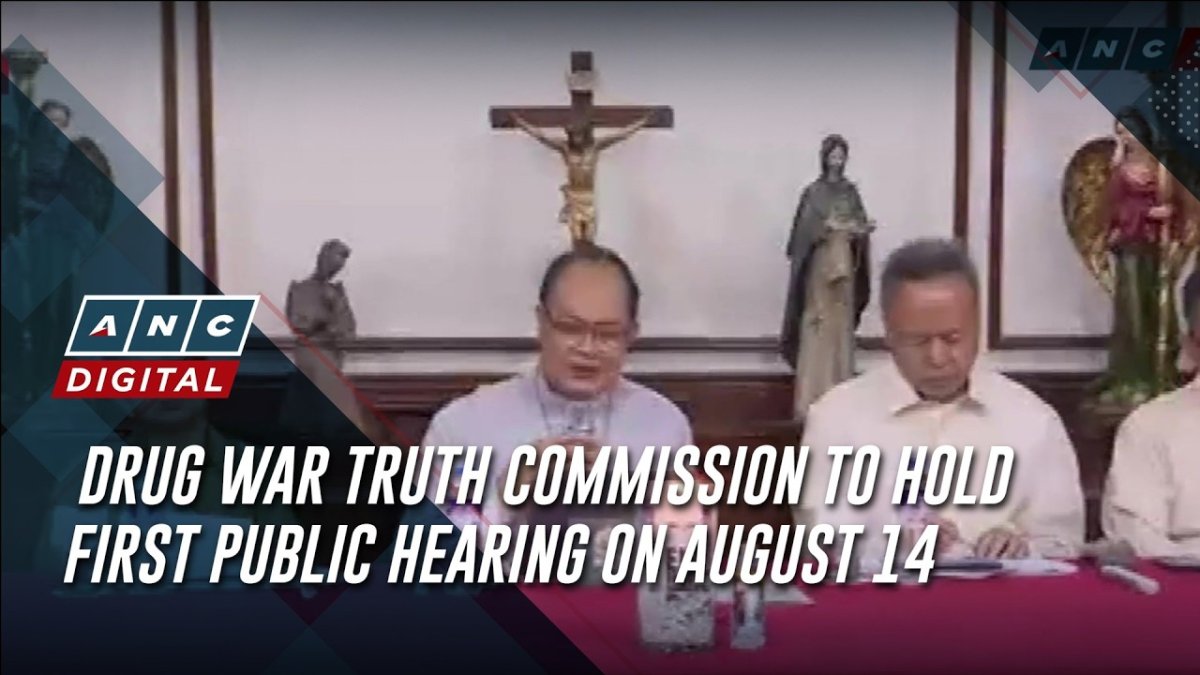
In a recent ANC 24/7 report, the civilian-led Philippine Truth and Reconciliation Commission announced it will hold its first public hearing on Friday, August 14, at the Pope Pius XII Catholic Center along UN Avenue in Manila. The commission, formed by Catholic Church leaders and civil society organizations, will begin documenting the human cost of former President Rodrigo Duterte's drug war — a conflict that human rights groups estimate claimed at least 30,000 lives.
In a recent ANC 24/7 report, the civilian-led Philippine Truth and Reconciliation Commission announced it will hold its first public hearing on Friday, August 14, at the Pope Pius XII Catholic Center along UN Avenue in Manila. The commission, formed by Catholic Church leaders and civil society organizations, will begin documenting the human cost of former President Rodrigo Duterte's drug war — a conflict that human rights groups estimate claimed at least 30,000 lives.
TRUTH COMMISSION OPENS PUBLIC HEARINGS ON DUTERTE DRUG WAR KILLINGS
Manila, Philippines — The first case to be heard will be that of Raymart Siapo, an 18-year-old from Navotas City who was abducted and killed on March 29, 2017. Siapo, who had congenital clubfoot that made walking and running difficult, was taken from his home hours after a neighbor accused him of selling marijuana. Witnesses said his captors ordered him to run before shooting him twice in the head. He had been preparing to start work with his uncle the next morning and had spoken to his mother about continuing his education.
His mother, Luzviminda Siapo, will testify before the commission on Friday. Dr. Raquel Fortun, a forensic pathologist and commission member, will present findings from a forensic examination of Raymart's remains following an exhumation requested by the commission.
A Commission Born From Church and Civil Society
The commission was launched in Manila in late May 2026, bringing together a coalition of Catholic Church leaders, human rights advocates, and forensic experts. Atty. Raul Pangalangan, a former judge of the International Criminal Court (ICC), serves as chairman. Cardinal Pablo Virgilio David, bishop of Kalookan, acts as adviser. The executive director is Carlos Conde, a longtime human rights advocate.
Other members include Dr. Al Fuertes, a psychosocial expert, and Fr. Daniel Franklin Pilario, president of Adamson University. The commission describes itself as a fact-finding and documentation body — not a court. It does not assign criminal liability. Its stated goal is to build a credible truth record that can guide accountability, healing, reform, and the prevention of future violence.
At the launch, Chairman Pangalangan emphasized the commission's limited but vital role: "This is not about replacing the courts or assigning guilt. It is about building a credible truth record that can guide accountability, healing, reform, and the prevention of future violence."
Why Raymart Siapo's Case Opens the Hearings
The choice of Raymart Siapo's case as the first to be heard is deliberate. His story encapsulates the patterns that defined the drug war: a young man with a physical disability, a neighbor's accusation, no due process, and a killing that witnesses say involved cruelty — ordering a boy who could barely walk to run before executing him.
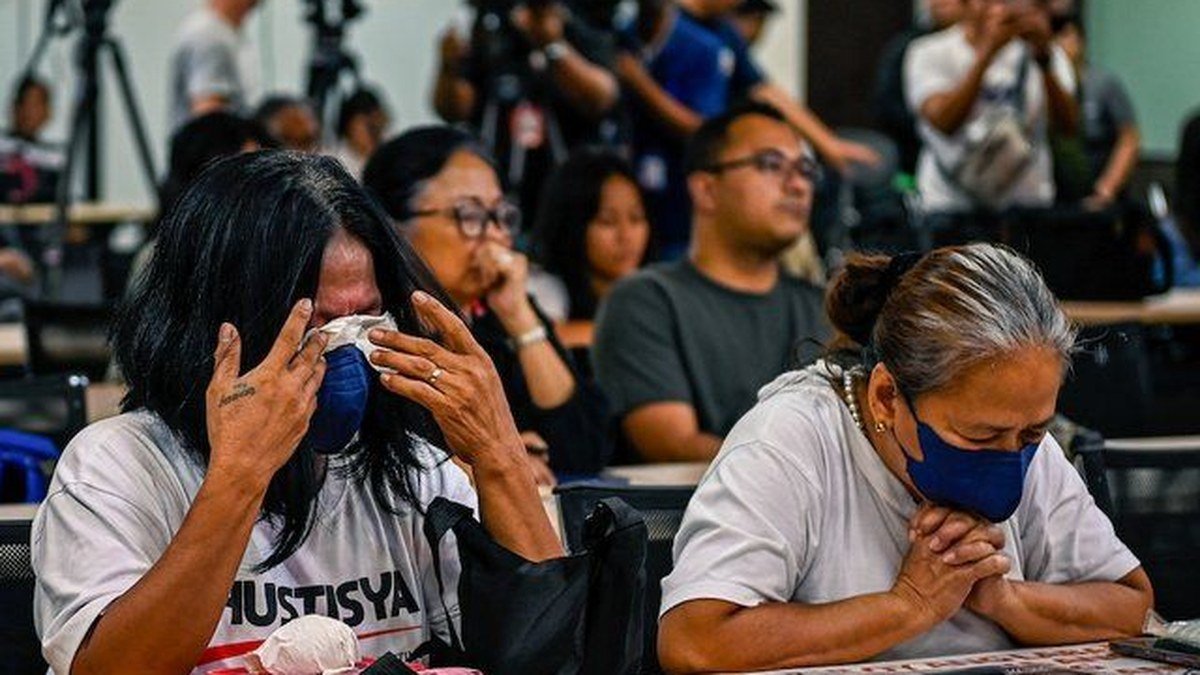
Luzviminda Siapo has waited nearly a decade for this moment. Her testimony on Friday will be the first public account of a drug war killing presented before a formal truth-seeking body in the Philippines. The commission says the session is "opening a public process to document the experiences of victims, survivors, and families affected by the killings."
Dr. Fortun's forensic findings will add a scientific dimension to the testimony. The exhumation and examination of Raymart's remains represent an effort to establish physical evidence of what happened — a departure from the official narratives that dismissed many drug war deaths as "nanlaban" or "resisted arrest."
Parallel Paths: The Commission and the ICC
The commission's work runs parallel to Duterte's trial at the ICC in The Hague, where he faces charges of crimes against humanity. Former Philippine National Police chief Senator Ronald "Bato" dela Rosa also faces legal scrutiny. The commission's reports could provide evidence and documentation that supports or contextualizes the ICC proceedings.
Chairman Pangalangan brings unique authority to this role. As a former ICC judge, he understands the standards of evidence required for international criminal proceedings. His presence signals that the commission intends to produce documentation that meets rigorous professional standards — not merely a collection of emotional testimonies, though those will be central to its work.
The commission will submit reports every six months to the National Police Commission, Congress, and President Ferdinand Marcos Jr. This reporting structure is designed to ensure that the truth record reaches the institutions with the power to act on it — whether through police reform, legislative action, or executive policy changes.
The Numbers Debate: 30,000 vs. Official Figures
Human rights groups estimate at least 30,000 deaths during the drug war. Official government figures are significantly lower. This gap is itself a matter of public concern — the commission's documentation work could help establish a more accurate count, though it cannot resolve the discrepancy alone.
Rights group Hustisya says drug-related killings continue under the Marcos Jr. administration. The University of the Philippines Third World Studies Center's Dahas Project has counted at least 1,184 drug-related killings under the current administration. This ongoing violence underscores the urgency of the commission's work — the drug war did not end with Duterte's presidency, even if its scale has diminished.
Cardinal David has invited members of the Philippine National Police to come forward and tell their stories. This invitation is significant. Police officers who participated in or witnessed drug war operations hold crucial information. Their testimony could illuminate how orders were transmitted, how operations were conducted, and how the "nanlaban" narrative became standard procedure.
Funding and International Support
The commission's funding is expected from a major German charitable foundation with experience supporting truth commissions abroad, including in Guatemala. This international support provides financial sustainability but also raises questions about foreign involvement in Philippine domestic affairs — a sensitive issue in a country where sovereignty debates are never far from the surface.
Supporters argue that international funding ensures independence from political pressure. Critics may question the motives of foreign funders. The commission's leadership will need to navigate these tensions while maintaining credibility with all stakeholders — victims' families, the public, the police, and the government.
The Guatemalan precedent is instructive. Guatemala's truth commission, supported by similar international partnerships, documented human rights violations during that country's civil war. Its findings were not universally accepted, but they provided a foundation for accountability efforts and historical memory. The Philippine commission appears to be following a similar model.
What This Means for Filipino Families and Communities
For the families of drug war victims, this commission represents the first formal acknowledgment that their loved ones' deaths matter — that their stories deserve to be heard and recorded. For nearly a decade, many have been told that their children, spouses, and siblings were criminals who got what they deserved. The commission offers an alternative narrative: that these were human beings with dreams, families, and futures.
Raymart Siapo was about to start work with his uncle. He had spoken to his mother about continuing his education. He had a physical disability that made walking difficult. None of this protected him from being abducted, forced to run, and shot twice in the head.
The commission's work is not about revenge. It is about recognition — recognizing that these deaths happened, that they were not isolated incidents, and that they were the result of policies and orders that came from the highest levels of government. This recognition is a prerequisite for any meaningful reform.
The hearings begin at 8:30 a.m. on Friday at the Pope Pius XII Catholic Center on UN Avenue in Manila, running until 12:15 p.m. The location is symbolic — a Catholic institution hosting a truth-seeking process that the Church has championed. Cardinal David's involvement ensures that the moral dimension of this work remains central.
As Cardinal David said at the commission's launch: "The truth must be protected not only as a matter of record, but as a matter of dignity for the families who have carried these stories for years."
On Friday, Luzviminda Siapo will finally have the opportunity to tell her son's story before a body empowered to listen. The commission's first public hearing marks the beginning of a long process — one that will test whether the Philippines can confront its recent past honestly and use that confrontation to build a more just future.
By Bella Reyes, Staff Writer
This article was produced with AI-assisted research and editorial support. Reporting is based on sources cited in the article.
What's Your Reaction?
 Like
0
Like
0
 Dislike
0
Dislike
0
 Love
0
Love
0
 Funny
0
Funny
0
 Wow
0
Wow
0
 Sad
0
Sad
0
 Angry
0
Angry
0

Philippines/Southeast Asia Correspondent at Global1.News. Manila-based journalist covering Philippine politics, environment, maritime security, and social issues. Passionate about marine conservation and the communities protecting the Philippines' natural heritage.










Comments (0)