
Covent Garden Stabbing: Four Men Injured in London Tourist District
The Metropolitan Police are investigating a stabbing incident in Covent Garden that left four men injured on Wednesday afternoon. Officers responded to reports of an assault on Endell Street shortly after midday, where emergency services found the victims with stab wounds. All four were transported to a major trauma centre for treatment, while a 47-year-old woman was taken into custody on suspicion of assault and possession of an offensive weapon.
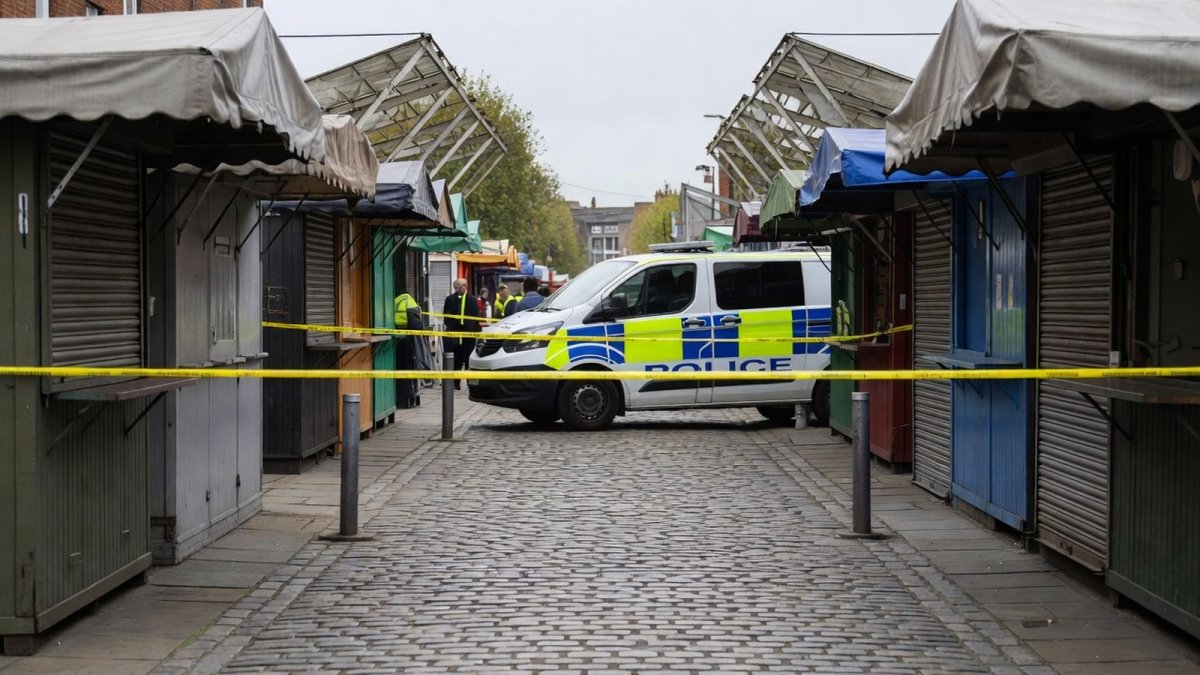
The Metropolitan Police are investigating a stabbing incident in Covent Garden that left four men injured on Wednesday afternoon. Officers responded to reports of an assault on Endell Street shortly after midday, where emergency services found the victims with stab wounds. All four were transported to a major trauma centre for treatment, while a 47-year-old woman was taken into custody on suspicion of assault and possession of an offensive weapon. The area remains under police cordon as investigators examine the scene.
What Happened
Metropolitan Police received reports of a stabbing at 12:27pm local time on Endell Street in Covent Garden. Officers arrived to find four men suffering from stab wounds. Paramedics and additional emergency units were already on site or en route when police secured the location. The incident occurred in a section of the district that includes pedestrian walkways and commercial frontages typical of the area.
Police established a cordon around the immediate scene to preserve evidence and allow forensic examination. No further details on the sequence of events have been released by investigators at this stage. The force has stated that inquiries are ongoing and that officers are reviewing available CCTV footage from the vicinity.
Covent Garden’s street layout, with its narrow thoroughfares such as Endell Street feeding into the larger piazza, creates a dense network of pedestrian routes that police must quickly secure after any violent incident. Officers typically establish layered cordons to protect potential evidence on pavements and building frontages while allowing limited public movement around the perimeter. This approach balances forensic requirements with the need to keep surrounding commercial activity from grinding to a complete halt.
London’s Metropolitan Police routinely review extensive CCTV networks covering both public spaces and private premises in central districts. Footage from fixed cameras on street corners, inside market arcades, and at transport hubs is collected within hours to establish timelines and identify individuals who may have witnessed events. Appeals for additional recordings from businesses and passers-by are issued early to prevent loss of data from automatic overwriting systems.
Daytime incidents in busy tourist zones often trigger multi-agency coordination between police, ambulance services, and local authority street managers. Temporary traffic and pedestrian diversions are implemented using barriers and signage to maintain access to nearby theatres and the Royal Opera House while the immediate scene is examined. Such measures reflect standard operating procedures developed after previous central London emergencies.
The Victims
The four men injured are aged 34, 39, 42, and 52. Each sustained stab wounds and was conveyed to a major trauma centre by ambulance. London's Air Ambulance was dispatched to support the response, along with additional ambulance crews and a paramedic in a fast-response vehicle. Hospital staff are providing ongoing care, though no updates on their conditions have been issued by police or medical authorities.
Investigators have not released further personal details about the victims. The men were all present in the Covent Garden area at the time of the incident, and police continue to appeal for witnesses who may have seen events leading up to the stabbings.
London’s major trauma centres, including those designated under the capital’s trauma network, are equipped to receive multiple patients with penetrating injuries simultaneously. Pre-hospital teams assess injury severity on scene using established triage tools before deciding whether air or road transport offers the fastest route to definitive care. This system ensures that operating theatres and specialist surgeons are ready upon arrival.
London’s Air Ambulance operates alongside ground crews during incidents involving several casualties, providing advanced interventions that can only be delivered by helicopter-equipped teams. Once patients are stabilised, they are transferred to hospitals with 24-hour access to vascular, thoracic and general surgical capabilities. Follow-up care pathways include critical care beds and rehabilitation services that extend well beyond the initial admission.
Police family liaison officers are routinely assigned when victims of serious violence require hospital treatment. These officers maintain contact with medical staff to respect patient confidentiality while gathering necessary details for the investigation. Relatives are offered support services that address both immediate practical needs and longer-term welfare considerations arising from sudden injury.
The Emergency Response
London Ambulance Service coordinated the medical response, deploying multiple units including an air ambulance and a fast-response car. An incident response officer from the Metropolitan Police also attended to manage the initial scene. The combination of resources reflects standard protocol for incidents involving multiple serious injuries in central London.
Once the victims were stabilised and removed, police took over the site for evidence collection. The cordon restricted access to nearby streets while officers documented the location and gathered statements from people in the immediate area. No other injuries were reported to emergency services.
The Arrest
A 47-year-old woman was arrested at the scene on suspicion of assault and possession of an offensive weapon. She was taken into police custody for questioning. Officers have not disclosed additional information about her connection to the victims or the circumstances leading to her detention.
Police continue to examine whether other individuals were involved. The investigation remains active, and the force has asked anyone with relevant footage or information to contact them directly. No motive has been confirmed or ruled out at this point in the inquiry.
Covent Garden Context
Covent Garden serves as one of central London's primary tourist and entertainment districts, drawing visitors to its market stalls, theatres, restaurants, and retail outlets. The area experiences high foot traffic throughout the day, particularly around midday when the incident occurred. Endell Street lies within the broader Covent Garden boundary and connects several pedestrian routes used by both locals and tourists.
Following the stabbings, police maintained a visible presence to manage the cordon and redirect pedestrian flow. Businesses in the immediate vicinity operated under restricted access while the investigation proceeded. The district's layout, with its mix of narrow streets and open plazas, requires coordinated management during any police operation of this scale.
Covent Garden’s historic Market Building and surrounding piazza have evolved from a working fruit-and-vegetable market into a major visitor destination featuring retail, dining and performance spaces. The area’s pedestrianised streets and covered arcades attract steady footfall from midday onward, creating a vibrant yet compact environment where incidents can quickly affect hundreds of people nearby.
The district’s proximity to the Royal Opera House and numerous West End theatres means that any police operation must consider performance schedules and audience arrival times. Temporary closures of adjacent walkways can influence both ticket-holders and staff, prompting local businesses to coordinate with authorities on access arrangements during investigations that extend into the evening.
Endell Street forms part of the broader street grid linking Covent Garden to neighbouring districts such as Seven Dials and Holborn. Its mix of commercial frontages and residential upper floors illustrates the area’s layered character, where daytime tourism overlaps with everyday local movement. This complexity requires police to manage both public reassurance and evidence preservation simultaneously.
The Bigger Picture (London knife crime)
Knife-related violence remains a recurring challenge for police across London, with the Metropolitan Police recording thousands of offences involving bladed weapons each year. Central London districts, including those with dense commercial and tourist activity, periodically see incidents that trigger large-scale responses. Data from the force shows that many such cases occur in public spaces during daytime hours.
London's trauma network, including designated major trauma centres, is structured to handle multiple simultaneous casualties from penetrating injuries. Air ambulance units and rapid-response teams are routinely integrated into responses when victims present with life-threatening wounds. These resources operate under established procedures that prioritise rapid transport and scene preservation for subsequent investigation.
Broader efforts to address knife crime include targeted stop-and-search operations, weapons sweeps, and partnerships with local authorities to reduce the availability of blades. Police have noted that many incidents stem from personal disputes rather than organised activity, though each case requires individual assessment. Public reporting of suspicious behaviour continues to be encouraged as part of ongoing prevention work.
Metropolitan Police data consistently show thousands of knife-enabled offences recorded annually across Greater London, with a notable proportion occurring in public spaces during daylight hours. National statistics from the Office for National Statistics indicate that knife crime has fluctuated in recent years, influenced by factors including weapon availability, enforcement activity and underlying social conditions in different boroughs.
Public-health approaches to knife violence have gained prominence alongside traditional policing methods. Initiatives such as hospital-based intervention programmes and community youth work aim to address the root causes of disputes that escalate to weapon use. These strategies operate in parallel with targeted stop-and-search operations and weapons amnesties conducted at transport hubs and in high-traffic areas.
Central London’s concentration of entertainment venues and transport interchanges creates environments where large numbers of people converge, increasing both the opportunity for conflict and the visibility of any resulting incident. Police and local authorities therefore maintain joint contingency plans that include rapid deployment of additional resources and coordinated public messaging to limit wider disruption.
What Happens Next
Investigators will continue forensic examination of the cordoned area and review CCTV from surrounding locations. The arrested woman is expected to be questioned further as part of standard custody procedures. Police have indicated they will provide updates as the inquiry progresses and as more information becomes verified.
Officers are maintaining the cordon while evidence collection continues. The force has reiterated its appeal for witnesses and has established channels for members of the public to submit information or footage. No additional arrests have been reported at this time.
After initial evidence gathering, forensic teams continue to process the cordoned area for trace materials that may assist in reconstructing events. Items collected are submitted for laboratory analysis while officers compile a comprehensive timeline from CCTV, witness statements and digital records. This methodical process can extend over several days as new information emerges.
Witness appeals are amplified through local media, social media channels and community networks to capture recollections before they fade. Officers also review automatic number-plate recognition and mobile-phone data where legally permitted, building a clearer picture of movements around the scene. Regular briefings keep the public informed without compromising investigative integrity.
Community impact after such incidents often includes increased police patrols, reassurance visits to nearby businesses and liaison with residents’ groups. Local authorities may adjust street-cleaning and maintenance schedules around the cordon while traders adapt opening hours. Over time, these measures give way to longer-term discussions about safety improvements and support services for those affected.
By Jessica Ali, Staff WriterThis article was produced with AI-assisted research and editorial support. Reporting is based on sources cited in the article.
What's Your Reaction?
 Like
0
Like
0
 Dislike
0
Dislike
0
 Love
0
Love
0
 Funny
0
Funny
0
 Wow
0
Wow
0
 Sad
0
Sad
0
 Angry
0
Angry
0

Editor-in-Chief at Global1.News. Atlanta-based journalist who cuts through the BS and tells it like it is. Lead anchor, host, and the voice you hear when the spin stops and the truth starts.














Comments (0)