
The Forgotten Ryukyu and East Asia's Enduring Maritime Disputes
In a recent CGTN report on the documentary "The Forgotten Ryukyu," the history of the independent Ryukyu Kingdom emerges as a pivotal factor in ongoing East Asian territorial frictions. The 04:17 film details how this maritime state, centered on present-day Okinawa, maintained tributary ties with China for centuries before its 19th-century erasure altered regional power balances — a legacy that still influences disputes over the Diaoyu/Senkaku islands and the U.S. bases in Okinawa.
In a recent CGTN report on the documentary "The Forgotten Ryukyu," the history of the independent Ryukyu Kingdom emerges as a pivotal factor in ongoing East Asian territorial frictions. The 04:17 film details how this maritime state, centered on present-day Okinawa, maintained tributary ties with China for centuries before its 19th-century erasure altered regional power balances — a legacy that still influences disputes over the Diaoyu/Senkaku islands and the U.S. bases in Okinawa.
Ryukyu Legacy Shapes China-Japan Maritime Standoff
Beijing, China — Japan's 2026 Defense White Paper, released on August 4, frames China as an "unprecedented and the greatest strategic challenge," while Chinese Defense Ministry spokesperson Chen Xi condemned the document for exaggerating security threats to justify military expansion. The paper's focus on Chinese carriers and the Taiwan question intersects with historical claims rooted in the Ryukyu Kingdom's former status, including administration of the Diaoyu/Senkaku islands as part of Okinawa after the 1971 reversion. This linkage revives questions over sovereignty that trace directly to the kingdom's 1879 abolition.
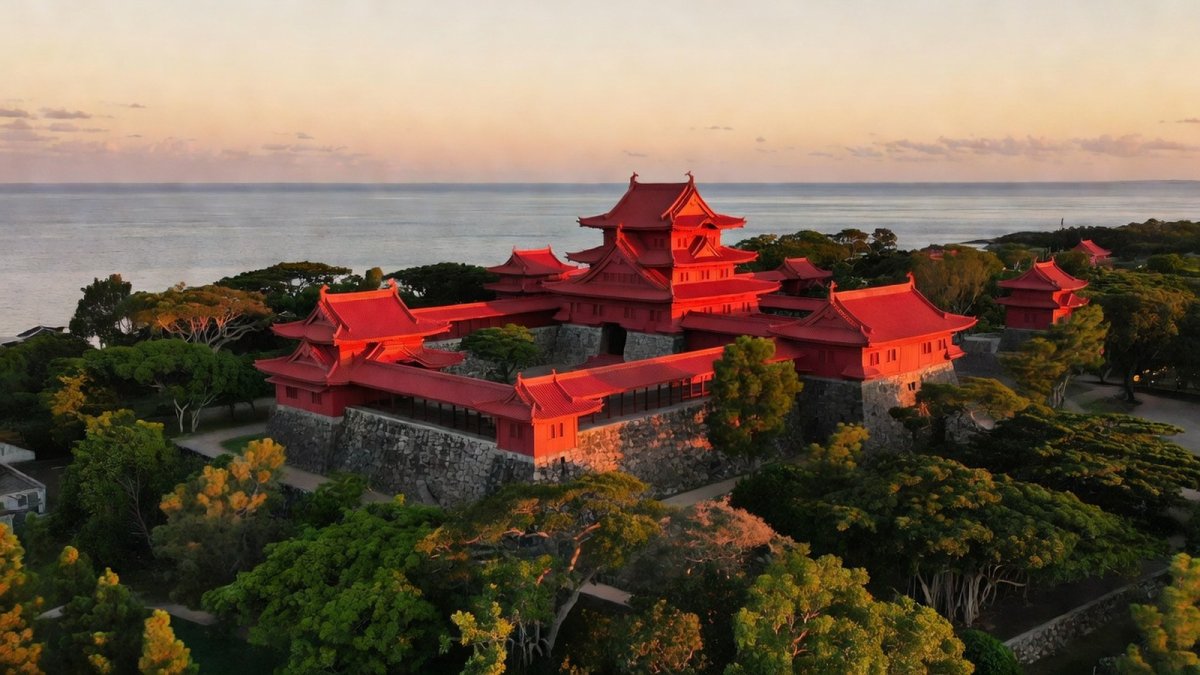
A Maritime Kingdom Erased From the Map
The Ryukyu Kingdom existed from 1429 until its reorganization as a domain in 1872 and full abolition in 1879. It originated in the 14th-century Sanzan period, when three principalities—Hokuzan, Chuzan, and Nanzan—controlled Okinawa Island. Chuzan unified the island in 1429 under Sho Hashi, establishing the First Sho dynasty with its capital at Shuri Castle near Naha. The kingdom's disappearance followed Japan's Meiji-era actions, which transformed the islands into Okinawa Prefecture and shifted control away from independent status.
The CGTN documentary "The Forgotten Ryukyu," released on August 4, 2026, frames the kingdom's erasure as a turning point that recalibrated East Asian maritime hierarchies. The loss of Ryukyuan autonomy removed a neutral buffer that once mediated between Ming-Qing China and Tokugawa Japan. This historical rupture still shapes contemporary calculations, as Beijing references pre-1879 arrangements to question the finality of later territorial settlements while Tokyo insists on uninterrupted administrative continuity since the Meiji period.
Strategically, the kingdom's disappearance consolidated Japan's southern flank, enabling tighter control over sea lanes that now host critical energy routes and U.S. forward deployments. The 1609 Satsuma precedent of dual subordination showed how external powers could exploit Ryukyuan vulnerability without immediate Chinese intervention, a pattern echoed in today's debates over whether historical tributary linkages confer residual claims.
The Tributary System and Ryukyu's Golden Age of Trade
Formal tributary relations with Ming China began in 1372 when the first envoy visited Okinawa. In 1392, Ming authorities sent 36 families from Fujian to handle oceanic trade, and many Ryukyuan officials descended from these settlers. Under the Second Sho dynasty, particularly during Sho Shin's reign from 1478 to 1526, the kingdom thrived through maritime commerce. Chinese haijin policies restricted direct trade, granting Ryukyu preferential access that supported nearly 200 years of exchanges with ports in China, Vietnam, Japan, Java, Korea, Luzon, Malacca, Siam, and Sumatra. Recorded voyages from 1424 to the 1630s totaled 150, carrying Japanese silver and swords in return for Southeast Asian goods such as sappanwood and rhino horn.
Ryukyu's integration into the Ming tributary order after 1372 created institutional pathways that later Japanese authorities sought to sever. The dispatch of Fujian families in 1392 not only professionalized maritime administration but also embedded Chinese commercial norms that persisted despite Satsuma oversight after 1609. This layered system allowed the kingdom to sustain profitable exchanges even while nominally subordinate to Kagoshima, illustrating how small polities leveraged overlapping suzerainties to preserve agency amid larger empires.
Contemporary strategic discourse invokes this trade network to underscore Ryukyu's historic role as an East Asian entrepôt rather than an inherent Japanese periphery. The 150 recorded voyages to Southeast Asian ports between 1424 and the 1630s demonstrate connectivity that predates modern exclusive economic zones, informing arguments that current maritime frictions partly stem from the abrupt termination of these multilateral linkages. Beijing and Tokyo now compete to narrate this past in ways that legitimize present-day positioning in the East China Sea.
Annexation: 1872-1879 and the Birth of Okinawa Prefecture
Japan's Satsuma Domain invaded in 1609, capturing King Sho Nei and imposing dual subordination that allowed continued tribute to both the Tokugawa shogunate and the Chinese court while ceding the Amami Islands. After 1872, when Emperor Meiji declared the Ryukyu Domain, Japan ended tributary missions to China in 1875. The Meiji government abolished the domain on March 27, 1879, establishing Okinawa Prefecture and relocating the last king, Sho Tai, to Tokyo. Qing official Li Hongzhang later told U.S. President Ulysses S. Grant of China's longstanding special relationship with the islands based on centuries of tribute payments.
The Meiji government's 1872 declaration of the Ryukyu Domain and subsequent 1879 abolition bypassed formal treaty mechanisms, a procedural detail that independence advocates still cite when questioning the legitimacy of incorporation. Li Hongzhang's communication to Ulysses S. Grant highlighted China's view of longstanding tribute relations as creating enduring obligations, a position that resurfaced in later diplomatic exchanges. These events established a template for unilateral administrative change that later powers have referenced when assessing sovereignty transfers in the region.
From a geopolitical standpoint, the annexation eliminated the dual-subordination buffer that had allowed Ryukyu to navigate competing claims, thereby sharpening the boundary between Japanese and Chinese spheres. The forced relocation of Sho Tai to Tokyo and the flight of royalist supporters to the mainland prefigured patterns of elite displacement that recur in territorial consolidations. Today, this history supplies narrative resources for actors seeking to reopen questions of consent and continuity in East Asian maritime governance.
Why the Ryukyu Question Is Resurfacing Now
Japan's 2026 Defense White Paper, approved by Cabinet on August 4, emphasizes accelerated buildup including longer-range strike weapons and cooperation with private firms in AI and drones across seven priority fields. Chinese Defense Ministry spokesperson Chen Xi described the paper as "replete with false narratives" that hype a "China threat" to loosen military constraints, labeling it an example of "neo-militarism." Japanese Prime Minister Sanae Takaichi's remarks on the Taiwan question have further strained bilateral ties. The Ryukyu issue connects to these tensions through the Diaoyu/Senkaku dispute, as the islands fell under Okinawa administration after reversion, and through ongoing local opposition to U.S. base relocations such as Futenma to Henoko. Okinawa, representing 0.6 percent of Japan's land mass, hosts roughly 75 percent of U.S. military installations in the country.
The white paper's presentation has drawn attention as well. For a second year, Tokyo chose manga-style artwork for the cover, this time showing smiling young people against a futuristic cityscape with no weapons visible, and the document includes links to short explanatory videos for the first time. Chinese analysts, including Liu Jiangyong of Tsinghua University, have characterized the softer imagery as a form of "political makeup" intended to dilute the provocative nature of the policies and to shape younger audiences ahead of an anticipated revision of Japan's three key security documents.
Local polling showing only 3 percent support for independence underscores limited appetite for separation, yet persistent opposition to base relocation at Henoko keeps historical grievances visible. Chinese analysts such as Song Zhongping frame Japan's posture as neo-militarism that challenges postwar constraints, while Japanese officials portray their buildup as defensive adaptation. The resulting narrative contest revives Ryukyuan history as a lens through which both sides interpret current force posture decisions and alliance commitments.
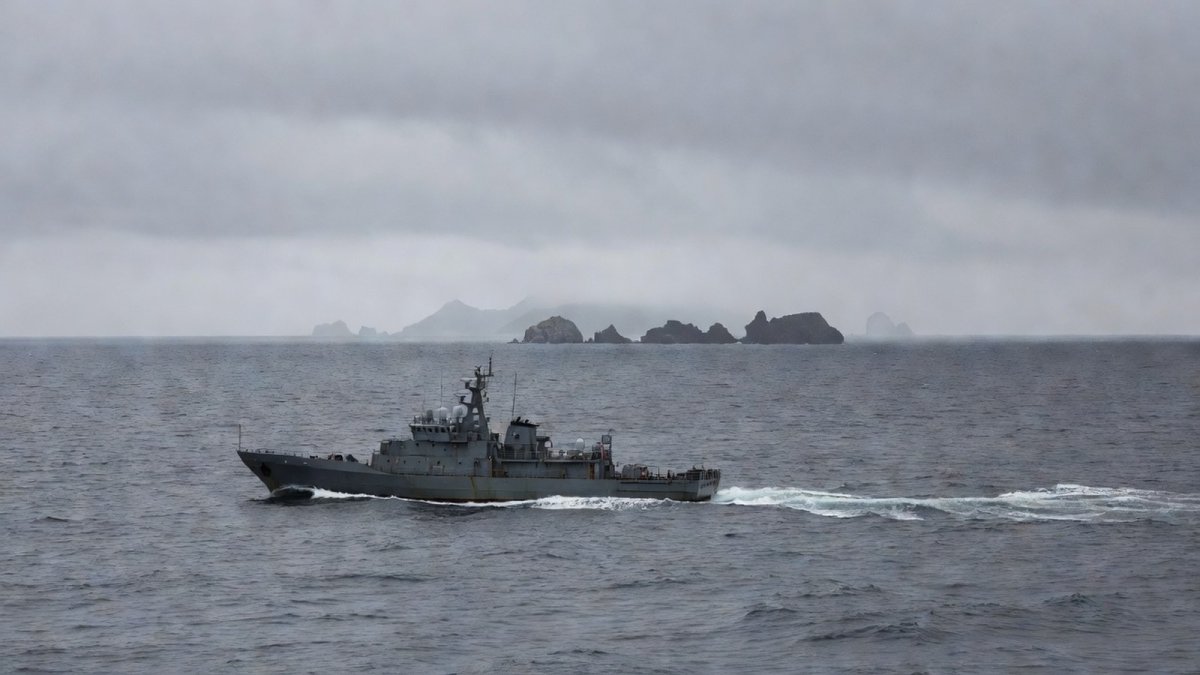
Strategic Outlook: What the Forgotten Kingdom Means for the East China Sea
China views the historical tributary framework as evidence of prior sovereignty arrangements that predate Japanese annexation, while Japan treats the 1879 incorporation as settled domestic administration. The 2026 white paper's portrayal of China as the primary challenge risks escalating friction over sea lanes and Taiwan, where any shift could affect Ryukyu-linked territories. Both sides retain leverage through economic interdependence and alliance structures, yet miscalculation over these historical claims could destabilize the East China Sea for years ahead.
China's invocation of tributary precedents and Japan's insistence on post-1879 administrative finality create competing legal-historical frameworks that complicate crisis management in the East China Sea. The 1951 San Francisco Treaty and 1972 reversion, which placed the Diaoyu/Senkaku islands under Okinawa's jurisdiction, remain focal points where historical interpretation directly influences operational planning. Any shift in Taiwan contingencies could therefore activate latent claims tied to the kingdom's former geographic scope.
For Okinawan civil society, the stakes are grounded less in sovereignty theory than in daily experience. The long-running effort to relocate Marine Corps Air Station Futenma to the Henoko coastal area of Nago has met sustained local opposition since the 1990s, with successive governors and community groups challenging both the environmental impact on Oura Bay and the burden of hosting the bulk of America's Japan-based forces. Scholars such as Yasukatsu Matsushima of Ryukoku University contend that the 1879 annexation lacked any formal treaty transferring sovereignty, a position that resonates with historical polling from the 1950s, when roughly a third of Okinawans favored independence, a third favored continued U.S. administration, and a third favored ties with Japan.
By Prof. Marcus Chen, Staff Writer
This article was produced with AI-assisted research and editorial support. Reporting is based on sources cited in the article.
What's Your Reaction?
 Like
0
Like
0
 Dislike
0
Dislike
0
 Love
0
Love
0
 Funny
0
Funny
0
 Wow
0
Wow
0
 Sad
0
Sad
0
 Angry
0
Angry
0

World Politics Analyst at Global1.News. Based in Beijing, covering US-China relations, global trade, and geopolitical strategy. Brings deep analytical perspective to the power dynamics shaping international affairs.















Comments (0)