
Congo's Ebola Outbreak Is Not Shrinking. It Is Moving.
Congo's record Ebola outbreak has shifted its centre of gravity to North Kivu, where Butembo's 29-bed treatment centre was full this week and health officials warn the epidemic is moving rather than shrinking.
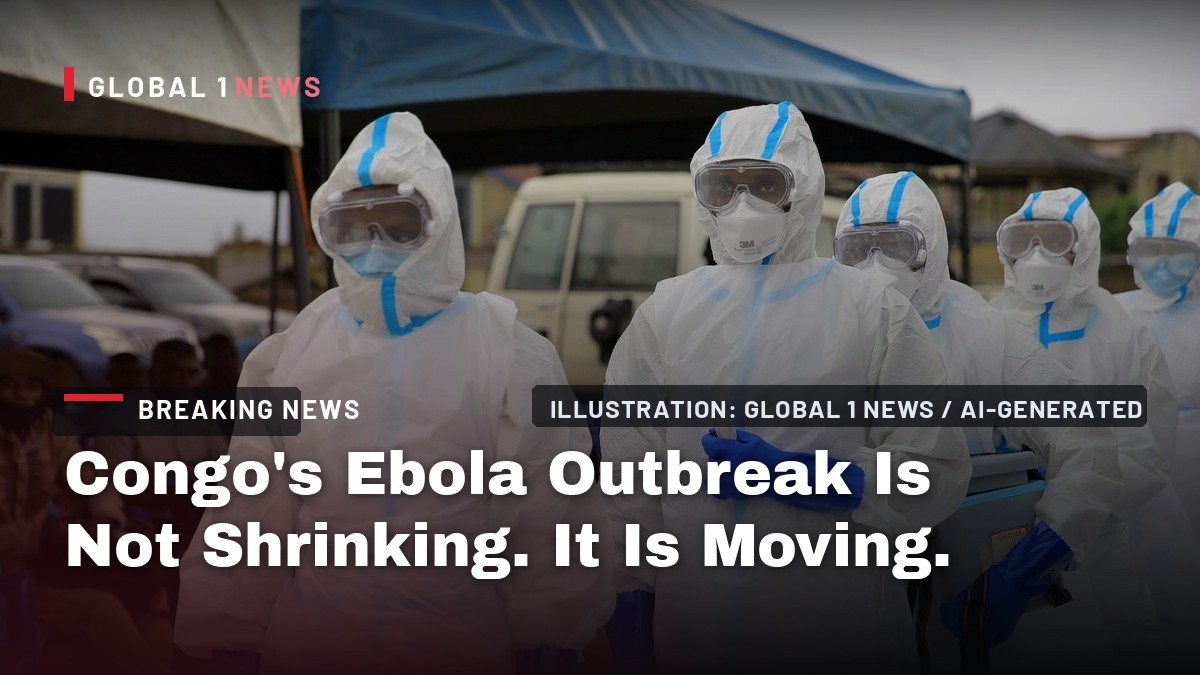
The Ebola treatment centre in Butembo has 29 beds. This week, every one of them was full, and a 10-year-old boy died in triage before doctors could find him a place.
Congo's Ebola Outbreak Is Not Shrinking. It Is Moving.
Butembo, DR Congo — The Democratic Republic of Congo is more than four months into the largest and deadliest Ebola outbreak in its history, and the virus has changed address. For months the emergency was centred on Ituri province in the northeast. The surge has now shifted into North Kivu, where all 29 beds at the Kitatumba treatment centre were occupied this week and city authorities opened two more facilities to absorb the demand.
Twenty-Nine Beds, and None of Them Empty
Butembo is a city of about two million people and one of eastern Congo's largest trading hubs. It is the sharp end of an outbreak spread across a stretch of territory bigger than France. Stephanie Hoffmann, project coordinator for the medical charity Médecins Sans Frontières in the city, described "a very sharp increase" over the past two weeks. "There are sometimes patients who know they have Ebola but cannot find a bed," she said. On Tuesday, she recounted, a 10-year-old boy died in triage before doctors could admit him. Some patients, she said, arrive so unwell that there is nothing doctors can do.
What the Numbers Say
Congo's government put the toll at 7,820 confirmed cases and 3,779 deaths as of Tuesday, according to figures cited by Reuters and by the Africa Centres for Disease Control and Prevention. The health ministry's own situation report for 21 September recorded 7,773 confirmed cases and 3,759 deaths, with 839 patients hospitalised in isolation and 1,935 people recovered. There is no approved vaccine or treatment for the Bundibugyo species of the virus driving this outbreak. The World Health Organization classifies it as the second-largest Ebola outbreak ever recorded, and the largest and deadliest in Congo's own history. It has grown at five times the rate of the previous biggest outbreak and is on a trajectory, the WHO says, to surpass the 2014-2016 West African epidemic that killed more than 11,000 people.
A Virus That Changed Address
The geography tells the story better than the totals. The outbreak grew from eight confirmed cases in three health zones on 15 May to 63 health zones across seven provinces. Beneath the national numbers, two provinces are moving in opposite directions. The WHO reported that cases fell roughly 26 per cent in Ituri and 15 per cent in Haut-Uélé over the previous three weeks, while North Kivu recorded a 73 per cent increase. Africa CDC's head of emergencies, Dr Wessam Mankoula, gave a different account the same day: new cases down 25 per cent in Ituri, but up 56 per cent in North Kivu, with deaths there rising 19 per cent. Either way, the WHO describes a "pronounced geographic redistribution of transmission".
The Gap Congo Cannot Fill
The WHO's incident manager for the outbreak, Catherine Smallwood, said this week that cases and deaths had begun declining in North Kivu in recent days, after several weeks of marked increases. The constraint is no longer only equipment. Nearly 1,400 treatment and isolation beds now operate across 49 Ebola treatment centres, backed by 25 laboratories capable of processing up to 2,500 tests a day. What is missing is the people to run them. "The human resources gap is one of the biggest gaps," Smallwood said. The WHO's representative in Congo, Anne Ancia, calculated that a single Ebola treatment centre needs about 300 health professionals, including anaesthetists, hygienists, nurses and general practitioners. "We are building Ebola treatment centers but do not always have the human resources needed to operate them," she said. "Those health workers must be paid."
One in Three Die Outside a Treatment Centre
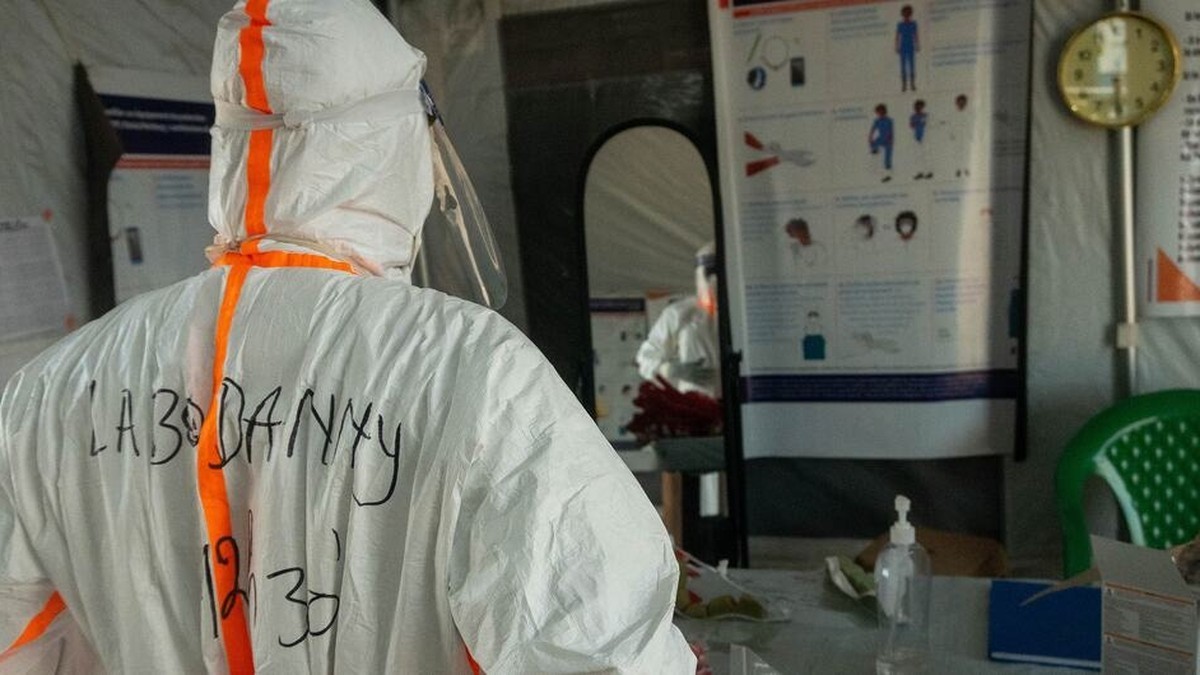
Dr Marie Roseline Belizaire, the WHO's regional emergency director for Africa, put the central failure plainly: around one in three new infections is identified only after the patient has died in the community, outside any treatment centre. Every such death raises the risk of transmission to family members, caregivers and those involved in traditional burials. Contact tracing has improved to nearly 88 per cent, but that still leaves a share of the caseload invisible until it is too late to treat. And North Kivu's fatality rate is far worse than the national picture: 60.5 per cent, against a national average of 48.3 per cent. Dr Michel Paluku Mukuloli, who works at a hospital in Butembo, described the fear that keeps patients away. "Patients think that if they arrive at the hospital, they will be immediately sent to the treatment centre to die," he said.
The Children This Virus Kills First
The youngest patients carry the heaviest burden. Children under five have a case fatality rate above 60 per cent, against roughly 40 per cent among adults, and they account for most of the deaths that happen outside Ebola treatment centres, at home or in clinics where their illness is never identified as Ebola. "Young children have a lower physiological reserve and not fully developed immune systems," said Dr Daniel Youkee, who leads the WHO's Ebola case management team. He said standardised supply kits need paediatric-sized equipment and medicines at paediatric doses, and that staff need specific training to recognise hypoglycaemia and shock in children. Dr Chaka Keita, a paediatrician with the aid group ALIMA, which runs five treatment centres across Ituri, said isolation itself damages children. "Isolation is a major factor contributing to emotional stress, agitation and irritability," he said.
Mistrust, a Machete and a Burned Health Post
The response is running into a wall of suspicion that predates this outbreak. North Kivu was the epicentre of three previous Ebola emergencies, including the 2018-2020 outbreak that, until this year, was Congo's largest and deadliest. That one was caused by the Zaire species, for which vaccines and treatments exist. "People remember the 2018 outbreak and ask why vaccines and treatments existed then but not today," said Pepin Kavota, a civil society coordinator in Beni. Sexual abuse and exploitation by responders during that outbreak, including some employed by the WHO, eroded public trust further; the agency says trust "must be continually earned" and that it has strengthened its safeguarding since. Residents in Butembo attacked a safe-burial team member with a machete this month, fracturing his knee, and set fire to a health post they accused of collaborating with responders. "I'm at a loss for words," said Kakule Mahamba, who ran the Hope Health Post, surveying the wreckage. "Even the hospital beds were burned, as well as the medicines."
Two Point Nine Billion Dollars, and a Warning Attached
Money is arriving. G20-plus countries pledged an additional $700 million at a meeting convened by the United States on Wednesday on the sidelines of the UN General Assembly, taking total funding past $2.9 billion. The United States has now committed $887 million, with a further $267 million pledged at that meeting, and the Africa CDC's director-general, Dr Jean Kaseya, credited contributions from 27 African countries. Kaseya called the new money "huge" and then attached a condition to the celebration. "But pledges alone will not stop Ebola," he said. "We must be able to trace every single dollar — from commitment to disbursement, from implementing partner to expenditure, and ultimately to the services delivered to affected communities."
A Vaccine Nobody Designed for This Virus
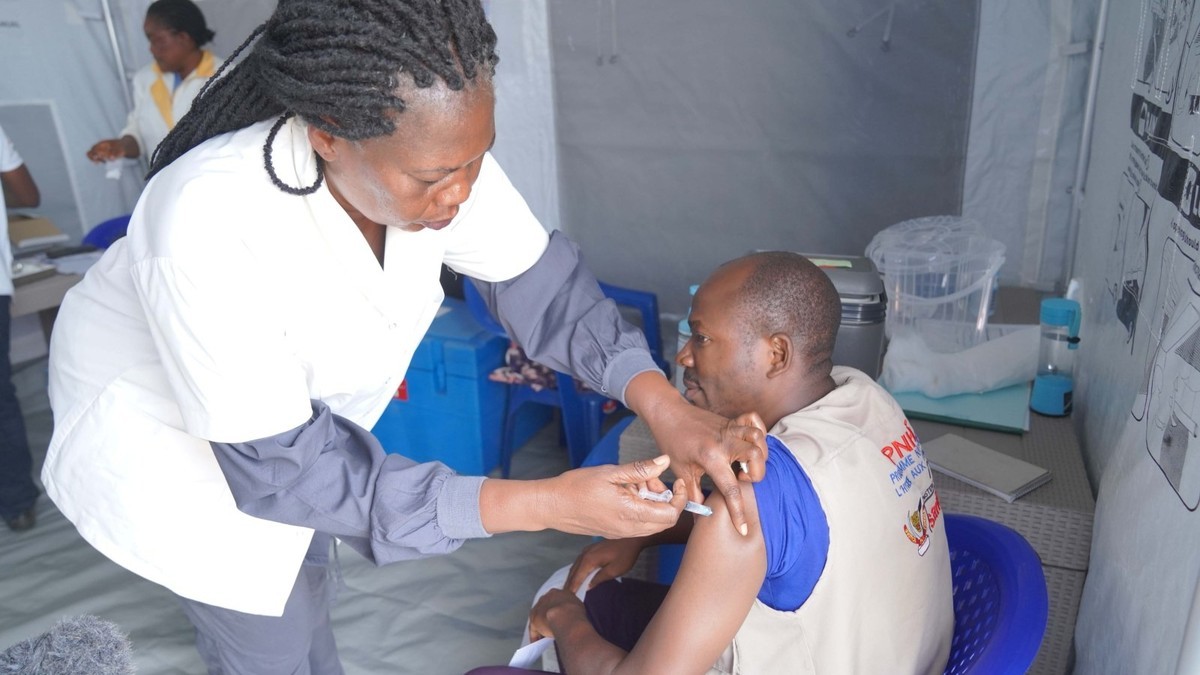
The scientific race is running behind the virus. Congo has 70,000 doses of Ervebo, the only Ebola vaccine licensed for use in outbreaks caused by Bundibugyo — but it was developed against the Zaire species and its effectiveness against Bundibugyo is unknown. The WHO's vaccine advisers recommended it be used for research purposes only at first. On 19 September, MSF began the BRAVO trial in Bunia, which will follow about 20,000 frontline workers in Ituri and North Kivu for nine to 12 months. "Although Ervebo was not originally developed to protect against Bundibugyo, preliminary data suggest that it may provide some degree of protection," said MSF epidemiologist Guyguy Manangama. Two further vaccines, one from Moderna using mRNA technology and one from Oxford, are in safety trials in Britain and Canada. The medical director of Butembo's treatment centre, Kakule Kihasaki Samson, is not waiting for them: "It is premature to say the situation is under control. Here, we continue to record new positive cases every day."
What Comes Next
The WHO says the outbreak is not under control and continues to pose a significant risk to regional and global health security, having already reached Uganda and produced imported cases in France and Germany — all of which recovered. Uganda's own outbreak was declared over on 25 August after 42 days with no new confirmed case. The immediate battle is trust as much as treatment. Dr Pablo Paluku Lwanzo, head of the Butembo health zone, said only two of the zone's nine health checkpoints are still operating because of staffing. He also objected to the coercive turn the response has taken: provincial authorities have recruited pro-government Wazalendo fighters to guard responders, and armed men now run handwashing stations on some roads into the city. "We should not need to use the police or the army in a response," Lwanzo said. "The population must be sensitised and willingly adopt the measures that are being put in place to protect them."
What the Case Curve Hides
MSF's emergency coordinator in Congo, Anthony Kergosien, made the point that the raw case curve can hide. "Assuming the outbreak is under control because some Ebola treatment centres are admitting fewer patients would be a mistake," he said in a statement. "The outbreak is not shrinking; it is moving." Congo's incident manager for the outbreak, Steve Ahuka, said after meeting the North Kivu governor and WHO representatives this week that authorities had gained more access over the past four weeks. "While pockets of resistance remain, we believe that with the involvement of traditional, religious and neighbourhood leaders, we can make progress," he said. Meanwhile 239 health workers have been infected and about 50 have died, according to the Africa CDC. The people who cannot find a bed are not statistics yet. They are tomorrow's caseload.
By Jessica Ali, Staff Writer
This article was produced with AI-assisted research and editorial support. Sources: Reuters, the World Health Organization and its Regional Office for Africa, UN News, the Africa Centres for Disease Control and Prevention via Health Policy Watch, the European Centre for Disease Prevention and Control, the US Centers for Disease Control and Prevention MMWR, the Democratic Republic of Congo Ministry of Public Health situation report N°130, Médecins Sans Frontières, the Associated Press, the US State Department, CGTN Africa and Global1.News.
What's Your Reaction?
 Like
0
Like
0
 Dislike
0
Dislike
0
 Love
0
Love
0
 Funny
0
Funny
0
 Wow
0
Wow
0
 Sad
0
Sad
0
 Angry
0
Angry
0

Editor-in-Chief at Global1.News. Atlanta-based journalist who cuts through the BS and tells it like it is. Lead anchor, host, and the voice you hear when the spin stops and the truth starts.












Comments (0)