
Colombia Earthquake Rescue: Elena Vasquez Reports from Cali
The earth moved beneath Colombia on Monday morning, and in the seconds that followed, thousands of lives were irrevocably altered. A magnitude 7.4 earthquake—the strongest to hit this nation in the century, according to the National Geological Service—struck at 07:34 local time, reducing buildings t
The earth moved beneath Colombia on Monday morning, and in the seconds that followed, thousands of lives were irrevocably altered. A magnitude 7.4 earthquake—the strongest to hit this nation in the century, according to the National Geological Service—struck at 07:34 local time, reducing buildings to dust and trapping families beneath the concrete of their own homes. As rescue workers dig through the debris with handsaws and bare hands, the official death toll stands at 181, though local officials fear the true number is already higher. This is a story of anguish, of a brother waiting for a miracle, and of a new president facing his first national catastrophe just days after taking office.
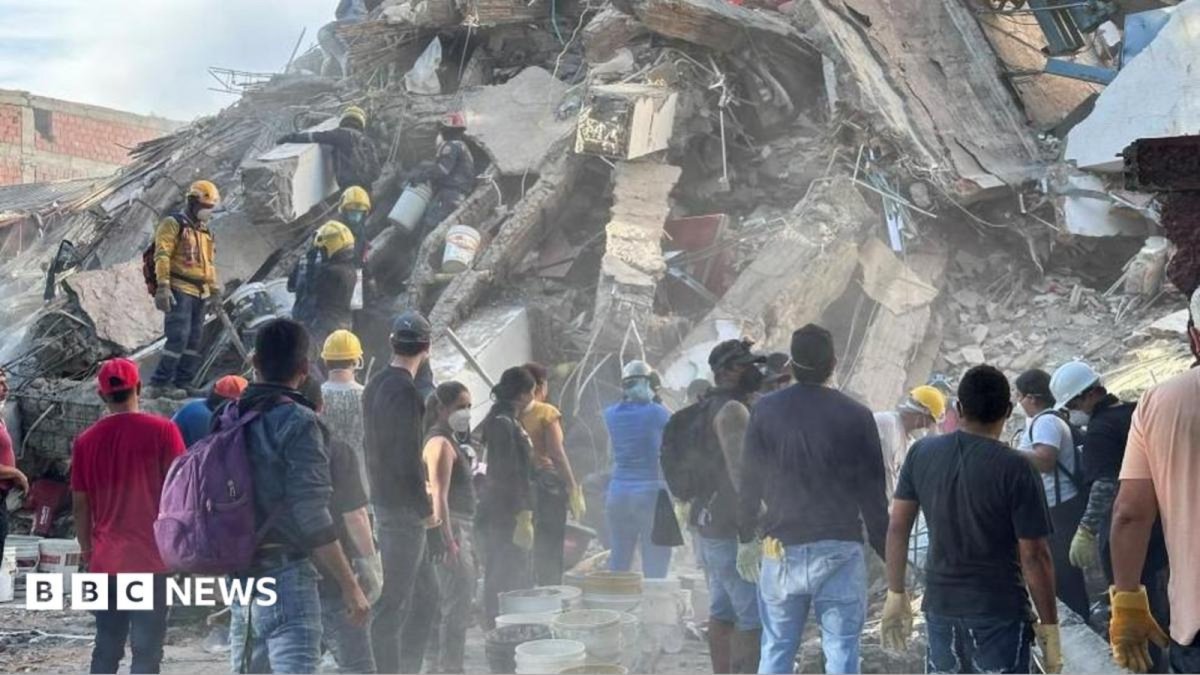
Cali, Colombia — The Torres del Limonar building in the Capri neighborhood of Cali has become a symbol of this tragedy. The four-story structure, which held dozens of apartments, is now a shattered mountain of rubble. Mattresses, furniture, and personal belongings peek out from the concrete, a cruel reminder of the lives that were interrupted here. Under the scorching Tuesday heat, more than 100 people—rescuers, military personnel, volunteers, and journalists—have gathered around the remains. Every few minutes, the work stops. Hands rise in the air, a universal sign for silence. “Silence! We are firefighters. If you can hear us, shout or make any noise,” they call out. The seconds pass. No answers come from below.
A Brother’s Vigil at Torres del Limonar
Efraín Gallego stands among the crowd, his eyes fixed on the rubble. His 80-year-old brother and sister-in-law were inside the building when it collapsed. “You feel anguish. Every time there is an alert about someone being alive, hope is reborn that we will find him,” Gallego tells me, his voice breaking as he speaks. He swallows hard, trying to regain his composure. He has been here since the collapse, refusing to leave, clinging to the belief that his brother will be pulled out alive.
According to Cali Mayor Alejandro Éder, at least 95 people have died in this city of 2.2 million. As of Monday night, officials estimated that 25 people were trapped under the rubble of Torres del Limonar alone. Rescuers have managed to save about 10 people since the collapse, according to a rescuer at the site. Local media reports, including from Blu Pacífico radio, spoke of six survivors pulled from the wreckage in the hours immediately following the quake, including an infant only a few months old. “What I can tell you is that right now there are at least two people detected alive. Tunnels are being made to get them out. One of them has to have his leg freed,” rescuer James Velasco tells me, his face streaked with dust and sweat.
Gallego’s hope is not unfounded. “In the past I have participated in operations where we have pulled out survivors after seven days trapped,” he says. “Those who are meant to survive, survive. Nothing is written.” But as the hours stretch on, the anguish grows. Around him, many residents choose not to speak. They are visibly affected, some sleeping exhausted on the ground or on a sofa placed in the street. Others gather under the shade for support, their eyes hollow with grief and uncertainty.
Death Toll Rises Across Western Colombia
The earthquake’s devastation extends far beyond Cali. In Pereira, a city roughly 180 miles to the north, 79 people have died according to the city’s fire department. President Abelardo de la Espriella, who was sworn in just days before the quake, gave an update from Pereira on Tuesday. He confirmed that almost 2,600 people have been injured and nearly 200 remain missing. More than 1,100 homes have been destroyed, and over 8,000 have been damaged across the affected regions. The president has declared a state of emergency, mobilizing national resources to the hardest-hit areas.
In Manizales, Mayor Jorge Eduardo Rojas reported five deaths and 60 buildings that have partially or totally collapsed. He urged the public not to share chain messages or social media posts from unknown sources, warning that they “may contain false or unverified information... which could cause greater concern and alarm among the public.” The warning comes as aftershocks continue to rattle the region. Colombia’s geological service has recorded more than 70 aftershocks since Monday’s main quake, including two magnitude 3.6 tremors early Tuesday—one in San José del Palmar and another in Santander.
The official death toll remains at 181, but an aggregated figure gathered from local officials puts it potentially at more than 240. In Cali, Mayor Éder reported that 239 people remain trapped, with 949 injured and 45 buildings that have either completely or partially collapsed. Several upper floors of one of the city’s hospitals, some dedicated to pediatric care, collapsed, leaving some patients trapped. In the Calima neighborhood in the north of Cali, four children died after a section of the Gimnasio Calima school collapsed. Mayor Antonio Cadavid stated that other children ended up with serious injuries, with a total of 30 children referred to care centers.
Volunteers and Citizens Unite in Rescue Efforts
In the midst of tragedy, ordinary citizens have become the backbone of the rescue operation. Alejandro Mahecha, 19, is one of them. He decided to come to Torres del Limonar after spending the night safely with his family and overcoming the initial shock. “I wanted to help from the very beginning. The earthquake affected my city and the homes of people I know. I came to this site because there has been a lot of talk about this building and the need for help here,” the young man explains. Together with several friends, Mahecha helps remove rubble, bring water to rescuers, and clear the street to facilitate evacuation efforts.
Gallego wants to acknowledge this collective effort. “We must mention all the people who have come to help with water, supplies, tools, equipment; there is a lot of collaboration. Volunteers are plentiful,” he says. In Pereira, hundreds of volunteers have joined the rescue effort, working alongside firefighters to remove rubble and free trapped survivors. The city has implemented a car-free day to allow the search to go ahead, with citizens urged to comply. In Cali, Mayor Éder has ordered a nighttime curfew, coming into effect at 20:00 local time and lasting until 06:00 on Wednesday morning, to combat threats of looting and speed up rescue operations.
One resident of Pereira’s Parque Industrial neighborhood, near the city’s airport, described the shock being experienced in the area. “It’s impossible to get around the city center. In Bolívar Square (the city’s main square), at least one building collapsed. Furthermore, there are structures where buses and trucks are trapped, and people are afraid those structures will collapse as well,” he said. “We’re all in shock. It was really awful.”
Regional Solidarity and International Response
As Colombia grapples with this catastrophe, the international community has begun to mobilize. A statement from a spokesperson for UN Secretary-General António Guterres expressed solidarity with the people and government of Colombia, noting that the UN is working to support the government’s response. Spain’s Foreign Minister, José Manuel Albares, reported that 164 Spaniards are still missing, though there are no reports of injuries or deaths of its citizens. The Trump administration, which backed President Espriella in his successful election earlier this year, announced a donation of $15.5 million to Colombia.
But it is the offers of help from Colombia’s neighbors that resonate most deeply in this region. Ecuador, Brazil, El Salvador, and Venezuela have all offered assistance. For Latin Americans, this solidarity is not just diplomatic—it is personal. We have seen earthquakes devastate our cities before, from Mexico City in 1985 to Peru in 2007 and Ecuador in 2016. We know that the first 72 hours are critical, and that the difference between life and death often comes down to the speed and coordination of the response. The Andes region has always lived with seismic risk, but that knowledge does little to soften the blow when it strikes.
President Espriella, who took office just days before the quake, now faces the defining challenge of his young presidency. His immediate declaration of a state of emergency was swift, but the reconstruction will take years. The new president must navigate not only the physical rebuilding of homes and infrastructure but also the psychological recovery of a nation shaken to its core. His administration’s response to this crisis will set the tone for his entire term.
Aftershocks and the Long Road Ahead
Further tremors were felt in Cali on Tuesday, part of a pattern of aftershocks across the country. The ground remains unstable, and the fear is palpable. Many residents spent Monday night outdoors—either because their homes were destroyed or out of fear of further collapses. In cities like Pereira and Cali, parks and open squares have become makeshift shelters. The psychological toll is immense, and the uncertainty of when the shaking will stop adds another layer of trauma.
At Torres del Limonar, the work continues. The rescuers are using handsaws to clear debris from the structure, creating escape routes through the destruction. They stop only when those present raise their arms, signaling for silence. Efraín Gallego waits. This time, too, there was no news of his brother. But he does not leave. He cannot leave. “I wanted to help from the very beginning,” he says, echoing the words of the young volunteer nearby. In the face of unimaginable loss, this is what holds Colombia together—the stubborn refusal to give up hope, the determination to dig through the rubble with bare hands, the belief that every life is worth fighting for.
The official death toll will likely rise in the coming days. The missing—nearly 200 people—may never all be found. But in the midst of this devastation, there are stories of survival, of neighbors helping neighbors, of a nation refusing to be broken. The earthquake has reshaped the physical landscape of western Colombia, but it has also revealed the resilience of its people. As the sun sets on another day of digging, the silence falls over Torres del Limonar once more. The rescuers raise their hands. Everyone holds their breath. And Efraín Gallego waits, hoping that this time, his brother will answer.
By Elena Vasquez, Staff Writer
This article was produced with AI-assisted research and editorial support. Reporting is based on sources cited in the article.
What's Your Reaction?
 Like
0
Like
0
 Dislike
0
Dislike
0
 Love
0
Love
0
 Funny
0
Funny
0
 Wow
0
Wow
0
 Sad
0
Sad
0
 Angry
0
Angry
0

Latin America Correspondent at Global1.News. Based in Mexico City, covering politics, economics, energy, and culture across the region. Brings an on-the-ground perspective to stories spanning from the Rio Grande to Patagonia.











Comments (0)