
China's PLA Air Force Advances AI-Assisted Strike Planning
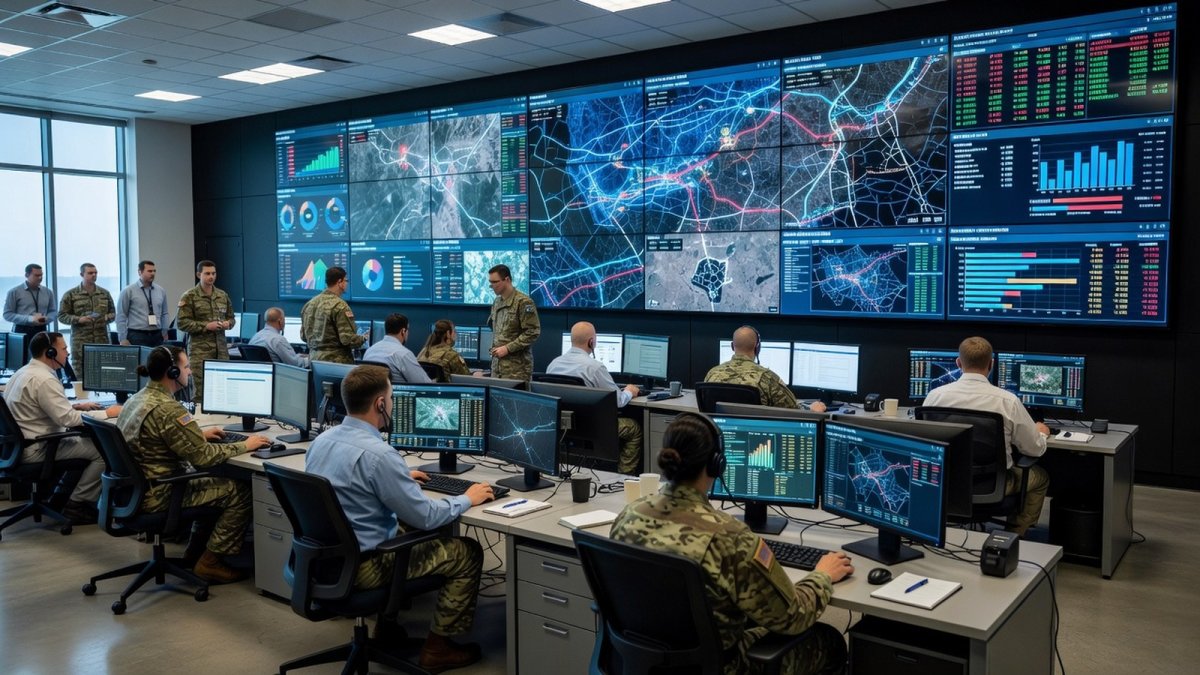
The CCTV Documentary and System Capabilities On August 2, 2026, Chinese state broadcaster CCTV aired a documentary detailing the People's Liberation Army Air Force development of an intelligent strike planning system. The platform assists commanders and pilots in prioritizing targets, coordinating attack waves, allocating weapons and tasks to units, organizing routes, and synchronizing multiple attack waves. State media described its use in exercises involving hundreds of targets, dozens of for
The CCTV Documentary and System Capabilities
On August 2, 2026, Chinese state broadcaster CCTV aired a documentary detailing the People's Liberation Army Air Force development of an intelligent strike planning system. The platform assists commanders and pilots in prioritizing targets, coordinating attack waves, allocating weapons and tasks to units, organizing routes, and synchronizing multiple attack waves. State media described its use in exercises involving hundreds of targets, dozens of formations, and more than 100 tactical units.
The system operates at the campaign level rather than enhancing individual aircraft or weapons. It connects target prioritization, mission allocation, and strike coordination to compress the interval between detection and execution. Coverage from the South China Morning Post on August 3, 2026, and outlets including Interesting Engineering and Army Recognition confirmed the CCTV account without additional operational specifics.
This development invites closer examination of how campaign-level tools interact with longstanding international efforts to maintain human oversight in weapons systems. The UN CCW process on autonomous weapons has long grappled with precisely these questions of scale, where coordination across multiple units risks diluting individual accountability. Historical debates within that forum illustrate how technical integration at higher echelons can outpace agreed-upon safeguards.
Policy implications for the Republic of Korea and its allies emerge clearly here. Seoul, alongside Washington and Tokyo, must assess whether similar planning architectures could accelerate response times in ways that compress diplomatic space during crises. Regional security dynamics around Taiwan contingencies and the Korean Peninsula underscore the need for calibrated modernization that preserves deterrence without eroding established norms.
The governance architecture Seoul has championed through REAIM summits and the Blueprint for Action offers a reference point for addressing these tensions. By emphasizing multilateral dialogue, South Korea seeks to shape standards that balance operational efficiency with enduring requirements for human judgment across Northeast Asia.
Campaign-Level Integration in PLA Modernization
The intelligent strike planning system forms part of broader PLA efforts to integrate artificial intelligence across intelligence, surveillance, reconnaissance, logistics, and operational planning. Beijing's military modernization goals emphasize accelerated decision-making at scale, and the new platform supports this objective by handling complex coordination tasks that previously required extensive manual processes.
Analysts note that the system's focus on large formations distinguishes it from narrower applications in single-platform autonomy. This campaign-level approach aligns with the PLA's emphasis on joint operations and rapid response in potential high-intensity scenarios. The Diplomat analysis by Gerald Mako on August 7, 2026, highlights how such tools could reshape planning timelines in regional contingencies.
Placing this integration within the evolution of the human-control debate reveals deeper strategic significance. Earlier phases of military AI development centered on platform-specific enhancements, yet the shift toward campaign orchestration introduces new layers of complexity that echo concerns raised in UN CCW deliberations over time. Such evolution suggests that future systems may test the boundaries of meaningful human supervision more rigorously than previous iterations.
For the ROK, United States, and Japan, these trends carry direct policy implications. Allies face choices about how to incorporate comparable technologies while maintaining interoperability and shared accountability standards. US-China technology competition amplifies these pressures, as each side seeks advantages that could influence outcomes in Taiwan contingencies or Peninsula scenarios.
South Korea's advocacy within the REAIM framework and Blueprint for Action positions it to encourage regional partners toward governance models that mitigate escalation risks. Historical Korean participation in arms control discussions demonstrates how sustained multilateral engagement can help preserve stability amid technological change.
Questions of Human Control in AI-Assisted Operations
The Diplomat piece raises the central issue of whether human operators retain meaningful control over AI-assisted targeting and strike planning. The distinction between human-in-the-loop, human-on-the-loop, and human-out-of-the-loop systems remains contested in international forums, including UN discussions on lethal autonomous weapons systems.
Recent examples from Ukraine, where AI-enabled drones have operated without direct human control during communications failures, have sharpened the debate. Pope Francis has warned that autonomous weapons systems risk spiraling beyond human control and called for global AI disarmament. These developments underscore the need for clear accountability frameworks as military AI capabilities expand.
Examining these questions against the backdrop of the UN CCW process highlights how the human-control debate has matured over successive negotiation rounds. What began as focused discussions on individual weapons has broadened to encompass campaign-level coordination, revealing persistent gaps between technological capability and normative consensus. This trajectory carries implications for how states interpret responsibility in complex operational environments.
Regional security dynamics in Northeast Asia intensify the stakes. Responses from the ROK, United States, and Japan will likely emphasize interoperability standards that reinforce human oversight, particularly amid US-China technology competition and potential Taiwan contingencies. Such alignment could influence deterrence postures on the Korean Peninsula.
Seoul's leadership in REAIM summits and the Blueprint for Action provides a platform for advancing these priorities. By linking governance efforts to established diplomatic channels, South Korea contributes to architectures that seek to prevent capability outpacing oversight across allied and partner nations.
South Korea's Leadership in Responsible Military AI Governance
South Korea has positioned itself as a leader in military AI governance through proactive diplomacy. In September 2024, Seoul co-hosted the second Responsible AI in the Military Domain Summit alongside the Netherlands, Singapore, Kenya, and the United Kingdom, with nearly 100 countries participating. The summit adopted the Blueprint for Action and reaffirmed that humans, not AI, should control nuclear weapons.
The first REAIM summit took place at The Hague in February 2023, co-hosted by the Netherlands and South Korea. Korean officials have framed this engagement as an AI Oppenheimer moment, emphasizing the need for international norms before capabilities outpace oversight. The Korea Times has characterized Seoul's approach as proactive AI diplomacy that seeks to shape global standards while advancing national security interests.
This diplomatic record connects directly to broader historical patterns of Korean engagement in multilateral arms control. Consistent participation has allowed Seoul to influence emerging norms while safeguarding its security environment, a balance that becomes more salient as AI applications proliferate. The REAIM process and Blueprint for Action extend this tradition into the military AI domain.
Policy implications for Northeast Asia include opportunities for the ROK to coordinate with the United States and Japan on shared standards. Regional security dynamics, including Taiwan contingencies and Peninsula stability, benefit from governance frameworks that reduce miscalculation risks amid US-China technology competition.
Continued emphasis on human oversight within these summits reinforces South Korea's role in fostering accountability mechanisms that resonate across allied capitals and beyond.
Implications for Northeast Asia and Inter-Korean Dynamics
China's military AI push occurs amid intensifying US-China competition over advanced technology. For Northeast Asia, the development carries direct implications for Taiwan contingencies and the broader regional balance. South Korea and Japan must calibrate their own defense modernization and AI adoption in response to these shifts.
Seoul's established role in REAIM summits provides a platform for advocating human oversight standards that could influence how allies approach similar technologies. Historical precedents of Korean engagement in arms control discussions suggest that consistent participation in multilateral forums can help mitigate escalation risks while preserving deterrence credibility.
Strategic analysis of these implications reveals how campaign-level AI tools may alter decision timelines in ways that affect inter-Korean dynamics. The ROK's diplomatic posture through REAIM and the Blueprint for Action offers avenues for engaging partners on oversight norms that could stabilize flashpoints.
US-China technology competition further shapes allied responses, prompting Japan and the United States to consider parallel governance initiatives. Such coordination could strengthen collective approaches to regional security without undermining individual modernization efforts.
Ultimately, South Korea's governance leadership positions it to bridge technological advancement with accountability, supporting stability across the Peninsula and wider Northeast Asia.
Strategic Significance and Policy Trajectories
The PLA's integration of AI into strike planning reflects a deliberate effort to accelerate campaign-level decision-making under conditions of contested communications. This trajectory raises questions about escalation dynamics in any future conflict involving Taiwan or the Korean Peninsula.
South Korea's diplomatic record on responsible AI offers a constructive reference point for regional partners seeking to balance technological advancement with accountability. Continued engagement through established summits and UN processes will remain essential as military applications of AI mature across Northeast Asia.
Deeper consideration of policy trajectories shows how the human-control debate, refined through UN CCW discussions, informs responses from the ROK, United States, and Japan. These states may pursue aligned modernization paths that incorporate lessons from REAIM summits and the Blueprint for Action.
Regional security dynamics, including Taiwan contingencies and Peninsula implications, underscore the value of governance architectures that mitigate risks associated with accelerated planning cycles. South Korea's proactive diplomacy provides a model for sustaining deterrence alongside normative commitments.
As capabilities evolve, sustained multilateral engagement will prove vital for managing the interplay between technological competition and established accountability frameworks in Northeast Asia.
By Prof. David Park, Staff WriterThis article was produced with AI-assisted research and editorial support. Reporting is based on sources cited in the article.
What's Your Reaction?
 Like
0
Like
0
 Dislike
0
Dislike
0
 Love
0
Love
0
 Funny
0
Funny
0
 Wow
0
Wow
0
 Sad
0
Sad
0
 Angry
0
Angry
0

East Asia/Technology Correspondent at Global1.News. Seoul-based voice covering Korean politics, technology, business, and culture. Analyzes how technology and geopolitics intersect across East Asia.














Comments (0)