
Ceuta Migrant Surge Kills Dozens and Strains Spain-Morocco Relations
In a recent DW News report on the Ceuta migrant incident, the focus rests on whether Morocco instigated or permitted the mass crossing that brought tens of thousands into the Spanish enclave between Thursday July 30 and Friday July 31, 2026. The surge left at least 75 dead and stranded 2,000 to 2,500 people, many of them Moroccan nationals, in a city of roughly 84,000.
In a recent DW News report on the Ceuta migrant incident, the focus rests on whether Morocco instigated or permitted the mass crossing that brought tens of thousands into the Spanish enclave between Thursday July 30 and Friday July 31, 2026. The surge left at least 75 dead and stranded 2,000 to 2,500 people, many of them Moroccan nationals, in a city of roughly 84,000. Families in Mexican colonias from Tijuana to Ciudad Juárez recognize the same pattern of social media hoaxes, militarized responses, and unaccompanied minors that have long shaped life along the US-Mexico border.
Ceuta Border Surge Kills Dozens and Strains Spain-Morocco Relations
Mexico City, Mexico – This week — Spanish government figures show roughly 72,000 people entered Ceuta during the two-day surge, with about 70,000 returning to Morocco within days and 2,000 to 2,500 remaining as of Monday August 3. Spain's interior minister Fernando Grande-Marlaska confirmed none of the 72,000 reached mainland Europe. Ceuta authorities placed the death toll at 88 in the local morgue, with at least 11 more reported on the Moroccan side, while the Spanish government stated at least 75 had died. Spain announced a 500-meter containment barrier along the breakwater fence into the sea.
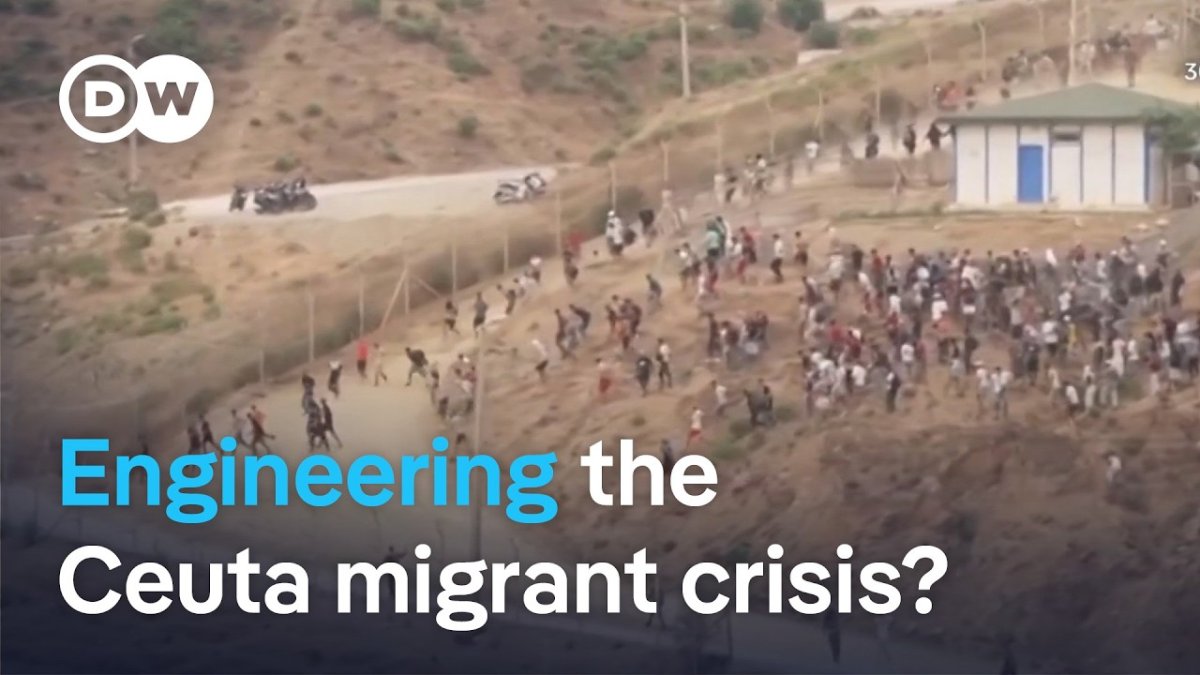
The Story Unfolds
Ceuta leader Juan Jesús Vivas, the long-serving conservative mayor, described the events as an atrocity with 88 bodies in the morgue and more across the border. He called the crossing fundamentally an attack on Spain's territorial integrity, if not orchestrated then at least encouraged or permitted by Morocco. Local people viewed the incident as a violation of territorial integrity, drawing a direct parallel to May 2021 when Moroccan authorities loosened controls and allowed 10,000 people to cross in two days during a diplomatic standoff over Western Sahara.
One local official reported 862 unaccompanied minors remained in Ceuta as of Monday. Spanish intelligence assessed that the influx was not planned by Moroccan authorities, yet border surveillance dwindled to a minimum and was completely lifted late last week. The root cause traced to a hoax on social media following a Spanish Supreme Court ruling that migrants arriving by sea could not be summarily deported.
The surge hit Ceuta like a sudden storm, with local streets filling with families carrying bundles and children, turning quiet neighborhoods into crowded gathering points where residents struggled to move through their own markets and plazas. Spain responded by announcing a 500-meter containment barrier along the breakwater fence extending into the sea, a direct reaction to the chaos. Residents described daily routines shattered as schools and shops closed amid the influx, echoing the sudden disruptions Mexican border communities in Tijuana and Ciudad Juárez have faced during past surges when numbers overwhelmed local resources overnight.
The Morocco Question
Spanish defense minister Margarita Robles stated that neither Spain nor Morocco can look the other way when it comes to this tragedy and called on the Moroccan government to fully investigate. Spanish intelligence found that Morocco failed to stem the tide and in some cases facilitated passage. Moroccan officials rejected suggestions that Morocco should act as Europe's border guard. Analysts pointed to Spain's recent rapprochement with Algeria, Morocco's arch-enemy, as a possible trigger for reduced Moroccan cooperation at the border.
Ceuta leader Vivas noted that the 2021 precedent showed how quickly diplomatic friction could produce sudden surges when Rabat loosened controls during the Western Sahara dispute.
Moroccan officials pushed back against accusations of facilitation, insisting the events reflected broader migration pressures rather than deliberate policy. This back-and-forth mirrors debates in Mexico about whether neighboring states use border flows as leverage during diplomatic tensions, leaving communities on both sides to manage the human fallout from sudden policy shifts.
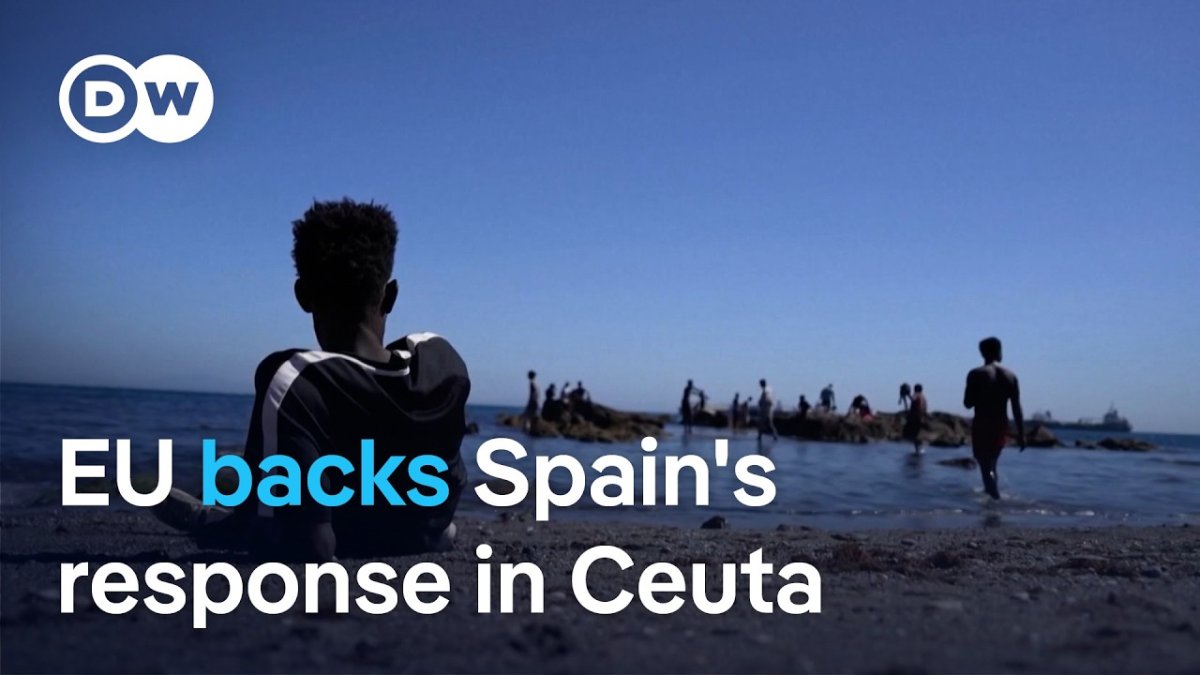
EU Divisions
An emergency video conference of EU interior ministers took place on Tuesday August 4. The 27 home affairs ministers backed Spain's immediate and efficient response. Italy suspended passport-free Schengen travel with Spain for one month at air and sea borders, even though Ceuta lies outside Schengen. A handful of EU countries called for Spain's suspension from the Schengen zone.
Twenty-two EU countries signed a letter organized by Italy and Denmark that implicitly criticized Spain's plan to regularize 500,000 undocumented migrants and asylum seekers, noting that nearly 1.2 million people have already applied. EU migration commissioner Magnus Brunner said Spain's regularization plan is definitely not a good signal for the rest of Europe, though he acknowledged it mainly concerns Latin Americans who speak the same language and share the same culture. France's interior minister Laurent Nuñez reported that ministers agreed Schengen itself was not the problem.
European Commission president Ursula von der Leyen proposed a five-point plan including early-warning systems, pre-frontier intelligence, social media monitoring, and measures against malicious external actors engaged in foreign information manipulation. The EU foreign policy service is investigating possible Russian disinformation.
Spain's foreign minister José Manuel Albares described a "synchronised reactionary international effort" that quickly amplified what was happening, spreading lies and fake news about the integrity of the Schengen area and about Spain's actions, with some falsehoods echoed by European governments themselves. He noted that Spain currently has the lowest number of irregular entries on the Mediterranean route, while Italy has the highest.
These divisions highlight how quickly migration crises can fracture European unity, much as similar debates over enforcement and regularization have split opinions across Latin American capitals when large-scale movements test regional cooperation and shared cultural ties.
Mexican Context
The Ceuta events mirror patterns long familiar along the US-Mexico border, where social media hoaxes have repeatedly triggered mass crossings, militarized responses, family separations, and surges of unaccompanied minors. Mexican institutions such as the Guardia Nacional and INM have faced similar accusations of using migration flows as leverage during diplomatic tensions with the United States. The question of whether a neighboring state permits or encourages a border surge to gain political advantage resonates directly with debates in Mexico City and along the northern border states.
Commissioner Brunner's explicit reference to Spain's regularization plan being mainly about Latin Americans underscores how language and cultural ties shape migration policy on both sides of the Atlantic. Far-right and nationalist parties in Europe and Mexico have exploited these crises to push stricter enforcement measures.
The transatlantic connections are unmistakable: Frontex data showed 178,000 irregular border crossings across the EU in 2025, down 26 percent from the previous year and the lowest since 2021, yet the sudden Ceuta surge demonstrated how quickly numbers can spike when controls shift. The same dynamics of leverage, disinformation, and family separation continue to shape daily life in colonias from Tijuana to Matamoros, where residents watch regional talks for signs of stability or renewed pressure.
Impact on Migrant Families
Mohamed Hatri, 23, a Moroccan who stayed in Ceuta, said Moroccan authorities closed everything down to force returns, yet he and others planned to remain whether hungry or not. Ashraf, 28, another Moroccan, described swimming past bodies in the sea after Moroccan police pushed people toward the water and told them to swim. A mother searched Ceuta for days for her children aged 13 and 16 who followed her by plunging into the sea.
These individual accounts reflect the human cost borne by families separated during sudden border surges, a reality repeated in Mexican communities where parents and children have been divided at the US border during enforcement operations.
The human cost borne by those who crossed and those left searching reflects the same reality repeated in Latin American border towns, where families navigate hunger, fear, and uncertainty while officials debate larger geopolitical questions far from the immediate pain on the ground.
Life in Ceuta During the Crisis
Inside the enclave, the DW News report showed migrants left in limbo, many sleeping rough on the beach or near Ceuta's mosques, while the Red Cross distributed food to hundreds of people who had arrived from Morocco. The city's temporary migrant center reached full capacity within days, leaving families and children in makeshift shelters with no clear timeline for what would come next. Residents of the autonomous city of 84,000 described weeks of disruption compressed into a few days, with daily routines interrupted and local services stretched to their limits.
Some migrants remained determined not to return, even as authorities closed shops and services to encourage departures. The DW report also documented growing calls among some residents for a stronger military presence along the border, a debate that echoes similar demands heard in Mexican border cities during periods of mass migration. Anti-immigrant political groups across Europe quickly seized on the images from Ceuta to argue for stricter enforcement, a pattern Mexican observers have watched unfold along the US-Mexico border as well.
What to Watch For
The EU's five-point plan will test whether early-warning systems and social media monitoring can prevent future hoaxes. Spain-Morocco relations remain under strain. Any shift in Moroccan cooperation could affect flows toward the Canary Islands and mainland Spain.
For Mexican readers, the Ceuta crisis demonstrates how quickly a neighbor's border policy can generate humanitarian emergencies and political divisions that reach far beyond the immediate frontier. The same dynamics of leverage, disinformation, and family separation continue to shape daily life in border colonias from Tijuana to Matamoros.
For families on both sides of the Atlantic, the lesson of Ceuta is that borders are never just lines on a map. They are places where policy decisions, social media rumors, and diplomatic rivalries collide with the hopes of ordinary people seeking safety and opportunity. As European leaders debate early-warning systems and as Madrid and Rabat manage a delicate relationship, Mexican communities will keep watching — because the same forces that turned Ceuta into a flashpoint this week have shaped life along their own northern frontier for generations.
By Rosa Martinez, Staff Writer
This article was produced with AI-assisted research and editorial support. Reporting is based on sources cited in the article.
What's Your Reaction?
 Like
0
Like
0
 Dislike
0
Dislike
0
 Love
0
Love
0
 Funny
0
Funny
0
 Wow
0
Wow
0
 Sad
0
Sad
0
 Angry
0
Angry
0

Latin America/Andes Correspondent at Global1.News. Based in Bogota, covering politics, environment, energy, and social movements across the Andean region. Passionate about environmental journalism and communities protecting their land.














Comments (0)