
Ukraine's Drone War on Russia's 'Amazon'
In a recent BBC News report, military analysts examined Ukraine's intensifying drone campaign against Wildberries, the vast Russian online retailer whose logistics network has become one of the most visible battlegrounds of the war's economic front.
In a recent BBC News report, military analysts examined Ukraine's intensifying drone campaign against Wildberries, the vast Russian online retailer whose logistics network has become one of the most visible battlegrounds of the war's economic front.
Ukraine's Drone War on Russia's 'Amazon'
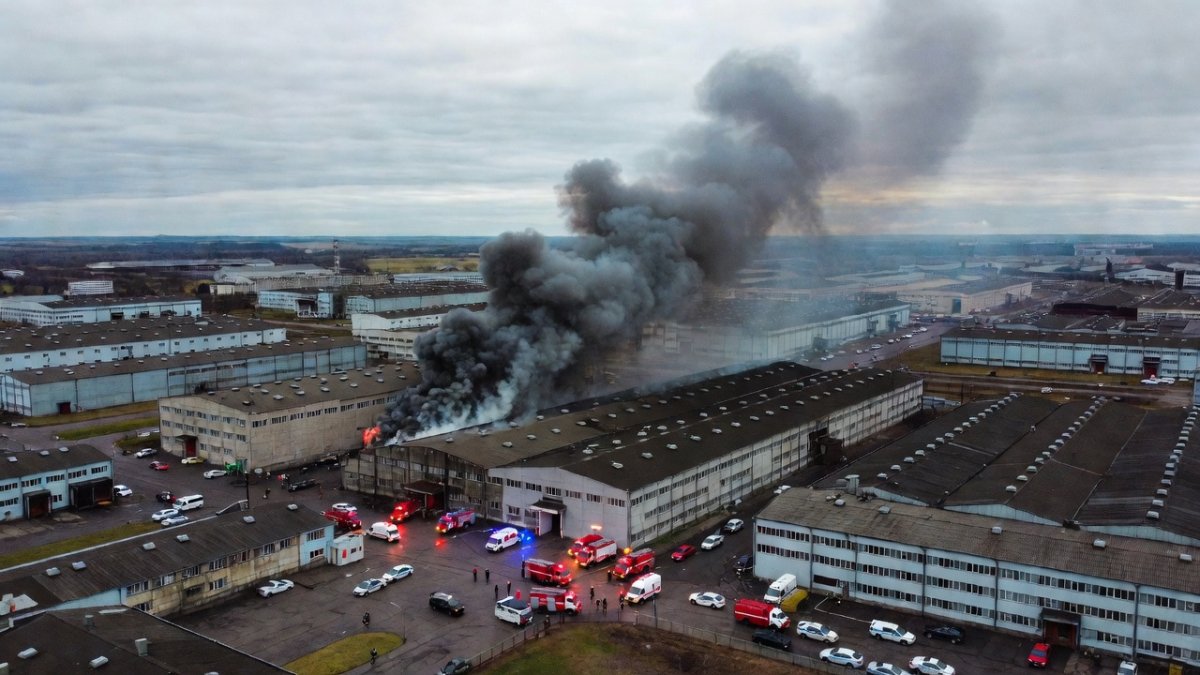
Moscow – 5 August 2026 — Ukrainian drones struck multiple warehouse complexes across Russia overnight into Tuesday, killing at least five people at a logistics facility in the Moscow region town of Chekhov and igniting fires at Wildberries depots in the Leningrad and Tver regions, according to Russian officials. The attacks came as Russia's Defense Ministry reported intercepting 320 Ukrainian drones across the country and annexed Crimea between Monday night and Tuesday morning.
A Campaign of Attrition Against 'Russia's Amazon'
Since 18 July Ukraine has struck Wildberries facilities in at least 15 cities and regions, from Elektrostal east of Moscow to Krasnodar in the south, from St Petersburg's Shushary district to Volgograd on the Volga. The campaign opened on 18 July with strikes on warehouses in Elektrostal in Moscow Oblast and Kotovsk in Tambov Oblast. Russian officials said those attacks killed eight people and wounded 62. Wildberries remains Russia's largest online retailer, controlling roughly 45 percent of the online retail market ahead of rival Ozon at 32 percent. Ukrainian officials describe the campaign as long-range sanctions against the logistics backbone of the Russian war economy. Governor Andrei Vorobyov of the Moscow region and Tambov region governor Evgeniy Pervyshov have both issued statements confirming the initial casualties and damage. The pattern shows repeated targeting of large distribution hubs that handle millions of parcels daily, many of which Ukrainian statements link to the movement of components that support Russian military production. Regional authorities across central and southern Russia have documented fires and structural damage at multiple sites, while the Defense Ministry continues to report nightly interceptions of incoming drones. The breadth of the strikes has forced Wildberries to reassess its entire domestic storage footprint.
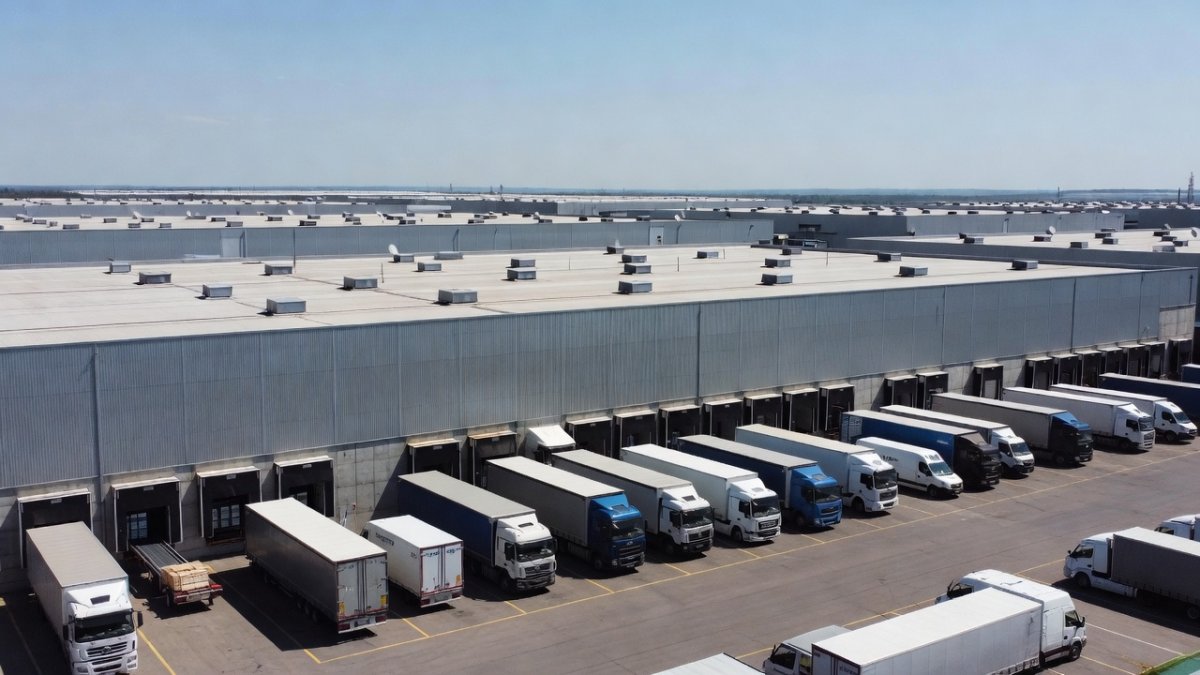
Tuesday's strikes hit a Wildberries warehouse in Krasny Bor in the Leningrad region, a facility of roughly 154,000 square metres, where the company said the depot was evacuated in advance and nobody was injured. Retailer Lenta confirmed a fire at a neighbouring logistics centre and one employee injured. In the Tver region northwest of Moscow, acting governor Vitaly Korolyov reported damage to another Wildberries facility. This was the second consecutive night of multi-region strikes, following the 3 August hit on one of the company's largest warehouses, around 171,900 square metres, in the Sobinsky District of Vladimir Oblast. Russian air defence units claimed to have downed dozens of drones during both nights, yet several facilities still sustained direct hits that set stored merchandise ablaze. The repeated nature of the attacks has prompted Wildberries to accelerate contingency planning, including the relocation of some operations beyond Russia's borders.
The Deadliest Night: Chekhov and a Rising Toll
The warehouse complex in Chekhov, south of Moscow, saw the highest single-night toll when Governor Andrei Vorobyov said five people were killed and ten injured in a drone attack. The building is understood to be rented by several companies including Wildberries and electronics retailer M.video. On 18 July seven night-shift workers died at the Kotovsk facility in the Tambov region. Governor Pervyshov wrote that seven people working the night shift died on the spot and that 28 drones were shot down on approach. The 62 total injuries reported in the opening strikes included workers treated for burns and shrapnel wounds at regional hospitals. Wildberries CEO Tatyana Kim, one of Russia's first female billionaires and the country's richest woman, called it a terrible night for Russia and the company. Russian authorities in dozens of regions have restricted filming of the aftermath of drone attacks, with several civilians detained for sharing footage on social media. These measures reflect official concern that graphic images could further erode public confidence in air defence capabilities. The human cost has been concentrated among night-shift warehouse staff, many of whom are low-paid contract workers with limited access to shelter during alerts.
By late July at least nine people had reportedly died as a result of the various strikes, according to reports compiled from regional officials. The strikes have also injured workers across multiple regions, with some hospitals treating shrapnel wounds. Russia has meanwhile continued its own strikes on Ukrainian cities. On the same night two children and an elderly woman were killed in Russian guided bomb strikes on the northern city of Sumy, according to regional authorities. The pattern of civilian casualties on both sides underscores the expanding reach of long-range systems into rear areas previously considered relatively safe. Russian regional governors have issued increasingly detailed casualty statements, a departure from earlier reticence that suggests the scale of losses can no longer be minimised.
Why Wildberries? The Military-Economic Calculus
President Volodymyr Zelensky said the strikes were aimed at eliminating Wildberries logistics centres involved in supplying the Russian army with drone components, navigation equipment, and other military hardware. He described the targets as major logistics facilities used to supply sanctioned components for drone production. Ukrainian officials say the primary goal is to disrupt Russian military logistics and supply chains, with a secondary goal of damaging the economy and public support for the war. Serhii Kuzan, chairman of the Ukrainian Security and Cooperation Centre, told the BBC that Wildberries was a vital component of Russian logistics and that its website had been used by volunteers to purchase military equipment including walkie-talkies, body armour and drone components. Ukraine has accused Wildberries of contributing to the war effort, noting that the company publicly lists drone components and body armour for sale on its website. These statements frame the campaign as an extension of economic pressure rather than purely battlefield action.
On 27 July Denys Shtilerman, co-founder of the Fire Point drone company, argued that Wildberries' partnership with Russia's state-controlled VTB Bank made it a prime strategic target. He described the retailer as the largest borrower in Russia whose collapse could threaten several banks including VTB. The merged RWB group combining Wildberries with advertising company Russ was valued at about $12.6 billion by Forbes Russia in 2026. The company was in 2022 the largest taxpayer in Russia, and both it and CEO Tatyana Kim have been subjected to international sanctions. The financial linkages illustrate how deeply integrated the retailer has become with state financial structures that support the broader war economy.
Economic Shockwaves and the Sellers' Fury
Moscow-based research firm Data Insight estimated merchandise losses alone at 170 billion roubles, roughly $2.2 billion, within the first week. Forbes Russia reported the strikes have wiped out a significant portion of the e-commerce giant's storage capacity and cost third-party merchants hundreds of billions of rubles. Wildberries' own decision on 7 July, eleven days before the first strikes, to update its terms and conditions stating it could not be held liable for goods destroyed in force majeure events including drone strikes, left sellers un-compensated as their merchandise burned. Social media footage showed Russian entrepreneurs in tears as their inventories and livelihoods went up in flames. The restoration cost for just the first two facilities could reach 35.8 billion rubles, $457 million, according to experts cited by Kommersant, which insurance companies would probably not fully cover. These figures highlight the direct financial pressure placed on small and medium-sized sellers who rely on Wildberries marketplaces.
On 3 August the company imposed a ban on carrying video cameras, including smartphones, into its warehouse premises, ostensibly to protect employees but widely seen as an effort to prevent workers from documenting conditions. The company has more than 200 warehouses and logistics centres across Russia which are practically impossible to protect completely from cheap Ukrainian drones with expensive Russian air defence systems. Wildberries has announced plans to build 260,000 square metres of warehouse space in Kazakhstan, with construction expected to finish in early 2027. This move signals a strategic shift toward diversification outside Russian territory amid sustained vulnerability at home.
Analysis and Implications
The Wildberries campaign forms part of Ukraine's broader deep-strike strategy, which Kyiv calls long-range sanctions, targeting oil refineries, fuel depots and logistics nodes to raise the cost of war for Moscow. Earlier this year Kyiv said nearly 43 percent of Russia's oil refining capacity had been disabled, a figure the BBC has not independently verified. President Vladimir Putin made a rare admission in June that fuel shortages had been caused by Ukrainian attacks and signed into law a bill aimed at boosting domestic fuel supplies. Analysts suggest the psychological dimension may be as significant as the economic one, bringing the war into the daily lives of ordinary Russians who shop on Wildberries and sell through its marketplace. The campaign could indicate a Ukrainian effort to destabilise the Russian home front and banking system without engaging front-line forces. Russia has historically targeted similar civilian logistics facilities in Ukraine, including its postal service and electronics distributors, which Ukrainian officials cite as precedent. This suggests the strikes will continue as long as Kyiv judges them effective, while Moscow faces hard choices about defending thousands of square kilometres of civilian infrastructure against low-cost drones.
For ordinary Russians, the fire-lit skies over warehouse districts have made the war unmistakably personal. For the Kremlin, the e-commerce empire that symbolised a modern consumer economy has become a reminder that no part of the country is beyond reach. For Ukraine, the campaign offers a rare avenue of leverage, one that carries real humanitarian costs and risks, but that Kyiv clearly believes is worth the price.
By Irina Volkov, Staff Writer
This article was produced with AI-assisted research and editorial support. Reporting is based on sources cited in the article.
What's Your Reaction?
 Like
0
Like
0
 Dislike
0
Dislike
0
 Love
0
Love
0
 Funny
0
Funny
0
 Wow
0
Wow
0
 Sad
0
Sad
0
 Angry
0
Angry
0

Russia/Eastern Europe Correspondent at Global1.News. Covering Russian politics, energy, security, and the shifting dynamics of the post-Soviet space. Provides clear-eyed analysis on one of the world's most opaque regions.













Comments (0)