
Canada Condemns Israel's Decision Not to Investigate Killing of Canadian Aid Worker
Canada condemned Israel's decision not to pursue a criminal investigation into the 2024 World Central Kitchen strike that killed Quebec aid worker Jacob Flickinger and six others. Minister Anita Anand called the move 'unacceptable'; a Canada-Australia-UK statement called it 'shameful.'
In a recent CBC News report, the international community has reacted with outrage after Israel's military prosecutor announced it would not pursue criminal investigations into the April 2024 airstrikes that killed seven World Central Kitchen (WCK) aid workers in Gaza, including Canadian Jacob Flickinger. The decision, announced on World Humanitarian Day, has drawn sharp condemnation from Ottawa, Canberra, and London, with Foreign Affairs Minister Anita Anand calling the move "unacceptable" and a joint statement from three allied nations labelling it "shameful." For Canadians, the case raises profound questions about accountability, the protection of humanitarian workers in conflict zones, and the limits of allied pressure on Israel.
IDF Decision Not to Investigate Killing of Canadian Aid Worker 'Unacceptable': Anand
Ottawa, Ontario – August 21, 2026 — The Israeli military's decision to close the file on the deaths of seven World Central Kitchen aid workers, including Quebec-born Jacob Flickinger, without criminal charges has triggered a diplomatic firestorm that reached Parliament Hill this week. Foreign Affairs Minister Anita Anand issued a blistering statement on Thursday, demanding answers for the families who have waited more than two years for justice.
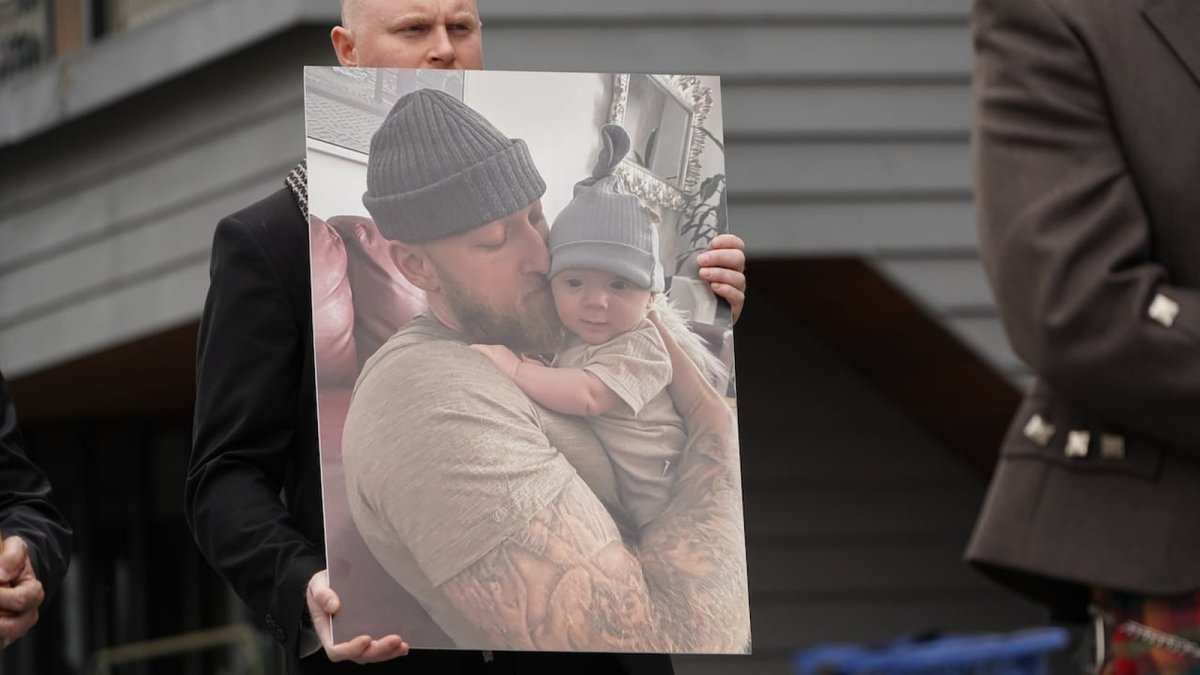
Anand's Statement and Canada's Position
Minister Anand's statement on Thursday was unequivocal. "Serious failures were identified in the conduct of the strike, and closing the case without further accountability leaves their families without the answers they have sought for more than two years," she said. The minister, who serves in Prime Minister Mark Carney's government, stressed that humanitarian workers in conflict zones must be protected under international law. "Canada expects international humanitarian law to be upheld and will continue pressing for a full accounting of what happened, along with justice for the seven workers who were killed and their families," Anand added.
The statement marked a significant escalation in tone from Ottawa. After the April 2024 strikes, the Canadian government called for an investigation that went beyond the Israeli military itself — then-prime minister Justin Trudeau said Canada needed "a fully open, transparent, independent and rapid investigation into what happened." Anand's latest words go further, framing the closure of the case as a denial of accountability to the families of all seven workers.
Joint Statement from Canada, Australia, and the United Kingdom
On Friday, the diplomatic pressure intensified. Canada, Australia, and the United Kingdom issued a rare joint statement, published on GOV.UK, that pulled no punches. "The announcement by the IDF on 19 August 2026 that it would not pursue criminal investigations into this strike, without further explanation, is shameful," the three nations declared. The statement took particular issue with the timing of the Israeli announcement, noting that "announcing this decision on World Humanitarian Day, while the world honoured the courage and sacrifice of humanitarians, was particularly egregious."
The joint statement concluded that "this decision is both too little, and too late," and affirmed that "the victims of this incident and their families deserve justice and accountability, and we will continue to seek answers on their behalf." The three countries also drew attention to the broader context of the Gaza conflict, noting that "the World Central Kitchen attack is one of countless incidents in Gaza where there has been no accountability."
The April 2024 Strike: A Detailed Recollection
The events that led to this diplomatic crisis began on April 1, 2024, when Israeli drone strikes hit a WCK convoy as it was delivering food to civilians in Gaza. The vehicles, which bore the charity's logo on their roofs and were visible from the air, were left incinerated and mangled. The attack killed seven humanitarian workers: Jacob Flickinger, 33, a dual US-Canadian citizen born in Quebec; Zomi Frankcom of Australia; Damian Soból of Poland; John Chapman, James Henderson, and James Kirby of the United Kingdom; and Saifeddin Issam Ayad Abutaha, a Palestinian.
Flickinger's death resonated deeply across Canada. A former soldier who served 11 years in the Canadian Armed Forces, he was a reservist with Le Régiment de la Chaudière and deployed to Afghanistan as a rifleman before joining the regular force with the Royal 22e Régiment. At the time of his death, he was the father of an 18-month-old son, Jasper. His funeral was held in Saint-Georges, Que., where his father John Flickinger led the procession into the town's silver Catholic church, gripping the urn with his son's ashes. Friends remembered him as a lover of the outdoors who ran survival training retreats and was deeply involved in mountaineering and rock climbing.

The IDF's Justification and Its Flaws
In its statement on Wednesday, the Israeli military claimed that individuals in the vehicles were mistakenly identified as armed Hamas operatives and that the convoy had deviated from the previously coordinated route. The military concluded that commanders' decisions "did not raise reasonable suspicion of criminal misconduct." This explanation, however, contradicts the IDF's own admissions at the time of the attack. In April 2024, the military described the incident as a serious mistake and failure, removing two officers from their positions and reprimanding three others.
World Central Kitchen has categorically rejected the military's latest account. In a response issued this week, the charity said the military's version of events "conflates different timelines and events, muddies the story and shifts the blame." WCK called for an independent investigation, stating that "there has never been any excuse or justification for the attacks, and there is nothing in this account that does so. The decision is inconsistent with the full truth and deeply offensive."
International Reactions: Allies Express Outrage
The Israeli decision has provoked strong reactions from other affected nations. Australian Foreign Minister Penny Wong summoned Israel's ambassador to Australia, Hillel Newman, and directed Australia's ambassador to Israel to convey the government's views directly. Wong noted that the IDF's own admissions confirmed "serious failures to follow IDF procedures, mistaken identification and errors in decision-making," and called the decision "especially insulting" given its timing on World Humanitarian Day. Australian relatives of Zomi Frankcom said she deserved more than an "internal, opaque process that ends with a short statement by the Israeli military absolving their soldiers of criminal wrongdoing."
The United Kingdom's Foreign Office said it was "appalled and angry" for the families of the three British victims. Poland's government expressed disappointment and called for Israeli authorities to co-operate with Polish investigations into the death of Damian Soból. Meanwhile, Israel's ambassador to Australia defended the decision, but the weight of allied criticism suggests a significant erosion of trust between Israel and its closest partners.
Canadian Domestic Pressures and Political Context
Within Canada, the government of Prime Minister Mark Carney faces mounting pressure to take concrete action. The Canadians for Justice and Peace in the Middle East (CJPME) issued a statement on Wednesday, before Anand's response, criticising Carney's silence on the findings. The group warned that inaction could "allow Israel to get away with the murder of a Canadian aid worker, with no consequences."
The case also raises questions about Canada's broader approach to the Gaza conflict. Experts declared a famine in Gaza in August 2025, and the joint statement from Canada, Australia, and the UK noted that 186 humanitarian workers were killed in 2025 alone, making Gaza "the deadliest place to deliver aid." Despite the fragile ceasefire currently in place, the statement emphasised that "Israel must comply with its obligations under international humanitarian law, and must do more to ensure that humanitarian staff can carry out their work safely."
A Contrast in Accountability: The Hind Rajab Case
Adding to the controversy, the IDF announced on Wednesday that it had opened a criminal investigation into the 2024 killing of five-year-old Hind Rajab and six family members, as well as the fatal shooting of 15 paramedics in 2025. The contrast between the IDF's decision to investigate those deaths and its refusal to pursue criminal action in the WCK case has drawn attention from observers, and it raises serious questions for Canadian readers about how accountability is applied under international humanitarian law.
What This Means for Canada-Israel Relations
The implications of this decision extend far beyond the families of the seven victims. For Canada, the case tests the limits of diplomatic influence with a key ally in the Middle East. Minister Anand's strong language suggests Ottawa is prepared to keep pressing the matter, and the joint statement with Australia and the UK signals a co-ordinated allied approach that could have lasting effects on Israel's standing within the international community.
For Canadians, the death of Jacob Flickinger serves as a sobering reminder of the risks faced by humanitarian workers in conflict zones. His service in the Canadian Armed Forces and his subsequent work delivering aid in Gaza embody the values of service and compassion that Canadians hold dear. The failure to secure accountability for his death, and for the deaths of his six colleagues, represents a profound injustice that will not be easily forgotten. As the joint statement affirmed, the families of the victims "deserve justice and accountability, and we will continue to seek answers on their behalf." Whether those answers will ever come remains an open and painful question.
By Alex Thompson, Staff Writer
This article was produced with AI-assisted research and editorial support. Reporting is based on sources cited in the article.
What's Your Reaction?
 Like
0
Like
0
 Dislike
0
Dislike
0
 Love
0
Love
0
 Funny
0
Funny
0
 Wow
0
Wow
0
 Sad
0
Sad
0
 Angry
0
Angry
0
Canada Correspondent at Global1.News. Based in Toronto, covering Canadian politics, energy, trade, and US-Canada relations. Provides the Canadian perspective on North American and global affairs.










Comments (0)