
Argentina's Stolen Children: The Grandmothers' 49-Year Fight for Truth Faces a New Political Threat
In a new DW Documentary report released this week, the world confronts one of Latin America's most harrowing chapters: the systematic theft of babies born to political prisoners during Argentina's military dictatorship. The film, titled "Argentina's stolen children - The crimes of the military dictatorship," traces how from March 1976, a junta led by General Jorge Rafael Videla abducted and murdered some 30,000 people — and quietly handed their newborns to military families.
In a new DW Documentary report released this week, the world confronts one of Latin America's most harrowing chapters: the systematic theft of babies born to political prisoners during Argentina's military dictatorship. The film, titled "Argentina's stolen children - The crimes of the military dictatorship," traces how from March 1976, a junta led by General Jorge Rafael Videla abducted and murdered some 30,000 people — and quietly handed their newborns to military families. For the Grandmothers of Plaza de Mayo, the search for these stolen grandchildren has become a 49-year crusade that now faces a new threat: budget cuts from President Javier Milei's government.
Argentina's Stolen Children: The Grandmothers' 49-Year Fight for Truth Faces a New Political Threat
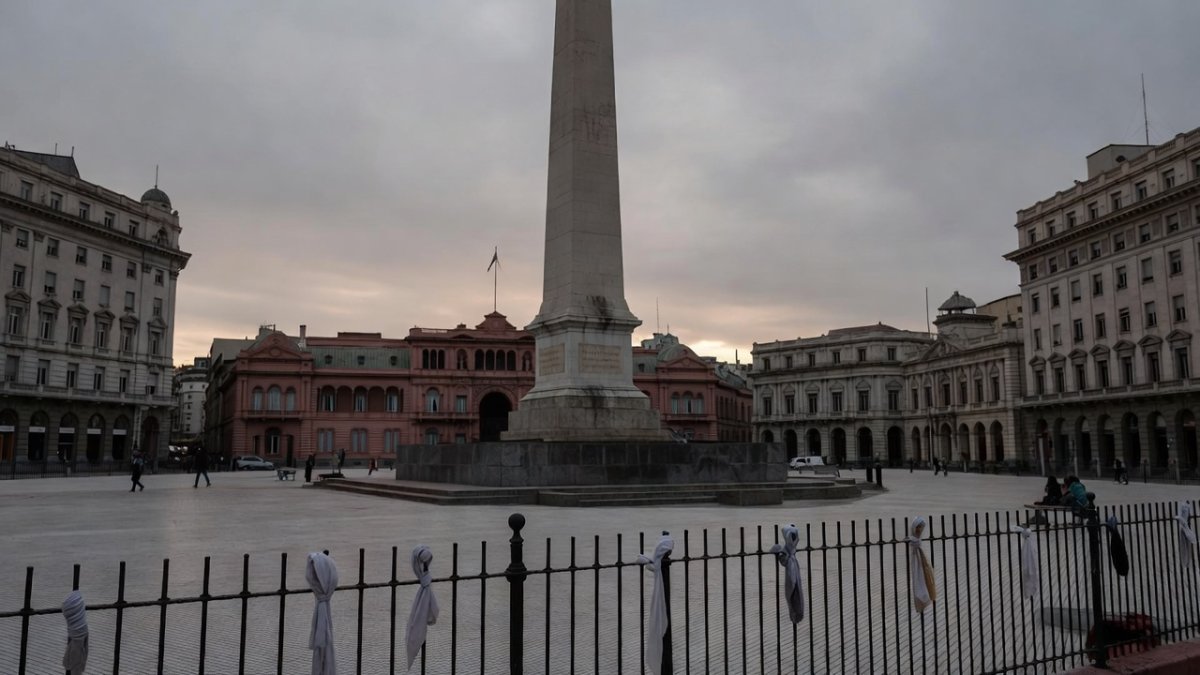
Buenos Aires, Argentina — The white headscarves still flutter in the wind at Plaza de Mayo, but the women wearing them are older now, their steps slower, their determination undimmed. In the DW Documentary report, viewers see Estela de Carlotto, the 95-year-old president of the Grandmothers of Plaza de Mayo, walking through the same square where she first marched in 1977, demanding to know what happened to her daughter Laura and her grandson Guido, born in captivity. Her own story is searing proof of the stakes: her daughter Laura was disappeared while pregnant, and it took 36 years — until 2014 — before she finally held her grandson Guido in her arms. The organization she leads has restored 140 identities since the dictatorship fell in 1983.
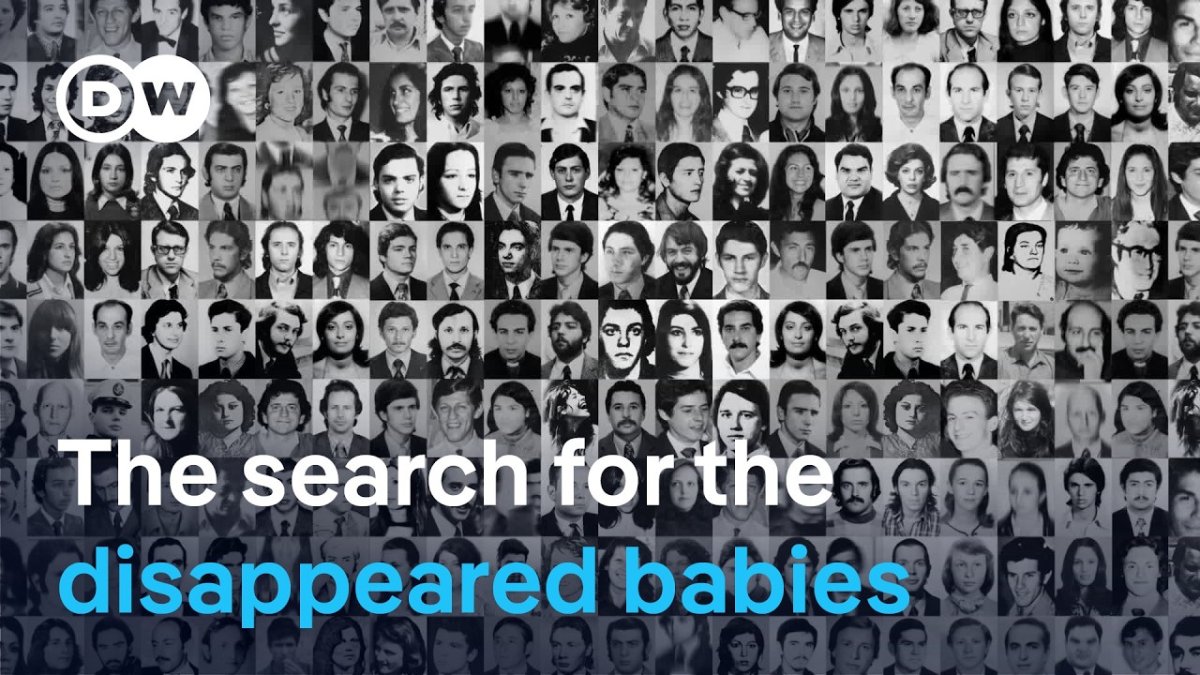
The Crime: How a Dictatorship Stole Its Children
On March 24, 1976, Argentina's armed forces seized power in a coup that installed a military junta under General Jorge Rafael Videla. The regime that followed was brutal and systematic: an estimated 30,000 people were abducted, tortured, and murdered by security forces, becoming known as "los desaparecidos" — the disappeared. But the junta's cruelty did not end with the adults. The regime operated a "Plan Sistemático de Apropiación de Menores," a systematic plan to appropriate babies born to detained and disappeared political prisoners. Pregnant women were held in clandestine detention centers until they gave birth, then their newborns were taken and given to military families or adopted under false identities.
Rights groups estimate that approximately 400 babies were stolen in this manner. Today, an estimated 300 people may still be living under false identities, unaware of their true origins. The machinery of appropriation was chillingly bureaucratic: birth certificates were falsified, medical records altered, and children were registered as the biological offspring of their captors. Historians and prosecutors have documented how internal military correspondence described the stolen children as "war booty" — a phrase that still chills investigators today. The dictatorship's machinery of appropriation was chillingly bureaucratic: birth certificates were falsified, medical records altered, and children were registered as the biological offspring of their captors.
The Grandmothers Who Refused to Forget
The Grandmothers of Plaza de Mayo (Abuelas de Plaza de Mayo) was founded in 1977, just one year after the coup, by a group of women who defied the dictatorship's terror to demand information about their missing children and grandchildren. Their symbol became the white headscarf (pañuelo blanco), worn as a sign of resistance and a visual plea for truth. The women marched every Thursday in Buenos Aires' Plaza de Mayo, facing down armed soldiers and the threat of their own disappearance. Estela de Carlotto, who has served as the organization's longtime president, became the face of this struggle — a grandmother who turned personal grief into a national movement for justice.
The documentary highlights how these women pioneered a forensic and genetic approach to human rights that would inspire the world. They pressured the government to create the National Genetic Data Bank (Banco Nacional de Datos Genéticos, BNDG) in 1987, which holds DNA samples from families of the disappeared. They also worked with CONADI (National Commission for the Right to Identity), the state body that investigates identity cases and collaborates with the grandmothers to restore stolen identities. Across Argentina, the bank's work has produced countless emotional reunions: a middle-aged man learning, through a simple DNA test, that the family he grew up with was not his biological family — and that his real grandparents had been searching for him for decades.
Justice and the Search for Identity
Justice has been slow but relentless. In 2012, a federal tribunal sentenced former dictator Jorge Videla to 50 years in prison for the systematic theft of babies, and former general Reynaldo Bignone to 15 years. Both died in prison — Videla in 2013 and Bignone in 2018 — but their convictions established a legal precedent that crimes against humanity cannot be forgiven or forgotten. Argentina's "truth and justice" process has continued through the courts, with trials for crimes against humanity proceeding under successive governments, each verdict reinforcing the principle that state terror will not go unpunished.
The search for stolen grandchildren has yielded remarkable results. In July 2025, the grandmothers announced the identification of the 140th stolen grandchild — a 48-year-old man who had lived his entire life under a false identity. The identification was made possible through the BNDG's DNA database, which has become a model for human rights investigations worldwide. Yet the work is far from complete: more than 300 grandchildren are still being sought, and each year brings new inquiries from adults who suspect their origins may be different from what they were told. Many of those inquiries come from adults prompted by a family secret revealed late in life — a deathbed confession, a chance remark, a growing suspicion that the identity they were given is not their own.
Latin America's Memory Under Threat
The 50th anniversary of the coup, marked in March 2026, should have been a moment of national reflection. Instead, it became a flashpoint. At the anniversary march, rights groups including the Abuelas and the Mothers of Plaza de Mayo issued sharp criticism of President Javier Milei's government, which they accuse of abandoning the state's historical commitment to memory, truth, and justice. International press reports documented that the Milei administration had stopped funding various human rights organizations, including the Grandmothers of Plaza de Mayo — a move that the grandmothers called "an attack on the very fabric of Argentine democracy."
The situation has deteriorated further in recent months. In April 2026, reports confirmed that the Milei government was not supporting a campaign to restore dictatorship-era identities, even as the Abuelas received a record-high number of inquiries from people seeking to know their origins. Then, in May 2026, the Abuelas denounced that the National Genetic Data Bank was in danger due to "budget strangulation" from government cuts. The organization warned that the search for stolen babies was at risk and called on Congress and the Judiciary to guarantee the bank's functioning urgently. The DW Documentary captures the irony: just as science and memory are converging to deliver justice, political will is retreating.
What Argentina's Fight Means for Mexico
For those of us in Mexico, Argentina's struggle resonates with painful familiarity. Mexico faces its own forced disappearance crisis — more than 110,000 people have disappeared since 2006, according to official registries, and search collectives across the country work with the Comisión Nacional de Búsqueda to locate their loved ones. The case of the 43 students from Ayotzinapa, disappeared in 2014, remains an open wound, and families across Mexico have adopted the same methods pioneered by the Abuelas: DNA banks, public marches, and relentless demands for state accountability. The white headscarf has become a symbol of solidarity that transcends borders, worn by Mexican mothers who march in the Zócalo just as their Argentine counterparts marched in Plaza de Mayo.
The DW Documentary makes clear that the fight for identity is not just an Argentine story — it is a Latin American story. The techniques developed by the Abuelas and the BNDG have been exported to Colombia, Peru, and Mexico, where forensic genetics is now a standard tool in human rights investigations. But the documentary also warns that these gains are fragile. When governments defund human rights institutions, they do not just cut budgets — they cut the threads that hold together a society's memory and its commitment to justice. For Mexican search collectives, the Argentine grandmothers' struggle is both an inspiration and a warning: the fight for truth requires eternal vigilance.
What to Watch For
The coming months will be critical. The Abuelas have called on Argentina's Congress and Judiciary to intervene to protect the National Genetic Data Bank, and human rights organizations are mobilizing internationally to pressure the Milei government to reverse its funding cuts. The grandmothers have also announced that they are preparing to launch a new public campaign to encourage people with doubts about their origins to come forward and submit DNA samples — a campaign that, without state support, will rely on private donations and international solidarity. Each new identification is a victory, but with more than 300 grandchildren still missing, the work is far from over.
The documentary's most haunting images are the ones that linger after the credits: the hundreds of grandmothers who died without ever knowing what happened to their grandchildren, and the grandchildren themselves — now middle-aged — still waiting to learn who they truly are. For the Abuelas, the message is simple and enduring: the search for stolen children is not just about the past. It is about the future, about a society that refuses to forget, and about the simple, radical idea that every person has the right to know who they are. For Argentina, for Mexico, and for all of Latin America, that idea remains worth fighting for.
By Rosa Martinez, Staff Writer
This article was produced with AI-assisted research and editorial support. Reporting is based on sources cited in the article.
What's Your Reaction?
 Like
0
Like
0
 Dislike
0
Dislike
0
 Love
0
Love
0
 Funny
0
Funny
0
 Wow
0
Wow
0
 Sad
0
Sad
0
 Angry
0
Angry
0
Latin America/Andes Correspondent at Global1.News. Based in Bogota, covering politics, environment, energy, and social movements across the Andean region. Passionate about environmental journalism and communities protecting their land.














Comments (0)