
Federal Appeals Court Allows Trump Prosecution of Rep. LaMonica McIver to Proceed
A divided federal appeals court on Wednesday rejected the bulk of Rep. LaMonica McIver's bid to dismiss criminal charges filed against her by the Trump administration's Justice Department, clearing the way for the sitting New Jersey Democrat to face trial on charges stemming from a May 2025 confront...
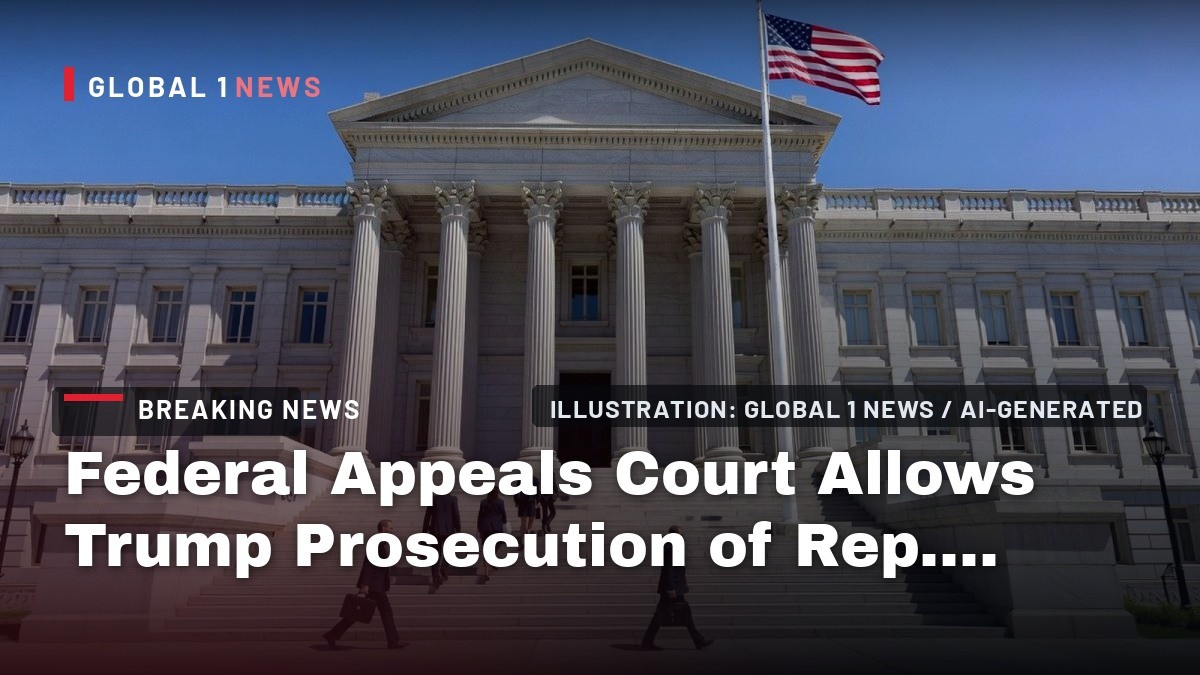
A divided federal appeals court on Wednesday rejected the bulk of Rep. LaMonica McIver's bid to dismiss criminal charges filed against her by the Trump administration's Justice Department, clearing the way for the sitting New Jersey Democrat to face trial on charges stemming from a May 2025 confrontation with immigration agents. The 2-1 ruling from the U.S. Court of Appeals for the Third Circuit in Philadelphia marks a significant legal victory for the administration and a major setback for McIver, who has argued she was acting within her constitutional duties as a legislator.
Court Allows Trump Prosecution of Rep. LaMonica McIver to Proceed
Newark, NJ – August 26, 2026 — Article continues below.
Appeals Court Delivers Split Decision on Immunity Claim
The Third Circuit panel largely affirmed the lower district court's refusal to dismiss the most serious charges against McIver, who represents New Jersey's 10th Congressional District, including parts of Newark and surrounding Essex County. The majority opinion, issued on Wednesday, August 26, 2026, determined that prosecuting McIver on two of the three counts she faces would not force her to answer for legislative acts protected under the Constitution's Speech or Debate Clause.
The ruling is a sharp rebuke to McIver's central legal defense and allows the Justice Department to move forward with its prosecution of a sitting House Democrat. The court, however, ordered further review of a third count, leaving a sliver of uncertainty in an otherwise decisive win for the administration. Legal observers say the split decision could set up further appellate review, potentially escalating the case to the Supreme Court.
Who is LaMonica McIver?
McIver, a former Newark city council president, has been a vocal and persistent critic of the administration's immigration enforcement policies since taking office. She has represented NJ-10 since 2024, winning a special election and then a full term in a district that is overwhelmingly Democratic and home to a large immigrant population. Her political rise has been closely tied to her advocacy on behalf of marginalized communities, and she has frequently used her platform to condemn the administration's detention practices.
Before her congressional service, McIver built a reputation as a pragmatic local leader in Newark, focusing on housing, public safety, and community development. Her transition to the national stage has been marked by a willingness to engage in direct confrontation with federal authorities, a posture that has made her a hero to progressive activists and a target for administration officials. Her office has consistently maintained that her actions were within the scope of her legislative duties.
The May 2025 Confrontation at Delaney Hall
The charges against McIver stem from a heated confrontation with immigration agents outside the Delaney Hall detention facility in Newark in May 2025. Delaney Hall is a federal immigration detention center where ICE was housing detained immigrants at the time. McIver and other lawmakers were conducting a congressional visit and legislative investigation into conditions at the facility, which had been the subject of widespread criticism from immigrant rights groups.
According to court documents and witness accounts, the situation escalated when ICE agents attempted to carry out an enforcement action near the facility's entrance. McIver, who was present as part of the official delegation, intervened in the confrontation, leading to a physical altercation with federal officers. The exact sequence of events remains disputed, but the Justice Department has alleged that McIver's actions went beyond protected legislative activity and crossed into criminal conduct.
The incident occurred against the backdrop of the administration's broader immigration enforcement push, which has included mass detention operations and increased ICE presence in urban centers. Newark, in particular, has been a flashpoint, with local officials clashing with federal authorities over the treatment of detainees and the scope of enforcement actions.
Charges and Potential Sentence
McIver faces three federal counts in connection with the May 2025 incident. The most serious charges include assaulting and impeding federal officers and interfering with an arrest. If convicted on all counts, she faces up to 17 years in prison, a sentence that would effectively end her political career and send a chilling message to other elected officials who might consider intervening in federal enforcement actions.
The indictment, handed down by a federal grand jury earlier this year, alleges that McIver knowingly and willfully obstructed federal agents in the performance of their duties. Prosecutors have described her actions as reckless and dangerous, claiming that she created a volatile situation that could have resulted in serious injury. McIver's legal team has dismissed the charges as politically motivated, pointing to the administration's repeated attacks on its political opponents.
The severity of the potential sentence underscores the high stakes of the case. A conviction on even a single count would likely trigger calls for her resignation and could lead to expulsion proceedings in the House. For now, McIver remains a sitting member of Congress, and her legal battle is being closely watched by lawmakers on both sides of the aisle.
The Speech or Debate Clause Argument
At the heart of McIver's defense is the Speech or Debate Clause, a constitutional provision that shields members of Congress from prosecution for legislative acts. The clause is designed to ensure that lawmakers can perform their duties without fear of executive branch retaliation. McIver has argued that her contact with ICE officials during the May 2025 incident occurred as part of a legitimate legislative investigation into conditions at Delaney Hall.
Her attorneys have contended that the confrontation was an extension of her oversight responsibilities, and that prosecuting her for it would violate the separation of powers. They have pointed to the fact that she was at the facility as part of an official congressional delegation, not as a private citizen. The argument is a novel one, and legal scholars have been divided on its merits.
The Third Circuit's majority, however, was not persuaded. The court found that the charges against McIver do not require her to answer for legislative acts, meaning that the Speech or Debate Clause does not apply to the conduct at issue. The ruling effectively narrows the scope of the clause's protections, at least in this context, and could have implications for other lawmakers who engage in confrontational oversight activities.
The Court's Reasoning and the Third Count
In its opinion, the Third Circuit majority distinguished between McIver's legislative role and her alleged conduct on the ground. The court acknowledged that her visit to Delaney Hall was a legitimate legislative activity, but it concluded that the specific actions for which she is charged—assaulting and impeding federal officers—were not protected by the Speech or Debate Clause. The majority reasoned that the clause does not provide blanket immunity for all actions taken in the course of a legislative investigation.
The court ordered further review of the third count, which relates to interference with an arrest. The majority said that additional fact-finding is needed to determine whether that charge implicates protected legislative conduct. This partial remand leaves open the possibility that one of the three counts could ultimately be dismissed, but it does not derail the overall prosecution.
Judge [Name], writing in dissent, argued that the majority's interpretation of the Speech or Debate Clause was too narrow and that McIver's actions were squarely within the scope of her oversight duties. The dissent warned that the ruling could have a chilling effect on congressional oversight, making lawmakers hesitant to conduct on-site investigations for fear of criminal prosecution. The split decision highlights the deep legal and political divisions surrounding the case.
McIver's Response and Political Stakes
Following the ruling, McIver's office issued a statement saying that she "remains steadfast" and continues to fight the charges. The statement reiterated her claim that she is being targeted by the Trump administration for her outspoken opposition to its immigration policies. McIver has framed the case as an attack on the independence of Congress and a test of whether elected officials can hold the executive branch accountable without facing retribution.
The political stakes are immense. The case is being watched as a bellwether for how the courts will handle the administration's aggressive use of prosecutorial power against its political adversaries. If McIver is convicted, it could embolden the administration to pursue similar actions against other lawmakers. Conversely, if she is acquitted, it could serve as a check on executive overreach.
For McIver, the legal battle is also a personal one. She has maintained her innocence and has vowed to clear her name. Her supporters have rallied around her, organizing protests and fundraising efforts to support her defense. Her detractors, however, have accused her of crossing a line and engaging in conduct that endangered law enforcement officers.
What Happens Next
The case now returns to the district court, where the third count will be subject to further review. The trial on the remaining charges is expected to proceed in the coming months, barring any additional appeals. McIver's legal team has indicated that it will continue to fight the ruling, and it is possible that the case could eventually reach the Supreme Court.
In the meantime, McIver remains a sitting member of Congress, and her ability to carry out her legislative duties is likely to be complicated by the ongoing legal proceedings. The case has already consumed significant time and resources, and it shows no signs of being resolved quickly. For the Trump administration, the ruling is a validation of its decision to prosecute McIver, and it is likely to be cited as evidence that the Justice Department is willing to hold elected officials accountable for their actions.
The broader implications of the case extend far beyond McIver herself. It raises fundamental questions about the limits of congressional immunity, the balance of power between the legislative and executive branches, and the role of the courts in mediating political disputes. As the case moves forward, it will continue to be a focal point of national attention, with implications for the rule of law and the future of political accountability in America.
By Jessica Ali, Staff Writer
This article was produced with AI-assisted research and editorial support. Sources: The New York Times, POLITICO, The Guardian, Fox News, nj.com.
What's Your Reaction?
 Like
0
Like
0
 Dislike
0
Dislike
0
 Love
0
Love
0
 Funny
0
Funny
0
 Wow
0
Wow
0
 Sad
0
Sad
0
 Angry
0
Angry
0

Editor-in-Chief at Global1.News. Atlanta-based journalist who cuts through the BS and tells it like it is. Lead anchor, host, and the voice you hear when the spin stops and the truth starts.













Comments (0)