
Lubiana Kepaou: Kora Artist Reconnects Two Worlds
The africanews podcast series "Echoes of Africa" turns its spotlight this month on Lubiana Kepaou, a Belgian-Cameroonian singer and kora player whose music bridges Brussels and Bangoua. In a continent where the kora has long been the voice of male griots, her story lands with the force of a thunderclap over the Sahel.
The africanews podcast series "Echoes of Africa" turns its spotlight this month on Lubiana Kepaou, a Belgian-Cameroonian singer and kora player whose music bridges Brussels and Bangoua. In a continent where the kora has long been the voice of male griots, her story lands with the force of a thunderclap over the Sahel. The podcast episode, produced by Pascale Mahe Keingna and Guillaume Carolle, traces a journey that begins in Belgian concert halls and ends in the red earth of Cameroon's western highlands.
Lubiana Kepaou: The Kora Artist Reconnecting Two Worlds Through Music
Dakar, Senegal — When Lubiana Kepaou plucks the strings of her kora, she carries the weight of two continents and the hopes of a new generation of African women. The africanews "Echoes of Africa" podcast, an original series that travels the continent through music, guitars, percussion, ancestral chants and modern beats, has devoted its latest episode to this remarkable artist. Her story speaks directly to the diaspora experience that resonates from Dakar to Douala, from Bamako to Brussels.
In a musical landscape where the kora remains a symbol of Mande heritage and male griot tradition, Kepaou's rise marks a quiet revolution. The podcast episode paints her as an artist in constant journey — terrestrial between Cameroon and Belgium, then spiritual and inner — with music as her liberation, guiding her to discover the layers of her identity. "I'm proud to be a mixed woman, I embody my heritage through my art," she declares in the episode, a statement that echoes across the Atlantic and back to the ancestral villages of West Africa.
A Kora Journey Between Two Worlds
Lubiana Kepaou was born December 12, 1993, in Belgium to a Cameroonian father and a Belgian mother, both from families of musicians. Her dual heritage could have been a source of confusion, but instead it became the foundation of an artistic identity that refuses to choose between worlds. The "Echoes of Africa" podcast episode, produced by Pascale Mahe Keingna and Guillaume Carolle, captures this duality with remarkable intimacy, following her from European stages back to the soil of her ancestors.
The africanews series has carved a unique space in the podcast landscape, traveling the continent through its sounds — the strings of guitars, the pulse of percussion, the weight of ancestral chants and the brightness of modern beats. In featuring Kepaou, the episode highlights an artist who embodies all these elements at once. Her music does not simply blend genres; it holds them in tension, allowing each tradition to speak on its own terms.
For Kepaou, music is not entertainment but liberation. The podcast episode describes how her art guides her to discover the layers of her identity, layer by layer, string by string. Growing up between Brussels and her father's native Cameroon, she learned early that music could hold spaces that language could not. The kora became her bridge, her compass, and eventually her voice.
"I'm proud to be a mixed woman, I embody my heritage through my art," she tells listeners in the episode. This pride is not abstract — it is woven into every composition, every performance, every return to the continent. The podcast episode captures her at a moment of full self-possession, an artist who has stopped searching for belonging and started creating it.
The episode's production values reflect the care africanews has invested in this series. Pascale Mahe Keingna and Guillaume Carolle have crafted a portrait that moves beyond biography into something more resonant — a meditation on what it means to carry multiple heritages in a world that often demands singular identities. For African listeners, particularly those in the diaspora, Kepaou's story feels deeply familiar and profoundly inspiring.
Breaking the Kora's Male Tradition
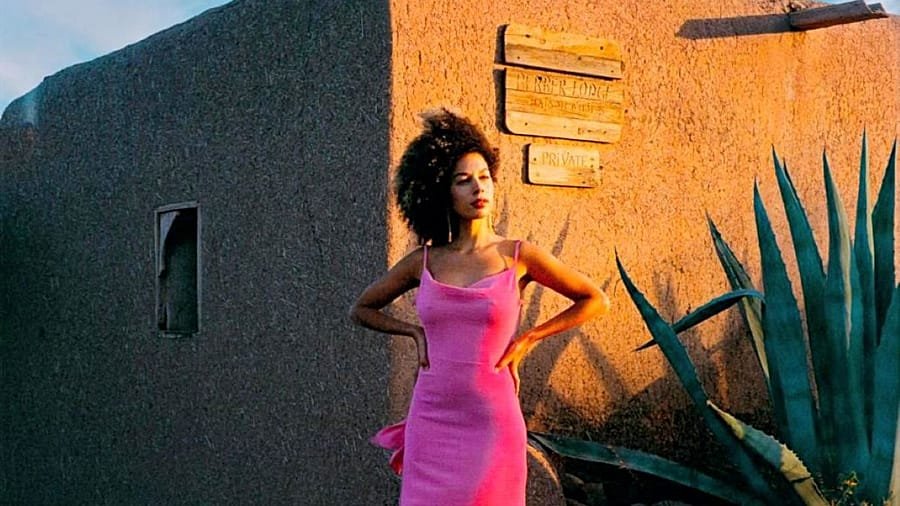
The kora is an ancestral West African instrument, a 21-string harp-lute that has traditionally been played exclusively by men. For centuries, the instrument belonged to the griot, or jali, class of the Mande people — the hereditary musicians and oral historians spread across Mali, Guinea, Senegal and The Gambia. To hear a woman master this instrument is to witness history being rewritten in real time.
Kepaou joins Gambian artist Sona Jobarteh as one of the very few female kora masters on the continent. Jobarteh, herself a pioneer from a legendary griot family, has paved a path that Kepaou now walks with confidence. Together, they represent a fundamental shift in who gets to tell the stories of West Africa through its most iconic instrument.
Kepaou's musical training began at age 8 with piano, guitar, saxophone, music theory and performing arts. This classical foundation gave her technical fluency, but it was the kora that gave her purpose. She learned the instrument under the late Malian griot Toumani Diabaté, the legendary kora virtuoso who became her mentor before his passing. Diabaté, himself a revolutionary figure who brought the kora to global audiences, recognized in Kepaou a kindred spirit.
The significance of a woman mastering the kora cannot be overstated. In the griot tradition, the instrument was long reserved for male storytellers, its music passed from father to son through generations. Kepaou's mastery does not simply break a rule — it expands the very definition of who can carry the Mande heritage forward. Her example sends a powerful message to young African women in music: the traditions belong to you too.
For young women across Senegal, Mali and beyond, Kepaou's presence on the kora stage is transformative. She represents a future where African musical traditions are not frozen in the past but alive, evolving, and open to all. The podcast episode makes clear that her achievement is not an exception but the beginning of a broader movement.
'Terre Rouge': An Album Rooted in Red Earth
Kepaou's second album, "Terre Rouge" — French for "red earth" — represents her most personal statement yet. She described it to reporters as "an album about my reconnection with my African roots," and the music delivers on that promise with remarkable depth. Released in April 2025, the album arrived with sold-out Belgian concerts at Brussels' Botanique, Namur and Louvain-la-Neuve, proving that her European audience was ready to follow her on this journey home.
The album is accompanied by a documentary, also titled "Terre rouge," which chronicles her return to Bangoua, her native village in Cameroon. Screened before her performances, the film captures the emotional weight of a diaspora artist stepping back onto ancestral soil. The red earth of Cameroon's western highlands becomes both literal landscape and metaphor — the ground from which her family's story grows.
One of the album's most moving tracks is "Grand-père," a poignant tribute to her ancestors. In this song, Kepaou reaches across generations, honoring the elders who came before her and whose stories shaped her family. It is a gesture that resonates deeply in African cultures, where ancestor veneration remains a living practice, not a historical curiosity.
In an interview with TV5 Monde, Kepaou explained that "Terre rouge" explores her African identity with unprecedented honesty. Where her first album, "Beloved" (2021), mixed upbeat pop and afro tunes for a broader audience, "Terre Rouge" digs deeper, allowing the kora to take center stage and the ancestral voices to speak. Her 2020 debut EP laid the groundwork, but this album represents a full artistic maturation.
The album's title carries multiple meanings. Red earth is the soil of Bangoua, the ground of her father's village. It is also the color of connection, of blood, of the bonds that tie diaspora Africans to the continent. For Kepaou, "Terre Rouge" is not just an album title — it is a declaration of where she belongs.
From Brussels to Bangoua: A Diaspora Homecoming
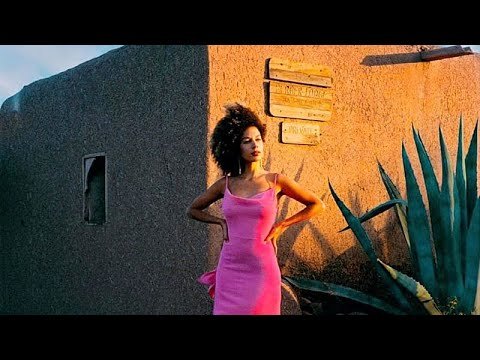
In early March 2025, Kepaou brought her music home. Her concerts in Yaoundé and Douala, Cameroon, marked a triumphant return to the country of her father. At the Douala French Institute (IFC), the venue could not accommodate the entire audience — a testament to the hunger Cameroonian audiences had for her music and her story. The overflow crowd outside the IFC spoke volumes about what her homecoming meant.
For diaspora artists, returning to the continent is never simple. It involves confronting questions of belonging, authenticity and expectation. Kepaou's homecoming was not a victory lap but a reckoning — a chance to stand before her father's people and offer them her music as both gift and proof. The reception she received in Douala and Yaoundé confirmed that her art had found its way home.
Kepaou's journey reflects a broader pattern of African diaspora musicians returning to the continent. From the United States to Europe, a new generation of artists is rediscovering their roots and bringing their skills, networks and global perspectives back to Africa. This reverse migration is reshaping the continent's cultural landscape, creating new collaborations and new possibilities.
The kora's cultural weight in Senegal and across West Africa gives Kepaou's story particular resonance. In Dakar, the instrument is inseparable from the griot tradition, from the praise songs and historical narratives that have sustained Mande culture for centuries. To see a woman — a mixed-heritage woman — commanding this instrument is to witness tradition being honored and transformed simultaneously.
Her journey also speaks to questions of mixed identity, belonging and heritage that resonate across the continent. In a November 2021 interview with France 24's Encore program, Kepaou spoke candidly about how playing the kora helped her embrace her mixed heritage. The instrument that could have been a barrier became her bridge, allowing her to claim both sides of her identity without apology.
The Setlist as Autobiography
The "Echoes of Africa" podcast episode features a setlist that serves as a window into Kepaou's influences and artistic DNA. The mix includes "La Blanche," Dave Brubeck's jazz standard "Take Five," Nina Simone's "Sinnerman," and her own compositions "Djali," "Terre Rouge," "Ancestors," "Take Me to Zion," "Farafina Mousso" and "Divine féminine." The list also features "Mali," her duet with Toumani Diabaté, a recording that captures the passing of the torch from one generation to the next.
The inclusion of "Take Five" and "Sinnerman" reveals an artist fluent in both European and African musical languages. Brubeck's jazz classic and Simone's gospel-infused protest anthem sit comfortably alongside kora compositions rooted in Mande tradition. This is not cultural appropriation or dilution — it is the natural expression of an artist who grew up with one foot in Brussels and one in Bangoua.
The spiritual thread running through her song titles is unmistakable. "Ancestors" and "Take Me to Zion" speak to a deep engagement with questions of heritage, memory and transcendence. "Farafina Mousso," which evokes the powerful women of Africa, and "Divine féminine" celebrate feminine strength in a tradition where the kora was long a male preserve. These are not just songs — they are statements of purpose.
Kepaou has described music as liberating, and the setlist demonstrates the range of that liberation. She moves from jazz standards to ancestral chants, from pop-inflected afro tunes to meditative kora pieces, without losing her center. The podcast episode captures this versatility, presenting an artist who refuses to be confined by genre, nationality or expectation.
What the setlist reveals is an artist who has achieved something rare: fluency in multiple musical languages without losing her own voice. She can honor Dave Brubeck and Toumani Diabaté in the same breath because both are part of her story. This is the sound of a new African identity — confident, hybrid and unapologetic.
What to Watch For
Following the release of "Terre Rouge," Kepaou's schedule shows no signs of slowing. She is slated to appear at Francofolies and Festival Solidarités in France, bringing her kora and her story to European audiences hungry for authentic African expression. These festival appearances will introduce her music to listeners who may never have heard the kora before, expanding the instrument's global reach.
The growing global audience for kora music and female kora players is one of the most encouraging developments in African music today. Where the instrument was once confined to griot families and specific West African communities, it now appears on world music stages, in jazz festivals and on streaming playlists worldwide. Kepaou and Sona Jobarteh are leading this charge, proving that the kora's voice is universal.
The "Echoes of Africa" podcast series continues to spotlight African artists who are redefining the continent's musical landscape. By featuring Kepaou, the series has highlighted not just an individual artist but a movement — the movement of diaspora Africans reclaiming their heritage and bringing it to the world. Each episode adds another voice to this chorus.
The significance of African diaspora artists building bridges between Europe and the continent cannot be overstated. These artists are not simply exporting African culture; they are creating new forms that draw on multiple traditions and speak to multiple audiences. Kepaou's music is a model for this kind of bridge-building, showing that identity is not a zero-sum game.
Her trajectory suggests a bright future for African traditional instruments in contemporary music. The kora, the balafon, the djembe — these instruments are not museum pieces but living voices capable of speaking to the present moment. Kepaou's success demonstrates that audiences are hungry for music that honors tradition while embracing innovation.
Kepaou belongs to a new generation of women redefining African music on their own terms. She has taken an instrument that was denied to her by tradition and made it her own, creating a sound that belongs to no one but herself. For young women across Africa and the diaspora, her example is a call to claim their voices, their instruments and their stories. The red earth of Bangoua has produced something extraordinary — and the world is listening.
By Amara Diop, Staff Writer
This article was produced with AI-assisted research and editorial support. Sources: africanews, TV5 Monde, France 24, StopBlaBlaCam.
What's Your Reaction?
 Like
0
Like
0
 Dislike
0
Dislike
0
 Love
0
Love
0
 Funny
0
Funny
0
 Wow
0
Wow
0
 Sad
0
Sad
0
 Angry
0
Angry
0

West Africa/Sahel Correspondent at Global1.News. Dakar-based journalist covering politics, security, climate, and development across Francophone and Anglophone West Africa. Tells the stories of a region undergoing profound transformation.













Comments (0)