
Federal Judge Halts Las Dunas Construction in Chuburna Puerto, Marking Third Major Coastal Reversal Under Sheinbaum
A federal judge provisionally suspended construction of the 14-tower Las Dunas complex on Yucatan's protected coastal dunes near Progreso, the third beach development halted under Sheinbaum. Residents' amparo cites missing consultation and the Escazu Agreement.
Federal Judge Halts Las Dunas Construction in Chuburna Puerto, Marking Third Major Coastal Reversal Under Sheinbaum
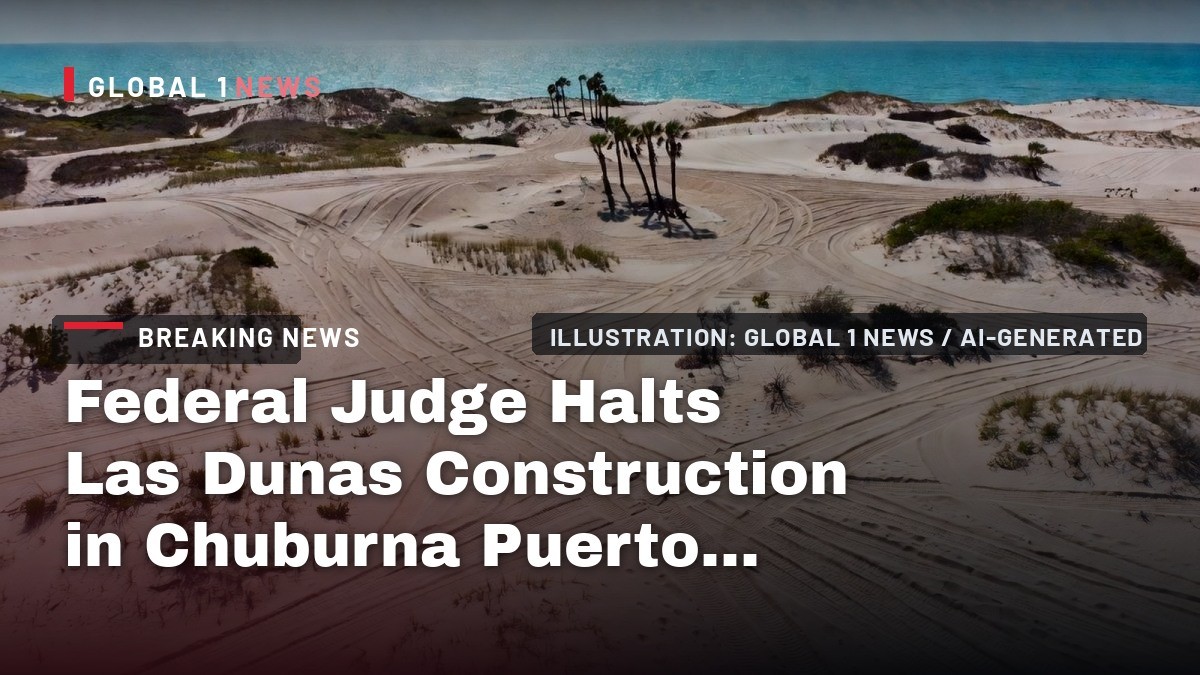
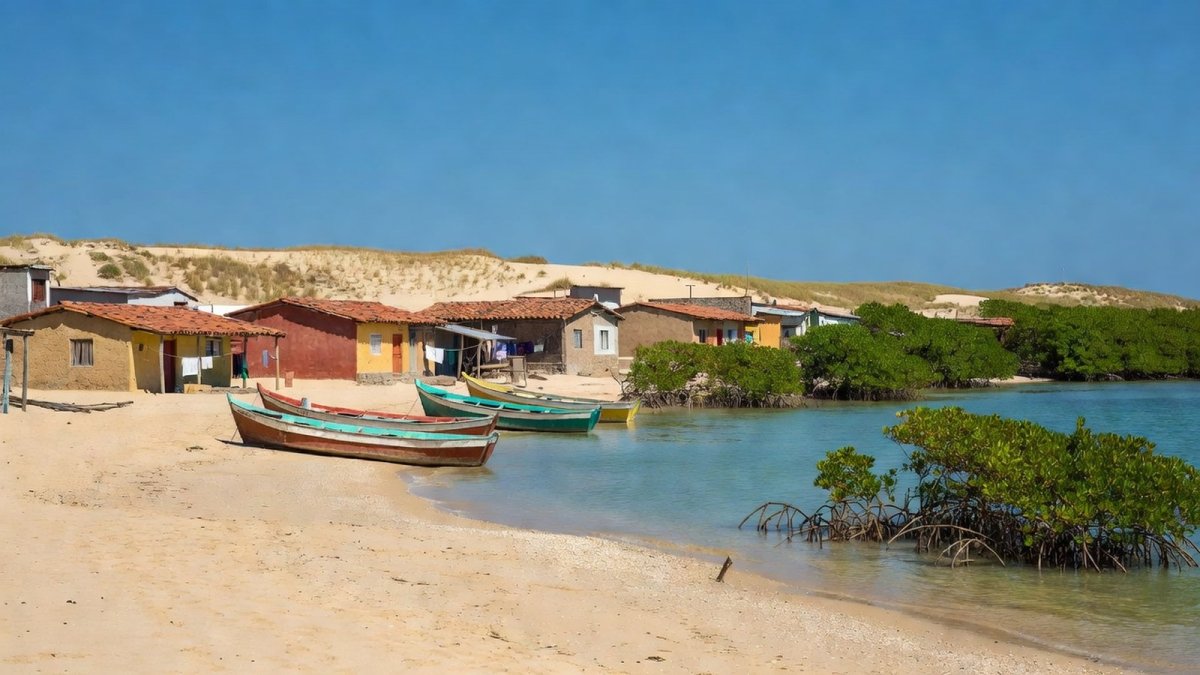
CHUBURNA PUERTO, Yucatan — The heavy machinery that had been scraping away the coastal dunes of this fishing village fell silent this week. On August 25, the Juzgado Primero de Distrito en Yucatan granted a provisional suspension within an amparo filed by residents, ordering a halt to all construction work on the "Las Dunas" tourist complex, a 14-tower development that had already cleared more than a hectare of protected dune habitat.
The legal measure does not definitively cancel the project, nor does it rule on the legality of the permits that allowed it to begin. Its purpose is to freeze the destruction while the court analyzes whether the Progreso municipal government violated residents' rights by approving the development without meaningful public consultation. For the families of Chuburna Puerto, who have watched bulldozers approach their turtle-nesting beaches for weeks, the suspension is a rare moment of judicial intervention in their favor.
The ruling represents the third high-profile coastal development halted or rejected under President Claudia Sheinbaum's administration, following SEMARNAT's rejection of Royal Caribbean's "Perfect Day Mexico" project near Mahahual in May and the revocation of the federal coastal concession for the Las Cocinas luxury development in Punta Mita, Nayarit, in July. While federal officials have not announced a formal national policy, the pattern is becoming increasingly visible to communities along Mexico's coastlines.
The Dunes Under Siege: A Community Watches Its Defenses Disappear
The Las Dunas project sits on a 92,017.3 square meter parcel, divided by the Yucalpeten-Chuburna highway and located approximately 100 meters from the Gulf of Mexico. The developer, Auralux Representaciones, plans 14 towers containing 138 apartments, pools, cafeterias, parking, and a commercial zone — nearly double the size of the original proposal that SEMARNAT rejected in December 2023. At four people per unit, the complex would introduce roughly 552 new residents to a community that has sustained itself for generations on fishing and, more recently, community tourism.
For Jesus Gomez, a fisherman and tourism guide who has worked these waters his entire life, the damage is already visible. "They gathered all the sand from what they cleared and are moving it, but we don't know where," he said. "There are no roots, nothing — it's left like a desert. This is sea-turtle nesting zone, these are supposed to be protected zones, but as long as there's money they do what they want."
The ecological toll documented by Profepa (Federal Attorney for Environmental Protection) is stark. Inspections between July 28 and 30 found 1.3 hectares — 13,000 square meters, or 30.8% of the authorized forest land-use-change area — completely cleared. About 6,500 square meters of the intervened area contained protected species listed under NOM-059-SEMARNAT, including the endangered Mexican sheartail hummingbird (Doricha eliza) and the threatened Yucatan wren (Campylorhynchus yucatanicus). Profepa also documented wild cotton, striped iguanas, bromeliads, orchids and agaves, along with the endangered biznaga pol tsakam "cabeza de gato" cactus — a protected species never listed in the environmental impact statement or rescue program.
The dunes are the community's first line of defense against the hurricanes that batter the Yucatan coast, protecting freshwater aquifers from saltwater intrusion and providing habitat for species found nowhere else on Earth. Their destruction, environmentalists warn, also raises the risk of marine pollution.
A Legal Battle Rooted in the Right to Be Consulted
The amparo filed by Chuburna Puerto residents does not center solely on the removal of sand or vegetation, though those violations are documented. The core of the lawsuit is procedural: residents argue that the Progreso Ayuntamiento should have informed neighbors and opened a public participation process before granting the municipal construction and land-use licenses that allowed the project to proceed.
The lawsuit invokes the Escazu Agreement, the regional treaty in force in Mexico that guarantees access to information, public participation, and justice in environmental matters. For the residents, the question is fundamental: how can a community protect what it does not know is at risk? "They never announced the project and Chuburna authorities allowed it," said Basilia Tzab, who grew up in the coastal zone. "They're damaging the beach where turtles nest. We're innocent of everything they do. By the time we find out, it's already done."
The court has asked the responsible authorities to apply a consultation methodology related to the project, signaling that judges take the participation argument seriously. It also fixed a 50,000-peso guarantee for the suspension to take effect. Kanan Derechos Humanos and the Colectiva Salvemos las Dunas have launched a citizen fundraising campaign to cover the bond, anticipating another deposit may be required if a definitive suspension is granted.
Alejandra, a Chuburna Puerto resident, captured the community's anxiety and resolve: "Si construyen nos va a dar en la torre, nos vamos a inundar y quizás vamos a desaparecer con los huracanes. Ya nos vendieron y no lo sabiamos, solo quieren llenar sus bolsillos." (If they build, the tower will hit us, we'll flood and maybe disappear with the hurricanes. They already sold us and we didn't know — they just want to fill their pockets.)
Permits, Politics, and the Paper Trail of a Controversial Project
The timeline of Las Dunas reveals a project that grew bolder as it moved through the permitting process. In April 2023, the Yucatan state government issued an Urban Environmental Feasibility opinion for the site. The first Environmental Impact Manifestation (MIA), presented by Auralux Representaciones on September 27, 2023, proposed six towers with 74 apartments. SEMARNAT rejected it on December 13, 2023, stating that the construction would impact and put at risk the flora and fauna of the Yucatan coast.
The project did not die. In February 2024, the Progreso municipal government granted the land-use license; in November 2024, the state mobility and urban development institute ratified the feasibility. On December 17, 2024, Auralux presented a second MIA — nearly double the size of the first: 138 apartments in 14 towers. In July 2025, the land-use-change permit was obtained under Guillermo Humberto Porras Quevedo, head of SEMARNAT's Yucatan office and a former Green Party (PVEM) militant. State permits had been granted during ex-Governor Mauricio Vila Dosal's administration.
Construction began in July 2026, with heavy machinery clearing the duneland. The developer's environmental mitigation budget is remarkably thin: Auralux stated that 1.11% of the execution budget would go to mitigation, with 200,000 pesos allocated for environmental restoration out of a total estimated investment of 18 million pesos. The MIA claims 67,903 square meters — 73.8% of the site — would remain as "free areas," a claim Profepa's documentation of cleared and stripped land directly contradicts.
Profepa's July 30 inspection resulted in a total temporary closure of the site, announced officially on August 2. The agency opened an administrative procedure and said it would analyze possible crimes against biodiversity. Profepa head Marina Boy Tamborrel has run a zero-tolerance campaign against unauthorized coastal development since 2025: "All works that aren't authorized will have to be demolished." Companies used to budget for fines and keep operating, she has said; the new philosophy prioritizes environmental restoration over fines. Profepa had already closed four developments in Puerto Vallarta.
What the Suspension Means — and What Comes Next
The provisional suspension obligates the cessation of all work that could affect the environment of the property, including execution of the municipal construction and land-use licenses. The court has not yet ruled on whether the authorizations themselves were legal — that question will be resolved during the amparo trial. The incidental hearing, where the court decides whether the protection stays in place, is the next critical moment. Case numbers, agreement dates and hearing dates have not been made public, and neither the Progreso Ayuntamiento nor the developer has issued a statement.
For the business community, the suspension raises questions about regulatory certainty. Enrique Molina Casares, director of CANACO Servitur and president of the Business Coordinating Council, said August 1 there was no clear information on the closure reason yet — if the project complies with all regulations there is no reason not to proceed, and if there are violations, the law should be applied. He urged respect for nature and environmental regulations.
The Progreso Ayuntamiento, under Mayor Erik Rihani Gonzalez, approved three new municipal regulations on August 4 — an updated construction code (the first in 33 years, replacing the 1993 code), a new zoning and land-use ordinance, and a signage rule. Officials described the changes as faster permitting, tighter oversight, and stricter structural-safety requirements, not caps on building size. No height limits have been confirmed publicly.
The Dunes as Identity: Maya Heritage and the Fight for the Coast
For Karen Sosa, a Chuburna resident, the fight over Las Dunas is not only about turtles and dunes — it is about who gets to define the future of a community. "The dunes represent our identity as Maya people because they have been passed down from generation to generation as a source of sustenance for many families," she told El Pais.
The Yucatan coast is home to the Reserva Estatal Cienagas y Manglares de la Costa Norte, a state protected area adjacent to the Las Dunas site. State officials have said that 58,740 square meters of the property — including coastal wetland and federal maritime-terrestrial land — must remain conserved and unoccupied. They have stressed that a state urban-environmental feasibility assessment is not a construction permit, and that SEMARNAT holds federal authority over the environmental-impact authorization.
The young people of the "Salvemos las Dunas" collective, formed in late July, have been gathering documentation and signatures to build the case that the community was never properly consulted. Spokesperson Victoria Sanchez insists the fight is not against development, but against development that destroys the resources the community depends on.
The provisional suspension is a victory, but a fragile one. The 50,000-peso bond must be paid, the incidental hearing must go well, and the court must ultimately rule on the merits. Even then, the cleared dunes cannot be restored overnight — the biznaga cactus that was not rescued, the nesting grounds that were disturbed. Residents have seen projects like Ciudad Maderas rise nearby without meaningful consultation and watched the mangroves suffer without intervention. But this time, a federal judge listened, the Escazu Agreement was invoked and acknowledged, and the machinery stopped — at least for now. As the fundraising campaign continues, the residents are watching, organizing, and preparing for the next hearing. The dunes have protected them from hurricanes for generations. Now, they are trying to return the favor.
Tags: Las Dunas, Chuburna Puerto, provisional suspension, amparo, Yucatan, SEMARNAT, Profepa, sea turtles, coastal dunes, Sheinbaum, Escazu Agreement, Auralux, Progreso, Maya heritage, environmental justice
This article was produced with AI-assisted research and editorial support. Sources: Mexico News Daily, PorEsto, Proceso, Yucatan Times, Yucatan Magazine.
By Rosa Martinez, Staff Writer
What's Your Reaction?
 Like
0
Like
0
 Dislike
0
Dislike
0
 Love
0
Love
0
 Funny
0
Funny
0
 Wow
0
Wow
0
 Sad
0
Sad
0
 Angry
0
Angry
0

Latin America/Andes Correspondent at Global1.News. Based in Bogota, covering politics, environment, energy, and social movements across the Andean region. Passionate about environmental journalism and communities protecting their land.













Comments (0)