
Anthropic decides to support OpenAI's markdown instructions spec
Anthropic’s latest move—adding support for OpenAI’s AGENTS.md spec in Claude Code—might look like a minor convenience tweak, but for anyone running AI‑driven development pipelines it’s a reminder of how quickly standards can fragment and then reconverge.
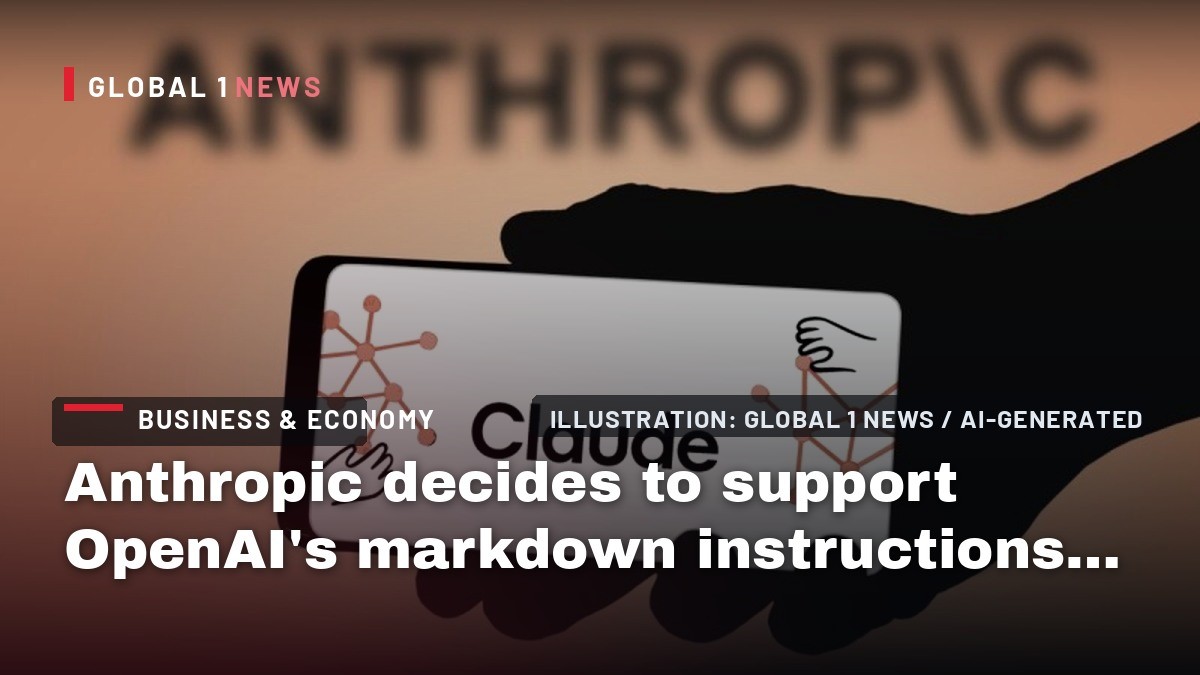
Anthropic’s latest move—adding support for OpenAI’s AGENTS.md spec in Claude Code—might look like a minor convenience tweak, but for anyone running AI‑driven development pipelines it’s a reminder of how quickly standards can fragment and then reconverge. As a founder who’s been wiring up production servers for a decade, I’ve seen the cost of “best practice” drift when vendors start their own proprietary formats. This little handshake between the two AI giants is a modest win for developers, but it also shines a light on the larger business‑risk calculus for independent hosting providers who have to support these tools in the wild.
Why the AGENTS.md support matters
The core of the change is simple: Claude Code now looks for an AGENTS.md file if it doesn’t find a CLAUDE.md in the same folder. That’s what Thariq Shihipar announced in a social post, noting the new behavior can be toggled with the /config command. For teams that juggle Claude Code alongside OpenAI’s Codex or other AI coding assistants, this eliminates the need to maintain two parallel instruction files. Previously, developers were forced into a juggling act—keeping CLAUDE.md and AGENTS.md in sync, sometimes via symlinks, to avoid divergent agent behavior.
From a practical standpoint, that duplication was a hidden operational cost. Every extra file meant another point of failure: a missed sync could cause an agent to ignore crucial tooling preferences or violate coding conventions, leading to bugs that surface later in production. By converging on a single, tool‑agnostic spec, Anthropic is cutting that friction. The move also signals a willingness to play nice with the Agentic AI Foundation’s standard, which OpenAI pushed into the Linux Foundation last year.
The cost of proprietary specs
When vendors lock you into their own markdown instruction format, you end up with “best practice” drift. In my own hosting business, we’ve seen customers waste hours maintaining custom config files for each AI service they integrate. That overhead isn’t just a developer annoyance; it translates into higher support tickets, longer deployment windows, and ultimately, more downtime. The fact that Anthropic felt the need to add this compatibility tells you how much pain the industry has felt from spec fragmentation.
Even though the source material doesn’t give exact numbers on support costs, the qualitative impact is clear. Teams that had to keep CLAUDE.md and AGENTS.md aligned were forced into workarounds like symlinks—a brittle solution that can break with a simple repo restructure. For a hosting provider, every broken symlink can cascade into a failed build, a stalled CI pipeline, and angry customers demanding SLA credits.
What the numbers say
OpenAI’s push for AGENTS.md has already gained traction: as of December 2025, more than 60,000 open‑source projects had adopted the spec. That level of adoption gives the standard real momentum, and Anthropic’s decision to support it in Claude Code reflects the market reality that developers gravitate toward the most widely supported conventions. For independent hosting firms, the implication is straightforward—if a spec is gaining that kind of community buy‑in, you’re better off supporting it natively rather than building custom adapters.
The source material also notes that Claude Code’s popularity gave Anthropic the latitude to push its own standards initially. That “latitude” is a double‑edged sword: it lets a vendor dictate terms, but it also forces downstream users to shoulder the integration burden. When a vendor decides to back off that stance, as Anthropic has here, it’s a signal that the market prefers convergence over competition on format standards.
Business‑risk lens for hosting providers
From the perspective of a hosting provider, any change that reduces the number of moving parts in a developer’s workflow is a risk mitigator. Fewer files, fewer sync mechanisms, and fewer vendor‑specific quirks mean a smoother CI/CD pipeline, which translates to higher uptime and lower operational overhead. The handshake between Anthropic and OpenAI, while modest in scope, removes a source of friction that could otherwise surface as a production incident.
In practice, we’ve seen similar spec wars play out with container runtimes and orchestration tools. When Docker tried to enforce its own image format against OCI standards, many customers hit compatibility snags that required custom tooling. Those “best practice” wars cost time and money—exactly the kind of expense that small to midsize hosting firms can’t absorb. Anthropic’s move is a reminder that aligning with community‑driven standards can be a competitive advantage.
What the community is saying
The reaction on social media has been largely positive. Widely followed software developers applauded the decision, and OpenAI’s head of core product, Thibault Sottiaux, posted an enthusiastic “Yay! This is the way. Come to the light,” to which Shihipar responded with a handshake emoji. While the source material frames this as a “modest significance” event, the tone of the exchange underscores a broader industry fatigue with competing specs. Developers want to write code, not maintain parallel instruction files.
That sentiment aligns with the practical reality on the ground: teams are already juggling multiple AI tools, and every extra step in the workflow adds cognitive load. By removing the need to duplicate CLAUDE.md and AGENTS.md, Anthropic is handing developers a small but tangible productivity boost. For hosting providers, that translates into smoother onboarding for customers who rely on AI‑assisted development pipelines.
Actionable advice for providers
First, audit your platform for any hard‑coded expectations around AI instruction files. If you’ve built tooling that assumes a CLAUDE.md exists, add a fallback to read AGENTS.md as Anthropic now does. Second, consider exposing a simple toggle in your CI/CD configuration UI that mirrors Claude Code’s /config switch—this gives users control without needing to dive into command‑line flags.
Third, keep an eye on the Agentic AI Foundation’s roadmap. As more projects adopt AGENTS.md, the spec will likely evolve, and staying aligned early will save you from retrofitting later. Finally, use this episode as a case study when negotiating with vendors: push for support of community standards rather than proprietary extensions. It’s a leverage point that can keep your infrastructure lean and your customers happy.
Looking ahead
The handshake between Anthropic and OpenAI is a small step toward a more unified AI development ecosystem. It won’t solve all the fragmentation issues—there are still multiple AI coding assistants, each with its own quirks—but it does demonstrate that even the biggest players can find common ground when the market pushes for it. For independent hosting providers, that’s a signal to double down on flexibility and standards‑first design.
In the end, the real win is not the emoji handshake but the reduction in operational friction for the developers we serve. When a vendor drops a proprietary spec in favor of a community‑driven one, you get a smoother pipeline, fewer support tickets, and a stronger value proposition for your customers. That’s the kind of pragmatic, no‑nonsense improvement that keeps a hosting business afloat in a world full of hype.
— Allan Ali, Founder
This article was produced with AI-assisted research and editorial support. Reporting is based on the source material cited below. Sources: The Register; theregister.com; Global1.News (21 September 2026).
By Allan Ali, Global1.News
What's Your Reaction?
 Like
0
Like
0
 Dislike
0
Dislike
0
 Love
0
Love
0
 Funny
0
Funny
0
 Wow
0
Wow
0
 Sad
0
Sad
0
 Angry
0
Angry
0

Publisher of Global1.News. Automation architect, systems builder, and the guy making sure the truth gets published.














Comments (0)