
Amazon on Trial: Brazil's Supreme Court Cases Could Reshape Forest Protections
The air in Brasilia is thick with tension this Wednesday, August 12, 2026, and it has nothing to do with the dry season that grips the Cerrado. The Supreme Court is convening for a series of hearings that will determine the legal architecture of the Amazon rainforest for decades to come.
The air in Brasilia is thick with tension this Wednesday, August 12, 2026, and it has nothing to do with the dry season that grips the Cerrado. The Supreme Court is convening for a series of hearings that will determine the legal architecture of the Amazon rainforest for decades to come.
Amazon on Trial: Brazil’s Supreme Court Weighs the Forest’s Future
Sao Paulo, Brazil — August 12, 2026 — This is not an abstract constitutional debate; it is a high-stakes collision between the forces of economic development and the imperative of environmental survival, playing out in the most biodiverse ecosystem on the planet. Lawmakers and environmental groups are sharply divided, but they all recognize the gravity of the moment. The court is set to hear three distinct yet interconnected cases: the clarification of Indigenous land rights, the future of the soya moratorium, and the constitutionality of a new environmental licensing law. These cases arrive at a paradoxical juncture. Deforestation in the Brazilian Amazon has fallen to its lowest level in a decade during the first half of 2026, a testament to the enforcement policies of President Luiz Inacio Lula da Silva's administration after the devastation of the Bolsonaro years. Yet, a mostly conservative Congress has overridden several of Lula's environmental vetoes, signaling a legislative pushback that threatens to dismantle the very protections that enabled this progress. The legal scaffolding that supports the recent decline in forest loss is now on trial, and the outcome will reverberate far beyond Brazil's borders.
 Keywords: Brazil Supreme Court, Amazon rainforest, deforestation, Indigenous land rights, marco temporal, soya moratorium, environmental licensing, Lula, agribusiness, Kawahiva, Yanomami, BR-319, CONAMA, Climate Observatory
The Amazon's Legal Crossroads
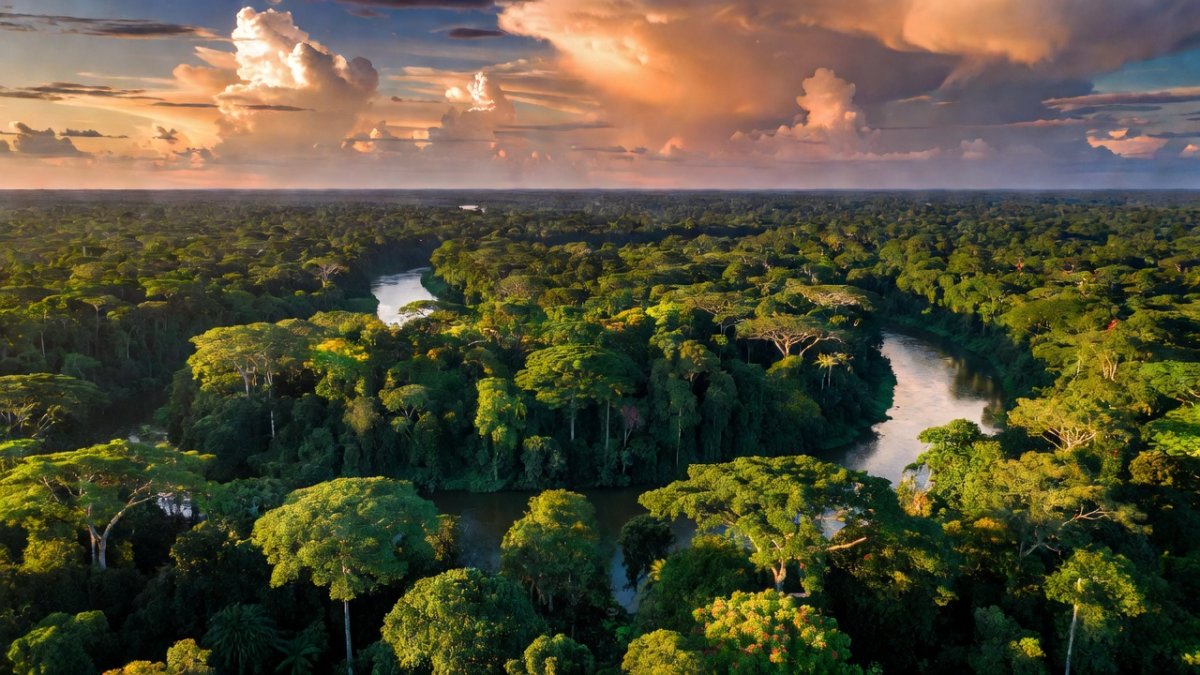
The convergence of these three cases before the Supreme Court marks a critical inflection point for Brazil's environmental policy. On one side, we have a president who has staked his international reputation on reversing the deforestation surge of his predecessor, Jair Bolsonaro. On the other, a powerful agribusiness caucus in Congress, emboldened by electoral gains, is pushing to loosen the regulatory framework that they argue stifles economic growth. The court is now the final arbiter in this tug-of-war. The stakes are immense: the Amazon is not just a Brazilian treasure; it is a global climate regulator, a repository of immense biodiversity, and the ancestral home of hundreds of Indigenous nations. The first half of 2026 has offered a glimmer of hope, with satellite data from INPE showing a significant reduction in clear-cutting. However, this progress is fragile. The legal challenges being heard this week could effectively legalize past deforestation and incentivize future destruction. The Supreme Court's rulings will send a clear signal to both domestic and international markets about Brazil's commitment to its climate goals. If the court sides with the agribusiness lobby, it could trigger a new wave of land speculation and forest clearing, undoing years of painstaking work. Conversely, a strong ruling in favor of environmental protections could solidify Brazil's position as a leader in the global fight against climate change, setting a powerful precedent for the rest of Latin America.
Indigenous Land Rights: The 'Time Limit' Fight Returns
The first case before the court is a complex legal maneuver that seeks to clarify a landmark 2025 ruling. In that decision, the Supreme Court rejected the "marco temporal" (time limit) thesis, a theory championed by Brazil's agribusiness lobby. This thesis argued that Indigenous peoples should only have rights to lands they physically occupied or were legally disputing on October 5, 1988, when the current Constitution was promulgated. The 2025 rejection was a massive victory for Indigenous rights, recognizing that this cutoff date ignored the brutal history of forced displacement, violence, and expulsion that Indigenous communities suffered, particularly during the military dictatorship. Now, the court is reviewing final motions seeking clarification on that ruling. The agribusiness caucus is pushing for a narrow interpretation, arguing that a definitive cutoff date is essential for providing "legal certainty" for landowners who have held title for decades. They claim that without a clear deadline, the country will face endless land conflicts. On the other side, Indigenous groups and their allies argue that the 2025 ruling was correct and that any attempt to impose a time limit would be a constitutional travesty. The court is also considering questions of compensation for landowners who may lose territory and possible deadlines for completing the demarcation of Indigenous lands, a process that has been notoriously slow. The fate of isolated and uncontacted peoples, such as the Kawahiva in Rondonia, hangs in the balance. Their survival depends on the protection of their territories, which are under constant threat from illegal loggers and land grabbers.
The Soya Moratorium Under Siege
The second case involves the future of the soya moratorium, a voluntary agreement that has been one of the most successful private-sector initiatives in environmental history. Since 2008, major grain traders have agreed not to purchase soya beans grown on land that was deforested in the Amazon after that year. This agreement has been credited with helping to curb deforestation even as Brazil became an agricultural powerhouse, proving that market pressure can be a powerful tool for conservation. However, the moratorium is now under direct attack. In January, several states that are major soya producers passed laws revoking tax incentives for companies that participate in the agreement. This legislative assault was designed to force the Brazilian Association of Vegetable Oil Industries (ABIOVE) to withdraw from the moratorium, which it subsequently did. This is a significant escalation in the conflict. Brazil is the world's largest producer and leading exporter of soya beans, and the moratorium has been a key factor in maintaining access to European and other international markets that demand sustainable sourcing. The Ministry of Environment and Climate Change has publicly defended the moratorium, arguing that it is a vital tool for protecting the Amazon and that its removal would lead to a surge in deforestation. The Supreme Court is now being asked to weigh in on the legality of the state laws that are effectively punishing companies for their environmental commitments. A ruling against the moratorium could open the floodgates to a new wave of soya-driven deforestation, as farmers rush to clear land without fear of market consequences.
Environmental Licensing: The 'Devastation Law' Test
The third and perhaps most far-reaching case is a constitutional challenge to a new environmental licensing law that took effect in February. This law, which environmental groups have dubbed the "devastation bill," fast-tracks approval for a wide range of projects, including mines, highways, and industrial plants. The government argues that the law is necessary to cut through bureaucratic red tape and stimulate investment, but environmentalists warn that it weakens critical safeguards in one of the world's most important ecosystems. Suely Araujo of the Climate Observatory (Observatorio do Clima) has been a vocal critic, stating that the law is already having tangible consequences in the Amazon. She points to the paving of the controversial BR-319 highway, which would slice through the heart of the rainforest, and plans to dredge the Tapajos River without adequate prior environmental review. The law's scope is staggering. Earlier reporting by The Guardian in July 2025 highlighted that the fast-track process, previously limited to low-risk activities, could now affect about 90% of licensing procedures in Brazil, including mining and most agriculture. Furthermore, it removes rule-making power from the National Environment Council (CONAMA), a key democratic body that allowed for public participation in environmental policy. The Supreme Court must now decide whether this law is constitutional, or whether it represents an unacceptable abdication of the state's duty to protect the environment. The outcome will determine the fate of countless projects and the health of the Amazon for generations.
What This Means for Latin America
The decisions made in Brasilia this week will not be confined to Brazil. The Amazon is a shared biome, spanning nine countries, and its health is intrinsically linked to the climate and hydrological cycles of the entire South American continent. The forest acts as a massive carbon sink and generates the "flying rivers"—atmospheric moisture that irrigates agricultural heartlands in Brazil, Argentina, Paraguay, and Uruguay. When the Amazon suffers, the entire continent feels the effects in the form of drought, extreme weather, and reduced agricultural productivity. Other Amazonian countries, including Colombia, Peru, and Bolivia, are watching Brazil's legal proceedings with intense interest. They face similar pressures to develop their own Amazonian territories and are looking to Brazil to set a legal precedent. If Brazil's Supreme Court upholds the weakening of environmental protections, it will provide a powerful justification for other governments in the region to follow suit, leading to a continent-wide acceleration of deforestation. Conversely, a strong ruling in favor of Indigenous rights and environmental safeguards would reinforce the position of environmental defenders across Latin America. This is also a test of Brazil's commitment to the legacy of COP30, which it hosted in Belem in 2025. The world is watching to see if Brazil will honor the promises it made on the international stage or if it will capitulate to domestic economic interests. The court's rulings will be a defining moment for the region's environmental future.
Voices from the Ground
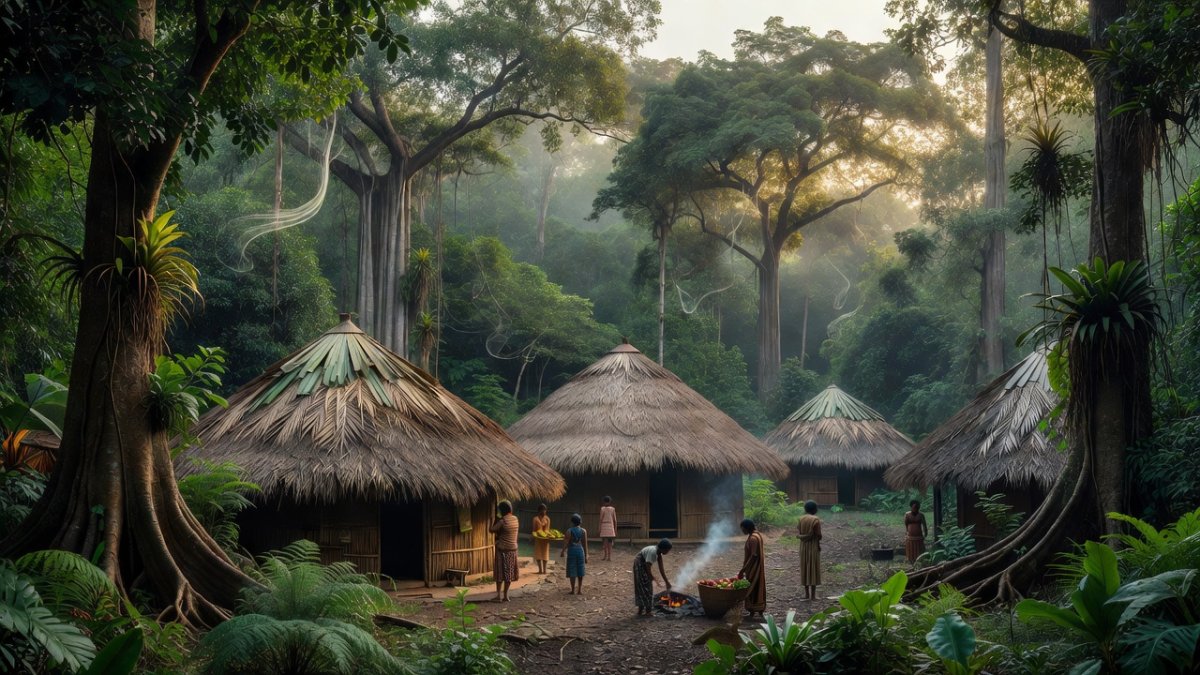
Amidst the legal jargon and political maneuvering, it is crucial to remember the human cost of these decisions. The people who live in the Amazon, who have stewarded its forests for millennia, are the ones who will feel the consequences most acutely. The Al Jazeera Witness documentary, "Saving one of Brazilian Amazon's largest Indigenous tribes," offers a powerful glimpse into this reality. It features Davi Kopenawa, a chief and spokesman for the Yanomami people, whose territory has been officially protected since the 1990s. Yet, during the Bolsonaro era, a huge increase in illegal gold mining threatened to destroy everything they had fought to protect. The documentary captures the desperation of a community facing an existential threat from invaders who bring disease, violence, and environmental destruction. Kopenawa's voice is a stark reminder that these legal battles are not abstract; they are about the survival of real people. The Climate Observatory's Suely Araujo echoes this urgency, warning that the new licensing law is already leading to destructive projects on the ground. Local communities and environmental defenders are on the front lines, risking their lives to protect the forest. They are not just fighting for trees; they are fighting for their homes, their cultures, and their futures. The Supreme Court's rulings will either empower these defenders or leave them more vulnerable than ever. The world must listen to their voices and understand that the fate of the Amazon is inextricably linked to the fate of its people.
The Bottom Line: A Court Test for the Amazon's Future
As the Supreme Court begins its deliberations, the future of the Amazon hangs in the balance. The rulings on these three cases will define the legal landscape for environmental protection in Brazil for years to come. A favorable outcome for environmentalists would solidify the progress made in reducing deforestation, protect Indigenous territories, and maintain market-based mechanisms like the soya moratorium. It would send a powerful signal that Brazil is serious about its climate commitments and its role as a global environmental leader. However, a ruling in favor of the agribusiness lobby could have catastrophic consequences. It would likely trigger a surge in deforestation, embolden illegal land grabbers, and undermine the trust of international investors and trading partners. The implementation of any ruling will also be a critical challenge. Even if the court upholds environmental protections, there will be significant resistance from powerful economic interests. Vigilance will be required from civil society, the press, and the international community to ensure that the letter of the law is respected. The watch items are clear: the speed of Indigenous land demarcation, the enforcement of environmental licensing, and the behavior of major soya traders. This is not just a legal test; it is a moral test for Brazil and for the world. The decisions made this week will determine whether we can protect the planet's most vital ecosystem or whether we will allow short-term greed to destroy a treasure that belongs to all of humanity.
By Elena Vasquez, Staff Writer
This article was produced with AI-assisted research and editorial support. Sources: Al Jazeera English, Associated Press.
What's Your Reaction?
 Like
0
Like
0
 Dislike
0
Dislike
0
 Love
0
Love
0
 Funny
0
Funny
0
 Wow
0
Wow
0
 Sad
0
Sad
0
 Angry
0
Angry
0

Latin America Correspondent at Global1.News. Based in Mexico City, covering politics, economics, energy, and culture across the region. Brings an on-the-ground perspective to stories spanning from the Rio Grande to Patagonia.












Comments (0)