
Air force deploys two F-16 jets for patrol over Mae Sot
The Royal Thai Air Force took to the skies over Mae Sot district in Tak province on Sunday, deploying two F‑16 fighter jets for an aerial patrol that residents were asked to expect.
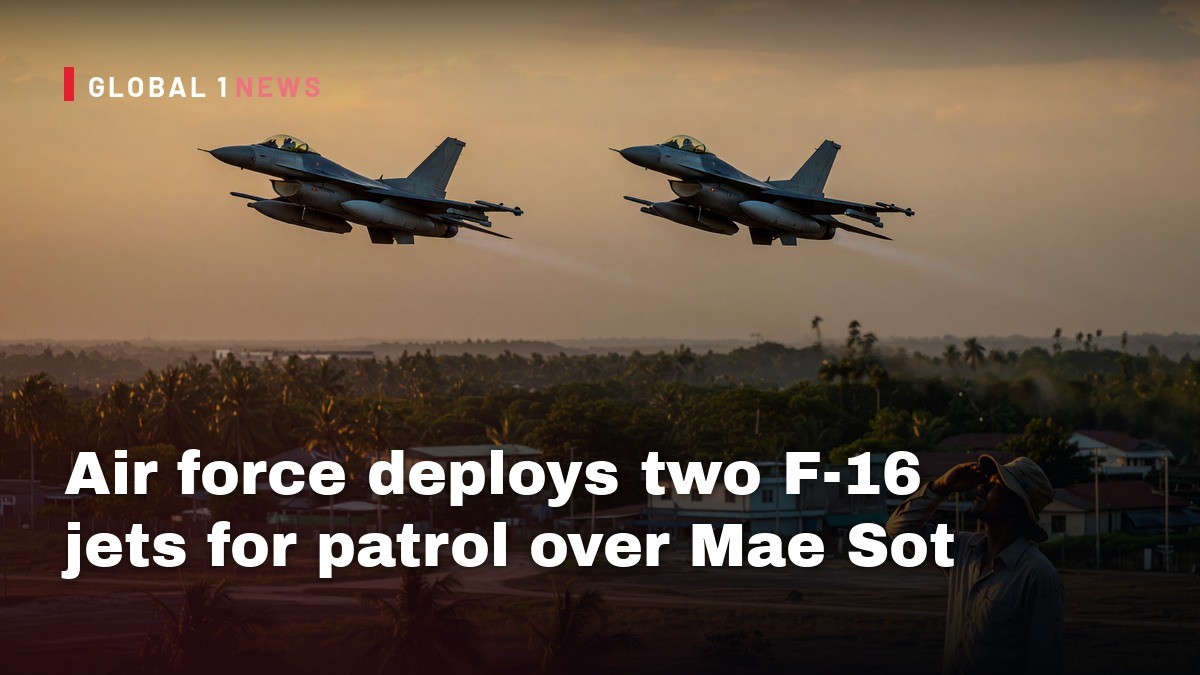
The Royal Thai Air Force took to the skies over Mae Sot district in Tak province on Sunday, deploying two F‑16 fighter jets for an aerial patrol that residents were asked to expect. The Ratchamanu Task Force, acting on behalf of the air force, announced the operation in advance, noting that the patrol was scheduled for 17:00 and that the aircraft might generate louder‑than‑usual noise. The message was clear: listen to the roar, stay calm, and trust that the patrol is part of Thailand’s ongoing commitment to protect its airspace and the safety of its people.
Why the patrol matters for national air security
The deployment of the two jets reflects a broader effort by the Royal Thai Air Force to monitor and safeguard the nation’s airspace. While the specific reasons for the Mae Sot patrol were not detailed, the operation aligns with routine surveillance missions that aim to detect any irregularities or potential threats. By maintaining a visible presence over the border provinces, the air force demonstrates its readiness to respond to any situation that could affect national security.
Such patrols are especially important in regions like Tak, which share borders with neighboring countries and sit along key transit routes. The presence of modern fighter aircraft sends a reassuring signal to both local communities and neighboring states that Thailand remains vigilant and capable of defending its skies.
Community outreach and the cultural context
In Thai society, the relationship between the armed forces and civilians is often framed by a sense of mutual respect and shared responsibility. The advance warning issued by the Ratchamanu Task Force is a thoughtful gesture that acknowledges the daily rhythms of village life. By informing residents that they might hear louder aircraft noise, the air force helps prevent misunderstandings and unnecessary alarm.
This approach resonates with Buddhist principles of mindfulness and calm. Encouraging people not to panic and to remain confident mirrors the practice of staying present and composed in the face of uncertainty—a value deeply rooted in Thai culture and often reflected in community gatherings at temples and local markets.
Historical backdrop of aerial patrols in Thailand
Thailand’s modern air defence strategy has evolved over decades, moving from early propeller‑driven aircraft to sophisticated jet fighters like the F‑16. While the current patrol over Mae Sot is a routine operation, it is part of a lineage of missions that have protected the nation’s borders since the mid‑20th century. Each patrol builds on lessons learned from past challenges, reinforcing a tradition of vigilance that has become a cornerstone of Thai sovereignty.
The continued use of F‑16s underscores the air force’s commitment to maintaining a capable fleet. These jets, acquired in earlier procurement phases, remain a reliable workhorse for patrol, interception, and training missions, bridging the past and present in Thailand’s defence narrative.
Regional geopolitics and the border province
Mae Sot sits near Thailand’s western frontier, an area that has historically seen a flow of people, goods, and ideas across borders. In the contemporary Southeast Asian landscape, border provinces play a subtle yet significant role in regional stability. Regular aerial patrols help assure neighboring countries that Thailand is actively managing its airspace, contributing to a climate of confidence and cooperation.
While the source material does not specify any particular incident prompting the patrol, the routine nature of such missions suggests a proactive stance. By keeping a watchful eye over the skies, Thailand participates in a broader regional effort to deter illicit activities, such as smuggling or unauthorized flights, that could destabilise the area.
Public safety and the air force’s reassurance
The air force’s message emphasized public safety, urging residents to remain confident in its operations. This reassurance is more than a simple statement; it reflects a deep‑seated duty to protect citizens from both external threats and the unintended consequences of military activity. By acknowledging that the patrol might produce louder noise, the force demonstrates transparency and respect for the community’s peace of mind.
Such communication helps to foster trust between the military and civilians. In Thai culture, where community cohesion is often reinforced through shared rituals and festivals, clear and calm messaging from authorities can strengthen the social fabric, ensuring that citizens feel secure even when the hum of jet engines passes overhead.
Connecting the patrol to everyday Thai life
For many residents of Mae Sot, the sound of aircraft may be an uncommon occurrence, especially if they are accustomed to the gentle rustle of rice paddies and the rhythmic chants of monks at sunrise. The air force’s advance notice allows families to prepare, perhaps pausing a television program or stepping outside to hear the roar with a sense of curiosity rather than fear.
This moment of shared experience can become a subtle reminder of the nation’s protective umbrella. In villages where the temple bell marks the passage of time, the distant echo of fighter jets can serve as a modern counterpart—an audible sign that the country’s guardians are watching over the skies, just as monks watch over the spiritual well‑being of the community.
Looking ahead: the role of transparency in defence
Transparency, as demonstrated by the Ratchamanu Task Force’s public announcement, is a valuable tool in modern defence. By keeping the public informed, the air force not only prevents panic but also invites citizens to be partners in national security. This collaborative spirit aligns with Thailand’s broader approach to governance, where dialogue between authorities and the people is encouraged.
As Thailand continues to navigate a complex regional environment, such open communication will remain essential. The Mae Sot patrol, while a single event, exemplifies how routine military operations can be woven into the daily lives of Thai communities, reinforcing a sense of shared responsibility and collective calm that is at the heart of Thai culture and Buddhist practice.
This article was produced with AI-assisted research and editorial support. Reporting is based on the source material cited below. Sources: Khaosod English; khaosodenglish.com; Global1.News (02 November 2026).
By Ann Srisawat, Staff Writer
What's Your Reaction?
 Like
0
 Dislike
0
 Love
0
 Funny
0
 Wow
0
 Sad
0
 Angry
0

Southeast Asia Correspondent at Global1.News. Based in Bangkok, covering Thai and Southeast Asian politics, economy, technology, and culture. Deep regional perspective on one of the world's most dynamic regions.













Comments (0)