
18 Years After 26/11, Is India Finally Winning the War Against Terror?
India marks the anniversary of the 2008 Mumbai attacks on November 26, a day that has become a reflective milestone for the nation’s evolving counter‑terrorism posture.
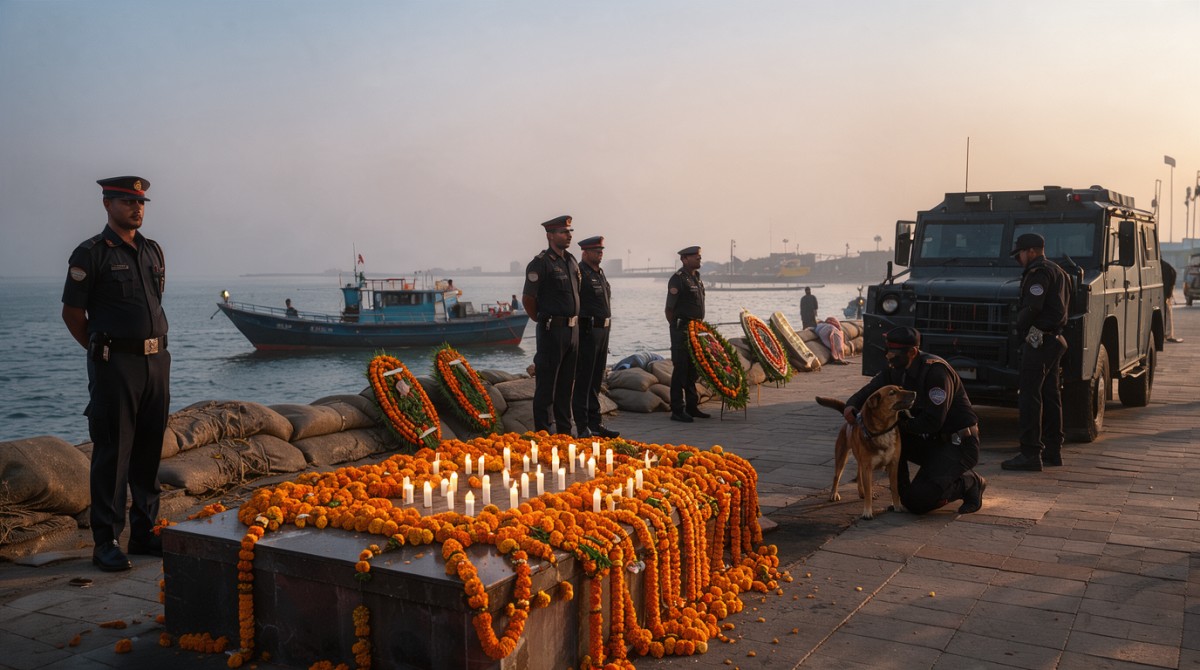
India marks the anniversary of the 2008 Mumbai attacks on November 26, a day that has become a reflective milestone for the nation’s evolving counter‑terrorism posture. The memory of the 26/11 siege—where ten heavily armed militants killed 166 people across multiple sites—still haunts the public imagination, yet the statistics released by the South Asia Terrorism Portal this year suggest a markedly different security environment. Terrorist fatalities have fallen to a few dozen, security‑force casualties are in single digits, and civilian deaths number only two. These trends invite a careful assessment of whether India’s long‑running fight against terror is finally tipping in its favour, or whether the apparent lull merely masks deeper challenges.
From Passive Posture to Proactive Kinetic Strategy
India’s early counter‑terrorism approach was characterised by a largely reactive stance, relying on diplomatic pressure and evidence‑gathering rather than direct confrontation. The 1999 hijacking of Indian Airlines Flight IC‑814, which forced the release of Pakistan‑based militants such as Ahmed Omar Sheikh and Masood Azhar, exemplified the limited leverage India possessed at the time. Subsequent attacks—including the 2001 Parliament assault by Jaish‑e‑Mohammed (JeM) and a series of bombings in Delhi, Pune and other cities—were met with condemnation and limited military mobilisation, but rarely with decisive cross‑border action.
The turning point arrived with the swearing‑in of Narendra Modi’s government in May 2014. Consolidating political power allowed the administration to adopt a more muscular counter‑terrorism doctrine. Rather than compiling dossiers for international forums, India began to pursue a “zero tolerance to terror” policy, emphasising kinetic operations that could directly degrade terrorist capabilities on the ground.
Key Milestones in the New Counter‑Terrorism Doctrine
The 2016 Uri attack on a army camp in Kashmir marked the first major test of India’s revised posture. In response, the Modi government authorised cross‑border surgical strikes that targeted terrorist camps in Pakistan‑administered Kashmir. These strikes, described as “precision strikes” in the source material, signalled a willingness to cross the Line of Control and deliver punitive blows without waiting for international consensus.
Following the 2019 Pulwama attack, which killed 40 soldiers, India escalated its response with the Balakot airstrike on February 26, 2019. This operation represented the first time the Indian Air Force conducted deep strikes on a JeM camp inside Pakistani territory, further cementing a doctrine of proactive, offensive counter‑terrorism that prioritises immediate retaliation over prolonged diplomatic negotiations.
Recent Operations Demonstrate Sustained Offensive Capability
In May 2025, India executed Operation Sindoor, a series of precision strikes over 88 hours targeting terrorist infrastructure across the border. The operation, conducted in response to the Pahalgam attack, underscores the continuity of the kinetic approach adopted since 2014. The scale and duration of the strikes illustrate an operational capacity that can sustain prolonged pressure on hostile elements.
Most recently, on November 19, 2026, Home Minister Amit Shah announced the elimination of the last known home‑grown terrorist, Latif Bhat, during a counter‑terrorism conference in Delhi. Shah’s statement that “the entire Kashmir has become free from India‑born terrorists” reflects the political narrative that the internal terror threat has been largely neutralised, shifting focus toward external, cross‑border sources.
Statistical Evidence of a Declining Terror Threat
Data from the South Asia Terrorism Portal reveal a sharp contraction in terrorist activity. Terrorist deaths this year stand at 25, a stark contrast to the peaks of 3,005 in 2001 and 1,232 in 2008. Likewise, casualties among Indian security forces have fallen to four this year, down from 883 in 2001 and 366 in 2008. Civilian fatalities have also plummeted to two, compared with 1,508 in 2001 and 915 in 2008. These figures suggest that the intensity of terrorist attacks has been dramatically reduced across multiple dimensions.
While the numbers are compelling, they do not capture the full scope of the threat. The data set focuses on lethal outcomes and does not account for thwarted plots, arrests, or the broader terror ecosystem that includes financing, recruitment and propaganda. Moreover, the statistics do not differentiate between cross‑border attacks and domestic radicalisation, a distinction that remains crucial for policy formulation.
Strategic Implications of a Reduced Terror Landscape
If the downward trend continues, India may be able to reallocate resources toward conventional security challenges, such as the rising geopolitical competition in the Indo‑Pacific and the need to modernise its armed forces. The narrative of a “knock‑out blow” to cross‑border terror, however, risks complacency. The source material cautions that premature celebrations could undermine years of hard work and sacrifice, implying that the underlying support networks for terrorism—especially those based in Pakistan—remain intact.
India’s emphasis on a proactive offensive approach, as articulated by Amit Shah, suggests a strategic intent to keep pressure on external sponsors while strengthening structural and operational capabilities. This dual focus—maintaining kinetic readiness while enhancing intelligence, border security and counter‑radicalisation programmes—will be essential to prevent a resurgence of violence.
Challenges Ahead: Sustaining Momentum and Managing Risks
One of the principal challenges lies in sustaining political will. The Modi government’s assertive posture has been underpinned by strong electoral mandates and a narrative of national security. Future administrations may face different domestic pressures, potentially altering the balance between offensive operations and diplomatic engagement. Additionally, the risk of escalation with Pakistan persists; each cross‑border strike carries the potential for retaliation, as seen in the diplomatic fallout after the 2019 Balakot strike.
Another concern is the evolution of terrorist tactics. As kinetic operations degrade physical infrastructure, terrorist groups may shift toward low‑intensity attacks, cyber‑enabled radicalisation or lone‑wolf operations that are harder to pre‑empt. The source material notes that earlier attacks, such as the 2011 briefcase bomb in Delhi, were claimed by groups affiliated with al‑Qaida, indicating a broader ideological spectrum that could adapt to changing security environments.
Conclusion: A Measured Assessment of Victory
India’s counter‑terrorism journey from a passive, evidence‑driven approach to a bold, kinetic doctrine has yielded measurable reductions in deaths and casualties. The statistical decline, coupled with high‑profile operations like Sindoor and the elimination of Latif Bhat, supports the view that India has made significant strides in weakening the terrorist threat. Yet the underlying dynamics—particularly Pakistan’s continued support for proxy groups—remain unresolved.
Consequently, while the data allow a cautiously optimistic appraisal, the strategic consensus articulated by senior officials stresses vigilance. The war against terror is unlikely to be declared won in absolute terms; rather, it is an ongoing contest that demands sustained offensive capability, robust intelligence, and diplomatic finesse. As India commemorates the anniversary of 26/11, the nation must balance celebration with the sober recognition that the fight against terror, though markedly subdued, continues to shape its security calculus.
This article was produced with AI-assisted research and editorial support. Reporting is based on the source material cited below. Sources: The Diplomat; thediplomat.com; Global1.News (25 November 2026).
By Kenji Tanaka, Staff Writer
What's Your Reaction?
 Like
0
 Dislike
0
 Love
0
 Funny
0
 Wow
0
 Sad
0
 Angry
0

Japan Correspondent at Global1.News. Tokyo-based voice covering Japanese politics, technology, economy, and culture. Tracks the intersection of tradition and innovation in one of the world's most dynamic societies.














Comments (0)