
A cheeky response to Trump and Sheinbaum’s first presidential trip to Asia: Wednesday’s mañanera recapped
President Claudia Sheinbaum’s Wednesday mañanera offered more than a routine policy update; it became a stage for a diplomatic duel, a showcase of Mexico’s infrastructure ambitions, and a signal of the president’s strategic calculus as she prepares for her first trip to Asia.
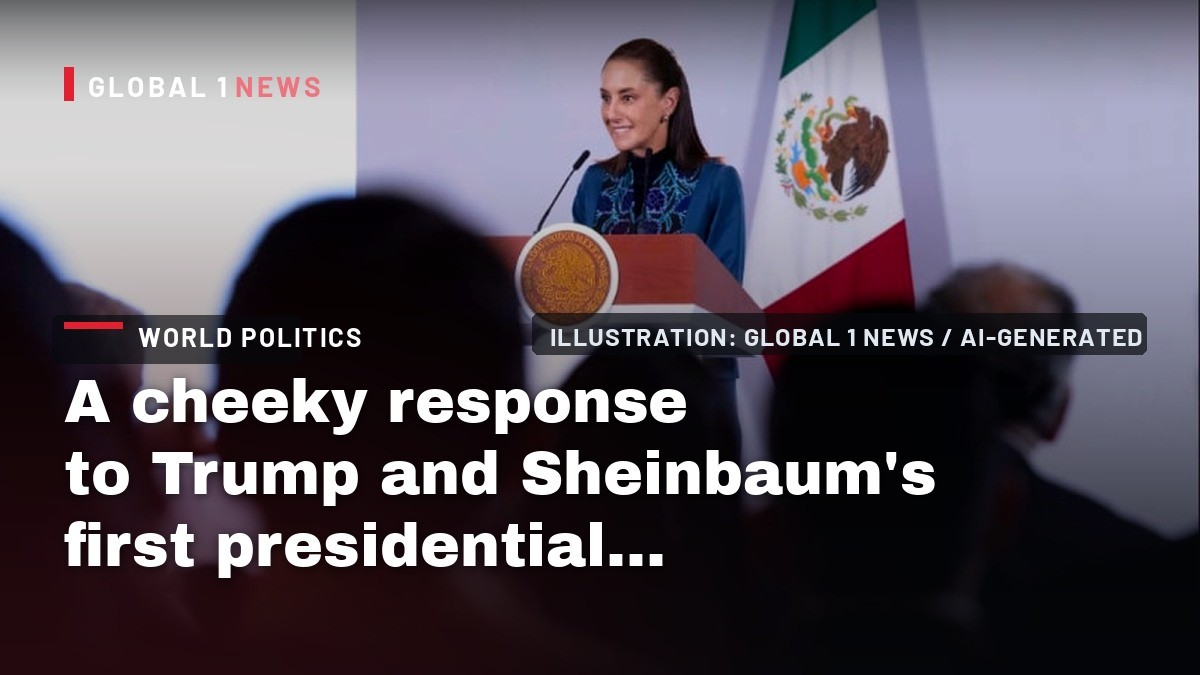
President Claudia Sheinbaum’s Wednesday mañanera offered more than a routine policy update; it became a stage for a diplomatic duel, a showcase of Mexico’s infrastructure ambitions, and a signal of the president’s strategic calculus as she prepares for her first trip to Asia. In a press conference that blended sharp retorts with forward‑looking announcements, Sheinbaum reminded both domestic audiences and international partners that Mexico will not be a silent by‑stander in the narratives that shape its image abroad, even as she underscores a collaborative security agenda with the United States.
Sheinbaum’s diplomatic riposte to Trump’s UN remarks
When asked about President Donald Trump’s recent United Nations address, which labeled Mexico the “epicenter” of cartel violence and called it “unacceptable” for the United States to share a 2,000‑mile border with a country “controlled by enemy cartels,” Sheinbaum responded with a measured yet pointed counter. She first highlighted that Trump also praised the “very good relationship” between the two governments, prompting a brief moment of levity before she turned to the more contentious part of his speech.
Sheinbaum said she could have echoed Trump’s criticism, noting that it would be “very difficult to live next to a country that has such a high level of illegal drug use” or “produces so many guns.” She chose not to utter those words, instead emphasizing that Mexico and the United States are “working in a coordinated way on security challenges” and “making progress.” The president’s decision to withhold a harsher rebuke was deliberate, underscoring a diplomatic balancing act: she wants to defend Mexico’s reputation without jeopardising the collaborative mechanisms that have been built to combat transnational crime.
Why Sheinbaum skipped the UN General Assembly
When pressed on her absence from the 81st session of the UN General Assembly in New York, Sheinbaum explained that “there are moments and then there are moments when one decides to go or not go.” She framed the decision as a judgment of timing rather than a rejection of the forum, noting that she also did not attend the previous year’s session. By delegating representation to Foreign Affairs Minister Roberto Velasco, she signaled confidence in her team’s ability to maintain Mexico’s voice on the world stage while she focuses on domestic priorities.
This approach aligns with her broader strategy of selective engagement: Sheinbaum appears to prioritize bilateral and multilateral meetings that directly advance Mexico’s economic and security agendas, such as the upcoming APEC summit in China, over symbolic appearances that may not yield immediate policy dividends.
The upcoming APEC trip to Shenzhen
Sheinbaum announced that she will travel to Shenzhen, China, on November 18‑19 to attend the APEC Leaders’ Meeting. This will be her first presidential trip to Asia, adding a new geographic dimension to her foreign‑policy portfolio that previously included visits to Panama, Brazil, Honduras, Canada, Guatemala, the United States and Spain. The Shenzhen visit is not only a diplomatic courtesy; it is a strategic rehearsal for Mexico’s own hosting of the APEC Leaders’ Meeting in 2028.
During the press briefing, Sheinbaum said Mexico will “receive the baton” in 2028, positioning the country as a future hub for Asia‑Pacific economic dialogue. She acknowledged that Vietnam will host the 2027 summit, indicating a continuity of engagement that will allow Mexico to build relationships and shape the agenda before its turn. For Mexican workers and entrepreneurs, the prospect of hosting APEC promises a boost in tourism, investment, and international visibility that could translate into jobs and infrastructure projects in the years to come.
Railroad investment: a cornerstone of the sexenio
Turning to domestic policy, Sheinbaum highlighted a massive rail‑investment program amounting to roughly 750 billion pesos for the current sexenio (2024‑30). She underscored that this commitment translates into about 60,000 jobs directly tied to railroad construction, a figure that reflects both the scale of the projects and the administration’s focus on job creation.
The president described trains as having “many virtues,” noting that they connect regions and cities while reducing greenhouse‑gas emissions by pulling cars and buses off the road. By framing rail as both an economic engine and an environmental solution, Sheinbaum is weaving together two of the most pressing concerns for Mexican families: the need for stable, well‑paid work and the desire for cleaner air in bustling urban centers.
Key rail corridors under construction
Sheinbaum’s briefing included updates on three major corridors: Mexico City‑Querétaro, Mexico City‑Pachuca, and Saltillo‑Nuevo Laredo. These routes are strategically chosen to link the capital with emerging industrial hubs and to improve north‑south connectivity toward the United States. The Saltillo‑Nuevo Laredo line, in particular, aims to streamline freight movement across the border, potentially lowering logistics costs for exporters and creating a more competitive supply chain for Mexican manufacturers.
By emphasizing the progress of these projects, the president signaled that the rail network is not a distant promise but an ongoing reality that is already generating employment and stimulating local economies. Communities along the tracks—often small towns that once relied on agriculture or informal trade—are now witnessing the arrival of construction crews, engineers, and supply trucks, a transformation that echoes the historic development of the ejido system, where collective effort reshaped the landscape.
Balancing security rhetoric with cooperation
Sheinbaum’s handling of Trump’s UN remarks illustrates a nuanced diplomatic posture. While she refuses to repeat the president’s accusations about drug consumption or gun production, she also refrains from outright condemnation, instead highlighting the “good relationship” and “coordinated work” on security challenges. This approach reflects an understanding that Mexico’s security problems are transnational; cooperation with the United States remains essential for tackling drug trafficking routes that cut across the border.
At the same time, the president’s refusal to “say it” signals a willingness to defend Mexican sovereignty against narratives that paint the nation solely as a source of illicit goods. By framing the issue as a shared difficulty—“very difficult to live next to a country that has such a high level of illegal drug use”—Sheinbaum invites a more balanced conversation that acknowledges mutual challenges without assigning blame.
Implications for Mexican families and the broader public
For the everyday Mexican—whether a worker in a tianguis, a farmer in a colonia, or a student in a pueblo mágico—the morning’s announcements carry tangible meaning. The rail projects promise new wages, training opportunities, and a future where travel between cities is faster and cheaper. Meanwhile, the diplomatic overtures to China and the United States aim to secure markets for Mexican products, from avocado orchards to automotive parts, ensuring that families can earn a living without having to migrate abroad.
Sheinbaum’s strategic communication style—mixing humor, firm rebuttal, and concrete policy details—reinforces her image as a president who listens to the concerns of ordinary citizens while navigating the complex geopolitics of North America and the Asia‑Pacific. As Mexico prepares to host APEC in 2028 and continues to expand its rail network, the hope is that these initiatives will translate into more resilient local economies, safer neighborhoods, and a national narrative that moves beyond the “epicenter of cartel violence” label to one of growth, connectivity, and shared prosperity.
This article was produced with AI-assisted research and editorial support. Reporting is based on the source material cited below. Sources: Mexico News Daily; mexiconewsdaily.com; Global1.News (23 September 2026).
By Rosa Martinez, Staff Writer
What's Your Reaction?
 Like
0
Like
0
 Dislike
0
Dislike
0
 Love
0
Love
0
 Funny
0
Funny
0
 Wow
0
Wow
0
 Sad
0
Sad
0
 Angry
0
Angry
0
Latin America/Andes Correspondent at Global1.News. Based in Bogota, covering politics, environment, energy, and social movements across the Andean region. Passionate about environmental journalism and communities protecting their land.










Comments (0)