
Zelenskyy says Ukraine sent 2 North Korean prisoners of war to South Korea
In a quiet moment at the United Nations General Assembly, President Volodymyr Zelenskyy revealed a development that connects the distant battlefields of Eastern Europe with the everyday concerns of families in Seoul.
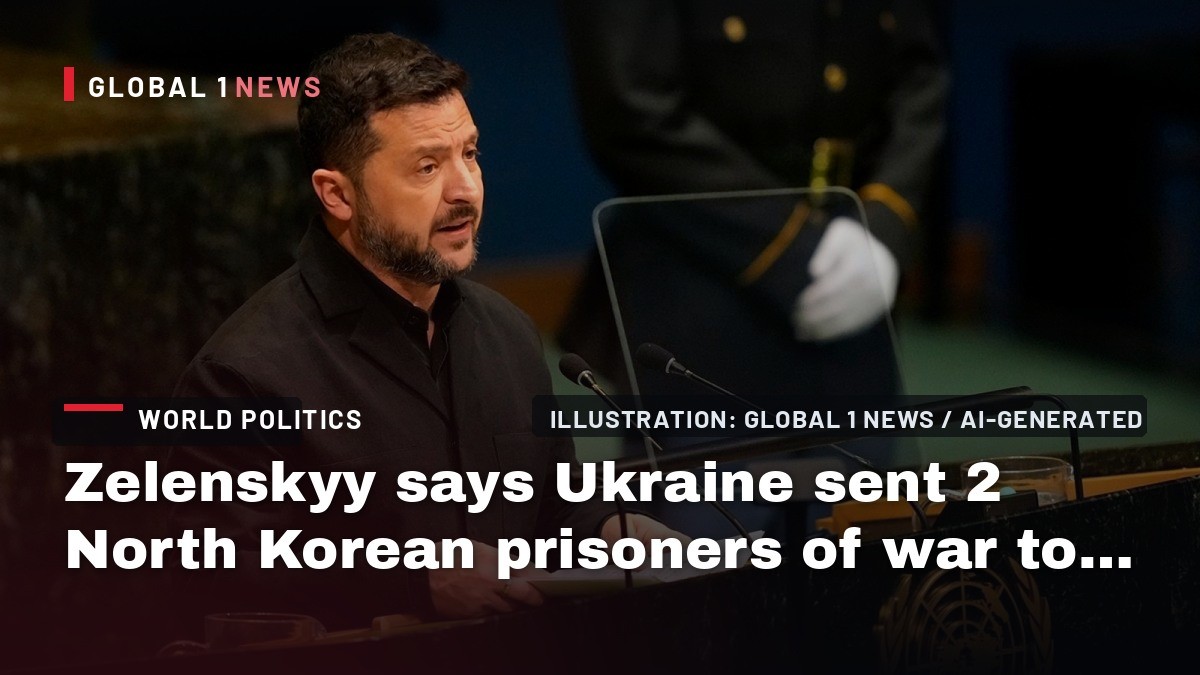
In a quiet moment at the United Nations General Assembly, President Volodymyr Zelenskyy revealed a development that connects the distant battlefields of Eastern Europe with the everyday concerns of families in Seoul. Ukraine has transferred two North Korean prisoners of war to South Korea, a gesture that reflects months of delicate diplomacy between Kyiv and Seoul after the soldiers were captured in Russia’s Kursk region in early 2025. While the details of the transfer remain confidential, the move underscores the humanitarian dimension of a conflict that has drawn in far‑flung allies and adversaries alike.
From Kursk to Seoul: the path of the captured soldiers
The two North Korean soldiers were taken prisoner during a clash in the Kursk border area in January 2025, when Russian forces, bolstered by Pyongyang’s contingent, repelled a Ukrainian incursion. Their capture was noted in the United Nations briefing, but the exact circumstances of their surrender were not disclosed. What is clear, however, is that the soldiers’ fate became a point of concern for South Korean officials, who warned Kyiv against returning them to the North where they could face persecution.
South Korea’s Foreign Ministry, while not confirming Zelenskyy’s statement outright, emphasized that any decision would be guided by the soldiers’ free will and international humanitarian law. The ministry declined to share specifics about the timing, route, or conditions of the transfer, describing the matter as “sensitive” and linked to the safety of the soldiers and their families. This cautious language reflects Seoul’s broader policy of balancing humanitarian concerns with the geopolitical sensitivities surrounding North Korea’s involvement in the war.
The human face behind the headlines
In his remarks to the U.N., Zelenskyy offered a stark glimpse into the soldiers’ mindset. “These guys are not easy to capture alive,” he said, recalling that one of the men attempted suicide when he realized he would become a prisoner, only to be thwarted by fate. “This is how they raise people in the North,” he added, hinting at the harsh discipline and indoctrination that shape North Korean soldiers. Such personal details, though brief, humanize a conflict that is often discussed in terms of numbers and weaponry.
Media reports from the period after their capture suggested that the prisoners expressed a desire to be resettled in South Korea. While the authenticity of those statements cannot be fully verified, they align with South Korea’s willingness to accept the men if they chose to stay, a stance that reflects Seoul’s broader humanitarian approach toward defectors and refugees from the North.
North Korea’s shadow on the battlefield
The presence of North Korean troops in Russia’s war effort has been a point of consternation for many observers. Since October 2024, South Korea’s intelligence service estimated that Pyongyang had dispatched roughly 15,000 soldiers to support Moscow, with about 2,000 of those troops killed in action. The two prisoners are part of a larger contingent that has fought alongside Russian forces, a partnership that deepened after the two countries publicly confirmed joint operations in April 2025 to repel a Ukrainian push into the Kursk region.
Beyond manpower, North Korea has supplied Russia with substantial quantities of artillery shells and ballistic missiles, bolstering Moscow’s capacity to sustain its campaign. This material support, coupled with the deployment of troops, signals a strategic alignment that places Pyongyang alongside Moscow and Beijing in a united front against Washington and its allies.
Regional security concerns and the nuclear question
South Korea, the United States, and their partners have long warned that Russia’s cooperation with North Korea could facilitate the transfer of high‑tech technologies that might accelerate Pyongyang’s nuclear and missile programs. The concern is that advanced Russian equipment, particularly in the fields of electronics and aerospace, could be reverse‑engineered or directly supplied to North Korean facilities, narrowing the gap in capabilities that Seoul has been striving to manage for decades.
These anxieties are not merely speculative. The ongoing war in Ukraine has highlighted how technology can be repurposed across theatres of conflict, and the prospect of a deeper Russia‑North Korea nexus adds a layer of complexity to regional security calculations. For Thailand, a nation that values diplomatic balance and regional stability, the development underscores the importance of multilateral dialogue within ASEAN and beyond, to mitigate the ripple effects of great‑power rivalries.
South Korea’s diplomatic balancing act
Seoul’s response to the prisoners reflects a nuanced diplomatic posture. While it has urged Kyiv not to repatriate the men to the North, it has also refrained from making a public commitment to accept them permanently, citing the need to respect the individuals’ wishes and the broader legal framework governing prisoners of war. This approach mirrors Thailand’s own diplomatic tradition of seeking consensus and avoiding overt confrontation, especially when dealing with sensitive humanitarian matters.
The South Korean foreign ministry’s statement highlighted that any resolution must align with international law and humanitarian principles. By framing the issue in terms of “free will” and “safety of the soldiers and their families,” Seoul positions itself as a compassionate actor, while also maintaining flexibility to respond to evolving circumstances on the ground.
Implications for the broader conflict
The transfer of the two North Korean prisoners, though a small number in the context of the thousands who have fought alongside Russian forces, carries symbolic weight. It demonstrates that Ukraine is willing to engage in humanitarian gestures even amid a protracted war, and it signals to allies that cooperation can extend beyond battlefield logistics to include the humane treatment of captured combatants.
For the international community, the episode serves as a reminder that the human costs of war are not confined to the front lines. Each captured soldier becomes a focal point for diplomatic negotiations, humanitarian advocacy, and public perception. The handling of these cases can influence broader narratives about the legitimacy and moral standing of the parties involved.
Looking ahead: lessons for Thailand and Southeast Asia
Thailand’s foreign policy, rooted in the principles of “Nam‑jai” (generosity of heart) and “Thainess,” often seeks to mediate conflicts and provide humanitarian assistance where possible. The situation in Ukraine, with its entanglement of regional powers and the involvement of distant actors like North Korea, offers a case study in how small states can navigate complex security environments while upholding humanitarian values.
As Southeast Asian nations watch the unfolding developments, the emphasis on protecting the rights and dignity of prisoners may inspire regional dialogues on the treatment of combatants and the application of international humanitarian law. Thailand, with its long tradition of Buddhist compassion, can play a constructive role by advocating for humane solutions, supporting refugee resettlement where appropriate, and encouraging transparent diplomatic channels that prioritize human welfare over geopolitical calculations.
This article was produced with AI-assisted research and editorial support. Reporting is based on the source material cited below. Sources: Khaosod English; khaosodenglish.com; Global1.News (24 September 2026).
By Ann Srisawat, Staff Writer
What's Your Reaction?
 Like
0
Like
0
 Dislike
0
Dislike
0
 Love
0
Love
0
 Funny
0
Funny
0
 Wow
0
Wow
0
 Sad
0
Sad
0
 Angry
0
Angry
0
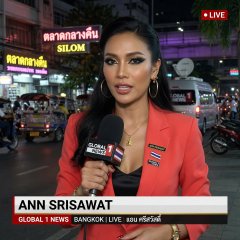
Southeast Asia Correspondent at Global1.News. Based in Bangkok, covering Thai and Southeast Asian politics, economy, technology, and culture. Deep regional perspective on one of the world's most dynamic regions.











Comments (0)