
WizardLM 13B: The 2023 Model That Rewired AI's DNA
Jessica Ali's retrospective on WizardLM 13B: Microsoft's 2023 Evol-Instruct model proved synthetic data pipelines beat raw scale, achieving 89.1% of ChatGPT's performance locally. The model is obsolete, but its DNA — Evol-Instruct, DPO, synthetic data — powers every modern AI. Data is t...
Folks, let me take you back to May 2023. GPT-4 was locked behind an API paywall, Big Tech was calling open-source AI a security risk, and the only way to run a "smart" model was to hand your data and cash to someone else's server. Then along comes WizardLM, a 13-billion-parameter model from Microsoft's research labs — and an Aitrepreneur video asking the question that had the local AI community buzzing: is this a new beginning for AI models? In 2026, that long-superseded 2023 model still holds the blueprint for everything you're running right now.
WizardLM 13B: The 2023 Model That Rewired AI's DNA
Beijing, China – 2023 — WizardLM-13B wasn't the biggest model on the block, and it didn't have the flashiest raw knowledge scores. What it did — with a paper called "Empowering Large Pre-Trained Language Models to Follow Complex Instructions" — was fundamentally change how the industry builds training data. The Aitrepreneur video captured the moment the paradigm shifted from "who has the biggest GPU cluster" to "who has the smartest data pipeline." It's a story still writing itself in every synthetic data pipeline from OpenAI to Anthropic to your local Ollama setup.
The Evol-Instruct Method: Training Data on Autopilot
Here's the thing that gets lost in every new model release: the bottleneck was never the architecture. It was the instructions. Before WizardLM, you had two dominant approaches. The InstructGPT approach — pay humans a fortune to hand-write thousands of instruction-response pairs. The Alpaca approach — distill knowledge from a proprietary model like GPT-3.5 by generating synthetic instructions. Faster, but you're still leaning on a closed system, and the data quality is capped by what that teacher model can produce.
WizardLM's Evol-Instruct said: what if we use an LLM to evolve the instructions themselves? You take a base set of instructions — 52,000 Alpaca instructions — and run them through an automatic evolution pipeline. The LLM becomes teacher, editor, and curriculum designer at once. Training data on autopilot. In-Depth Evolution makes a simple instruction brutally harder — adding constraints, increasing reasoning steps, concretizing abstract concepts, demanding multi-step solutions. Think "write a function to sort a list" evolving into one demanding multiple keys, graceful missing-key handling, and O(n log n) time complexity.
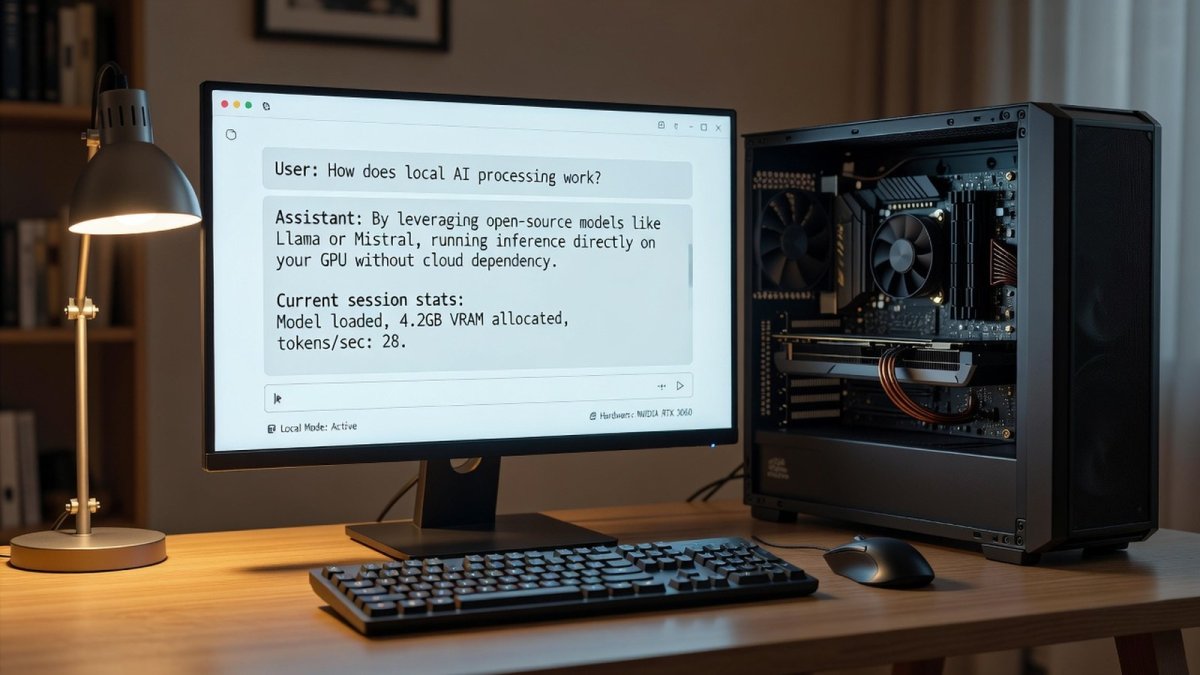
Then In-Breadth Evolution generates entirely new instructions inspired by existing ones, expanding topic coverage and diversity — "Explain photosynthesis" becomes a comparison of aerobic and anaerobic respiration. The result: a dataset covering a wider skill range and deeper difficulty spectrum than any human team could produce in the same timeframe.
The Benchmark Shock: 89.1% of ChatGPT's Performance
When Microsoft put WizardLM-13B through the Evol-Instruct testset with the GPT-4 automatic evaluation framework from FastChat, the results were a gut punch to the "open source can't compete" crowd: 89.1% of ChatGPT's performance on average — almost 100% or more on 10 specific skills, over 90% on 22.
Even more damning: WizardLM-13B beat Vicuna-13B, the darling of the open-source community, outright in GPT-4 automatic evaluation. The 7B version was also competitive with ChatGPT on complex instructions. I'm not going to call it a flawless victory. On the Open LLM Leaderboard v1, WizardLM 13B v1.2 scored MMLU 52, HellaSwag 79, ARC-Challenge 57, TruthfulQA 42, and Winogrande 73 — comparable to other 13B-class models of the era (Llama 2 13B Chat hit MMLU 55, Nous Hermes 53, Vicuna 13B v1.5 52). On raw knowledge benchmarks, it wasn't blowing the doors off. That was never the point. The point was instruction-following quality on complex, multi-step tasks — where WizardLM's real strength lived.
The Local AI Promise: Your GPU, Your Data, No API Bill
Let's get real about why this mattered in 2023. GPT-4 was API-only — you couldn't download it, fine-tune it, or run it offline. Every prompt went through someone else's servers. Open-weight models running on consumer GPUs were the counterweight — and WizardLM-13B was the proof of concept.
Thanks to quantization via llama.cpp, you could run WizardLM-13B on an 8GB VRAM card — an RTX 3060 12GB or an M1/M2 Mac with 16GB of unified memory would do. The Q4_K_M quantization fit in roughly 8GB of VRAM; Q5_K_M around 10GB, Q8_0 about 14GB, FP16 about 26GB. TheBloke's WizardLM-13B-1.0-fp16 on Hugging Face racked up 47,301 all-time downloads starting May 2023. The simplest path? ollama run wizardlm:13b.
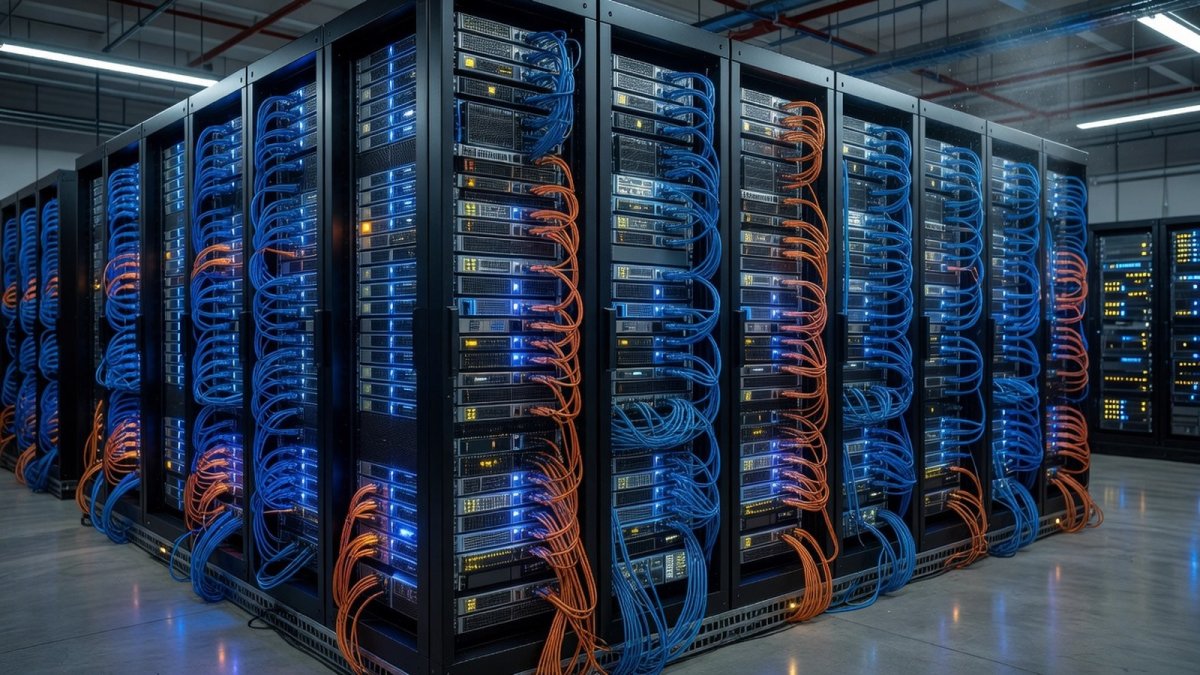
This was the promise: privacy, because your prompts never left your machine. No API fees, because you weren't paying per token. No censorship, because no corporate gatekeeper decided what you could ask. Offline capability, because you didn't need an internet connection. In 2023, that was a radical act — proof the local AI dream was a viable alternative to the corporate AI cloud.
What This Means: Data, Not Scale, Is the Moat
Here's where I get fired up, folks. The lesson of WizardLM isn't the model — it's what the model proved. Big Tech wanted you to believe only they could play this game because only they had the resources. WizardLM flipped that script: the quality of your training data, and the methodology you use to generate it, can be a bigger differentiator than raw model size.
Evol-Instruct demonstrated you could use an LLM to generate training data more complex, diverse, and challenging than humans could produce at scale. That's the foundation of virtually every modern AI training pipeline. OpenAI uses synthetic data. Anthropic uses synthetic data. Every serious lab on the planet does — and the lineage traces directly back to this 2023-era Microsoft research. The model is obsolete, but the METHOD won.
And let's not forget the strategic angle. Microsoft, the corporate giant, quietly bankrolled open-source research that made local AI mainstream — publishing the paper, releasing the weights, letting the community run with it. This wasn't charity; it was Microsoft understanding that open weights are a strategic moat. By seeding the ecosystem, they ensured the AI landscape would be shaped by their research.
The Legacy: WizardCoder, WizardMath, and the WizardLM 2 Explosion
WizardLM wasn't a one-hit wonder. WizardCoder took Evol-Instruct to code generation — a monster, though we've covered that story separately. WizardMath applied similar principles to mathematical reasoning. WizardVicuna 30B blended the approach with Vicuna's conversational data.
Then came April 2024, and the WizardLM team dropped the mic with WizardLM 2. The 8x22B version was a massive open-weight Mixture-of-Experts model on the Mixtral 8x22B backbone — roughly 141 billion total parameters, about 39 billion active per token, a 65,536-token context window, Apache 2.0. It was trained with a fully AI-powered synthetic-data pipeline: progressive Evol-Instruct plus Evol-Answer, supervised learning, staged DPO, and RLEIF. The 7B version was comparable to Qwen1.5-32B-Chat, surpassed Qwen1.5-14B-Chat and Starling-LM-7B-beta, and came close to GPT-4-1106-preview in human preferences evaluation.
That's the legacy. WizardLM 2 used staged DPO — a precursor to the RLHF alternatives now standard everywhere. The pipeline that started with 52K Alpaca instructions evolved into the fully AI-powered training regimes that power today's frontier models.
The 2026 Reality Check: Obsolete Model, Immortal DNA
Now let's be brutally honest, because that's what I do. In 2026, nobody is running WizardLM 13B as their daily driver. Qwen, Llama 3, Mistral, DeepSeek — these models have completely superseded it. If you're running ollama run wizardlm:13b today, it's for nostalgia or very specific research. The instruction-following quality that was revolutionary in 2023 is now table stakes.
But here's the thing: the DNA is everywhere. Every modern model trained on synthetic data is a descendant of Evol-Instruct. Every lab using DPO instead of traditional RLHF is feeling the influence of the WizardLM 2 training regime. The model is gone, but the methodology is immortal — WizardLM created a template for how AI would be built.
Your Move: What You Can Do With This Knowledge
So what do you do with this? First, stop chasing every new model release like it's the second coming. The models are transient; the methodologies are what matter. When you evaluate a new AI tool, ask: what's the training data pipeline? How was the instruction data generated?
Second, if you're building anything with AI — an app, a workflow, a business — understand that your data strategy is your moat. WizardLM proved a smart data pipeline can beat raw scale. Don't just feed your AI generic data. Evolve it. Constrain it. Diversify it. Make it harder and more complex with each iteration. That's how you build something that actually performs.
Third, embrace the local AI mindset. The promise of WizardLM — privacy, no API fees, no censorship, offline capability — is more relevant than ever. You don't need to send every prompt to a corporate cloud. You have the hardware. You have the tools. Run models locally, own your data.
Folks, the AI revolution isn't about the next shiny object. It's about understanding the foundations. WizardLM was a foundation — proof that data beats scale, open weights are a strategic advantage, and the little guy with a consumer GPU can stand toe-to-toe with the corporate cloud. Now go build something with it.
— Jessica Ali, Global 1 News — cutting through the BS, one story at a time.
This article was produced with AI-assisted research and editorial support. Reporting is based on sources cited in the article.
What's Your Reaction?
 Like
0
Like
0
 Dislike
0
Dislike
0
 Love
0
Love
0
 Funny
0
Funny
0
 Wow
0
Wow
0
 Sad
0
Sad
0
 Angry
0
Angry
0

Editor-in-Chief at Global1.News. Atlanta-based journalist who cuts through the BS and tells it like it is. Lead anchor, host, and the voice you hear when the spin stops and the truth starts.














Comments (0)