
UK Hands Ukraine Blueprints to Build Its Own Storm Shadow Missiles
In a recent BBC News report, British Prime Minister Andy Burnham was shown arriving in Kyiv on his first foreign visit since taking office, where he is handing over classified blueprints so Ukraine can build its own long-range missiles.
In a recent BBC News report, British Prime Minister Andy Burnham was shown arriving in Kyiv on his first foreign visit since taking office, where he is handing over classified blueprints so Ukraine can build its own long-range missiles.
UK Hands Ukraine the Blueprints to Build Its Own Storm Shadow Missiles
Kyiv, Ukraine – 24 August 2026 — On Ukraine's 35th anniversary of independence, British Prime Minister Andy Burnham met President Volodymyr Zelensky and announced that defence company MBDA will declassify information on UK components for the long-range Scalp missile, the French equivalent of the Storm Shadow. Within hours, Kremlin spokesman Dmitry Peskov accused Britain of “adding fuel to the fire” and threatened to destroy any future missile production sites.
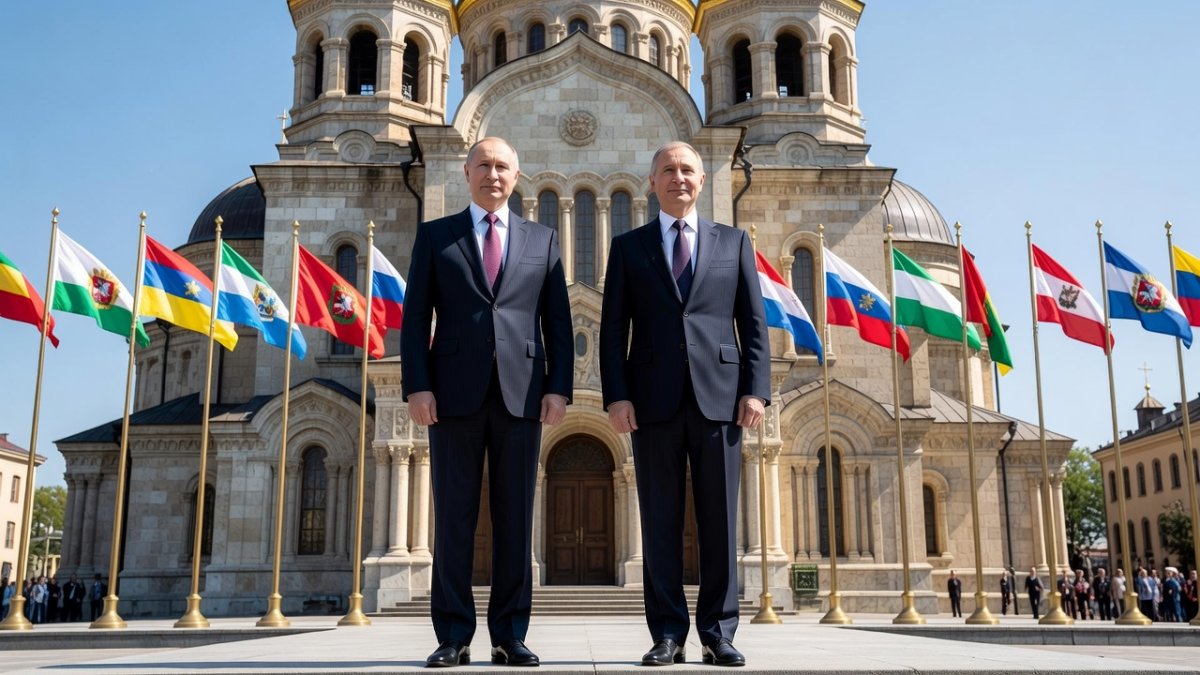
Blueprints for War: UK Hands Kyiv the Means to Build Storm Shadow Missiles
Andy Burnham, who became UK prime minister only a few weeks ago following the resignation of Sir Keir Starmer, chose Kyiv as the destination for his inaugural overseas trip, a decision freighted with symbolic and strategic meaning. The visit, which coincided with Ukraine's 35th anniversary of independence on Monday, saw Burnham meet President Volodymyr Zelensky and accept an award on behalf of the British people: the "Honorary Distinction to the British People, Gratitude of the Ukrainian People," presented at an Independence Day event outside St Sofia Cathedral in the heart of the capital. The timing was deliberate, a signal that Britain's commitment to Ukraine remains steadfast under new leadership.
The centrepiece of the visit was a landmark announcement on defence industrial cooperation. Burnham confirmed that the government had agreed to allow the defence company MBDA to declassify information on UK components for the long-range Scalp missile, the French equivalent of the UK's Storm Shadow. This decision follows France, where President Emmanuel Macron had already agreed to give Kyiv the blueprints for the joint Franco-British missile. In 2023, the UK was the first country to supply Ukraine with Storm Shadow missiles, soon followed by France; now, both nations are taking the unprecedented step of sharing the underlying technology itself, moving from selling weapons to empowering Ukraine to manufacture its own.
Defence Minister Luke Pollard told BBC Breakfast that the blueprints would help Ukraine "defend against this illegal invasion that's now killed so many people." He emphasised that Ukraine requires a variety of weapons systems, which is why the UK is also supplying air defence assets and counter-drone measures alongside the missile technology. The move represents a significant escalation in Western support, transitioning from providing finished munitions to transferring the intellectual property and manufacturing know-how that could, in time, make Ukraine a producer of advanced strike weapons rather than merely a recipient. It is a profound shift in the nature of military assistance.
Kremlin Fury: 'Fuel to the Fire' and a Threat to Destroy Production Sites
The Kremlin's response was swift and characteristically bellicose. Spokesman Dmitry Peskov said the UK decision would "add fuel to the fire," asserting that Britain is "participating in this war" on Ukraine's side and is "methodically and regularly adding fuel to the fire and methodically and regularly plotting to prevent any progress in the peace process." The language was carefully chosen to frame the UK not as a mediator or supporter but as a direct belligerent, a narrative Moscow has consistently pushed since the full-scale invasion began in February 2022. Peskov's remarks were designed to portray London as an obstacle to any negotiated settlement.
Peskov went further, issuing a direct military threat. He said the Russian military was already systematically gathering data to identify the location of any missile production sites and destroy them. This threat extends the logic of Russia's targeting of Ukrainian infrastructure to include future manufacturing facilities, a warning that the blueprints themselves are now considered legitimate military objectives. The Russian embassy in the UK echoed this line, accusing Britain of "deliberately opting for an escalation of the Ukraine crisis" and warning that "the deeper its involvement in the conflict... the higher the price it will pay." The diplomatic temperature has risen markedly.
Burnham's reply to Peskov was pointed and defiant: "Who started the fire? That's the question, isn't it." The retort, delivered with characteristic bluntness, reframed the Kremlin's metaphor to place responsibility for the war squarely on Moscow. Separately, Russia confirmed that its ambassador to the UK, Andrei Kelin, had left his post in London in recent weeks. The Kremlin has not named a replacement, though the embassy told the BBC this did not reflect an intention to downgrade relations. The absence of an ambassador, however, speaks to the depth of the diplomatic freeze between London and Moscow.
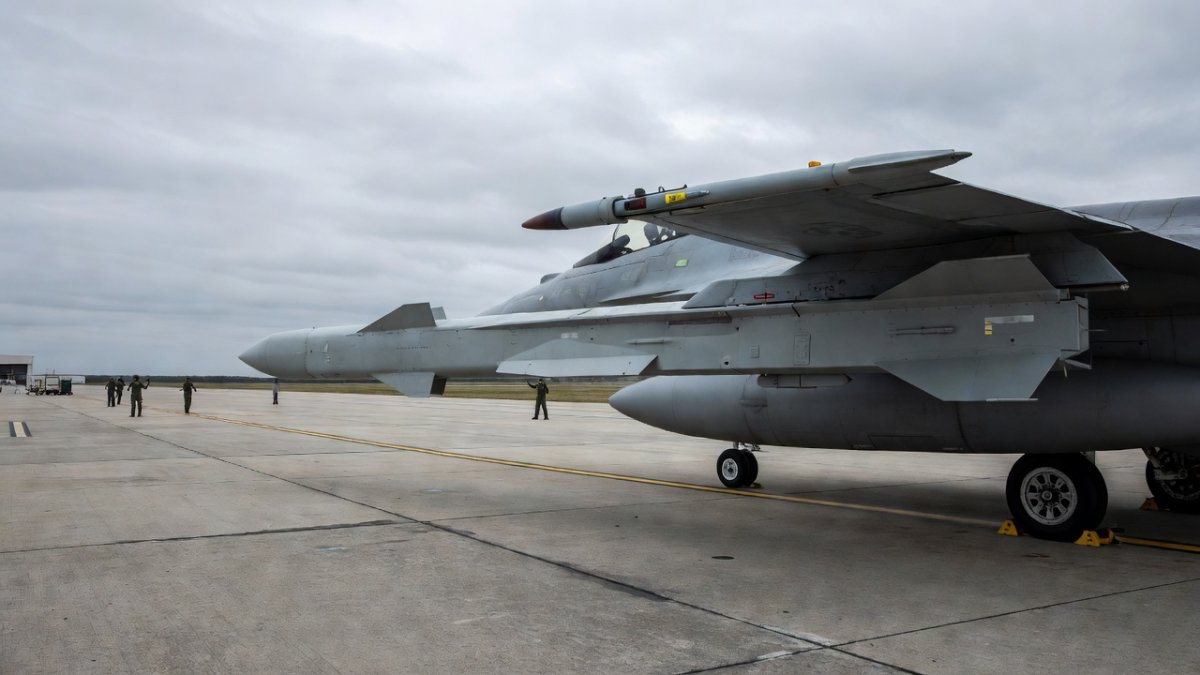
What the Scalp Missile Can Do — and What It Cannot
The long-range Scalp missile is a formidable piece of military hardware. Weighing 1,300kg and measuring 16.7ft (5.10m) in length, it can hit targets around 150 miles into Russian territory. While this range does not match Ukraine's deep-strike drones, which have reached targets far deeper into Russia, the missile represents a significant step in sharing weapons technology between the UK and Ukraine. MBDA, the manufacturer, says the missile is designed to hit pre-planned, stationary targets, operates day and night in all weather conditions, and possesses advanced navigation systems. It is in service with the Royal Air Force, French Air Force and Italian Air Force, and has seen combat in Iraq, Syria and Libya.
Experts quoted by BBC Verify offered a nuanced assessment of the missile's capabilities. Justin Crump, CEO of the risk firm Sibylline, said the missile is "more deadly than drones" and best placed to hit "hardened bunkers and high value military targets," including sites Russia uses to launch Iskander ballistic missiles. This precision strike capability against fortified positions is a qualitative advantage over drones, which are often intercepted or diverted from their targets. Christoph Bergs of the Royal United Services Institute (RUSI) cautioned, however, that it will take time to set up production, meaning the strategic impact of the blueprints will not be felt immediately on the battlefield.
Retired Major General Volodymyr Havrylov, former Ukrainian deputy defence minister, called the transfer a "game changer" when the first Ukrainian ballistic missiles reach targets close to Moscow and St Petersburg, where Russia's defence industry is concentrated. His comment underscores the strategic significance of the move: the ability to strike deep into Russia's industrial heartland with precision-guided munitions, produced domestically, would fundamentally alter the military calculus. It would reduce Ukraine's dependence on Western-supplied missiles and give Kyiv a sovereign strike capability that Moscow cannot easily counter through export controls or diplomatic pressure on third countries.
The Coalition of the Willing and Ukraine's Air Defence Gap
Beyond the missile announcement, Burnham was scheduled to chair his first meeting of the "coalition of the willing," a grouping set up by the UK and France under Starmer's premiership to coordinate military support for Ukraine. The main topic of discussion was expected to be missile interceptors, the critical gap in Ukraine's air defence architecture. Zelensky has repeatedly asked for more Patriot interceptors to combat Russian ballistic missiles; on Sunday, he said Ukraine had requested 360 of them. The scale of the request reflects the intensity of Russian missile attacks and the vulnerability of Ukrainian cities and infrastructure to strikes that current air defences cannot reliably intercept.
Ukraine relies heavily on US supplies of Patriot interceptors, but stockpiles are running low because of the war in Iran, which has consumed significant American munitions. This leaves Ukraine exposed at a critical moment, as Russia continues to target energy infrastructure and population centres ahead of the winter months. BBC Ukraine correspondent Dan Johnson noted that Zelensky hopes US President Donald Trump will follow the UK and France in trusting Ukraine with advanced technology, including permission to produce Patriot interceptors domestically. Such a move would represent a parallel to the UK's decision on Scalp missiles, but it remains uncertain whether Washington will follow suit.
Burnham also met European Council President Antonio Costa on the train to Kyiv, and said "the UK had to be bolder in terms of getting closer to the bloc," building on defence and security ties. This remark signals a broader strategic ambition: using the Ukraine crisis as a catalyst for deeper UK-European defence cooperation, despite the Brexit divorce. The coalition of the willing, therefore, serves a dual purpose — coordinating immediate military aid to Ukraine while also forging a new security architecture between the UK and its European partners. The meeting's outcome on interceptors will be closely watched in Kyiv, Moscow and Washington alike.
Independence Day Under Fire: The Battlefield Overnight
As Burnham attended the Independence Day ceremony at St Sofia Cathedral, the war continued unabated across Ukraine and inside Russia. Zelensky used the occasion to deliver a defiant message: "Ukrainians will not be cobblestones under the feet of tsars and rulers. Ukrainians will not submit." In his national address, marking "1,643 days of full-scale war," he expressed hope that "America will lose all its contradictions and phobias about Russia. The Russians must be brought to the negotiating table." He called on Europe to be "united," "ambitious" and "brave," and urged China to "no longer remain silent." The speech was both a rallying cry and a diplomatic appeal.
The overnight battlefield reports painted a grim picture. A Russian drone hit a residential apartment block in Chernihiv, about 100 miles north of Kyiv, with 14 people being treated for injuries including two children aged 12 and 17. In Russia's Belgorod region, Ukrainian drone strikes killed two men in the village of Tavrovo and wounded two in Oktyabrsky. Russia's children's rights commissioner Maria Lvova-Belova said three teenagers, aged 13, 15 and 16, were killed when a children's centre in Krasnodar territory was hit by "drone debris," with six other children hospitalised. The competing casualty figures underscore the war's reach into civilian populations on both sides of the border.
Ukrainian drones also hit three Ozon warehouses in Adygeya, Makhachkala and Krasnodar, marking a third consecutive night of strikes on the retailer, which Ukraine has said sells dual-use items. Ozon warehouses in Samara and Orenburg were hit on Saturday and Sunday, and Kyiv has repeatedly targeted Wildberries warehouses since July. Commander of Ukrainian drone forces Robert Brovdi said they hit a Russian MiG-29 fighter jet in the Rostov region, while Russia's defence ministry claimed 351 Ukrainian drones were intercepted overnight. In Ukraine, five people were killed and 15 wounded in Russian attacks on the Kharkiv region, and the Odesa region came under a "massive missile-and-drone attack" per regional head Oleh Kiper, with two Epicentre shopping centres hit outside Odesa. Moscow also claimed its forces captured three more villages — Novokostyantynivka in Sumy, Kucheriv Yar in Donetsk and Dolynka in Zaporizhzhia — though these claims were not independently verified.
Analysis — A Signal of Trust With Global Consequences
The decision to hand over missile blueprints is more than a military aid package; it is a structural statement about the future of the war and the nature of Western support. By declassifying MBDA's technology, the UK is effectively betting that Ukraine will survive and thrive as an independent, sovereign state capable of manufacturing its own advanced weapons. This is a profound act of trust, one that signals to Moscow that the West is prepared to invest in Ukraine's long-term defence industrial base, not merely its immediate battlefield needs. The message is clear: the West is not looking for a quick exit but is committed to a durable Ukrainian victory.
The move also carries significant risks for the UK. By transferring sensitive technology, London is exposing itself to accusations of escalation and potentially setting a precedent for other nations to share advanced weapons systems. The Kremlin's threat to destroy production sites is a direct challenge to this policy, and the UK must now consider the security of any future Ukrainian manufacturing facilities. There is also the question of proliferation: once technology is shared, it is difficult to control its spread. The UK will need to maintain oversight and ensure that the blueprints do not fall into unintended hands, a concern that will require ongoing diplomatic and intelligence engagement.
For ordinary Russians, the implications are more immediate. The war economy has already stretched resources thin, and the prospect of Ukrainian-produced missiles striking deeper into Russian territory raises the stakes for a population that has largely been insulated from the conflict's direct consequences. The strikes on Ozon and Wildberries warehouses, while militarily modest, are a reminder that the war is not confined to the front lines. As Ukraine gains the ability to produce its own long-range missiles, the psychological and economic impact on Russian society is likely to grow, potentially increasing domestic pressure on the Kremlin to seek a negotiated settlement.
The broader pattern is clear: Western defence industrial support for Ukraine is evolving from providing finished weapons to enabling domestic production. This shift, if sustained, could fundamentally alter the balance of power in the region. Ukraine would no longer be dependent on the vagaries of Western political cycles and stockpile availability but would possess a sovereign capability to defend itself and deter future aggression. The UK's decision, following France's lead, is a significant step in this direction, and it sets a precedent that other nations, including the United States, may be pressured to follow.
Looking ahead, the immediate focus will be on the coalition of the willing meeting and whether it can deliver the Patriot interceptors Ukraine urgently needs before winter. The outcome of that meeting will determine Ukraine's ability to protect its cities and energy infrastructure from Russian missile barrages in the coming months. The question of whether Washington will follow London and Paris in trusting Ukraine with advanced technology remains open, but the pressure is mounting. As Burnham said, "We are not fair-weather friends, we will be there in Ukraine's hour of need and that won't change." The blueprints are a tangible promise of that commitment, but the true test will come in the months ahead, as Ukraine seeks to turn paper plans into operational reality.
By Irina Volkov, Staff Writer
This article was produced with AI-assisted research and editorial support. Reporting is based on sources cited in the article.
What's Your Reaction?
 Like
0
Like
0
 Dislike
0
Dislike
0
 Love
0
Love
0
 Funny
0
Funny
0
 Wow
0
Wow
0
 Sad
0
Sad
0
 Angry
0
Angry
0

Russia/Eastern Europe Correspondent at Global1.News. Covering Russian politics, energy, security, and the shifting dynamics of the post-Soviet space. Provides clear-eyed analysis on one of the world's most opaque regions.











Comments (0)