
Israel's New Daraa Incursion Tests the US-Brokered De-escalation Process Hours After It Began
Israel's forces advanced into the western Daraa countryside hours after US-mediated Syria-Israel de-escalation talks in Jordan, exposing the fragile security track as Damascus weighs a security agreement covering southern Syria and a UN-only buffer zone.

The fragility of the US-mediated security track between Damascus and Tel Aviv was laid bare on Monday, when Israeli forces launched a fresh incursion into the western countryside of Syria's Daraa province—less than 24 hours after senior Syrian and Israeli officials met in Jordan for high-level de-escalation talks. The raid, reported by Syrian state media, underscores the yawning gap between diplomatic process and military reality on the ground in southern Syria.
Syrian Alikhbariah TV reported that "Israeli occupation forces advanced with several military vehicles into the village of Maariya in the western Daraa countryside." The operation follows a separate Israeli raid on Sunday in the town of al-Rafid in Quneitra province, during which a shepherd was arrested. These near-daily incursions—including raids, searches, arrests, and the establishment of military checkpoints—have become a defining feature of the post-Assad security landscape in Syria's southern provinces.
Israel's New Daraa Incursion Tests the US-Brokered De-escalation Process Hours After It Began
Istanbul, Türkiye – Aug 24, 2026 — Syrian Alikhbariah TV reported that "Israeli occupation forces advanced with several military vehicles into the village of Maariya in the western Daraa countryside." The operation follows a separate Israeli raid on Sunday in the town of al-Rafid in Quneitra province, during which a shepherd was arrested. These near-daily incursions—including raids, searches, arrests, and the establishment of military checkpoints—have become a defining feature of the post-Assad security landscape in Syria's southern provinces.
A Diplomatic Track Running on Fumes
The timing of Monday's incursion is particularly significant. On Sunday, Syrian and Israeli officials met in Jordan for what Syria's state news agency SANA described as high-level, US-mediated talks aimed at easing tensions following recent Israeli strikes on Syrian territory. The meeting, which included Syria's Foreign Minister Asaad al-Shaibani and Israeli intelligence officials, focused on "practical mechanisms to halt Israeli strikes, arrests and targeted operations," according to a diplomatic source cited by SANA. The talks also sought to revive negotiations toward a security agreement that could lay the groundwork for a broader future accord. A diplomatic source said the meeting was "part of efforts aimed at reducing escalation following the latest Israeli shelling of Syrian territory and rising tensions in southern Syria." Notably, the two sides also discussed efforts to ease tensions between Israel and Türkiye—a recognition that the Syrian theater has become a proxy arena for a wider regional rivalry. Yet the immediate resumption of Israeli military operations in Daraa suggests that the mechanisms discussed in Amman are either not yet operational or are being deliberately tested by actors on the ground. The cautious phrasing used by diplomats—that mechanisms "are being discussed" and that the talks "aim to" reduce escalation—reflects a process that remains aspirational rather than enforceable.The Security Agreement That Almost Was
The core of the diplomatic effort is a proposed security agreement between Israel and the government of Syrian President Ahmed al-Sharaa. According to al-Shaibani, who spoke to Reuters on Saturday, the two sides had agreed on paper to "almost everything" around the beginning of the year. This included arrangements for security zones in southern Syria and a buffer zone where only United Nations forces would be present. The framework, as described, would represent a significant concession by Damascus—accepting limitations on its own military deployment in the south in exchange for a halt to Israeli strikes and a defined UN-monitored buffer zone. For Washington, which has spent more than a year brokering this arrangement, it would provide a template for a broader normalization of Syrian-Israeli relations. However, al-Shaibani expressed deep skepticism about Israel's willingness to implement the agreement. "There is a lack of trust between them," he told Reuters, adding that Damascus doubted Israel's commitment to the terms. The Israeli prime minister's office did not respond to requests for comment on these remarks, a silence that speaks volumes about the current state of the process. The talks had been suspended since the start of the Iran war, and Syria cut off contact entirely after Israeli strikes on Syria's Abu al-Duhur air base last week. The resumption of talks in Jordan was therefore itself a significant diplomatic achievement—but one that Monday's Daraa raid has already called into question.Abu al-Duhur and the Türkiye-Israel Rivalry
The Abu al-Duhur air base, located approximately 70 kilometers east of the Turkish border in Idlib province, has become a flashpoint in a broader structural rivalry between Israel and Türkiye. The base, largely out of service since 2013 and having changed hands multiple times during Syria's conflict, was struck by Israeli forces on August 18. The strikes hit the runway and storage facilities, with no casualties reported. What transformed this from a routine Israeli operation into a diplomatic crisis was Prime Minister Benjamin Netanyahu's indication that the "operation carried a message for Türkiye." This framing, reported by Turkish columnist Murat Yesiltas, elevated the strike beyond a tactical military action into a strategic signal of Israeli opposition to Ankara's expanding security cooperation with Damascus. Türkiye's Foreign Ministry "strongly condemned" the strikes, while Syria's Foreign Minister al-Shaibani denied any Turkish military presence at the base. The Israeli Prime Minister's Office offered its own justification: "Israel repeatedly warned Syria that such a deployment would pose a threat to Israel's security. Syria chose to ignore these warnings."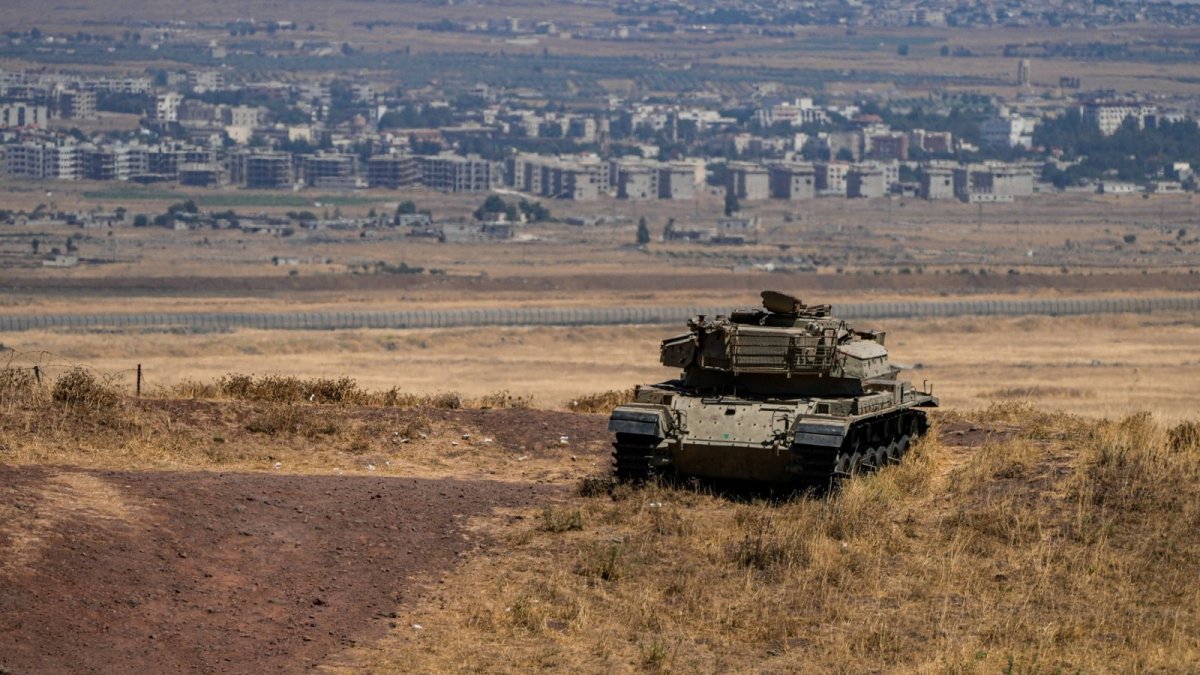
Competing Visions for Post-Assad Syria
The Abu al-Duhur incident and the ongoing southern Syria incursions reflect fundamentally different conceptions of what Syrian security should look like after the Assad regime's collapse. For Türkiye, stabilization requires effective state institutions, a professional military, and sufficient national defense capabilities. A weak Syrian state, in Ankara's view, cannot secure its borders, prevent terrorist organizations from reorganizing, control armed groups, or facilitate the return of displaced populations. Israel sees the same process through a different lens. Its initial response to Syria's political transition involved extensive attacks against Syrian military infrastructure. By degrading strategic facilities, weapons depots, and defense capabilities, Israel sought to prevent Damascus from rebuilding a meaningful military capacity. This strategy has also acquired a territorial dimension: expanding occupation around the Golan Heights and extending military presence deeper into Syrian territory, establishing what analysts describe as a new sphere of influence. The result is a structural competition in which Syria has become the most visible arena of Turkish-Israeli rivalry. For years, tensions between Ankara and Tel Aviv unfolded primarily through political rhetoric. The Abu al-Duhur strike and Netanyahu's explicit messaging suggest this rivalry is entering a more dangerous, operational phase.Three Models of Regional Order
The deeper competition in Syria involves three distinct approaches to regional order. Iran continues to rely on asymmetric capabilities, escalation leverage, and its capacity to generate insecurity across interconnected theaters. Israel has moved from conventional deterrence toward a model of military domination—repeated air operations, preventive strikes, and insistence on unrestricted freedom of action across Syrian territory. Türkiye offers a third approach, combining diplomatic engagement, defense cooperation, and regional coordination. This model positions Ankara as a stabilizing actor that can work with Damascus to rebuild state institutions while maintaining its own security interests along the border. Israeli domestic politics reinforce these tensions: Netanyahu's prolonged war politics have deepened the securitization of Israeli society and elevated military logic above other considerations. The Jordan talks, which included a discussion of Israel-Türkiye tensions, represent an attempt to manage this three-way competition. But the structural drivers of rivalry remain unaddressed. Israel's insistence on military domination directly contradicts Türkiye's vision of a rebuilt Syrian state with credible defense capabilities. Iran's asymmetric posture adds a third layer of complexity that neither Ankara nor Tel Aviv can ignore.What the Daraa Raid Means for the Emerging Order
Monday's incursion in Maariya village is more than a routine military operation. It is a test of whether the US-mediated process can translate diplomatic agreements into on-the-ground restraint. The fact that Israeli forces advanced into Daraa hours after the Jordan talks concluded suggests that either the mechanisms discussed are not yet operational, or that elements within Israel's security establishment are signaling their opposition to the process. For Washington, the stakes are significant. The United States has invested more than a year in brokering a security agreement between Israel and Syria's new government. The framework—security zones in southern Syria, a UN-only buffer zone, and a halt to Israeli strikes and arrests—represents a potential template for broader regional stabilization. But the persistent gap between diplomatic commitments and military actions undermines the credibility of the entire process. For Damascus, the situation is equally fraught. President al-Sharaa's government is being asked to accept limitations on its own sovereignty in the south—a politically difficult position—in exchange for promises that Israel has so far failed to honor. Al-Shaibani's public expression of doubt about Israeli intentions reflects a broader skepticism within the Syrian government about whether Tel Aviv is genuinely committed to a negotiated settlement. The regional implications extend beyond Syria's borders. The Israel-Türkiye dimension, explicitly discussed in the Jordan talks, adds a layer of complexity that Washington must manage. Ankara's expanding role in Syria, combined with Israel's military domination model, creates a structural rivalry that could destabilize the entire eastern Mediterranean. The emerging security order in Syria will be shaped not only by the Damascus-Tel Aviv track but by how effectively the United States can mediate between Ankara and Jerusalem. For now, the process continues—but it is running on fumes. The Daraa incursion demonstrates that diplomatic achievements on paper do not automatically translate into military restraint on the ground. The coming weeks will reveal whether the Jordan talks represent a genuine turning point or merely another chapter in the long, troubled history of Syrian-Israeli negotiations.By Malik Hassan, Staff Writer
This article was produced with AI-assisted research and editorial support. Sources: Daily Sabah, SANA, Reuters, Alikhbariah TV, AFP.
What's Your Reaction?
 Like
0
Like
0
 Dislike
0
Dislike
0
 Love
0
Love
0
 Funny
0
Funny
0
 Wow
0
Wow
0
 Sad
0
Sad
0
 Angry
0
Angry
0

Middle East Correspondent at Global1.News. Based in Beirut, covering politics, conflict, energy, and society across the Middle East. Brings context and depth to a region often reduced to headlines.














Comments (0)