
US strikes on alleged drug boats could be crimes against humanity, says UN
In the wake of a damning United Nations report, the United States’ “Southern Spear” campaign—purportedly aimed at eradicating narco‑terrorism—has ignited a fierce debate across Latin America.
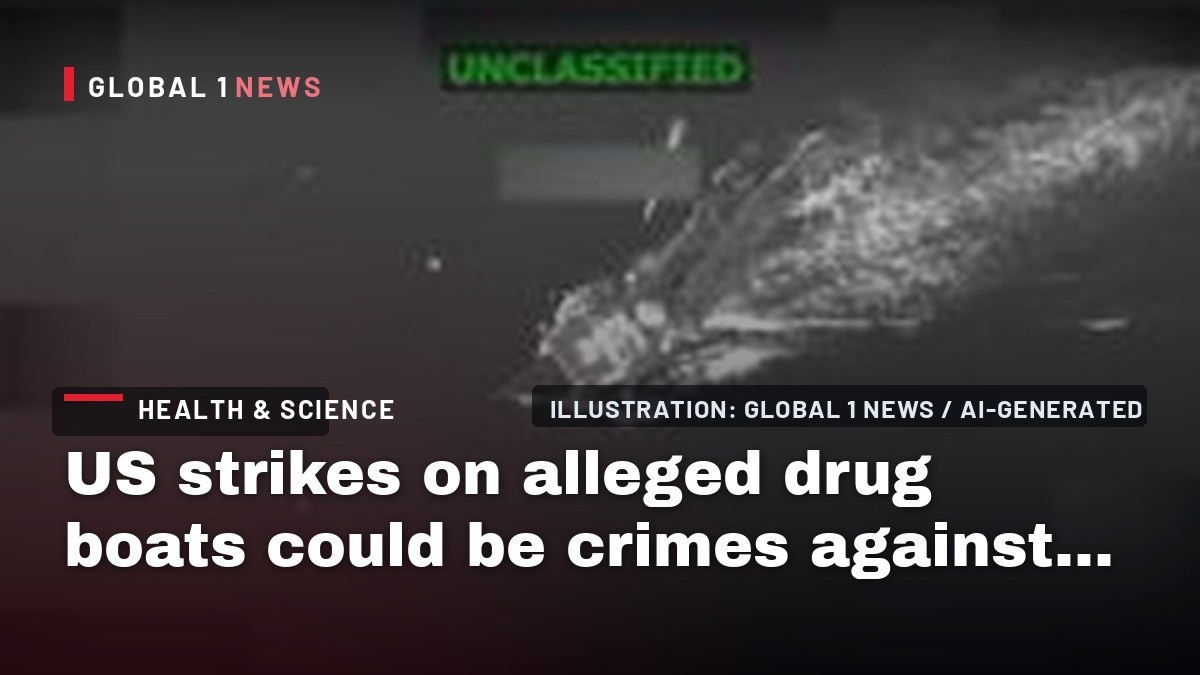
In the wake of a damning United Nations report, the United States’ “Southern Spear” campaign—purportedly aimed at eradicating narco‑terrorism—has ignited a fierce debate across Latin America. The UN’s Special Rapporteur, Ben Saul, concluded that at least 68 airstrikes on vessels in the Caribbean and Pacific, carried out since September of last year, breached international law and may amount to crimes against humanity. For communities living along the coasts of our region, the numbers are more than statistics; they are a stark reminder of how foreign military power can turn the sea into a battlefield, often with little accountability.
UN findings: a stark tally of death
The UN Human Rights Council brief, released on Monday, laid out a chilling ledger: more than 220 lives have been taken in these strikes, with Saul estimating 223 people killed across the documented attacks. The report emphasizes that even if the targets were linked to designated terrorist groups, they had not launched an armed attack on the United States—a prerequisite under international law for a self‑defence claim.
Saul’s language is unequivocal. He described the strikes as “serial extrajudicial killings” that violate the right to life, international humanitarian law, the law of the sea, narcotics suppression conventions, and counter‑terrorism statutes. By framing the operations as unlawful killings, the UN signals a potential breach of customary international law, opening the door to accusations of crimes against humanity.
The US narrative: “Narco‑terrorists” under fire
Southcom, the command overseeing US forces in the region, has consistently framed the strikes as necessary actions against “narco‑terrorists.” In a statement following the most recent Caribbean attack, officials highlighted “confirmed intelligence” that allegedly linked the vessel to drug trafficking, justifying the killing of four individuals. The operation, known as “Southern Spear,” was launched in early September and has been presented as a defensive measure to protect American lives from the scourge of narcotics.
Defence Secretary Pete Hegseth has echoed this rhetoric, positioning the campaign as a shield for the hemisphere against drugs that are “killing our people.” Yet, the UN report underscores a glaring gap: officials have not provided definitive evidence that the targeted vessels were indeed involved in trafficking. This lack of transparency fuels suspicion that the strikes may be driven more by geopolitical posturing than by concrete counter‑narcotics objectives.
Latin America’s political backlash
From the outset, the operation drew sharp criticism from regional leaders. Venezuelan President Nicolás Maduro—then in power when the strikes began—condemned the attacks as violations of sovereignty. Earlier this year, US forces carried out a highly controversial night‑time raid in Caracas, seizing Maduro in a move that further strained diplomatic ties. The incident amplified fears that the United States is willing to breach international norms to pursue its security agenda.
In Colombia, left‑wing President Gustavo Petro, a vocal opponent of “Southern Spear,” was forced out of office in August after a Trump‑backed candidate won the June elections. Petro’s ouster illustrates how US‑aligned political shifts can reshape the region’s stance on American security initiatives, often sidelining dissenting voices that call for greater scrutiny of such operations.
Human cost: stories behind the numbers
Each casualty listed in the UN’s tally represents a family torn apart, a community left to mourn. The report notes that the strikes have taken place “outside US territorial waters,” meaning they occur in international zones where local fishermen and coastal residents often ply their trade. When a vessel is targeted, the ripple effects extend beyond the immediate loss of life, disrupting livelihoods and sowing fear among those who depend on the sea for survival.
Although the UN document does not provide individual names, the mention of “four narco‑terrorists” killed in the latest Caribbean strike hints at a pattern: the US military publicly labels victims as terrorists, while the broader international community questions the veracity of such designations. This dichotomy underscores the need for independent investigations that can verify claims and give voice to the victims’ families.
Legal complexities: self‑defence versus extrajudicial killing
International law permits self‑defence only when an armed attack occurs against a state. Saul’s analysis points out that the vessels targeted had not staged such an attack on the United States, thereby stripping the US of a legal justification for the strikes. Moreover, the UN report argues that the attacks contravene the law of the sea, which governs conduct in international waters, as well as narcotics suppression conventions that require due process in combating drug trafficking.
The designation of the strikes as potential crimes against humanity is significant. Crimes against humanity, under customary international law, involve widespread or systematic attacks against civilian populations. By framing the US operations as part of a systematic campaign that resulted in hundreds of deaths, the UN raises the stakes, suggesting that accountability could extend beyond national courts to international tribunals.
US response and the road ahead
BBC News has reached out to the White House and State Department for comment, but as of now, no official response has been recorded in the public domain. The silence, coupled with the lack of publicly released evidence linking the targeted vessels to drug trafficking, leaves a vacuum that fuels speculation and distrust.
Moving forward, the UN’s findings could prompt calls for independent investigations, possibly involving the International Criminal Court or other mechanisms. For Latin American governments, the challenge will be balancing diplomatic relations with the United States against the imperative to protect their citizens and uphold international law. The region’s civil society, already wary of foreign military interventions, is likely to amplify demands for transparency and accountability.
What this means for the region
The controversy surrounding “Southern Spear” reflects a broader tension: the United States’ willingness to project power far beyond its borders in the name of security, and the region’s growing insistence on sovereignty and legal norms. As the UN report gains traction, it may embolden other Latin American states to question US‑led operations and to demand multilateral frameworks that respect international law.
For the people whose lives are directly affected—fishermen, coastal families, and communities living under the shadow of military aircraft—the stakes are personal. The debate is not merely about abstract legal principles; it is about whether foreign powers can decide, unilaterally, who lives and who dies on the seas that have sustained these societies for generations. The UN’s condemnation may be a crucial step toward ensuring that any future counter‑narcotics actions are conducted with genuine evidence, transparent oversight, and respect for the fundamental right to life.
This article was produced with AI-assisted research and editorial support. Reporting is based on the source material cited below. Sources: BBC News Latin America; bbc.co.uk; Global1.News (21 September 2026).
By Elena Vasquez, Staff Writer
What's Your Reaction?
 Like
0
Like
0
 Dislike
0
Dislike
0
 Love
0
Love
0
 Funny
0
Funny
0
 Wow
0
Wow
0
 Sad
0
Sad
0
 Angry
0
Angry
0

Latin America Correspondent at Global1.News. Based in Mexico City, covering politics, economics, energy, and culture across the region. Brings an on-the-ground perspective to stories spanning from the Rio Grande to Patagonia.















Comments (0)