
U.S. Congress Passes ‘Sanctions From Hell’ Bill Against Russia
The U.S. House of Representatives approved on Wednesday a sweeping sanctions and tariff bill aimed at tightening economic pressure on Russia over its ongoing war in Ukraine, sending the measure to President Donald Trump for signature.
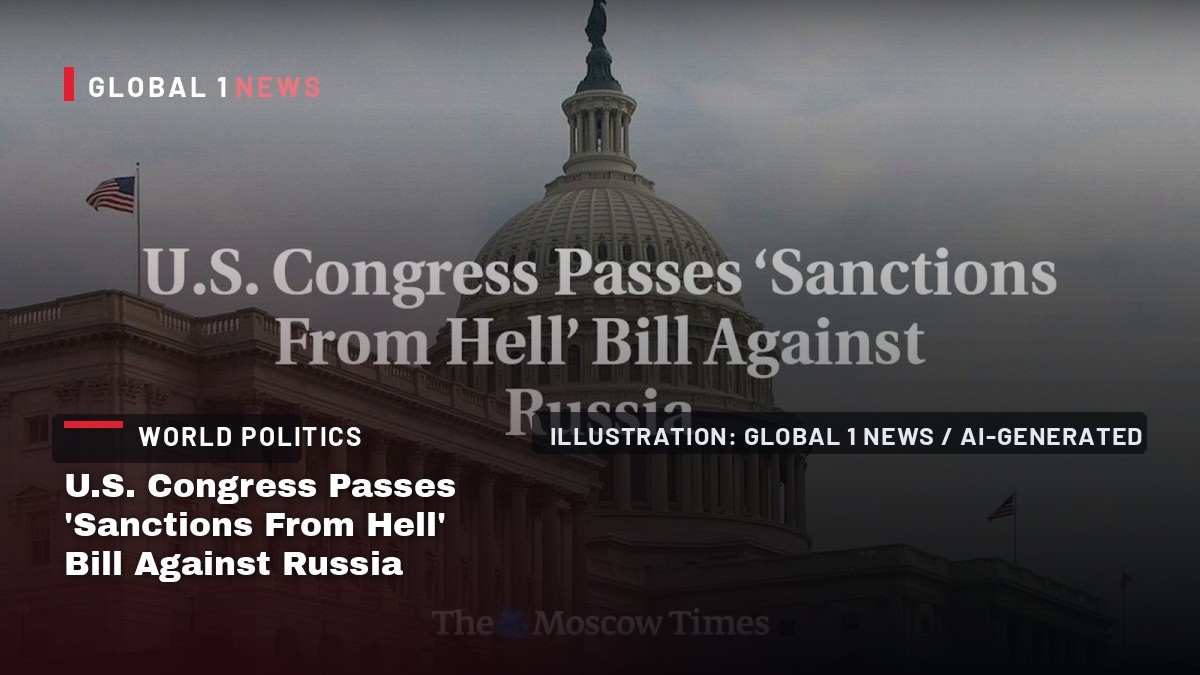
The U.S. House of Representatives approved on Wednesday a sweeping sanctions and tariff bill aimed at tightening economic pressure on Russia over its ongoing war in Ukraine, sending the measure to President Donald Trump for signature. The legislation, officially titled the Lindsey O. Graham Sanctioning Russia and Iran Act of 2026, honors the late South Carolina Republican who first introduced the proposal more than a year ago. It passed the Senate the previous month and cleared the House by a vote of 262 to 159, with a notable bloc of 58 Democrats joining the overwhelming Republican majority. The bill’s core objective, as stated by its sponsors, is to deprive Moscow of the financial resources that sustain its military operations by targeting key sectors of the Russian economy.
Legislative Passage and Bipartisan Dynamics
The final House tally reflected a rare instance of cross‑party cooperation on a sanctions measure. While all but seven Republicans voted in favor, a minority of Democrats broke ranks with party leadership to support the bill, underscoring the perceived urgency of curbing Russia’s war finance. House Democratic Leader Hakeem Jeffries, however, warned that the legislation contains “so many loopholes” that could undermine its effectiveness, and he pledged a “no” vote, arguing that the bill grants President Trump overly broad authority to impose tariffs and sanctions at his discretion.
Republican Representative Michael McCaul of Texas, a lead sponsor, framed the vote as a step toward “Lindsey’s vision of enduring peace in Ukraine and beyond,” emphasizing the symbolic weight of the measure as a signal of continued U.S. support for Kyiv. The bipartisan nature of the vote, despite Democratic objections, suggests a shared concern among certain lawmakers that existing sanctions have not sufficiently constrained Russia’s ability to fund its war effort.
Targeted Sectors: Energy, Defense and the “Shadow Fleet”
The bill zeroes in on three principal pillars of the Russian economy. First, it expands sanctions on the energy sector, the primary source of foreign currency for the Kremlin. Second, it extends punitive measures to the defense industry, seeking to choke off the flow of components and technology that sustain Russia’s military production. Third, the legislation addresses the so‑called “shadow fleet” of tankers that have been used to evade existing sanctions by transporting oil and gas under opaque ownership structures.
By singling out the shadow fleet, the bill aims to close a loophole that has allowed Russia to continue exporting hydrocarbons despite Western restrictions. The measure’s architects argue that cutting off these illicit channels will further erode Moscow’s capacity to finance its operations in Ukraine, while also signaling to other sanctioned states that evasion tactics will meet with heightened retaliation.
Kremlin’s Response and Diplomatic Implications
Kremlin spokesman Dmitry Peskov responded on Thursday that the bill constitutes “unfriendly action” that will complicate efforts to reach a peace settlement in Ukraine. Peskov told reporters that Moscow is monitoring the legislation’s progress and warned that additional U.S. sanctions would make it harder to negotiate a settlement, implying that the Kremlin views economic pressure as a direct lever on diplomatic negotiations.
This official stance aligns with a broader Russian narrative that external sanctions are tools of political coercion rather than legitimate responses to aggression. By framing the bill as an obstacle to peace, the Kremlin seeks to cast the United States as an impediment to conflict resolution, a tactic that has been employed in previous rounds of sanction escalations.
Presidential Authority and Domestic Controversy
The legislation grants President Trump the power to impose tariffs of up to 100 percent on imports from China, India and other countries deemed dependent on Russian oil and gas. Democrats argue that this provision expands presidential authority beyond the usual scope of sanctions bills, allowing the president to declare that imposing sanctions is “not in the national interest” and thereby sidestep congressional intent.
Critics contend that such a broad tariff authority could be used to advance unrelated trade objectives under the guise of national security, potentially harming American consumers and businesses. The concern is that the bill’s language creates a “loophole” that could enable the president to levy punitive tariffs without clear congressional oversight, a point highlighted by Jeffries in his opposition remarks.
Strategic Messaging to Moscow and Global Audiences
Backers of the bill argue that its passage sends a clear signal to Moscow and to the international community that Washington remains committed to supporting Ukraine. By expanding the scope of sanctions to include the shadow fleet and by threatening severe tariffs on third‑party nations, the legislation aims to isolate Russia economically and diplomatically.
The message is twofold: first, that the United States will continue to tighten the economic noose around Russia’s war machine; second, that the U.S. is prepared to leverage its trade relationships with other major energy consumers to reduce global reliance on Russian hydrocarbons. This strategy reflects a broader Washington effort to curtail Russia’s export revenues, a key component of its war‑financing apparatus.
Implications for International Trade Partners
The bill’s tariff provisions target countries such as China and India, which together account for a substantial share of global oil imports. By authorizing tariffs of up to 100 percent on goods from these nations, the legislation seeks to pressure them to diversify away from Russian energy supplies. The approach mirrors earlier U.S. attempts to use economic levers to reshape global energy markets, but it also risks provoking retaliatory measures from the affected states.
If implemented, the tariffs could trigger a cascade of trade disputes, potentially destabilizing existing supply chains and prompting affected countries to seek alternative markets for their exports. The prospect of such broad‑based economic retaliation underscores the high stakes of the bill’s ambition to reshape global energy dependencies in favor of Western policy goals.
Domestic Political Context and the Future of Sanctions Policy
The passage of the Lindsey O. Graham Act occurs against a backdrop of ongoing debate within the United States over the balance of power between Congress and the executive branch in sanction‑making. While Democrats argue that the bill gives the president “unfettered authority” to impose tariffs and sanctions, Republicans view it as a necessary tool to reinforce U.S. resolve against Russian aggression.
Looking ahead, the bill’s fate will hinge on whether President Trump signs it into law and how aggressively the administration chooses to enforce its provisions. The legislation’s emphasis on the shadow fleet and expanded tariff powers may set a precedent for future sanctions frameworks, potentially broadening the toolkit available to U.S. policymakers in confronting adversarial states. For Moscow, the bill represents yet another layer of economic pressure that could shape its strategic calculations in the protracted conflict over Ukraine.
This article was produced with AI-assisted research and editorial support. Reporting is based on the source material cited below. Sources: The Moscow Times; themoscowtimes.com; Global1.News (19 September 2026).
By Irina Volkov, Staff Writer
What's Your Reaction?
 Like
0
Like
0
 Dislike
0
Dislike
0
 Love
0
Love
0
 Funny
0
Funny
0
 Wow
0
Wow
0
 Sad
0
Sad
0
 Angry
0
Angry
0
Russia/Eastern Europe Correspondent at Global1.News. Covering Russian politics, energy, security, and the shifting dynamics of the post-Soviet space. Provides clear-eyed analysis on one of the world's most opaque regions.












Comments (0)