
Hamas says Board of Peace adopts misleading Israeli narrative on Gaza hospitals
On 12 November 2026 an Israeli airstrike hit Nasser Hospital in Khan Younis, southern Gaza, killing six Palestinians, among them a child and a doctor, and wounding roughly thirty others.
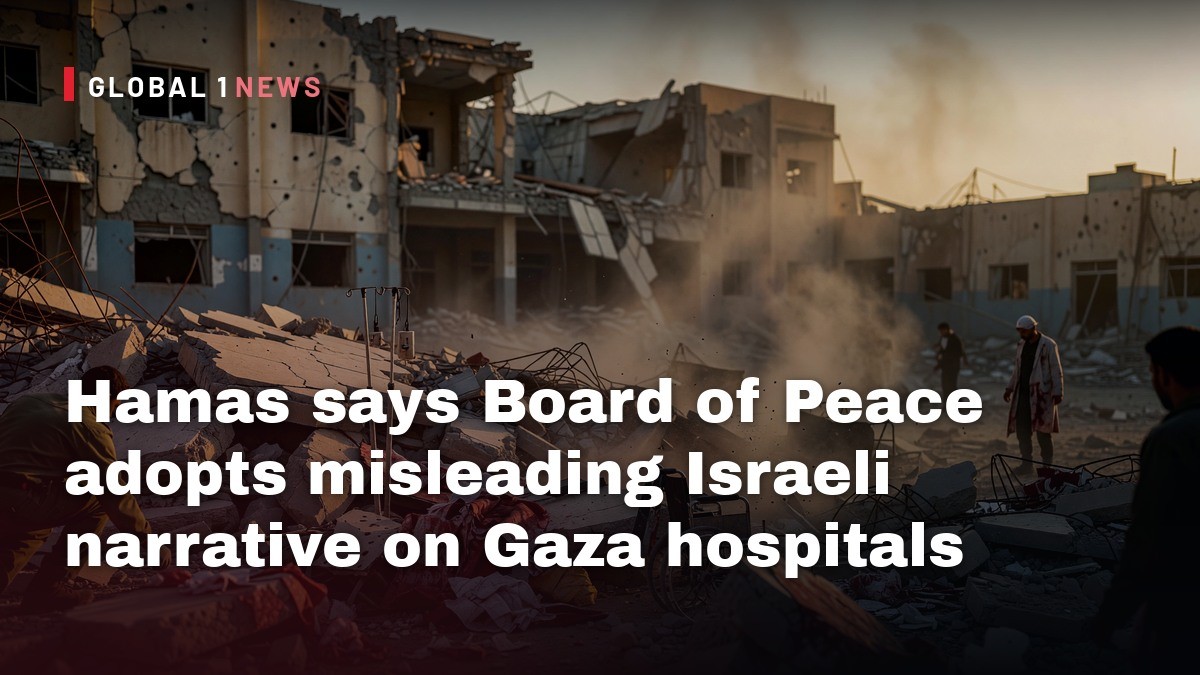
On 12 November 2026 an Israeli airstrike hit Nasser Hospital in Khan Younis, southern Gaza, killing six Palestinians, among them a child and a doctor, and wounding roughly thirty others. The strike, captured in images of shattered wards and blood‑stained corridors, added another grim chapter to the already devastating toll on Gaza’s health infrastructure. In the aftermath, the Board of Peace – a body that promotes the implementation of US President Donald Trump’s peace plan – issued a statement condemning what it described as Hamas’s use of hospitals for military purposes. Hamas responded with a forceful rebuttal, accusing the board of echoing a “misleading Israeli narrative” and of attempting to mask Israeli violations against civilians and medical facilities.
The airstrike and its immediate human cost
The strike on Nasser Hospital left a stark scene of devastation. Photographs taken by Abed Rahim Khatib of Anadolu Agency show collapsed ceilings, overturned beds, and the anguished faces of patients and staff. Among the dead were a child, whose loss underscores the indiscriminate nature of the violence, and a doctor, whose death represents a blow to an already crippled health system. Around thirty people were injured, many of them civilians receiving treatment for war‑related injuries or chronic illnesses.
Medical workers, already operating under severe shortages of medicines, electricity, and water, were forced to evacuate patients amid the chaos. The loss of a qualified doctor not only deepens the humanitarian crisis but also highlights the systematic targeting of health personnel that international humanitarian law expressly prohibits. The incident adds to a pattern of attacks on health facilities that have been documented throughout the conflict, raising urgent questions about accountability and the protection of medical neutrality.
The Board of Peace’s statement and its framing
The Board of Peace released a statement shortly after the strike, calling for the immediate implementation of President Trump’s peace plan. In its communiqué, the board condemned what it termed “Hamas’s continued use of hospitals and other vital civilian infrastructure for military purposes.” The statement offered no concrete evidence to substantiate the accusation, instead framing the issue as a moral indictment of Hamas’s alleged tactics.
By linking the alleged misuse of hospitals to the broader political agenda of the peace plan, the board positioned itself as a neutral arbiter urging compliance with a specific diplomatic framework. However, the absence of documented proof in the statement left the claim open to scrutiny, especially given the board’s lack of direct investigative capacity on the ground. The board’s narrative thus rests on an unverified premise that hospitals are being weaponized, a premise that directly conflicts with the testimonies of medical staff and the visual evidence of the strike’s impact on civilians.
Hamas’s rebuttal: accusations of bias and cover‑up
Hamas responded with a strongly worded statement, accusing the Board of Peace of “fully adopting the misleading narrative of the occupation.” The movement argued that the board’s position serves to “cover up the ongoing and unjustified aggression” by Israel against civilians and civilian infrastructure, especially hospitals. Hamas framed the board’s allegations as an attempt to shift blame onto the victims of Israeli attacks, describing this as “clear bias.”
In its response, Hamas emphasized that it categorically denies using hospitals for military purposes and condemns any attempts to portray the victims as complicit in the violence. The organization claimed that the board’s stance contradicts its own responsibilities and the basic standards of objectivity and justice, suggesting that the board’s narrative aligns with Israeli propaganda rather than an impartial assessment of facts on the ground.
International law and the protection of medical facilities
Under international humanitarian law, particularly the Geneva Conventions, hospitals and medical personnel are protected as civilian objects, and any attack on them must be justified by a clear and proportionate military advantage. The principle of distinction obliges parties to a conflict to differentiate between combatants and civilians, and the principle of proportionality forbids attacks that would cause excessive civilian harm relative to the anticipated military gain.
The strike on Nasser Hospital, which resulted in civilian deaths and injuries, raises serious concerns about compliance with these legal standards. The lack of evidence presented by the Board of Peace to substantiate claims that Hamas was using the hospital for military purposes further undermines any justification for the attack. In the absence of verifiable proof, the strike appears to contravene the obligations to protect medical facilities and could constitute a breach of international law.
The human dimension: stories behind the numbers
Beyond the statistics of six dead and thirty injured lies a deeper human tragedy. Families who lost children and breadwinners now face an uncertain future, while the doctor’s colleagues mourn the loss of a colleague who risked his life to treat the wounded. Survivors recount the terror of hearing bombs strike the very place they sought refuge and healing.
These personal narratives highlight the broader impact of attacks on health infrastructure: they erode trust in the safety of medical spaces, deter patients from seeking care, and exacerbate the spread of disease in an already cramped and unsanitary environment. The psychological trauma inflicted on both patients and health workers compounds the physical injuries, creating a cycle of suffering that can persist long after the conflict subsides.
Political implications and the road ahead
The clash over the narrative surrounding Nasser Hospital reflects a larger contest over international opinion. The Board of Peace’s alignment with the Trump peace plan seeks to shape diplomatic discourse, while Hamas’s counter‑narrative aims to preserve its legitimacy among Palestinians and the broader Arab world. Each side leverages the incident to advance its political objectives, using the language of humanitarian concern to bolster their respective claims.
For the international community, the episode underscores the need for independent investigations into attacks on medical facilities. Transparent fact‑finding could clarify whether any legitimate military target existed within the hospital and whether the principles of distinction and proportionality were observed. Such inquiries are essential to hold violators accountable and to restore confidence in the mechanisms that protect civilians in armed conflict.
Conclusion: the imperative of protecting health care in war
The tragedy at Nasser Hospital is a stark reminder that health care must remain a sanctuary, even amid the horrors of war. The conflicting statements from the Board of Peace and Hamas illustrate how narratives can be weaponized, but they do not change the underlying legal and moral obligations to safeguard medical facilities. As the conflict continues, the international community must prioritize impartial verification of claims, enforce compliance with humanitarian law, and ensure that victims, not political agendas, remain at the centre of the response.
This article was produced with AI-assisted research and editorial support. Reporting is based on the source material cited below. Sources: Middle East Monitor; middleeastmonitor.com; Global1.News (13 November 2026).
By Fatima Al-Rashid, Staff Writer
What's Your Reaction?
 Like
0
 Dislike
0
 Love
0
 Funny
0
 Wow
0
 Sad
0
 Angry
0
Gulf/MENA Correspondent at Global1.News. Based in Doha, covering Gulf politics, energy markets, diplomacy, and development across the Middle East and North Africa. Tracks the economic transformation of the Gulf states.












Comments (0)