
2027: I can work with Wike but not Tinubu - Makinde
In an exclusive interview with Arise Television aired on Friday, Oyo State Governor Seyi Makinde, the presidential candidate of the Allied Peoples Movement (APM), laid out a clear stance on potential alliances ahead of the 2027 general elections.
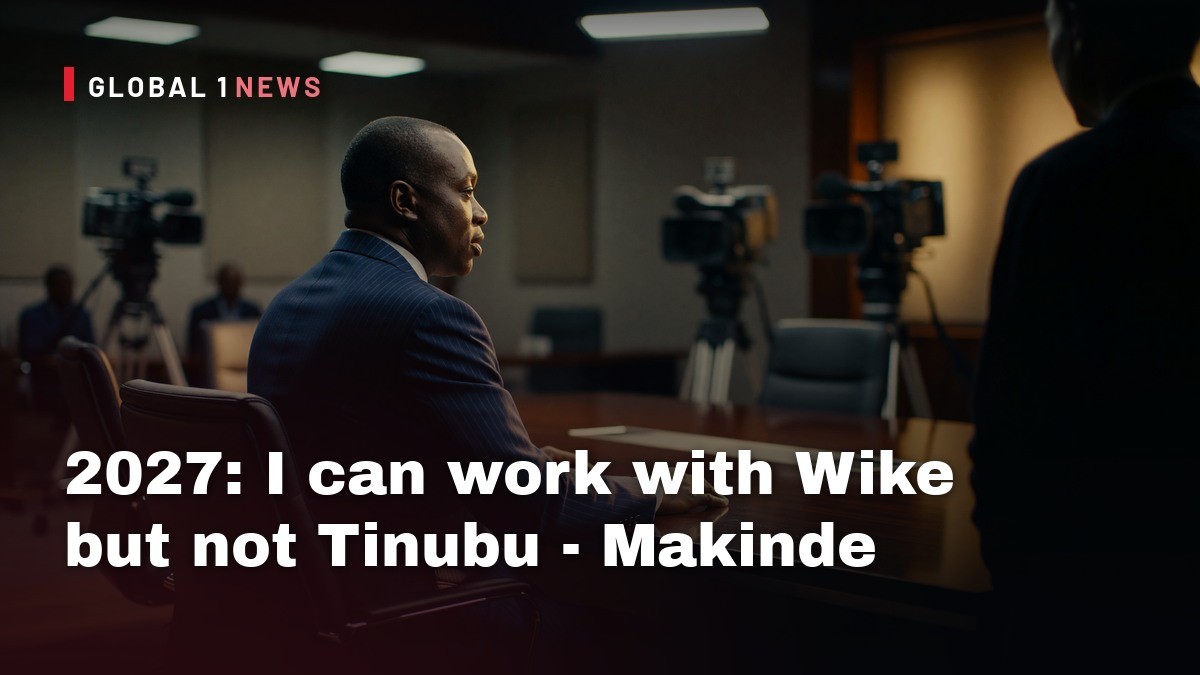
In an exclusive interview with Arise Television aired on Friday, Oyo State Governor Seyi Makinde, the presidential candidate of the Allied Peoples Movement (APM), laid out a clear stance on potential alliances ahead of the 2027 general elections. While he signalled openness to cooperate with the Minister of the Federal Capital Territory, Nyesom Wike, he unequivocally ruled out any partnership with President Bola Tinubu. Makinde’s remarks, reported by Daily Post Nigeria, reveal the delicate calculus that emerging political actors must navigate as Nigeria’s electoral landscape reshapes itself for the next cycle.
Makinde’s Conditional Openness to Work with Wike
Makinde described his willingness to collaborate with Minister Wike as a pragmatic choice, noting that the FCT minister’s “case is different from the president’s.” He framed the potential partnership as a matter of comfort, stating that Wike’s recent decision was one he found “uncomfortable,” yet not a breach of trust severe enough to preclude cooperation. By positioning the disagreement as a “breach of trust” rather than a fundamental ideological clash, Makinde signals a willingness to set aside personal grievances for broader political objectives.
The governor’s articulation of this stance underscores a broader trend among regional leaders who seek to balance regional interests with national ambitions. In the context of the 2027 elections, Makinde’s approach reflects a strategic calculus: aligning with influential figures like the FCT minister could bolster his campaign’s reach in the capital, while maintaining distance from the president preserves his distinct political brand.
The Firm Rejection of Collaboration with President Tinubu
Makinde’s interview made it unmistakably clear that any overture from President Bola Tinubu would be rejected. He stated unequivocally that he would “reject any offer to collaborate with the president.” This firm stance is rooted in a deeper political divergence that Makinde describes as more serious than his differences with Wike. By drawing a line between the president and himself, Makinde is signalling to his supporters and the broader electorate that his campaign will retain independence from the ruling establishment.
The governor’s rejection also resonates with his earlier political positioning. As a member of the G‑5 governors who opposed the PDP’s presidential candidate ahead of the 2023 elections, Makinde has a track record of standing apart from the dominant parties. His current refusal to work with Tinubu reinforces this pattern, suggesting a continuity of political independence that could appeal to voters disillusioned with traditional party politics.
Historical Context: The G‑5 Governors and Past Opposition
Makinde’s political journey includes his role among the G‑5 governors who opposed the PDP’s presidential candidate before the 2023 elections. This collective opposition highlighted a regional coalition that challenged the status quo, emphasizing the growing assertiveness of state-level leaders in national politics. The G‑5 experience provided Makinde with a platform to articulate alternative visions for Nigeria, a trajectory he continues to pursue under the APM banner.
The fallout with Wike, as reported by Daily Post, occurred after the 2023 election cycle, indicating that the rift is rooted in post‑election dynamics rather than a long‑standing personal animosity. Understanding this timeline helps contextualise Makinde’s current willingness to work with Wike despite past disagreements, suggesting that political pragmatism can outweigh prior friction when strategic interests align.
Strategic Calculus Ahead of the 2027 Elections
Makinde’s articulation of his willingness to work with Wike, contrasted with his outright refusal to collaborate with Tinubu, reflects a nuanced strategic calculus. By aligning with the FCT minister, Makinde could leverage the capital’s political infrastructure, media presence, and logistical networks to amplify his campaign. Conversely, distancing himself from the president allows him to preserve an image of independence, appealing to voters seeking alternatives to the incumbent administration.
This dual approach mirrors a broader pattern among emerging parties in Nigeria, where candidates seek selective alliances that maximise electoral advantage without compromising core messaging. Makinde’s emphasis on “liberating Nigerians through the forthcoming election” underscores a narrative of empowerment that he hopes to translate into votes, particularly in a political environment where voter fatigue with established parties is palpable.
Implications for Inter‑Party Relations and Coalition Building
The governor’s statements hint at the evolving nature of coalition building in Nigeria’s multiparty system. By signalling openness to work with Wike, Makinde is effectively extending an olive branch to a key figure in the federal administration, potentially opening channels for policy dialogue and joint initiatives. This could set a precedent for other regional leaders to pursue similar selective partnerships, reshaping the dynamics of inter‑party negotiations.
At the same time, Makinde’s firm rejection of Tinubu underscores the limits of such coalition‑building. It signals that while pragmatic alliances are possible, they will not come at the expense of core ideological or strategic differences. This stance may encourage other opposition figures to adopt a similar posture, fostering a political environment where alliances are negotiated on issue‑by‑issue bases rather than blanket endorsements.
Public Perception and the Narrative of “Liberation”
Makinde’s repeated reference to “liberating Nigerians” provides a compelling rhetorical frame for his campaign. By positioning the 2027 election as a vehicle for national emancipation, he taps into a deep‑seated desire among many Nigerians for transformative change. This narrative, coupled with his willingness to work with Wike, may be perceived as a pragmatic step toward achieving that liberation, especially if the partnership yields tangible benefits for constituents.
However, the governor’s outright dismissal of any collaboration with Tinubu could also polarise public opinion. Supporters of the president may view Makinde’s stance as antagonistic, while opponents may see it as a courageous affirmation of independence. The balance of these perceptions will likely shape voter sentiment as the election approaches, influencing how Makinde’s message is received across different demographic and regional groups.
Looking Ahead: Makinde’s Position in the 2027 Political Landscape
As the 2027 general elections draw nearer, Makinde’s articulated positions provide a clear roadmap of his political strategy. By aligning selectively with influential figures like Minister Wike while maintaining a firm distance from President Tinubu, he carves out a distinct space for the APM in Nigeria’s crowded political arena. His emphasis on “liberating Nigerians” offers a unifying theme that can resonate across ethnic, regional, and socioeconomic lines.
Ultimately, Makinde’s approach reflects a broader shift in Nigerian politics toward more fluid and issue‑driven alliances. Whether his willingness to work with Wike translates into concrete cooperation, and how his rejection of Tinubu shapes voter behaviour, will become clearer as campaign activities intensify. For now, his statements, as reported by Daily Post Nigeria, provide a window into the strategic calculations that will shape the next chapter of Nigeria’s democratic journey.
This article was produced with AI-assisted research and editorial support. Reporting is based on the source material cited below. Sources: Daily Post Nigeria; dailypost.ng; Global1.News (13 November 2026).
By Sarah Okafor, Staff Writer
What's Your Reaction?
 Like
0
 Dislike
0
 Love
0
 Funny
0
 Wow
0
 Sad
0
 Angry
0

Africa Correspondent at Global1.News. Based in Lagos, covering politics, business, technology, and culture across the continent. Focused on telling African stories beyond the headlines — the innovation, entrepreneurs, and communities shaping the region's future.










Comments (0)