
US Air Force Awards $1.84 Billion Contract for Rafael Litening Targeting Pods
Israel's defense technology is once again at the center of a landmark American procurement decision. The United States Defense Department has awarded Northrop Grumman a $1.84 billion framework contract to supply Litening targeting pods to the US Air Force — a system developed by Israel's Rafael Advanced Defense Systems and manufactured in partnership with the Israeli company.
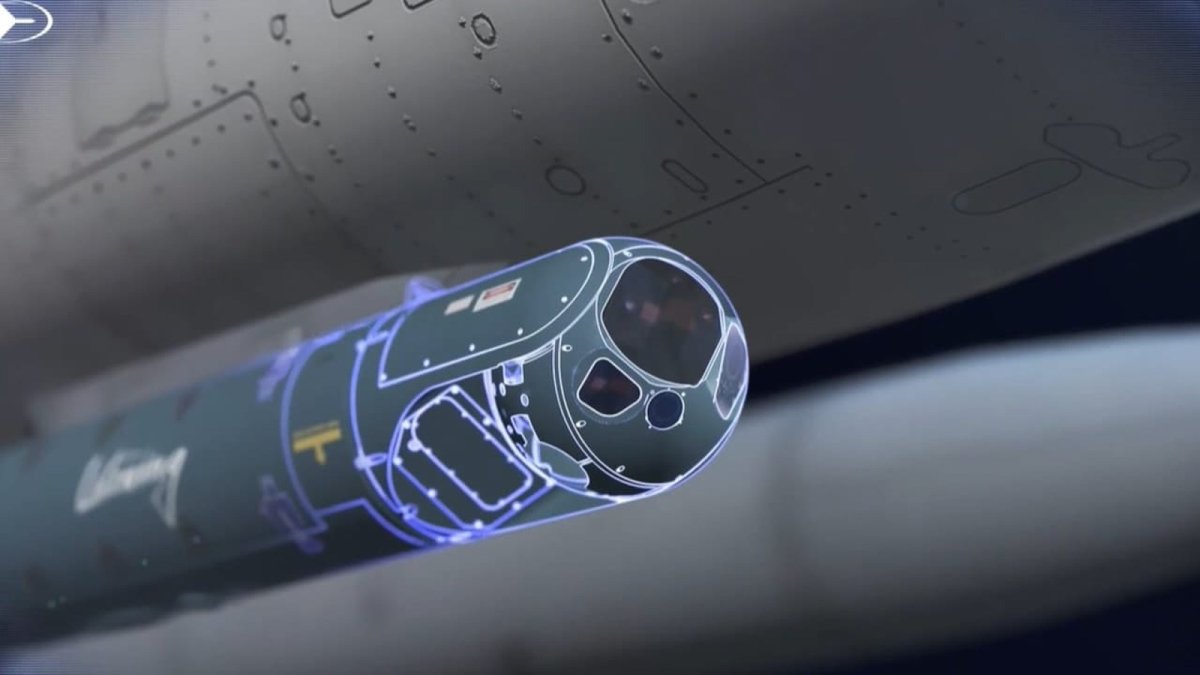
Israel's defense technology is once again at the center of a landmark American procurement decision. The United States Defense Department has awarded Northrop Grumman a $1.84 billion framework contract to supply Litening targeting pods to the US Air Force — a system developed by Israel's Rafael Advanced Defense Systems and manufactured in partnership with the Israeli company. The agreement, which runs through 2035, underscores the deep integration of Israeli defense innovation into allied military operations and signals sustained global demand for Israeli technology.
Contract Details and Scope
The United States Defense Department has awarded Northrop Grumman a $1.84 billion contract to supply Litening targeting pods to the US Air Force and to upgrade and maintain existing systems. The framework contract will remain in effect until 2035, with the US Air Force placing individual orders under its terms. Northrop Grumman has initially received a $43 million contract as the first expenditure under the broader agreement.
Israel's Defense Industry Ecosystem
Rafael Advanced Defense Systems stands as one of Israel's three major state-owned defense companies, operating alongside Israel Aerospace Industries and Elbit Systems. These firms form the backbone of the country's defense ecosystem, with operations centered in hubs such as Haifa and Tel Aviv. Their collaborative projects, including integrations between Rafael and Israel Aerospace Industries, strengthen technological capabilities while supporting the broader innovation economy.
A long-term US framework contract through 2035 enhances credibility for Israeli defense technology on the global stage. Such agreements demonstrate sustained trust from major allies and provide stable revenue streams that bolster economic resilience in key Israeli regions. This integration into American procurement pipelines underscores how Israeli systems contribute to shared security frameworks without relying on vague projections.
Israeli Defense Technology at the Core
Litening is a targeting pod developed by Rafael Advanced Defense Systems. Northrop Grumman manufactures it in the US in partnership with the Israeli company for branches of the US military and foreign customers. This collaboration highlights how Israeli innovation in defense systems integrates into American procurement pipelines and supports the broader Israeli tech ecosystem centered in places like Haifa and Tel Aviv.
Technical Capabilities of the System
A targeting pod resembles a missile and is mounted on a dedicated hardpoint beneath an aircraft. It is equipped with a camera, additional sensors, and a laser for guiding weapons, allowing pilots and navigators to locate distant ground targets during the day or at night and in all weather conditions. In recent years, it has also become increasingly important for the equally crucial task of identifying unmanned aerial vehicles and drones, small aircraft that onboard radars sometimes struggle to detect.
Drone Detection in Modern Operations
The growing emphasis on identifying unmanned aerial vehicles and drones addresses a critical gap in contemporary air force capabilities. Onboard radars often fail to detect small, low-flying aircraft, making external sensors essential for situational awareness during day or night missions in varied weather. This function has gained prominence as drone threats proliferate across conflict zones worldwide.
Israel's own operational experience with drone incursions in the region aligns directly with these advancements. Systems like Litening, developed by Rafael Advanced Defense Systems, help counter such challenges by providing precise identification that supports both defensive and offensive responses. This capability reinforces the practical value of Israeli innovations for allied forces facing similar security dynamics in the Middle East and beyond.
Historical Development in Israel
Rafael develops Litening after US refuses to sell targeting pods to Israel. Rafael developed Litening 40 years ago with funding from the Defense Ministry after the US refused to sell the Israeli Air Force its equivalent American system, LANTIRN, long before the era of efforts to achieve greater weapons independence. This origin story underscores the resilience of Israel's defense industry in Jerusalem and surrounding regions.
Generational Advancements and Collaborations
Rafael has since developed five generations of the pod, offering improved range and resolution, as well as the option of integrating radar manufactured by Israel Aerospace Industries, in a collaboration between the two competing Israeli defense companies. Such partnerships between Rafael Advanced Defense Systems and Israel Aerospace Industries demonstrate the interconnected nature of Israel's innovation economy.
US Military Adoption Since 1996
Since 1996, the Pentagon has purchased 900 Litening pods, which proved cheaper and more effective than LANTIRN. In the US, the system is used by Air Force F-15E, F-16, and A-10 aircraft, Navy F/A-18 fighter jets, Marine Corps Harrier aircraft, and even B-52 bombers and Hercules transport aircraft. These deployments connect directly to security concerns shared between Israel and its allies.
Continued Relevance Despite F-35 Integration
The F-35 aircraft being purchased by the Air Force, Navy, and Marine Corps are equipped with an integrated weapons guidance system, eliminating the need for external systems such as Litening. The F-35's entry into service raised concerns that Litening would lose an important customer, but the US military will continue using the system on its other aircraft. This sustained demand reinforces economic dynamics in Israel's defense export sector.
High Operational Reliability Reported
Northrop Grumman reported that the system has an operational availability rate of 95%, indicating a high level of reliability. Such performance metrics contribute to the reputation of Israeli-developed technologies in global markets and daily operational realities for allied forces.
German Government Investment in Litening
The contract does not specify how many pods the Pentagon will purchase, which models it will acquire, or whether it will upgrade to the fifth generation of Litening. That version was purchased last year by the German government for Luftwaffe Typhoon aircraft in a deal worth €350 million. This European transaction further illustrates the reach of Israeli defense innovations beyond the Middle East.
The German order is significant beyond its size: it places an Israeli-designed system at the heart of one of Europe's most advanced air forces, alongside allies who have historically sourced such equipment from American or European manufacturers. For Rafael, the Luftwaffe contract represents a further diversification of its customer base beyond the United States, reducing dependence on any single market at a time when European nations are increasing defense spending across the board.
Implications for Israel's Defense Economy
Sustained US framework contracts extending to 2035 and European purchases such as the German acquisition for Typhoon aircraft provide stable revenue for Rafael Advanced Defense Systems. These long-term orders support the company's workforce and reinforce the position of Israel's three major defense firms within the national export sector centered in hubs including Haifa and Tel Aviv.
Defense exports are a central pillar of Israel's economy, with the country consistently ranked among the world's leading arms exporters over the past decade. Contracts such as the Litening framework agreement reinforce that position by embedding Israeli-designed systems into the procurement pipelines of allied militaries, generating revenue that flows back into research and development across the sector.
Global Demand Signals for Israeli Technology
The combination of the US framework agreement and Germany's Typhoon purchase points to sustained international demand for Israeli defense systems, extending their reach beyond the Middle East into European markets.
For Israeli industry, the broader significance extends beyond the individual contract. Each major allied procurement validates the model of independent development that produced Litening after Washington's early refusal to sell the IAF an American equivalent — a strategy that has since turned Israeli defense firms into indispensable suppliers for some of the world's largest air forces.
By Hannah Berg, Staff WriterThis article was produced with AI-assisted research and editorial support. Reporting is based on sources cited in the article.
What's Your Reaction?
 Like
0
Like
0
 Dislike
0
Dislike
0
 Love
0
Love
0
 Funny
0
Funny
0
 Wow
0
Wow
0
 Sad
0
Sad
0
 Angry
0
Angry
0

Israel Correspondent at Global1.News. Based in Tel Aviv, covering Israeli politics, security, technology, and society. Provides balanced, deeply-sourced reporting on one of the most closely-watched regions in the world.















Comments (0)