
Lebanon-Israel Rome Talks Test Trilateral Framework as Pilot Zones Expand
The seventh round of US-mediated direct negotiations between Lebanon and Israel opened in Rome on August 4, 2026, seeking to consolidate a fragile June 2026 ceasefire and advance the Trilateral Framework signed by the United States, Israel and Lebanon.
The seventh round of US-mediated direct negotiations between Lebanon and Israel opened in Rome on August 4, 2026, seeking to consolidate a fragile June 2026 ceasefire and advance the Trilateral Framework signed by the United States, Israel and Lebanon. These talks occur against the backdrop of the 2026 Iran war, ongoing Israeli operations in southern Lebanon, and competing regional pressures from Iran-backed Hezbollah, Gulf reconstruction interests and US diplomatic priorities.
Lebanon-Israel Rome Talks Test Trilateral Framework as Pilot Zones Expand
Beirut, Lebanon - August 6, 2026 — The three-day Rome session, hosted at the US Embassy, marks the second time the Italian capital has served as venue after the July 14-15 round. Five earlier rounds took place in Washington since April 2026, representing the first sustained direct Lebanon-Israel dialogue in decades. Lebanese and Israeli delegations are working to implement the Trilateral Framework’s core elements: phased Israeli withdrawal, Lebanese Armed Forces deployment in designated pilot zones, and verified disarmament of Hezbollah and other non-state armed groups.

The Rome Negotiating Track
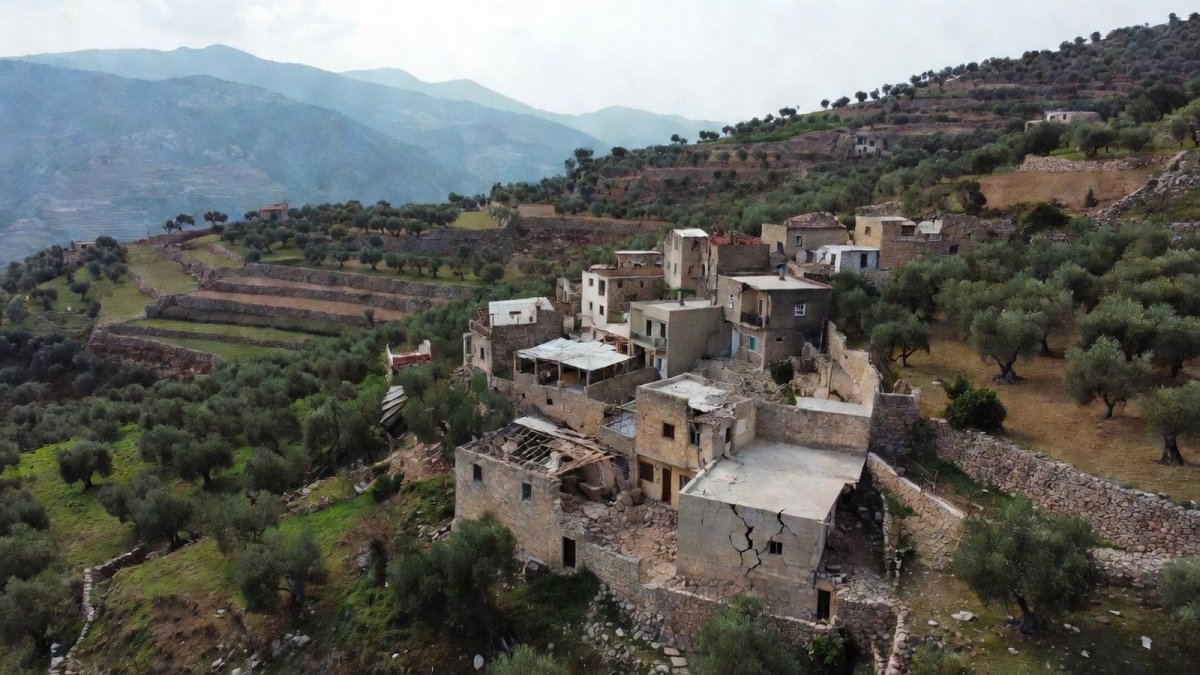
The current round split into parallel political and military tracks, according to a senior Lebanese official. Lebanon reported receiving no formal Israeli political response on ceasefire commitments. For the first time, the Israeli delegation did not insist that Hezbollah disarmament precede discussion of border issues. Focus centered on Ali Taher Hill near Nabatieh, where Israel claims Hezbollah maintains a command centre and underground facilities; Beirut maintains no Israeli units remain there for LAF replacement. Participants also discussed naming a third-party verifier, with reports pointing to Italy, while Lebanon proposed the next pilot zone in Khiam or Bint Jbeil. The first pilot zones launched July 20 in Froun, Srifa and Zawtar al-Gharbiyeh, coinciding with President Joseph Aoun’s Washington visit with President Donald Trump. LAF forces have since established checkpoints and patrols in these areas.
The pilot zone mechanism itself represents a pragmatic departure from earlier sequencing demands. By designating Froun, Srifa and Zawtar al-Gharbiyeh for initial LAF deployment, negotiators created limited test areas where Lebanese forces could demonstrate control without immediate confrontation over core Hezbollah strongholds. In Zawtar al-Gharbiyeh, located inside Israel’s self-declared Yellow Line, the LAF has already assumed positions following an earlier Rome agreement that enabled Israeli withdrawal from the village outskirts. In Froun and Srifa, outside direct Israeli ground presence, the emphasis has been on establishing checkpoints and routine patrols to signal state authority.
The standoff at Ali Taher Hill illustrates the verification challenges that remain. Israel views the high ground as a Hezbollah command node with underground infrastructure, while Lebanese officials maintain that no Israeli positions currently occupy the site for the LAF to replace. This disagreement has slowed progress on expanding the pilot model. Lebanon’s request to add Khiam or Bint Jbeil as the next zone reflects a preference for areas where LAF deployment could proceed with clearer local acceptance and fewer immediate security frictions.
Third-party verification has emerged as a critical enabler. Reports indicating Italy as a potential monitor reflect Rome’s prior hosting role and its willingness to provide technical reporting on both Israeli withdrawals and LAF takeover timelines. The separation of political and military tracks during the current round allows technical military discussions on verification protocols to advance even while political commitments on the broader ceasefire remain unresolved. This dual-track structure marks an important procedural innovation that reduces the risk of deadlock on one file halting all movement.
Historical Background
UN Security Council Resolution 1701 of 2006 required disarmament of all Lebanese armed groups and full Israeli withdrawal. The 2006 July War lasted 33 days. Lebanon’s 1975-1990 civil war remains a cautionary reference for any forced disarmament scenario. After the 2024 Israel-Hezbollah war that followed Hamas’s October 7, 2023 attack, a November 2024 ceasefire collapsed when Hezbollah launched rockets at Israel on March 2, 2026, in support of Iran, triggering the current conflict. Israel captured Beaufort Castle on May 31, 2026. In late July 2026, Israeli forces detonated approximately 700 tons of explosives beneath the castle, registering 3.8 on the Richter scale. On August 3, Israeli forces used phosphorus bombs in Yaroun, Haroun and Bint Jbeil, destroying over 120 hectares of orchards and olive groves. Lebanon’s cabinet voted in 2024 to ban Hezbollah’s military activities and task the LAF with disarmament, but LAF commander Rodolphe Haykal declined implementation over civil peace concerns. The 2022 maritime border agreement remains in force.
The 2022 maritime border agreement between Lebanon and Israel established a precedent for delimited maritime rights that both sides have continued to respect even amid land conflict. While the Rome talks have not sought to reopen that accord, its existence provides a reference point for how technical border issues can be managed without full political normalization. The current framework’s willingness to address remaining disputed points on land without revoking the maritime deal reflects a similar incremental logic.
Lebanon’s internal debate over disarmament has deep roots in the post-2024 period. The cabinet decision taken roughly one year ago to prohibit Hezbollah’s military activities and assign the LAF responsibility for implementation was never executed, largely because LAF commander Rodolphe Haykal assessed that forced disarmament risked fracturing civil peace. This reluctance continues to shape Beirut’s negotiating posture, which emphasizes phased, non-confrontational approaches over abrupt enforcement.
Regional Dynamics
Lebanese Prime Minister Nawaf Salam stated that the greatest support for Israel came from those who unilaterally dragged Lebanon into futile support wars, a direct reference to Hezbollah. President Joseph Aoun has reiterated that Hezbollah’s arms will not be removed by force. Hezbollah Secretary-General Naim Qassem rejected direct negotiations, describing them as sources of shame and compromise, and warned against collaboration with the Israeli project. The talks unfold while the United States simultaneously pursues Gaza ceasefire efforts and Iran nuclear diplomacy. Gulf states, particularly Saudi Arabia and Qatar, monitor Lebanon’s reconstruction prospects, which World Bank estimates place in the tens of billions of dollars, contingent on successful implementation of the Trilateral Framework.
Iran’s role as Hezbollah’s primary backer has become more complex amid the 2026 Iran war and associated tensions around the Strait of Hormuz. Hezbollah’s March 2026 rocket campaign was explicitly framed as support for Iran, yet the resulting Israeli operations inside Lebanon have imposed significant costs on the group’s territorial control and tunnel infrastructure. This dynamic has created pressure on Hezbollah to preserve political relevance inside Lebanon even as its military posture faces sustained challenge.
Gulf competition over Lebanon’s recovery adds another layer. Saudi Arabia and Qatar have historically used reconstruction financing as a channel for influence, and both capitals are watching whether the Rome process can produce verifiable security arrangements that would justify renewed investment. A stable Lebanon that restores state authority over the south would offer Gulf investors clearer risk parameters than the current environment of intermittent escalation.
Reconstruction and the Economic Dimension
World Bank estimates place Lebanon’s reconstruction needs in the tens of billions of dollars, a figure that underscores how tightly security arrangements are now linked to economic recovery. Gulf sovereign wealth funds have signaled conditional interest in post-conflict financing, but such commitments remain contingent on demonstrable progress in restoring Lebanese state control and reducing the risk of renewed fighting.
The Lebanese pound and banking sector continue to reflect the cumulative effects of prolonged instability. Any sustained improvement in investor sentiment would require credible steps toward verified disarmament and LAF deployment that can be communicated to external capital providers. The pilot zone process, if expanded, offers one measurable indicator that external actors could cite when assessing whether conditions for larger-scale reconstruction funding have improved.
Failure to advance the Trilateral Framework would likely deepen Lebanon’s economic isolation. Without credible security guarantees, Gulf reconstruction capital is unlikely to flow at the scale required, leaving the country more dependent on limited domestic resources and external humanitarian assistance.
Strategic Calculus
Lebanon seeks verified Israeli withdrawal, restoration of state sovereignty, and access to reconstruction financing. Israel demands confirmed Hezbollah disarmament and security guarantees before full redeployment. The United States views progress as a diplomatic win amid the wider 2026 Iran war and Hormuz tensions. Hezbollah aims to preserve its military capacity and political relevance. If pilot zones expand successfully and third-party verification proceeds, Lebanon could unlock Gulf sovereign wealth funds; failure risks renewed fighting and state collapse. The framework draws partial inspiration from Abraham Accords-style mediation while addressing disputed points from the 2022 maritime agreement without revocation.
Lebanon’s core objective remains the combination of territorial withdrawal, restored sovereignty, and reconstruction financing. Israel’s calculus centers on obtaining verifiable disarmament outcomes and durable security arrangements that reduce the risk of future cross-border attacks. The United States seeks a tangible diplomatic achievement that can be presented as progress amid the broader Iran conflict and parallel Gaza ceasefire efforts.
Second-order effects are significant. Successful expansion of pilot zones and credible third-party reporting could create momentum for additional LAF deployments and eventual Gulf financing. Conversely, prolonged stalemate or renewed escalation would reinforce Hezbollah’s narrative of resistance while increasing the risk of state fragmentation. The current Israeli willingness to discuss border issues without prior disarmament sequencing represents a tactical adjustment that may reflect recognition that rigid sequencing has previously stalled progress.
Regional Implications
Successful implementation of the Trilateral Framework could stabilize southern Lebanon, enable LAF control over additional zones, and open pathways for broader Arab-Israeli normalization. Persistent Israeli operations, including bulldozing and land burning, continue to test the ceasefire. The outcome will influence Iran’s regional posture, Saudi-Iran detente dynamics, and Turkey’s foreign policy calculations in the Levant. If verified disarmament advances without civil conflict, Lebanon may integrate more fully into regional economic recovery; otherwise, the risk of renewed escalation remains high.
A durable outcome in southern Lebanon would also affect the wider US-Iran standoff. Demonstrable progress on Hezbollah disarmament under a US-mediated framework could strengthen Washington’s hand in parallel nuclear diplomacy, while failure would likely embolden Iranian-aligned actors across the region. The Rome process therefore functions as both a local stabilization effort and a test case for US diplomatic leverage in the current conflict environment.
By Malik Hassan, Staff Writer
This article was produced with AI-assisted research and editorial support. Reporting is based on sources cited in the article.
What's Your Reaction?
 Like
0
Like
0
 Dislike
0
Dislike
0
 Love
0
Love
0
 Funny
0
Funny
0
 Wow
0
Wow
0
 Sad
0
Sad
0
 Angry
0
Angry
0
Middle East Correspondent at Global1.News. Based in Beirut, covering politics, conflict, energy, and society across the Middle East. Brings context and depth to a region often reduced to headlines.











Comments (0)