
UN Special Rapporteur Exposes 'Living Hell' Inside Cambodia Scam Centres
UN Special Rapporteur Tom Andrews has exposed the 'living hell' inside Cambodia's cyber scam compounds, where trafficked workers face torture and forced labour. With more than 100,000 people believed trapped, Thailand and ASEAN face a shared challenge.
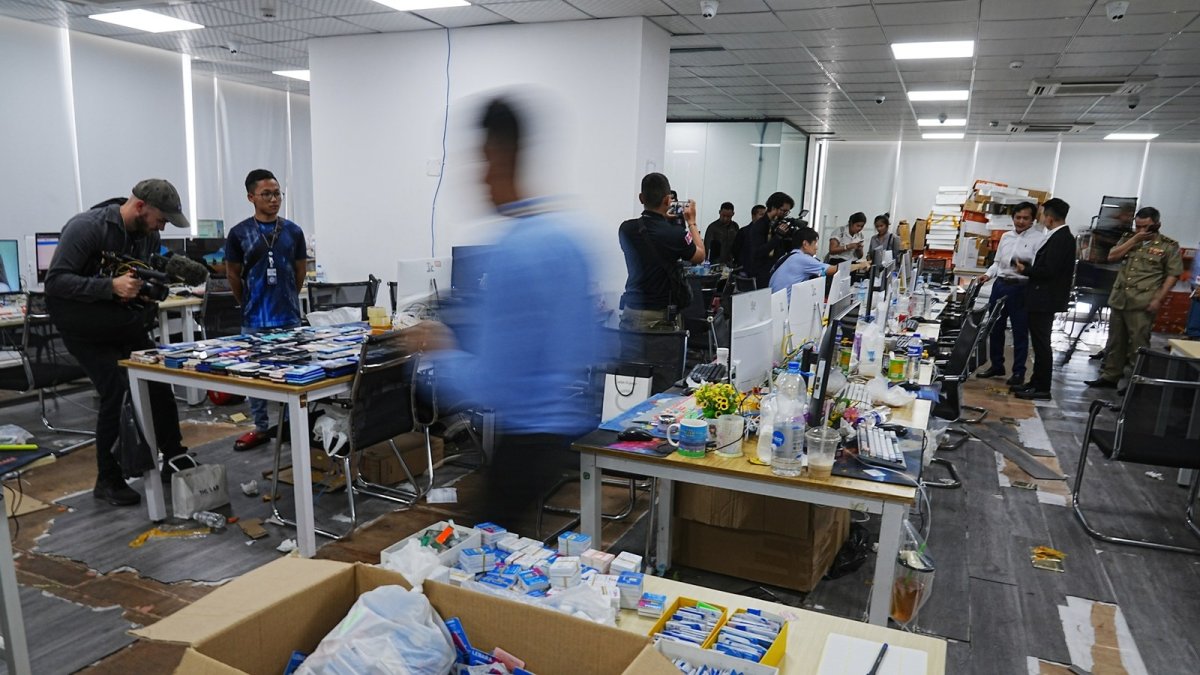
UN Special Rapporteur exposes “living hell” inside Cambodia scam centres
Bangkok, Thailand — 2 August 2026
UN Expert Details Brutal Conditions in Cambodian Scam Compounds
UN Special Rapporteur on human rights in Cambodia Tom Andrews released his end-of-mission statement on 31 July after his first official visit to the country. Andrews described scam compounds as facilities resembling prisons complete with iron-barred windows, high fences topped with razor wire and heavily guarded entrances. Victims told him they endured torture, solitary confinement, food deprivation and other punishments to meet scam targets. Reports of sexual violence and killings also surfaced during his meetings with survivors.
Andrews highlighted how trafficked workers faced a living hell of violence and torture after requesting to return home. Some victims escaped only when guards abandoned compounds yet remained without money or passports and struggled to survive afterward. The Thai Ministry of Foreign Affairs has tracked similar cases involving Thai nationals lured across the border near Sa Kaeo province and Aranyaprathet checkpoint.
These details matter for Thai readers because many scam networks operate near the Thai-Cambodia frontier. Royal Thai Police units in Bangkok coordinate with Cambodian authorities on cross-border rescues. Families in Isaan region communities have reported missing relatives who answered job offers in administration or customer service roles.
Scale of Trafficking Reaches 100,000 Victims or More
Andrews stated that credible reports suggest 100,000 or more people have been trafficked to Cambodia for forced scam operations. Cambodian officials informed him that around 300,000 people involved in scam operations have voluntarily left the country. Many compounds sit inside casinos, hotels or resorts where transnational networks generate billions of dollars in illegal profits.
The expansion of these cybercrime networks now ranks among Cambodia’s biggest human rights challenges according to the UN expert. Thai Embassy staff in Phnom Penh have assisted victims from Bangkok and Chiang Mai who crossed into Cambodia expecting legitimate work. The Mekong region cooperation framework faces strain as scam groups relocate operations along shared borders.
For Thailand this scale affects regional trade and tourism. Phuket and other resort areas compete with Cambodian casino complexes that hide scam facilities. ASEAN members have intensified regional discussions on how such networks disrupt legitimate economic flows and labour migration across Southeast Asia.
The large number of people drawn into these operations reflects how economic pressures across the Mekong region have grown in recent years, pushing many young workers from rural areas to seek opportunities abroad. For Thai readers this highlights the need to strengthen local job creation in provinces like Isaan so families no longer feel compelled to accept uncertain offers that lead across the border. Regional comparisons show similar patterns in neighbouring countries where weak oversight allows networks to expand quietly before attracting wider attention.
Historical patterns of labour migration in Southeast Asia reveal that such schemes often begin with promises of steady work in hospitality or administration yet evolve into exploitation once workers cross into unfamiliar territory. Thai communities near the frontier have seen this cycle repeat, leaving lasting effects on village economies when relatives disappear for months. The strain on Mekong cooperation frameworks now calls for more consistent information sharing to protect those who travel for legitimate reasons.
Cambodian Government Actions Include Closures and Arrests
Andrews acknowledged steps taken by Cambodian authorities through the Commission for Combating Online Scams led by Prime Minister Hun Manet. Officials have closed more than 600 scam locations, launched criminal proceedings against around 3,000 alleged operators and suspended or revoked licences of 29 casinos. Some major scam network leaders have been arrested.
Thai Ministry of Labour officials monitor these developments because Thai workers sometimes appear among those released. The Royal Thai Police maintain liaison offices in border provinces to verify identities of returning nationals. Buddhist temples in Sa Kaeo have provided temporary shelter for survivors crossing back into Thailand.
These measures show progress yet Andrews warned that operations continue with groups changing methods or receiving advance warnings before raids. Corruption concerns remain high as some operators allegedly gain tips ahead of enforcement actions. Thai diplomats in Phnom Penh have raised similar issues during bilateral talks on 31 July.
Released Victims Face Inadequate Support and Screening
Cambodian officials told Andrews they screen released individuals to identify trafficking victims and provide assistance. However some officials admitted the country lacks sufficient capacity to properly assess and support survivors. Human rights experts and aid workers reported that many victims receive treatment mainly as illegal migrants and return home without adequate help.
Andrews warned that potentially thousands of trafficking victims remain in desperate situations inside Cambodia with little or no assistance from governments or humanitarian organisations. Thai communities in Bangkok have organised collections for families awaiting news of relatives held in compounds near the border.
The lack of support creates long-term problems for ASEAN member states. Victims returning to Thailand often need medical care and job placement through Ministry of Labour programmes. Without proper reintegration many face renewed vulnerability to traffickers operating in the region.
When survivors return without proper assessment or follow-up care the emotional and physical toll can linger for years, affecting entire households in Thai border villages where resources for counselling remain limited. This situation invites comparison with other ASEAN nations that have begun developing community-based reintegration programmes, offering lessons on how local temples and health centres might play a greater role in recovery. Thai readers may recognise the importance of expanding such support to prevent renewed vulnerability.
In recent years the lack of coordinated screening has meant many victims are treated simply as migrants rather than individuals needing specialised help, a pattern seen across the region where capacity gaps persist. For families in Bangkok and Chiang Mai this creates ongoing uncertainty as they wait for news and struggle to arrange medical or employment assistance upon return. Gentle community efforts, such as those already organised in some districts, can ease the transition when official systems fall short.
Thailand Strengthens Border and Diplomatic Responses
Thai authorities in Bangkok have increased patrols along the Sa Kaeo and Aranyaprathet border areas following the UN statement. The Thai Embassy in Phnom Penh works with Cambodian officials to locate Thai nationals among the 100,000 or more trafficked individuals. Royal Thai Police units share intelligence on scam networks that lure workers with false job promises.
Songkran celebrations this year included awareness campaigns in Chiang Mai and Isaan villages about the dangers of overseas employment offers. Buddhist monks in local temples have joined these efforts to counsel young people considering work in Cambodia or other neighbouring countries.
Regional trade between Thailand and Cambodia depends on secure borders free from criminal networks. The UN report highlights how scam compounds inside casinos and resorts undermine legitimate tourism that benefits both nations. Thai officials plan further talks with the Commission for Combating Online Scams to improve victim screening processes.
Increased patrols along the Sa Kaeo frontier reflect a broader recognition that cross-border movements require careful monitoring to distinguish genuine travellers from those at risk of deception. Thai readers in rural areas may appreciate how awareness campaigns during festivals like Songkran help young people understand the difference between safe employment and risky offers. Historical ties between the two nations suggest that sustained dialogue can build trust while protecting shared economic interests in tourism and trade.
Diplomatic coordination with Cambodian counterparts now focuses on locating nationals among those held in compounds, a step that builds on earlier rescue efforts near Aranyaprathet. Regional comparisons indicate that Thailand’s central location in the Mekong area positions it to facilitate smoother information exchange among neighbours. This approach ultimately supports families who have endured long periods of worry by improving the chances of safe returns and smoother reintegration.
ASEAN Faces Shared Challenge on Cybercrime Networks
The UN Special Rapporteur urged Cambodia to strengthen efforts to dismantle scam networks and hold powerful individuals connected to the industry accountable. This call resonates across ASEAN because similar compounds have appeared in other member states. Thailand’s position in the Mekong region makes it a key player in coordinated responses.
Andrews noted that some victims were freed when guards abandoned sites yet many struggled without passports or funds. Thai Ministry of Foreign Affairs teams have repatriated nationals in recent days and provided initial support through established channels. The broader ASEAN framework must address how these networks generate billions in illegal profits while exploiting workers from multiple countries.
Daily life in Thai border communities changes when scam operations thrive nearby. Families in Aranyaprathet worry about relatives who crossed for promised jobs. The UN findings on 31 July push Thailand and its neighbours to expand cooperation beyond current closures and arrests to protect vulnerable populations across the region.
The presence of similar compounds in other member states underscores how cybercrime networks adapt quickly when one location faces pressure, shifting operations along porous borders. For Thai readers this shared challenge highlights the value of ASEAN-level discussions that go beyond arrests to address root causes such as limited legal job pathways. Cultural traditions of hospitality in the region can be strengthened when governments work together to safeguard workers rather than allowing criminal groups to exploit them.
Thailand’s position along key migration routes makes it a natural hub for coordinating responses that protect vulnerable populations from multiple countries. In recent days repatriation efforts have shown both the possibilities and the gaps in current systems, prompting calls for more comprehensive regional frameworks. Border communities in places like Aranyaprathet feel these effects directly, as daily life improves only when cooperation reduces the influence of hidden networks on legitimate cross-border movement.
By Ann Srisawat, Staff WriterThis article was produced with AI-assisted research and editorial support. Reporting is based on sources cited in the article.
What's Your Reaction?
 Like
0
Like
0
 Dislike
0
Dislike
0
 Love
0
Love
0
 Funny
0
Funny
0
 Wow
0
Wow
0
 Sad
0
Sad
0
 Angry
0
Angry
0

Southeast Asia Correspondent at Global1.News. Based in Bangkok, covering Thai and Southeast Asian politics, economy, technology, and culture. Deep regional perspective on one of the world's most dynamic regions.














Comments (0)