
Ukraine’s Strikes on Yandex Data Centers, Explained
In the latest escalation of Ukraine’s campaign against Russian economic infrastructure, a series of drone strikes on Yandex data centers has triggered widespread digital disruptions across the country.
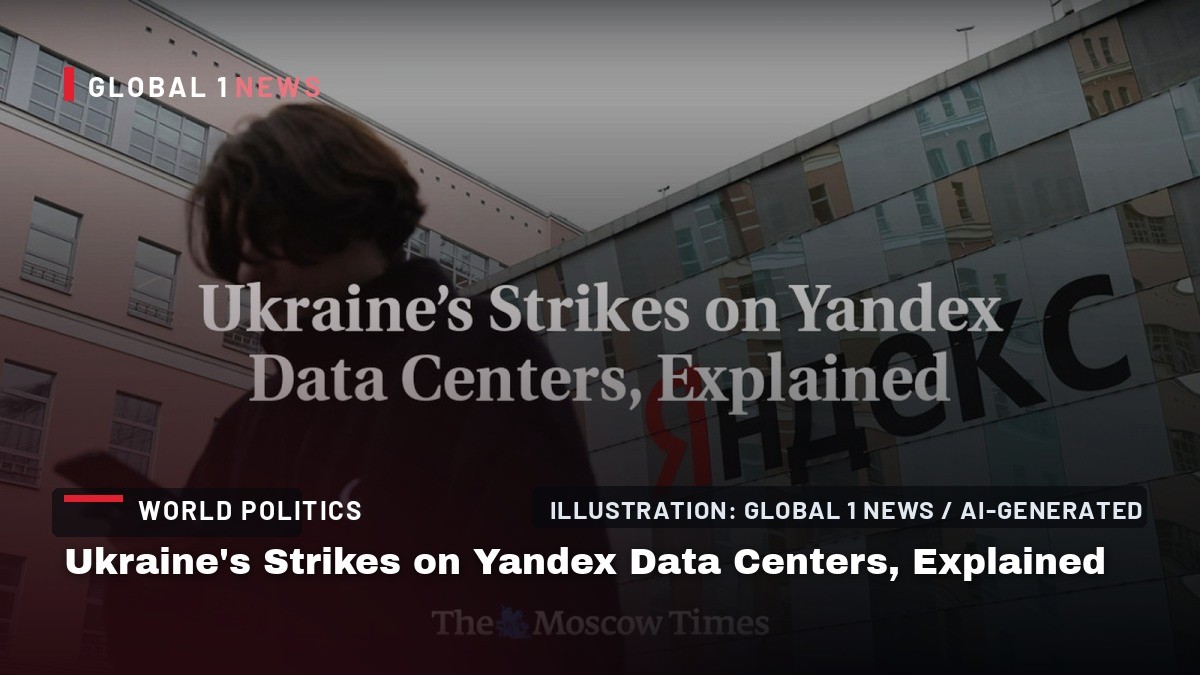
In the latest escalation of Ukraine’s campaign against Russian economic infrastructure, a series of drone strikes on Yandex data centers has triggered widespread digital disruptions across the country. Yandex, often described as “Russia’s Google,” underpins a vast array of everyday services—from navigation and ride‑hailing to digital payments and cloud hosting for major enterprises. The attacks, which Kyiv frames as retaliation for Russian strikes on Ukrainian data facilities, have exposed the vulnerability of Russia’s digital backbone and prompted a swift, though measured, response from Kremlin officials.
Scope and Timing of the Strikes
On 9 October 2026, Yandex announced that two of its data centers had been hit by drones: one in Sasovo, a city southeast of Moscow, and another in the Kaluga region southwest of the capital. A third facility, located in the suburbs of Vladimir east of Moscow, was struck before the weekend concluded. Yandex confirmed that the Sasovo site was “completely halted,” while part of the Kaluga infrastructure was “disabled,” and the Vladimir center was taken offline entirely on Sunday. The company’s statement emphasized that teams were working “around the clock” to restore services, underscoring the severity of the damage.
Regional authorities reported collateral effects: nine people were injured in the Kaluga region, and approximately 1,600 customers in Vladimir were left without electricity. Neither official mentioned the Yandex facilities directly, but the proximity of the incidents to the data centers suggests a direct link between the strikes and the reported outages.
Immediate Impact on Russian Digital Life
The disruption rippled through Yandex’s extensive ecosystem. Users reported outages across a range of Yandex applications, including the popular Yandex Go ride‑hailing and food‑delivery platform, Yandex Maps, and the Yandex Pay digital wallet. While many services were temporarily restored, some remained unavailable into Monday, prompting the company to advise users to switch to alternative platforms such as Google Maps or Waze.
Beyond consumer‑facing apps, the strikes affected businesses that rely on Yandex Cloud. Outage data cited by Kommersant indicated that grocery chain Magnit, fast‑food brand Vkusno i Tochka, and appliance retailer M.Video experienced service interruptions, highlighting Yandex’s role as a critical cloud provider for large Russian firms. The disruption to Yandex Pay also raised concerns about the safety of users’ funds; CEO Dima Pirogov reassured customers that money is not stored in the data centers themselves, though he admitted that a precise restoration timeline was unavailable.
Cross‑Border Repercussions
Yandex’s services extend beyond Russia’s borders, and the strikes have been felt in neighboring states. Users in Kazakhstan, Kyrgyzstan, and Uzbekistan reported difficulties accessing Yandex apps, while residents of Yerevan, Armenia, faced taxi‑booking outages that forced a surge in demand for local competitors. These cross‑border effects illustrate how the targeting of a single Russian tech giant can generate regional digital instability, potentially complicating Russia’s influence in the post‑Soviet space.
Such spillover aligns with Ukraine’s broader strategy of striking infrastructure that supports the Russian economy and its satellite markets. By disrupting Yandex, Kyiv not only hampers daily life for Russian citizens but also pressures Russian‑aligned businesses in the wider region that depend on Yandex’s cloud and payment services.
Kremlin’s Reaction and Policy Implications
President Vladimir Putin has not publicly commented on the attacks, a pattern consistent with his historically cautious approach to emerging crises. However, signals from the Kremlin suggest heightened concern. Digital Development Minister Maksut Shadayev told a State Duma committee that his ministry was coordinating with the Defense Ministry on measures to protect data centers, describing the scale of the attacks as “unprecedented.” He noted that the entire industry is now assisting in resolving the chaos, indicating a potential mobilization of state and private resources to harden digital infrastructure.
This coordination hints at a possible shift in Russian policy toward greater securitization of cyber‑physical assets. The involvement of the Defense Ministry may lead to the deployment of additional air‑defense assets around critical data hubs, as well as the development of more resilient, perhaps underground, data center facilities. Such measures could divert resources from other defense priorities, reflecting the strategic weight the Kremlin now places on protecting its digital economy.
Strategic Context of Ukraine’s Targeting
Ukraine’s leadership framed the strikes as retaliation for Russian attacks on Ukrainian data centers in the Kyiv region, which had caused temporary internet outages for roughly 100,000 households. Kyiv’s claim that the Russian strikes targeted facilities used by Ukrainian military intelligence underscores the growing perception of data centers as dual‑use assets—critical for both civilian services and intelligence operations.
By extending its air campaign to include data centers, Ukraine signals a tactical evolution: rather than focusing solely on traditional military targets, it now seeks to erode Russia’s economic resilience and public confidence. Disrupting Yandex, a platform woven into the fabric of everyday life, amplifies the psychological impact of the conflict, potentially sowing dissent among a population already strained by sanctions and war.
Potential Long‑Term Consequences for Russia’s Tech Sector
The attacks expose a structural vulnerability in Russia’s reliance on a single dominant tech firm for a broad spectrum of services. Should Yandex’s infrastructure remain compromised, the government may accelerate diversification efforts, encouraging the development of alternative domestic platforms or the import of foreign technology where politically feasible. However, sanctions and geopolitical isolation limit the pool of viable alternatives, raising the stakes for Yandex’s rapid recovery.
In the medium term, the incident could catalyze a consolidation of state control over critical digital infrastructure. The coordination between the Digital Development Ministry and the Defense Ministry may evolve into a more permanent oversight framework, potentially curbing Yandex’s operational autonomy. Such a shift would align with broader trends of increased state involvement in Russia’s strategic sectors, reinforcing the Kremlin’s grip on the digital economy.
Outlook and Ongoing Developments
Yandex’s immediate priority is to restore full functionality to its affected data centers. While the company has pledged relentless effort, the extent of the damage—complete halts at Sasovo and Vladimir, and partial disabling at Kaluga—suggests that full recovery may take weeks, if not longer. The company’s appeal for users to switch to alternative services underscores the uncertainty surrounding restoration timelines.
Monitoring the situation will require close attention to several indicators: the pace of equipment replacement at the damaged sites, any further statements from Shadayev or other Kremlin officials, and the potential escalation of Ukrainian strikes on additional data facilities. As the conflict continues to blur the lines between military and economic targets, the Yandex attacks may serve as a bellwether for future cyber‑physical campaigns aimed at undermining Russia’s domestic stability and its regional influence.
This article was produced with AI-assisted research and editorial support. Reporting is based on the source material cited below. Sources: The Moscow Times; themoscowtimes.com; Global1.News (13 October 2026).
By Irina Volkov, Staff Writer
What's Your Reaction?
 Like
0
Like
0
 Dislike
0
Dislike
0
 Love
0
Love
0
 Funny
0
Funny
0
 Wow
0
Wow
0
 Sad
0
Sad
0
 Angry
0
Angry
0

Russia/Eastern Europe Correspondent at Global1.News. Covering Russian politics, energy, security, and the shifting dynamics of the post-Soviet space. Provides clear-eyed analysis on one of the world's most opaque regions.















Comments (0)