
Israel's Southern Syria Incursions Test Post-Assad Order
Fresh Israeli incursions in Daraa and Quneitra test the post-Assad order, violating the 1974 disengagement agreement and reshaping the Golan security map.
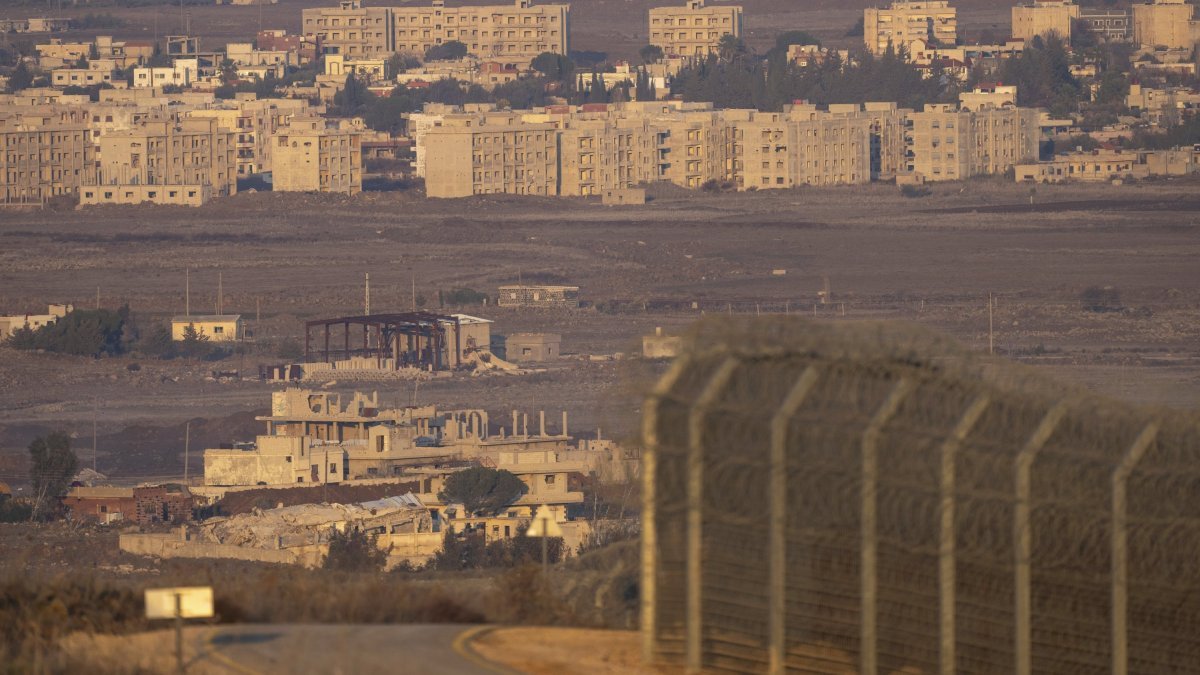
Israel's latest ground operations in Syria's southern provinces of Daraa and Quneitra underscore how the post-Assad order remains unsettled more than a year and a half after the fall of Damascus. The incursions — small in scale, but persistent in rhythm — are reshaping the security map along the Golan frontier and testing the limits of the region's new diplomatic arrangements.
Israel's Southern Syria Incursions Test Post-Assad Order
Damascus, Syria – August 5, 2026 — Israeli forces conducted separate incursions into Syria's southern provinces of Daraa and Quneitra on Tuesday, according to Syria's state news agency SANA, in the latest round of a months-long pattern of ground operations along the ceasefire line.
Recent Israeli Ground Movements in Daraa and Quneitra
Israeli forces conducted separate incursions into Syria's southern provinces of Daraa and Quneitra on August 4, 2026, according to Syria's state news agency SANA. In Daraa, troops advanced into the village of Mariya in the Yarmouk Basin area, entering the western part of the village and searching several civilian homes before withdrawing without arrests.
Separately, an Israeli force of six military vehicles and a Hilux pickup moved near the Jbata al-Khashab quarries junction in northern Quneitra countryside. The unit established a temporary checkpoint, stopped and searched civilians and vehicles, then withdrew. These actions followed similar operations reported on August 3 by multiple outlets.
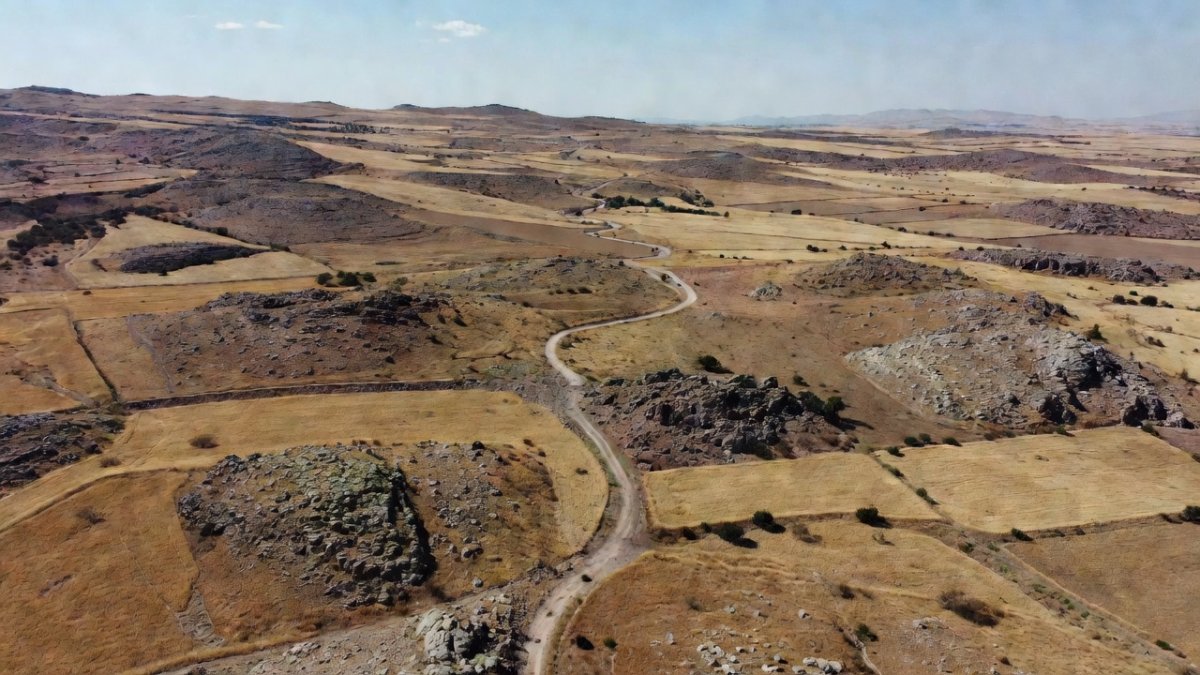
Since August 3, Israeli forces have also continued earthmoving work to reopen an old dirt road north of Wadi al-Raqad from Mariya village, supported by a bulldozer, tank, and pickup truck. Such operations have recurred for months in southern Syria, with intensified activity after the December 2024 collapse of Bashar Assad's government.
The pattern of limited ground activity in these provinces reflects a broader effort to monitor terrain that has historically served as a corridor for cross-border movements, particularly in the years following the 1974 disengagement framework. Local communities in the Yarmouk Basin area have experienced repeated disruptions, which in turn affect agricultural routines and internal displacement trends already heightened by the post-Assad transition.
These operations also intersect with the activities of remaining local armed groups that emerged or reorganized after the regime change, creating a fluid security environment where Israeli patrols seek to gather real-time information on shifting alliances. The cautious pace of withdrawals after each incursion suggests an emphasis on avoiding prolonged exposure while still shaping the operational landscape.
Violation of the 1974 Disengagement Agreement
The 1974 Agreement on Disengagement between Israel and Syria created a buffer zone in the Golan Heights, along with areas of limited forces and weaponry on each side. It also established the United Nations Disengagement Observer Force under Security Council Resolution 350. The United Nations has described Israeli army presence inside this buffer zone as a breach of the accord.
Following the fall of Assad's regime in December 2024, Israel declared the 1974 agreement no longer valid and moved forces into the demilitarized buffer zone. Syria has consistently condemned these steps as violations and demanded full Israeli withdrawal. A January 2026 de-escalation mechanism agreed between the two sides did not address the buffer zone directly.
These developments occur against a backdrop of recurring raids, searches, and arrests in southern Syria. The pattern reflects Israel's stated aim to prevent hostile forces from consolidating near its borders after the power vacuum left by Assad's departure.
Over the decades since 1974, the disengagement line has functioned less as a permanent border and more as a managed separation mechanism, with periodic tensions arising whenever either side perceived changes in the other's force posture. The current phase marks a significant departure because the absence of a centralized Syrian authority has removed the previous interlocutor that once channeled complaints through established diplomatic channels.
UNDOF's monitoring role has become more constrained as access routes and observation points face new restrictions, limiting its ability to verify compliance on both sides of the line. This situation underscores how the post-Assad vacuum has accelerated a recalibration of long-standing arrangements without yet producing a replacement framework acceptable to all parties.
Strategic Objectives Driving Israeli Actions
Israel seeks to maintain a security buffer that prevents Iranian-linked groups or other adversaries from establishing positions close to the Golan Heights. The collapse of the Assad government removed a predictable, if hostile, neighbor and created uncertainty about who controls southern Syria's terrain.
By conducting limited incursions and infrastructure work, Israeli forces gather intelligence and shape the ground to their advantage without committing to permanent occupation. This approach allows flexibility while signaling resolve to any emerging Syrian authorities or external actors.
Syria's new leadership, still consolidating power, lacks the military capacity to challenge these moves directly. Its public condemnations serve to rally domestic support and appeal for international backing, yet they produce limited immediate effect on the ground.
The approach also takes into account the potential for Iran to exploit any security gaps through residual networks that survived the regime transition, particularly in areas where local militias retain autonomy. Maintaining operational presence near key junctions allows Israel to disrupt such linkages before they mature into more structured threats.
At the same time, these measures serve as a form of signaling to Damascus that any future Syrian government will need to account for Israeli security priorities when organizing its southern provinces, thereby influencing the internal bargaining that shapes the new order.
Regional Ripple Effects Across the Levant and Gulf
The incursions add pressure to already fragile post-Assad arrangements in Syria. Neighboring states watch closely, concerned that instability could spill across borders or allow Iran to rebuild influence through remaining networks. Sunni-Shia geopolitical competition remains a key undercurrent, with Iran's regional proxy networks facing setbacks after Assad's fall.
Gulf states pursuing economic diversification view prolonged border friction as a risk to broader stability needed for investment and trade routes. Turkey's regional influence calculations also factor in, as Ankara balances its own interests in northern Syria with the shifting dynamics further south.
Israeli-Palestinian dynamics intersect indirectly, as any perception of unchecked Israeli expansion can fuel narratives that complicate Arab-Israeli normalization efforts under the Abraham Accords framework. Energy markets and OPEC+ diplomacy stay sensitive to any escalation that might affect regional security perceptions.
Lebanese border communities, already navigating their own post-conflict recovery, monitor these developments for signs that similar patterns could emerge along their frontier, potentially drawing in additional actors and complicating UNIFIL operations. Jordanian officials similarly assess how southern Syrian instability might affect refugee flows and cross-border security coordination.
The cumulative effect is a gradual erosion of the diplomatic space that once allowed quiet understandings between Israel and certain Arab states, as public opinion in the region reacts to visible military activity near the Golan.
Great Power Competition and Diplomatic Leverage
The United States maintains influence through security ties with Israel while seeking to avoid deeper entanglement in Syrian affairs. Russia and China, each with stakes in the post-Assad order, monitor how buffer zone violations affect their own positioning in the Levant.
Israel calculates that limited, reversible operations carry acceptable diplomatic costs at present. Syrian authorities, meanwhile, hold little leverage beyond diplomatic appeals and coordination with remaining international observers such as UNDOF.
Second-order effects include heightened risks of miscalculation that could draw in additional actors. Sustained incursions may also accelerate efforts by external powers to broker new security arrangements before the situation hardens into a longer-term territorial reality.
Russian forces, still present in limited numbers at key Syrian bases, face the challenge of balancing their remaining commitments with the need to avoid direct friction with Israeli units operating closer to the southwest. Chinese diplomatic initiatives in the region, focused on economic corridors, register these border tensions as potential obstacles to longer-term connectivity projects.
The resulting environment encourages back-channel diplomacy among multiple capitals, yet the absence of a unified Syrian negotiating partner reduces the prospects for rapid formal agreements that could stabilize the frontier.
Outlook for De-escalation and Lasting Arrangements
The January 2026 de-escalation mechanism offers a narrow channel for communication, yet its limited scope leaves core disputes over the buffer zone unresolved. Both sides appear to prioritize immediate security needs over comprehensive settlement in the near term.
Continued earthmoving and checkpoint activity suggest Israel intends to maintain operational flexibility along the frontier. Syrian responses will likely remain confined to statements and calls for international pressure unless new military capabilities emerge.
Regional actors and outside powers face the task of managing these frictions to prevent wider spillover. The balance between Israeli security requirements and Syrian sovereignty claims will shape stability in southern Syria for months ahead.
Any future arrangement will likely require renewed involvement from the United Nations and interested regional states to establish verification mechanisms that address both the buffer zone and adjacent limited-force areas. Without such steps, the current pattern of incremental activity risks becoming normalized over time.
Observers note that the interplay between local Syrian dynamics and wider Iran-Israel competition will continue to influence the pace at which de-escalation talks can expand beyond their present narrow focus, leaving southern Syria in a prolonged state of managed tension.
By Malik Hassan, Staff WriterThis article was produced with AI-assisted research and editorial support. Reporting is based on sources cited in the article.
What's Your Reaction?
 Like
0
Like
0
 Dislike
0
Dislike
0
 Love
0
Love
0
 Funny
0
Funny
0
 Wow
0
Wow
0
 Sad
0
Sad
0
 Angry
0
Angry
0

Middle East Correspondent at Global1.News. Based in Beirut, covering politics, conflict, energy, and society across the Middle East. Brings context and depth to a region often reduced to headlines.












Comments (0)