
ROK-US Alliance Management Via Social Media: Trump's Last-Minute Cut to Ulchi Freedom Shield
The management of the Republic of Korea-United States alliance has historically been conducted through formal channels: Blue House and White House readouts, joint statements from the Security Consultative Meeting, and carefully choreographed announcements from the Yongsan-based defense establishment. That protocol was upended on August 16, 2026, when U.S.
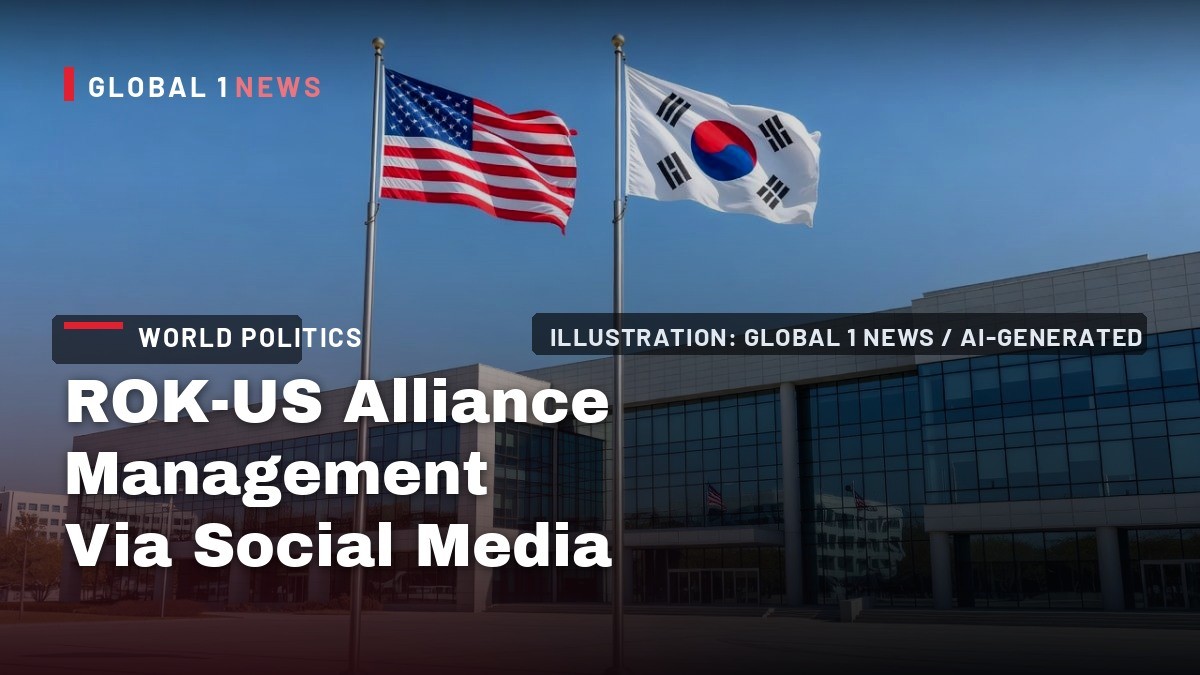
The management of the Republic of Korea-United States alliance has historically been conducted through formal channels: Blue House and White House readouts, joint statements from the Security Consultative Meeting, and carefully choreographed announcements from the Yongsan-based defense establishment. That protocol was upended on August 16, 2026, when U.S. President Donald Trump directed the Pentagon to "substantially reduce" the annual Ulchi Freedom Shield (UFS) exercise—not through a diplomatic cable or a phone call to Seoul, but via a post on his Truth Social platform. The medium of the announcement, delivered without advance notice to the South Korean government, has become as significant a strategic signal as the substance of the decision itself.
The timeline of the reduction is precise and consequential. UFS began on Monday, August 17, 2026, and was originally scheduled to run eleven days through August 27. The exercise, which combines computer-simulated command-post training with field maneuvers, is the cornerstone of the allies' combined defense posture against North Korean aggression. Yet within 48 hours of the exercise's commencement, South Korea's Joint Chiefs of Staff (JCS) announced on Wednesday, August 19, that the drill would conclude after five days, on August 21, rather than August 27. The second command-post phase was cancelled outright. The U.S. military formally ended its participation on Friday, August 21. South Korea's foreign minister subsequently confirmed that neither Seoul nor U.S. officials in the theater were informed of the President's post in advance.
The Substance of the Reduction: Costs, Pyongyang, and the Iran Factor
President Trump's stated rationale for the downsizing was threefold. First, he cited the financial cost of the exercises, a recurring theme in his criticism of U.S. military commitments abroad. Second, he referenced what he described as his "good relationship" with North Korean leader Kim Jong Un, suggesting that large-scale maneuvers were unnecessary given the personal rapport he claims to have cultivated. Third, and most pointedly for Seoul, Trump linked the reduction to South Korea's refusal to join the U.S. war against Iran. This conflation of separate strategic theaters—the Korean Peninsula and the Persian Gulf—represents a significant departure from the traditional compartmentalization of alliance obligations.
The Iran linkage is particularly troubling for South Korean policymakers. The Ministry of National Defense and the Ministry of Foreign Affairs have long maintained that the U.S. alliance is a bilateral security arrangement focused on deterrence on the Korean Peninsula. By explicitly tying the scale of UFS to Seoul's position on an unrelated conflict, the President has introduced a transactional logic that fundamentally alters the character of the alliance. The New York Times reported that the cancellation of a joint amphibious landing drill scheduled for September was communicated to Seoul as early as June, citing constraints on force availability related to the Iran war. On August 24, Seoul's Marine Corps confirmed that the United States had cancelled the exercise, citing those same force constraints. The timing suggests that the reduction was not an impulsive decision but a calculated policy choice, with the Truth Social post serving as the public unveiling of a premeditated strategy.
The Medium as Message: Alliance Management in the Social Media Age
The manner of the announcement warrants scholarly attention. In traditional alliance management, major adjustments to military posture are preceded by extensive consultation. The U.S.-ROK Mutual Defense Treaty, signed in 1953, and the subsequent Status of Forces Agreement establish a framework of mutual respect and shared decision-making. The annual Security Consultative Meeting between defense ministers serves as the primary venue for such discussions. By bypassing these established channels, President Trump has signaled that the alliance relationship is subordinate to his personal diplomatic agenda and his preferred mode of communication.
This is not the first time Trump has used social media to announce major policy shifts affecting the Korean Peninsula. In 2018, ahead of his first summit with Kim Jong Un in Singapore, Trump announced the suspension of the Ulchi Freedom Guardian exercise, citing the "provocative" nature of the drills and the cost of the maneuvers. That decision was also communicated without prior consultation with Seoul, catching the South Korean defense establishment off guard. The 2026 reduction follows the same pattern, suggesting that the social media announcement is not an aberration but a deliberate feature of Trump's approach to alliance management. For South Korean officials, this creates a fundamental uncertainty: no matter how carefully they prepare for bilateral consultations, the alliance's operational reality can be altered by a single post on a social media platform.
Korean Context: OPCON Transition and the Defense Establishment
The reduction comes at a particularly sensitive moment for the ROK-U.S. alliance. The planned transfer of wartime operational control (OPCON) from the U.S. to South Korea has been a subject of debate for decades. The transition, originally scheduled for the early 2020s and repeatedly postponed, is predicated on the assumption that the combined forces structure remains robust and interoperable. A unilateral reduction in exercise scale undermines the very foundation of that assumption. The JCS and the Ministry of National Defense have invested heavily in developing the capabilities necessary for OPCON transition, including the development of the Korean Three-Axis System of preemptive strike, missile defense, and mass retaliation. But these capabilities are meaningless without the integrated command-and-control structures that exercises like UFS are designed to test and refine.
The cancellation of the second command-post phase is particularly significant. Command-post exercises are the primary mechanism for validating the combined command structure that would operate in a wartime scenario. By cancelling this phase, the allies have lost a critical opportunity to test the interoperability of their command systems. The Yongsan-based defense establishment, which has been the nerve center of the alliance since the U.S. military relocated its headquarters to Camp Humphreys in Pyeongtaek, now faces the prospect of managing an alliance whose operational parameters can be altered without warning. The National Assembly's defense committee has already begun to raise questions about the reliability of the U.S. commitment, with lawmakers from both the ruling and opposition parties expressing concern about the precedent set by the reduction.
Public Opinion and the Protest Dynamic
The reduction has also had a visible impact on South Korean public opinion. On August 17, the day UFS began, protesters rallied outside the U.S. Embassy in Seoul to oppose the joint exercises. These protests, which have been a recurring feature of the alliance since the 1980s, typically draw from progressive and nationalist constituencies who view the exercises as provocative to North Korea and a symbol of U.S. dominance. However, the 2026 protests carry an additional layer of complexity. While some protesters welcomed the reduction, others expressed concern that the unilateral nature of the decision undermines South Korea's sovereignty and strategic autonomy. The alliance has always been a contested issue in Korean domestic politics, with progressives favoring engagement with Pyongyang and conservatives emphasizing the necessity of a robust deterrence posture. The Trump decision has scrambled these traditional alignments, creating an unusual situation where both ends of the political spectrum find reasons for dissatisfaction.
The inter-Korean dimension adds further complexity. President Trump's reference to his relationship with Kim Jong Un suggests that the reduction may be a prelude to renewed negotiations with North Korea. Trump has repeatedly sought to revive the personal diplomacy he developed with Kim during his first term, including the historic meetings in Singapore, Hanoi, and the Panmunjom truce village. For Seoul, this raises the specter of being sidelined in inter-Korean and U.S.-North Korea negotiations, a scenario that South Korean presidents have historically sought to avoid. The Moon Jae-in administration's role as a facilitator in the 2018-2019 period was predicated on the assumption that Seoul would be a central actor in any diplomatic process. If Trump is preparing to engage Pyongyang directly, without Seoul's involvement, the strategic calculus for South Korea changes fundamentally.
Forward-Looking Analysis: Deterrence, Autonomy, and the Future of the Alliance
The implications of this episode extend far beyond the immediate reduction of UFS. For deterrence signaling against North Korea, the message is ambiguous. On one hand, the reduction could be interpreted as a sign of U.S. confidence in the diplomatic track, suggesting that military pressure is no longer necessary. On the other hand, it could be read as a signal of U.S. unreliability, suggesting that the American commitment to South Korea's defense is conditional and subject to the whims of the President. North Korea has historically responded to perceived weakness in the alliance with provocations, and the reduction of exercises could embolden Pyongyang to test the resolve of both Seoul and Washington.
For South Korea's strategic autonomy debate, the episode provides ammunition for those who argue that Seoul must develop greater self-reliance in defense matters. The progressive wing of Korean politics has long advocated for a more independent foreign policy, arguing that the alliance with the U.S. constrains South Korea's ability to pursue engagement with the North and manage its relations with China. The conservative wing, traditionally the strongest supporter of the alliance, now faces the uncomfortable reality that the alliance's reliability is not guaranteed. The result is likely to be an acceleration of the debate over OPCON transition, with some arguing that the reduction demonstrates the urgency of completing the transfer, while others contend that the episode proves South Korea is not yet ready to assume full operational control.
The precedent set by this episode will have lasting consequences for alliance consultations. If the United States can unilaterally alter the scale and scope of combined exercises through a social media post, the entire framework of bilateral consultation is called into question. Future administrations in Seoul will need to develop contingency plans for managing an alliance where the primary decision-maker may not be reachable through traditional diplomatic channels. This may require the development of alternative communication mechanisms, including direct military-to-military channels that can operate independently of political leadership. It may also require Seoul to develop a more robust independent defense capability, not as a replacement for the alliance but as a hedge against its unpredictability.
The Ulchi Freedom Shield reduction of 2026 will be studied by scholars of alliance politics for years to come. It represents a case study in how the medium of communication can fundamentally alter the substance of a strategic decision. For South Korea, the episode is a stark reminder that the alliance, while enduring, is not immutable. The challenge for Seoul is to navigate this new reality without sacrificing the deterrence capabilities that have maintained peace on the Korean Peninsula for over seven decades. The challenge for Washington is to recognize that alliance management requires more than a social media post—it requires the sustained, institutionalized consultation that has been the hallmark of the ROK-U.S. relationship since its inception.
This article was produced with AI-assisted research and editorial support. Sources: The Diplomat, Reuters, Stars and Stripes, Al Jazeera, Yonhap News Agency, Korea Times, Defense News.
By Prof. David Park, Staff Writer
What's Your Reaction?
 Like
0
Like
0
 Dislike
0
Dislike
0
 Love
0
Love
0
 Funny
0
Funny
0
 Wow
0
Wow
0
 Sad
0
Sad
0
 Angry
0
Angry
0

East Asia/Technology Correspondent at Global1.News. Seoul-based voice covering Korean politics, technology, business, and culture. Analyzes how technology and geopolitics intersect across East Asia.










Comments (0)