
Thailand, Singapore to Cooperate on Care During First 1,000 Days of Children's Lives
BANGKOK — In a move that signals a deepening of ties between two of Southeast Asia's most dynamic economies, the Thai Cabinet on Tuesday approved a draft memorandum of understanding that will see Thailand and Singapore join forces on social development, with a particular focus on the care and development of children during their first 1,000 days of life.
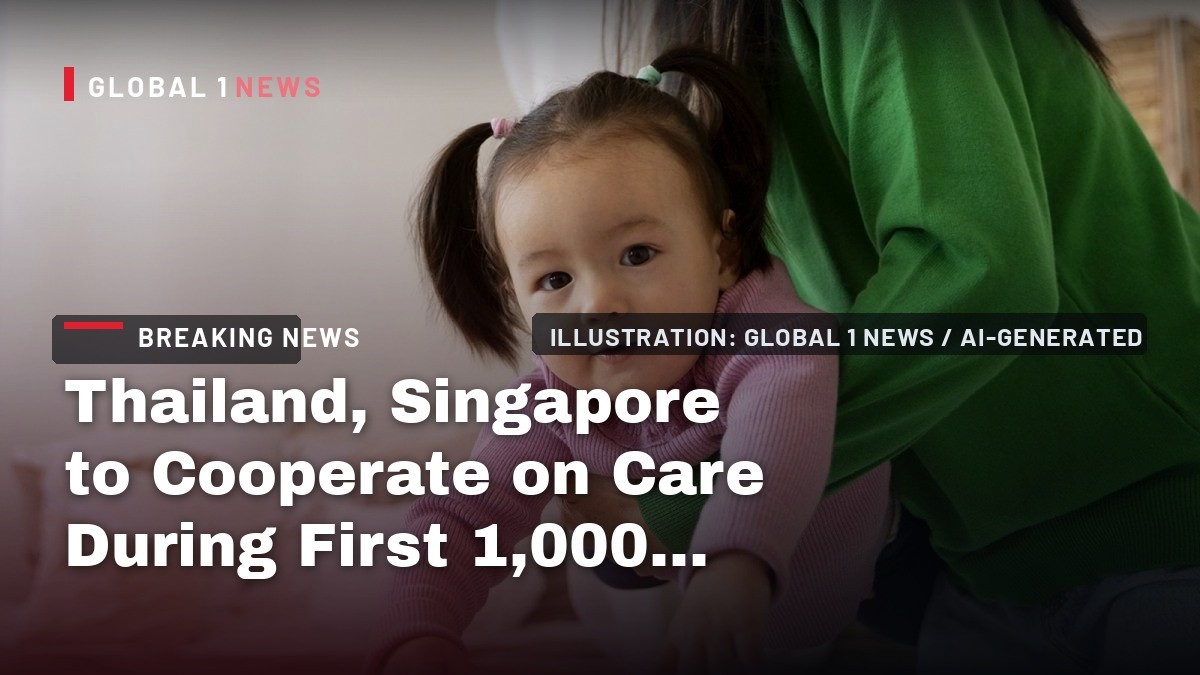
BANGKOK — In a move that signals a deepening of ties between two of Southeast Asia's most dynamic economies, the Thai Cabinet on Tuesday approved a draft memorandum of understanding that will see Thailand and Singapore join forces on social development, with a particular focus on the care and development of children during their first 1,000 days of life. The agreement, between Thailand's Ministry of Social Development and Human Security and Singapore's Ministry of Social and Family Development, is scheduled to be signed on 6 September during the sixth Thailand-Singapore Leaders' Meeting, where it is expected to be one of the key outcomes of bilateral cooperation.
The approval came during the weekly Cabinet meeting in Bangkok, with government spokesperson Capt. Phatdarasmi Thongsaluakorn confirming the decision to reporters. The draft MOU represents a formal commitment to promote exchanges of information, knowledge, experience, policies and best practices between the two countries in areas including social welfare, community development, and child development and protection. For Thai families, this cooperation arrives at a moment when early childhood development has become a national priority, and the opportunity to learn from Singapore's renowned family support systems could reshape how Thailand approaches its youngest citizens.
What the Cabinet Approved and the Ministries Involved
The Cabinet's approval on Tuesday clears the path for the formal signing of the MOU between the Ministry of Social Development and Human Security, led by Minister Varawut Silpa-archa, and Singapore's Ministry of Social and Family Development, headed by Minister Masagos Zulkifli. The agreement is not merely a ceremonial document; it establishes a framework for ongoing collaboration that will touch on social welfare systems, community development initiatives, and the critical area of child development and protection.
Capt. Phatdarasmi Thongsaluakorn told reporters that the cooperation would provide an opportunity for Thailand and Singapore to learn from each other, particularly in child development and protection and care during the first 1,000 days of life. The spokesperson emphasised that the insights gained from this partnership could be used to improve social policies and services according to each country's needs, acknowledging that while the two nations share common goals, their approaches must be tailored to their unique social and cultural contexts.
The draft MOU had been in preparation for several months, with officials from both ministries holding working-level discussions to define the scope of cooperation. The agreement covers a broad spectrum of social development issues, but the spotlight is firmly on early childhood, reflecting a growing recognition across the region that investing in the earliest years of life yields the greatest returns for individuals and societies alike.
The First 1,000 Days: A Critical Window for Lifelong Health
The "first 1,000 days" concept refers to the period from conception to a child's second birthday, a window that scientists and child development experts consider the most critical for brain development, nutrition, and lifelong health. During this period, a child's brain forms neural connections at a rate of more than one million per second, and the foundations for cognitive, emotional, and physical development are laid down. Malnutrition, stress, or lack of stimulation during this window can have irreversible consequences that persist into adulthood.
Thailand is no stranger to this concept. The country already runs a national First 1,000 Days Programme, which operated from 2018 to 2023 under the leadership of the Department of Health within the Ministry of Public Health, with support from UNICEF. That programme focused on maternal health, child growth, and early childhood development, and it reached communities across the country, from the urban centres of Bangkok to the rural villages of the Isaan region. The programme's achievements have been significant, but challenges remain, particularly in reaching marginalised communities and ensuring consistent quality of care.
Singapore, for its part, is widely regarded as having one of the strongest early childhood development and family support systems in Asia. The city-state has invested heavily in preschool education, parental leave policies, and family-friendly workplace practices, and its programmes supporting children in their early years are often cited as models for other nations. By sharing knowledge and experience on early childhood development and child protection, the two countries aim to strengthen their respective approaches and potentially develop new strategies that could benefit the wider region.
Concrete Cooperation: Staff Exchanges, Study Visits, and Joint Training
The MOU is not a vague statement of intent; it contains specific mechanisms for cooperation that will bring Thai and Singaporean officials, social workers, and child development specialists into direct contact. The agreement covers staff exchanges, study visits, training programmes, conferences, and joint seminars, all designed to strengthen expertise and share approaches to social welfare and development. These activities will allow Thai practitioners to observe Singapore's systems in action, while Singaporean experts will have opportunities to understand the unique challenges and opportunities present in Thailand's diverse communities.
A joint working group will be established to plan, coordinate, monitor, and evaluate the cooperation. This group will meet at least once a year, or as needed, to review progress and identify new areas for collaboration. The working group will be co-chaired by senior officials from both ministries, and its membership will include technical experts in child development, social welfare policy, and community development. The establishment of this group signals a long-term commitment to the partnership, rather than a one-off exchange of pleasantries.
The focus on staff exchanges is particularly significant. Social workers and child development specialists from Thailand will have the opportunity to spend time in Singapore, observing how the city-state manages its family support services, early childhood education centres, and child protection systems. Conversely, Singaporean practitioners will visit Thailand to learn about community-based approaches that have proven effective in Thai contexts, particularly in rural areas where formal services may be limited. This two-way flow of knowledge is designed to ensure that both countries benefit from the partnership.
Broader Thailand-Singapore Relations and the 6 September Leaders' Meeting
The signing of the MOU on 6 September will take place during the sixth Thailand-Singapore Leaders' Meeting, a high-level platform that has become a cornerstone of bilateral relations between the two countries. The Leaders' Meeting, which alternates between Bangkok and Singapore, brings together heads of government and senior ministers to discuss cooperation across a wide range of areas, including trade, investment, tourism, and regional cooperation within ASEAN. The social development MOU is expected to be one of the key outcomes of this year's meeting, alongside agreements in other sectors.
Thailand and Singapore have deep and multifaceted ties. Singapore is one of Thailand's largest foreign investors, with significant holdings in manufacturing, finance, and logistics. The two countries are also major trading partners, with bilateral trade exceeding 20 billion US dollars annually. Tourism flows are substantial in both directions, with Singaporeans flocking to Thai beaches and cultural sites, while Thais visit Singapore for business, shopping, and medical care. Within ASEAN, the two nations often find themselves on the same side of regional debates, advocating for economic integration and pragmatic solutions to shared challenges.
The Leaders' Meeting on 6 September will be co-chaired by Thai Prime Minister Paetongtarn Shinawatra and Singaporean Prime Minister Lawrence Wong. The meeting is expected to produce a joint statement outlining the future direction of bilateral cooperation, and the social development MOU will be highlighted as evidence of the relationship's breadth and depth. For the two leaders, the signing will be an opportunity to demonstrate that the partnership extends beyond economics into the realm of human development and social welfare.
What This Means for Thai Families, Communities, and the Region
For Thai families, the cooperation with Singapore on the first 1,000 days of life has the potential to translate into tangible improvements in services and support. The knowledge and best practices shared through this partnership could inform the next generation of Thailand's early childhood development policies, potentially leading to better maternal health services, improved nutrition programmes, and more accessible early childhood education. For parents in Bangkok's bustling districts, Chiang Mai's mountain communities, or the rice-farming villages of the Isaan region, these improvements could mean healthier children, better developmental outcomes, and brighter futures.
The partnership also carries significance for the broader Southeast Asian region. As ASEAN member states grapple with the challenges of demographic change, urbanisation, and inequality, the sharing of best practices in social development becomes increasingly important. Thailand and Singapore, as two of the region's more developed economies, have a responsibility to lead by example and to contribute to the development of regional approaches to child welfare. The cooperation established under this MOU could serve as a model for other ASEAN nations, demonstrating how bilateral partnerships can be leveraged to improve social outcomes.
From a cultural perspective, the partnership reflects a shared Buddhist-influenced value system that places importance on compassion, care for the vulnerable, and the nurturing of the next generation. While Singapore is a multi-religious society, its Chinese-majority population shares with Thailand's Buddhist majority a deep respect for family and community. This cultural resonance may facilitate the transfer of knowledge and practices, as both sides will be working from a similar ethical foundation.
The timing of the cooperation is also significant. As Thailand continues its recovery from the economic disruptions of recent years, investments in early childhood development represent a strategic choice to build human capital for the future. The first 1,000 days of life are when the foundations for lifelong health, learning, and productivity are established, and ensuring that every Thai child gets the best possible start is an investment in the nation's long-term prosperity. The partnership with Singapore, with its proven track record in early childhood development, offers Thailand a valuable opportunity to accelerate progress in this critical area.
For the officials who will implement the MOU, the work begins immediately after the signing ceremony. The joint working group will need to establish its terms of reference, identify priority areas for cooperation, and develop a work plan for the coming year. Initial activities are likely to include a series of study visits and training programmes, with the first exchanges possibly taking place before the end of the year. The success of the partnership will depend on the commitment of both sides to translate the MOU's provisions into concrete actions that benefit children and families in both countries.
As the 6 September signing approaches, the sense of anticipation among child development advocates in Thailand is palpable. The cooperation with Singapore represents more than just a diplomatic achievement; it is a recognition that the care of children during their first 1,000 days is a matter of national importance, deserving of the highest levels of government attention. For the families who will benefit from improved services and support, the partnership offers hope that their children will have the opportunity to reach their full potential, regardless of where they are born or the circumstances of their families.
By Ann Srisawat, Staff Writer
This article was produced with AI-assisted research and editorial support. Sources: Khaosod English.
What's Your Reaction?
 Like
0
Like
0
 Dislike
0
Dislike
0
 Love
0
Love
0
 Funny
0
Funny
0
 Wow
0
Wow
0
 Sad
0
Sad
0
 Angry
0
Angry
0

Southeast Asia Correspondent at Global1.News. Based in Bangkok, covering Thai and Southeast Asian politics, economy, technology, and culture. Deep regional perspective on one of the world's most dynamic regions.














Comments (0)