
Tel Aviv University Study Documents Record Emigration Wave as Security and Economic Pressures Mount
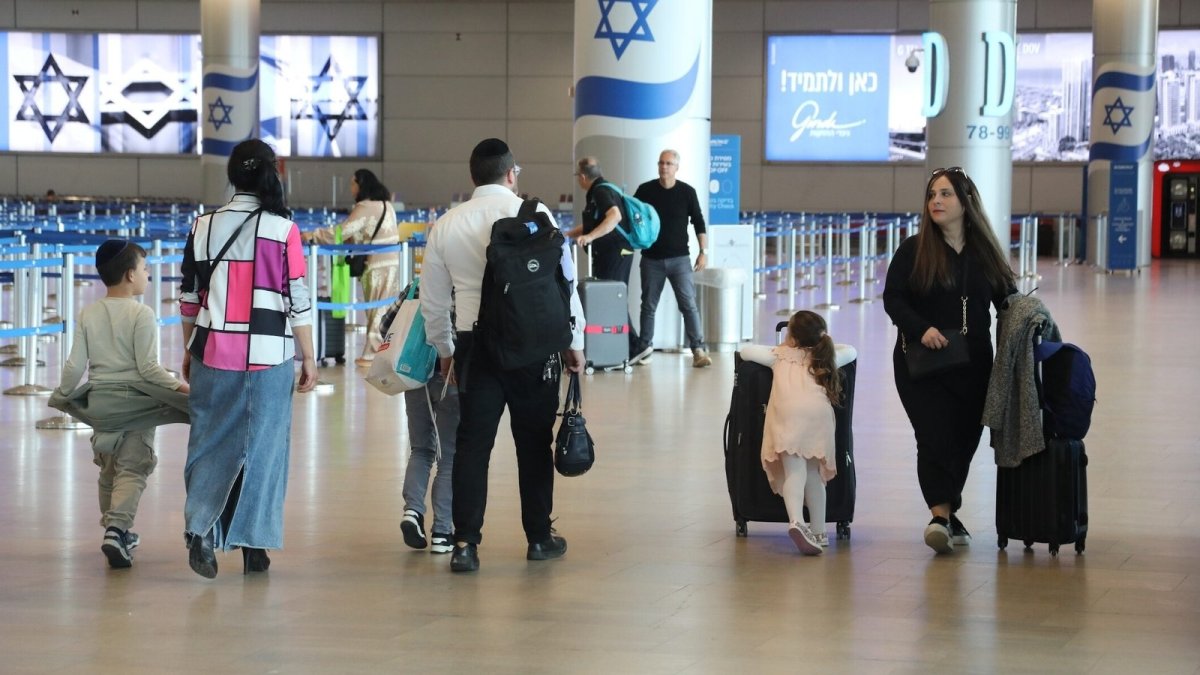
In a recent i24NEWS English report covering a Tel Aviv University demography study published on Monday, August 3, 2026, researchers documented 268,509 Israelis who left the country for at least three consecutive months between 2023 and 2025. The figures mark a record wave of emigration, with annual departures averaging around 90,000 compared to roughly 60,000 per year from 2010 to 2019.
In a recent i24NEWS English report covering a Tel Aviv University demography study published on Monday, August 3, 2026, researchers documented 268,509 Israelis who left the country for at least three consecutive months between 2023 and 2025. The figures mark a record wave of emigration, with annual departures averaging around 90,000 compared to roughly 60,000 per year from 2010 to 2019. This trend unfolded amid the 2022-2023 political crisis, the October 7, 2023 Hamas attack, the war in Gaza, and clashes with Hezbollah in Lebanon.
Tel Aviv University Study Documents Record Emigration Wave as Security and Economic Pressures Mount
Jerusalem, Israel – August 5, 2026 — A Tel Aviv University demography study released this week shows 268,509 Israelis departed for at least three consecutive months between 2023 and 2025, representing a nearly 50 percent increase over prior averages. The research, led by Prof. Itai Ater of the Coller School of Management, Prof. Nittai Bergman of the School of Economics, and doctoral candidate Doron Zamir, drew on Central Bureau of Statistics travel data and found a 0.96 correlation between three-month absences and longer-term emigration. Israel's population exceeds 10 million, and most departures occur through Ben Gurion International Airport.
Precise Annual Emigration Totals from 2023 to 2025
The Tel Aviv University study placed the 2023 total at 86,509 departures under the three-month measure, reflecting a 29.1 percent increase from the 66,966 recorded in 2022 by the Central Bureau of Statistics. This followed the COVID-19 pandemic baseline of 38,764 in 2020, the lowest figure since the study began in 2009 when 65,014 Israelis were absent, then 53,559 in 2021. The 12-month emigration definition showed 24,400 in 2020, 32,036 in 2021 and 35,698 in 2022, with the stricter count reaching 49,925 in 2023 and 49,677 in 2024.
Researchers reported a 0.96 correlation between three-month absences and longer-term emigration, confirming that the shorter measure reliably predicts permanent departures tracked through Ben Gurion International Airport data. Official Central Bureau of Statistics figures for 2025 will only become available in early 2027 due to the agency's standard methodology lag, forcing the Tel Aviv University team to project 45,000 to 50,000 under the 12-month definition for that year. The three-year total of 268,509 exceeds the 183,219 departures recorded in the 2013-2015 period by a wide margin.

High-Skilled Professionals Drive the Outflow
Earlier Tel Aviv University research identified sharp rises in emigration among doctors, PhD holders, engineers, academics, and high-income earners. Many of these individuals work in Israel's high-tech and knowledge-intensive sectors centered in Tel Aviv and Herzliya. The loss of such personnel directly affects units within the IDF that rely on technical expertise for intelligence and defense systems.
Israel depends on human capital because it lacks abundant natural resources, making the high-tech sector centered in Tel Aviv and Herzliya central to economic output and defense innovation. Earlier Tel Aviv University research documented large increases in emigration among doctors, PhD holders, engineers, academics and high-income earners who staff these knowledge-intensive industries.
Brain drain in a country with a population over 10 million directly reduces the pool of specialists available for IDF technical units that rely on expertise from the same Tel Aviv and Herzliya workforce. The loss of such personnel affects intelligence and defense systems development at a time when the Central Bureau of Statistics data already shows sustained outflows exceeding prior decades.
Context of Political Crisis and Regional Conflicts
Emigration discussions intensified after the 2022-2023 judicial reform protests, the October 7, 2023 Hamas attack from Gaza, and subsequent fighting with Hezbollah along the Lebanon border. Israeli operations extended to Syria, Yemen, and Iran during this period. The Prime Minister's Office and Foreign Ministry have tracked these security developments while the Knesset debated related legislation.
Public discourse on emigration intensified since late 2022 following the 2022-2023 judicial reform protests that divided Israeli society. The October 7, 2023 Hamas attack from Gaza triggered the subsequent war in Gaza and clashes with Hezbollah along the Lebanon border, while Israeli operations extended to Syria, Yemen and Iran.
These overlapping security events shaped decisions by Israeli families considering residence abroad, with the Prime Minister's Office and Foreign Ministry monitoring the regional developments. The Knesset continued legislative debates amid the conflicts, as the Tel Aviv University study authors noted the timing of heightened emigration discussions.
Economists Warn of Security and Economic Risks
Prof. Itai Ater of the Coller School of Management stated that even in 2025 the numbers remain troubling and do not yet pose an immediate danger to Israel's resilience. He warned that if the trend continues without change there is a real risk of harm to Israel's security and economy, citing data compiled with Prof. Nittai Bergman of the School of Economics and doctoral candidate Doron Zamir.
Ater highlighted the snowball warning that each wave of departures encourages more Israelis to emigrate, potentially causing significant damage to the economy and Israeli society. The researchers drew on Central Bureau of Statistics travel records to demonstrate how sustained outflows from 2023 onward compound these pressures on national institutions.
Human Capital Dependence and Opposition Criticism
Israel's economy depends heavily on human capital in high-tech industries because the country lacks abundant natural resources. Opposition politicians in the Knesset attributed the emigration surge to failures by the current government. The Shin Bet and Mossad continue recruitment from the same talent pools now showing higher departure rates.
Opposition politicians in the Knesset stated that the Tel Aviv University report reflects failures of the current government amid coalition debates over conscription for ultra-Orthodox communities and early elections discussions. Israel's economy relies on high-tech and knowledge-intensive industries because the country lacks abundant natural resources, making retention of skilled personnel essential.
The military dimension adds pressure as reservists and elite tech units within the IDF draw from the same talent pools now showing higher departure rates, directly affecting the qualitative edge maintained by the Shin Bet and Mossad. Central Bureau of Statistics figures confirm that these outflows among high-skilled professionals have exceeded averages from 2010 to 2019.
Diplomatic and International Reactions
The Tel Aviv University study on 268,509 departures between 2023 and 2025 enters international discourse at a time when diaspora Jewish communities in the United States and Europe track both emigration from Israel and aliyah trends through the Jewish Agency. The agency's programs promoting immigration to Israel face counter-pressure from sustained outflows of high-skilled residents, particularly from Tel Aviv and Herzliya high-tech centers, amid ongoing regional tensions with Iran and Hezbollah.
Western Jewish communities have observed the 2025 figure of 90,922 three-month absences alongside the 2022-2023 judicial reform protests and the October 7, 2023 Hamas attack. These observers note that Israel's high-tech sector continues to draw foreign investment from American and European funds, yet prolonged brain drain among engineers and PhD holders could alter investor assessments of long-term stability in the knowledge economy.
Foreign governments monitoring normalization talks with Saudi Arabia and security developments involving Hezbollah along the Lebanon border view the emigration wave as an indicator of internal Israeli resilience. The Prime Minister's Office and Foreign Ministry have maintained diplomatic channels while Central Bureau of Statistics data shows outflows exceeding the 2010-2019 annual average of roughly 60,000.
International economic implications center on Israel's dependence on human capital rather than natural resources. Sustained departures of specialists who support IDF technical units and defense innovation could influence how European Union and United States policymakers evaluate Israel's qualitative edge in regional security calculations involving Iranian proxies.
Analysis and What This Means
The 2025 total of 90,922 three-month departures, nearly identical to the 91,499 recorded in 2024, signals a possible plateau after the initial surge that began with the 2022-2023 political crisis. This leveling may reflect exhaustion of the first wave of departures rather than genuine stabilization, as the Tel Aviv University researchers documented consistent annual figures above 86,000 since 2023.
The snowball effect warned by Prof. Itai Ater carries particular weight because each additional departure from Tel Aviv and Herzliya high-tech sectors reduces the pool available for IDF intelligence units and defense systems development. Jerusalem policymakers can deploy economic incentives, security stabilization measures, and political reforms to address retention before the pattern compounds further.
If official Central Bureau of Statistics data released in early 2027 confirms another year above 90,000 under the three-month measure, the trend would intersect directly with Israel's demographic debate and the maintenance of qualitative military edge. The loss of doctors, engineers, and academics affects both economic output and the specialized recruitment pipelines used by the Shin Bet and Mossad.
Forward-looking assessments for Israeli readers indicate that sustained outflows through Ben Gurion International Airport will require coordinated responses from the Knesset and Prime Minister's Office. Without intervention, the combination of regional threats from Hamas, Hezbollah, and Iranian proxies with continued high-skilled emigration risks eroding the human capital foundation that underpins national security and innovation capacity.
The combination of sustained high emigration among skilled professionals and ongoing regional threats from Hamas, Hezbollah, and Iranian proxies creates compounding pressure on Israel's defense and innovation base. Policymakers in Jerusalem must address both the immediate security environment and the longer-term retention of expertise if the country is to maintain its qualitative edge.
By Hannah Berg, Staff Writer
This article was produced with AI-assisted research and editorial support. Reporting is based on sources cited in the article.
What's Your Reaction?
 Like
0
Like
0
 Dislike
0
Dislike
0
 Love
0
Love
0
 Funny
0
Funny
0
 Wow
0
Wow
0
 Sad
0
Sad
0
 Angry
0
Angry
0

Israel Correspondent at Global1.News. Based in Tel Aviv, covering Israeli politics, security, technology, and society. Provides balanced, deeply-sourced reporting on one of the most closely-watched regions in the world.















Comments (0)