
Board of Peace Envoy Urges Netanyahu to Halt Gaza Strikes
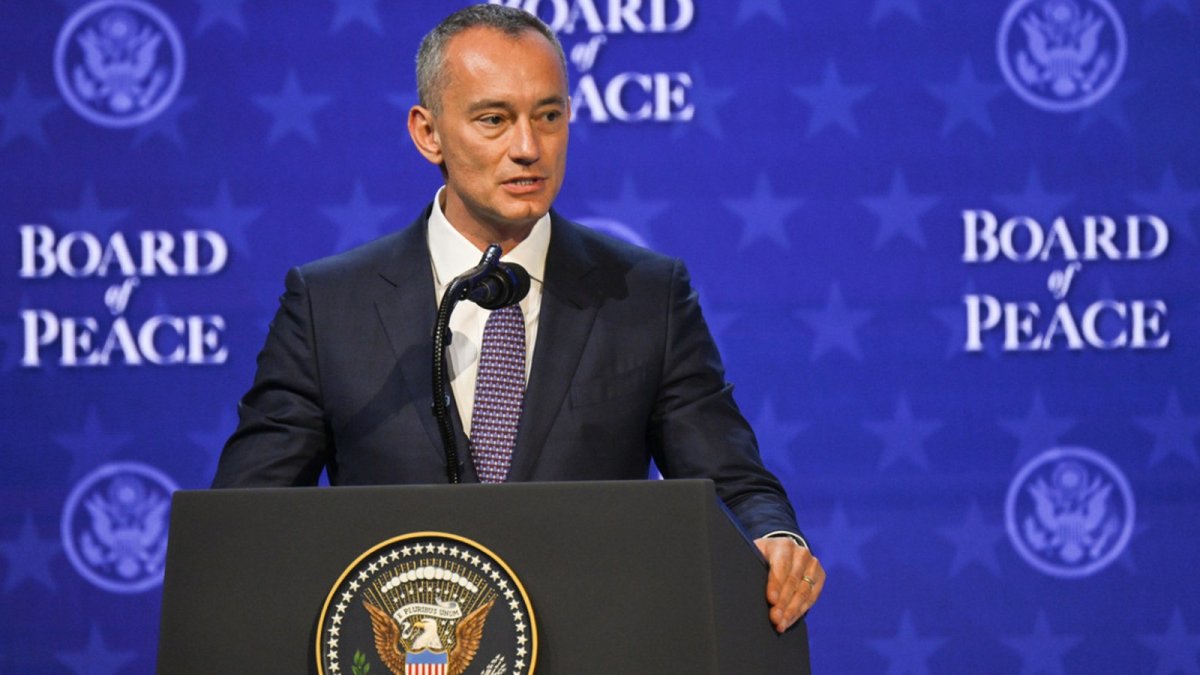
Board of Peace envoy Nickolay Mladenov urged Israeli Prime Minister Benjamin Netanyahu to halt strikes in Gaza, citing commitments under Trump's 20-point plan, as 28 Palestinians were killed despite a new ceasefire roadmap.
Board of Peace Envoy Urges Netanyahu to Halt Gaza Strikes
Board of Peace envoy Nickolay Mladenov met with Israeli Prime Minister Benjamin Netanyahu on Monday and called on him to stop attacks in the Gaza Strip, according to reports from Israeli media. The request referenced commitments Israel made under President Donald Trump's 20-point plan. Mladenov was joined by Board of Peace senior adviser Aryeh Lightstone during the discussions.
Israel's Channel 12 cited a source close to the meeting in its reporting. The Israeli public broadcaster KAN had earlier noted Mladenov's arrival in Israel for talks with officials. These developments come amid ongoing diplomatic efforts tied to the Board of Peace initiative launched by President Trump.
Israeli Media Coverage of the Meetings
Channel 12 reported that Mladenov and Lightstone asked Netanyahu to cease strikes in Gaza as pledged when Israel agreed to the 20-point plan. KAN confirmed the envoy's presence for official engagements. Such coverage from major Israeli outlets provides direct insight into the diplomatic exchanges taking place.
The meetings highlight the role of the Board of Peace in pushing forward phases of the Gaza ceasefire. No immediate official response from the Israeli side addressed the specific request made during the session.
Israeli Position on Territorial Lines and Security
An Israeli political source stated that Israel will not withdraw from the current line in the Gaza Strip. The same statement indicated that Israel will continue to thwart any threat to its citizens and soldiers. Statements attributed to a political source are issued by the Israeli prime minister's office, according to Israeli media outlets.
This position reflects Israel's approach to maintaining control over certain areas even as ceasefire discussions advance. The statement circulated to media outlets underscores ongoing security priorities amid the proposed next phase of the agreement.
Announcement of the Next Ceasefire Phase
On Friday, the Board of Peace and President Donald Trump announced an agreement to implement the next phase of the Gaza ceasefire. The board stated that Hamas had accepted a detailed roadmap for this phase. Israel has not officially commented on the proposal.
The announcement marks a step in the Board of Peace initiative aimed at advancing the ceasefire process. Details of the roadmap remain tied to the broader 20-point plan framework introduced by President Trump.
The Friday announcement represents an attempt to translate the 20-point plan into a concrete next stage. The framework, introduced by the Trump administration, set out phased arrangements for Gaza; the board's statement that Hamas had accepted a detailed roadmap suggests at least one side has formally signed on to the next set of commitments.
Israel's decision not to officially comment on the proposal is significant. In past rounds of Gaza diplomacy, Israeli officials have often responded quickly to frameworks they support and remained silent on those they oppose. The Israeli political source's statement that Israel will not withdraw from the current line in the Gaza Strip suggests territorial questions remain a major sticking point.
Ceasefire frameworks of this kind typically move through defined phases: an initial pause in fighting and exchange of detainees, followed by troop redeployment, and finally negotiations over reconstruction and long-term arrangements. The Board of Peace roadmap is understood to follow a similar structure, though the details of sequencing and verification have not been made public. For the Trump administration, the initiative's credibility depends on whether the announced next phase translates into measurable change on the ground.
Casualties Reported Since the Friday Announcement
Despite the announcement of the roadmap, the Israeli army has killed at least 28 Palestinians in attacks across the Gaza Strip since Friday. These incidents occurred even as diplomatic efforts sought to advance the ceasefire phases.
Gaza's Health Ministry reported that the Israeli army has killed more than 73,000 Palestinians and injured over 174,000 others since October 2023. The ministry further noted that since the ceasefire agreement took effect on Oct. 10, 2025, the Israeli army has continued attacks, killing 1,250 Palestinians and injuring 4,110 others.
The announcement of a detailed roadmap stands in sharp contrast to the continued military operations that killed at least 28 Palestinians across the Gaza Strip in the days after the declaration. The gap between the diplomatic language of the Board of Peace and the reality on the ground underscores the fragility of the process, with families in areas such as Khan Younis and the central governorate absorbing attacks even as mediators described progress.
The scale of the killing since the ceasefire took effect on Oct. 10, 2025 is central to understanding the limits of the current agreement. Gaza's Health Ministry has recorded 1,250 Palestinians killed and 4,110 injured in continued Israeli attacks during that period, figures that human rights organizations say reflect a ceasefire that has reduced but not ended the violence. For communities in Gaza, the distinction between war and ceasefire has often been measured in the number of nights without shelling, not in the absence of casualties.
Casualty data from Gaza's Health Ministry is compiled from hospital records, morgue counts and reporting networks across the enclave, and is routinely cited by United Nations agencies, the World Health Organization and international media as the most complete accounting available. The ministry's cumulative figures — more than 73,000 killed and over 174,000 injured since October 2023 — are widely used in official UN reports on the humanitarian situation.
Humanitarian Conditions and Aid Restrictions
Israel has continued restricting the entry of agreed quantities of food, medicine, medical supplies, shelter materials and prefabricated homes into Gaza. Approximately 2.4 million Palestinians live in the enclave, including roughly 1.5 million displaced people who face catastrophic humanitarian conditions.
These restrictions compound the challenges for residents already dealing with the effects of prolonged conflict. The blocked supplies directly affect daily access to essentials in areas under ongoing pressure.
The restrictions strike at the most basic survival needs of Gaza's population. Medical teams have warned that shortages of surgical supplies, anaesthetics and fuel for hospital generators have pushed the health system to the brink, with many facilities operating at a fraction of their capacity and patients facing impossible choices about who receives care first.
For the roughly 1.5 million displaced people, many living in tents and makeshift shelters, the lack of shelter materials and prefabricated homes means prolonged exposure to the elements. With temperatures dropping in the autumn months, families describe covering their shelters with whatever fabric they can find, while the absence of adequate sanitation and clean water raises the risk of disease outbreaks among children in particular.
The aid restrictions also carry a political dimension. Under the ceasefire framework, Israel agreed to allow specified quantities of humanitarian goods into Gaza, and the continued blocking of those agreed volumes is seen by rights groups as a violation of the deal's humanitarian provisions. United Nations agencies have repeatedly described conditions for the 2.4 million Palestinians in Gaza as catastrophic, with malnutrition and the collapse of basic services compounding the toll of the conflict.
Background on the Board of Peace and Key Figures
Nickolay Mladenov previously served as UN Special Coordinator for the Middle East Peace Process and now acts as a Board of Peace envoy. The Board of Peace represents the initiative launched by President Donald Trump to address the Gaza situation through structured diplomatic steps.
Aryeh Lightstone participates as a senior adviser in these efforts. The 20-point plan forms the basis for the ceasefire commitments referenced in the recent meetings with Netanyahu.
Connecting Diplomacy to Lived Realities in Gaza
The diplomatic exchanges occur against a backdrop of continued casualties and restricted aid flows. Palestinian families in Gaza navigate daily life amid displacement and limited resources, with the proposed ceasefire phases offering potential but uncertain relief if implemented.
Local conditions in the enclave reflect broader patterns of occupation and conflict that shape access to basic needs. The figures from Gaza's Health Ministry illustrate the scale of impact on communities over time.
Regional Context and Potential Next Steps
The Board of Peace initiative connects to wider Middle East geopolitics involving multiple actors. Israel's lack of official comment on the Friday proposal leaves room for further clarification on how the roadmap might proceed.
Observers note that sustained diplomatic pressure could influence outcomes, though the statements from Israeli sources indicate firm positions on security lines. The human cost documented in casualty reports remains central to understanding the stakes involved.
The Gaza diplomacy does not unfold in a regional vacuum. Egypt and Qatar have historically served as the principal mediators between Israel and Hamas, hosting ceasefire negotiations and channeling aid and reconstruction funding, while Jordan has played a role in coordinating humanitarian responses. Gulf states have been positioned as potential financiers of Gaza reconstruction, though their willingness to commit large sums has often been conditioned on political progress and guarantees about governance in the enclave.
The Israeli political source's statement — issued, according to Israeli media, by the prime minister's office — signals that the government intends to hold its current positions on security lines regardless of the diplomatic calendar. That posture, combined with the continued strikes, suggests the gap between the announced roadmap and implementation could widen unless external pressure is sustained.
If the roadmap stalls, the most likely scenario is a return to the fragile status quo: a ceasefire that reduces but does not end the violence, with periodic flare-ups and a deepening humanitarian crisis. International pressure, including from the United Nations and human rights organizations, has historically been most effective when paired with concrete leverage, and observers note that the coming weeks will test whether the Board of Peace initiative can move from announcement to enforcement. The human cost — the 28 killed since Friday, the 1,250 killed since the ceasefire took effect — remains the measure against which any diplomatic progress will ultimately be judged.
By Fatima Al-Rashid, Staff Writer
This article was produced with AI-assisted research and editorial support. Reporting is based on sources cited in the article.
What's Your Reaction?
 Like
0
Like
0
 Dislike
0
Dislike
0
 Love
0
Love
0
 Funny
0
Funny
0
 Wow
0
Wow
0
 Sad
0
Sad
0
 Angry
0
Angry
0

Gulf/MENA Correspondent at Global1.News. Based in Doha, covering Gulf politics, energy markets, diplomacy, and development across the Middle East and North Africa. Tracks the economic transformation of the Gulf states.













Comments (0)