
Second Train Derailment in 24 Hours Sparks Rail Safety Inquiry
Two passenger trains derailed in England within 24 hours — a Greater Anglia service at Wickford, Essex, and a Southern Rail crash near Lewes that left two seriously injured. Network Rail and RAIB investigate amid the fifth UK heatwave.
The screech of buckled steel and the shudder of a carriage floor have become the soundtrack of a troubling 24 hours for Britain’s railway network. Just one day after a Southern Rail service toppled onto its side near Lewes, carrying 150 passengers, a second train partially derailed in Essex on Friday afternoon, forcing the suspension of all services on the Southend Victoria line and prompting urgent questions about the resilience of our ageing infrastructure in the face of unprecedented heat.
Second Derailment in 24 Hours: Network Rail Faces Scrutiny as Heatwave Buckles Tracks and Safety Fears Grow
London, UK – 14 August 2026 — The Rail Accident Investigation Branch (RAIB) has deployed inspectors to a second derailment site in as many days, this time in Wickford, Essex, as the nation’s fifth heatwave of the summer exposes critical vulnerabilities in the country’s rail infrastructure. The incident, which occurred at approximately 2:12pm on Friday, involved a Greater Anglia service travelling from Southend Victoria to London Liverpool Street, and comes just 24 hours after a more serious crash in East Sussex left two passengers in hospital with significant injuries.

Friday’s Derailment: The Wickford Incident
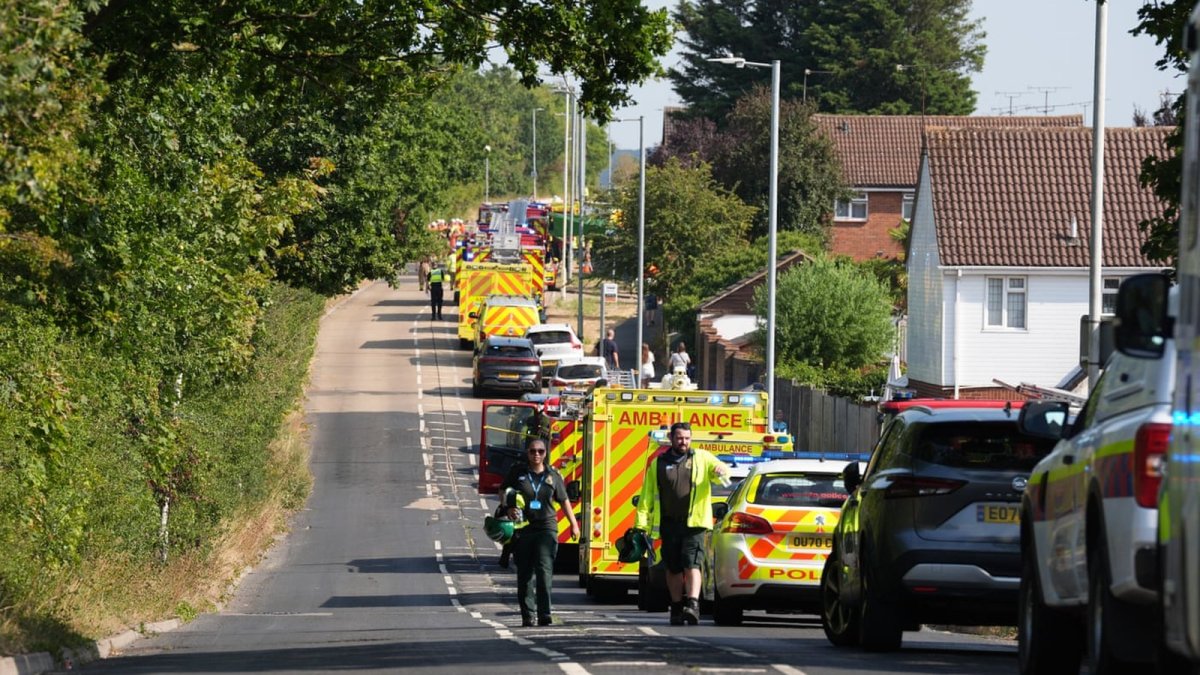
The latest disruption began when the 2:06pm departure from Rayleigh failed to arrive at Wickford station as scheduled. British Transport Police (BTP) confirmed that the rear carriages of the train, carrying between 40 and 45 passengers, derailed "in an upright position," with the entire train remaining vertical. Despite the alarming nature of the event, no injuries were reported, although an air ambulance was scrambled to the scene as a precautionary measure.
Eyewitness Aaron Poyser, who lives adjacent to the railway line, described the moment to BBC News as an "almighty crunching sound" emanating from his garden. "It's almost like someone was shovelling stones. I saw this plume of dust and smoke," he said, labelling the experience "quite scary." Danielle Belton, a local business owner, initially feared a full collision: "There was a big, loud noise and then the unit rattled and sort of shook."
The immediate operational impact was severe. All lines were blocked between Wickford and Southend Victoria, effectively severing the commuter artery for thousands of residents in Essex. National Rail issued a stark "do not travel" warning between Shenfield and Southend Victoria until further notice, with all services cancelled at Southend Airport. By 7pm, the train had been fully evacuated, and passengers were confirmed safe, but the disruption rippled through the evening rush hour, leaving commuters across south Essex facing severe delays through the evening rush hour.
The Lewes Crash: A Major Incident Declared
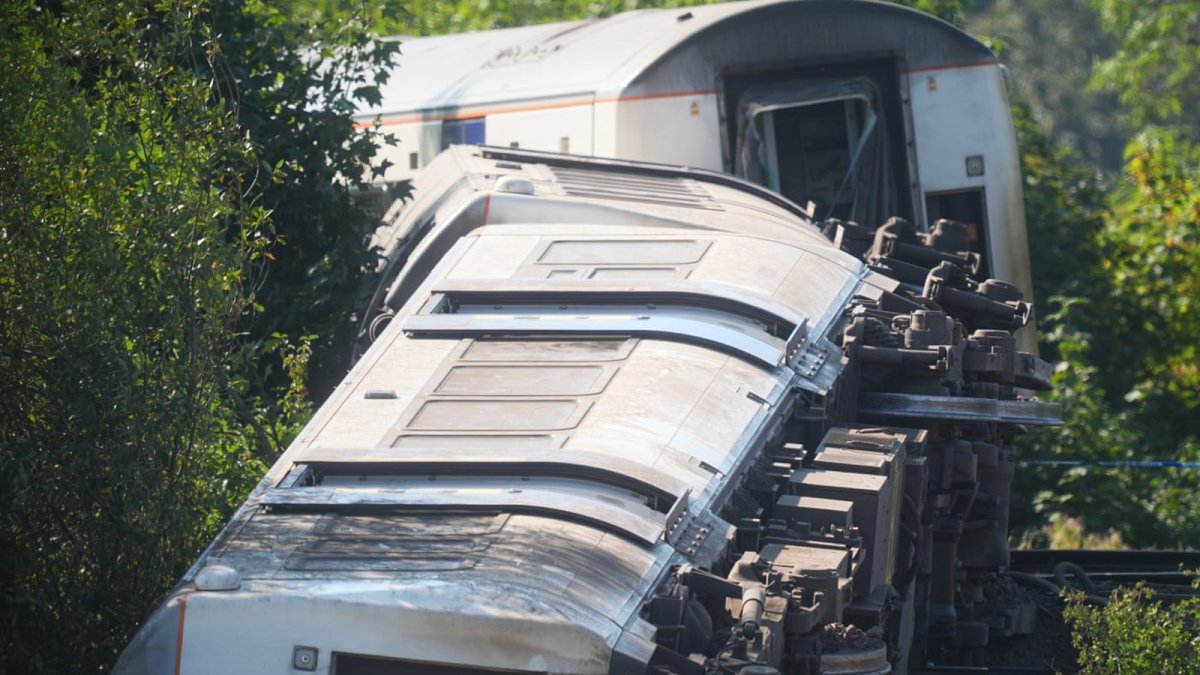
The Wickford incident follows Thursday’s far more serious derailment on the Southern Rail network. A 14:24 service from London Victoria to Eastbourne derailed between Haywards Heath and Lewes shortly before 16:00 BST, with three carriages leaving the track and coming to rest on their sides near an embankment. The South East Coast Ambulance Service deployed more than 50 staff at the height of the response, with BTP declaring a major incident at approximately 15:54 BST.
Two passengers sustained serious injuries and were transported to major trauma centres. On Friday, BTP confirmed their injuries were no longer deemed life-threatening, though both remain hospitalised. A further 18 passengers were treated for less serious injuries and subsequently discharged. The scale of the emergency response underscores the potential for catastrophe inherent in such incidents, a fact not lost on local MP James MacCleary.
Heat, Buckled Tracks, and a "Bumpier" Ride
With Thursday recording the hottest day of the year so far at 38.1°C, attention has immediately turned to the role of extreme heat in both incidents. Reports have emerged of steel tracks bent out of shape, a phenomenon known as "sun kink" or track buckling, which occurs when rails expand under high temperatures and can cause the track geometry to fail.
Lewes MP James MacCleary revealed that constituents had raised concerns with Greater Thameslink Railway about the track feeling "bumpier" in recent months, approximately a week before the derailment. "We've seen images of damaged track — was that caused by the derailment, or did it cause it, or a bit of both?" he asked. "They'll look at the effects of heat." Richard Bowker, former chairman of the Strategic Rail Authority, echoed this sentiment, stating that investigators would meticulously examine the condition of the track to determine whether damage occurred before or during the derailment.
Network Rail’s Defence and the Safety Paradox
Network Rail’s group safety and engineering director, Martin Frobisher, moved swiftly to defend the network’s safety record while acknowledging the exceptional circumstances. "The unprecedented hot and dry weather that we have experienced this summer has presented exceptional challenges to the railway," he said. "In response, we have taken several additional proactive steps to manage and mitigate the impact on the railway, including closely monitoring the temperature of tracks, implementing speed restrictions where it is appropriate to do so, and planning track renewals around high temperatures."
Frobisher urged the public to avoid speculation, insisting that "Britain's railways still rank among the safest in the world." John Whiteshurst, chief executive of Greater Thameslink Railway, the state-owned operator running Southern, reinforced this message: "The railway is safe. These types of incidents are incredibly rare. We have control processes in place that involve inspection, temporary speed restrictions, or even suspending services if that's required."
However, the Department for Transport’s insistence that the network is "among the safest in the world" offers little comfort to the commuters in Essex and East Sussex who have now experienced the fragility of that safety first-hand. The RMT union’s general secretary, Eddie Dempsey, struck a more cautious tone, praising the emergency services while calling for a thorough investigation: "We must praise emergency services and rail workers for their quick reactions under difficult circumstances on the hottest day of the year. We will need to reflect on the causes of this incident once a full investigation has been carried out."
What This Means for the UK
For the daily commuter, these incidents represent a worrying escalation. The Southend Victoria to London Liverpool Street line is a critical route for thousands of workers in the financial and service sectors, and the "do not travel" warning has already caused significant economic disruption. Similarly, the London Victoria to Eastbourne service is a lifeline for coastal communities in East Sussex, connecting them to the capital for work, education, and healthcare. The closure of these lines, even temporarily, forces passengers onto already congested roads and alternative rail routes, adding hours to journeys and straining local transport infrastructure.
Beyond the immediate inconvenience, there is a broader political and economic dimension. The government has repeatedly committed to improving rail reliability, yet these incidents will inevitably revive questions about investment in track maintenance and renewal, particularly on regional and commuter lines. The fact that both derailments occurred during a heatwave raises serious questions about the network’s preparedness for climate change, where hotter, drier summers are expected to become the norm. The RAIB’s investigations will be crucial, but the findings will likely take months to emerge, leaving passengers in a state of uncertainty.
The Investigation: What Happens Next
The RAIB’s inspectors are now on site at both Wickford and Lewes, gathering evidence, interviewing witnesses, and examining the track and rolling stock. Their remit is to establish the facts, identify the causes, and make recommendations to prevent recurrence. The key questions are clear: Was the track damaged before the trains arrived, or did the derailments cause the damage? What role did the extreme heat play in weakening the rail infrastructure? And were the speed restrictions and monitoring systems implemented by Network Rail sufficient given the forecast?
Martin Frobisher has promised that Network Rail will conduct its own internal investigations, looking at "all possible causes and factors." The Department for Transport will be watching closely, as will MPs on the Transport Select Committee, as the investigation unfolds. For the passengers injured at Lewes, and the hundreds more who have endured terrifying ordeals, the priority is a clear and transparent explanation.
The Bottom Line — What Comes Next
Britain’s railways are facing a stress test they were not designed for. The fifth heatwave of 2026 has exposed the limits of a Victorian-era infrastructure struggling to adapt to a changing climate. While the industry insists that safety remains paramount, the occurrence of two derailments in 24 hours is a statistical anomaly that demands urgent attention. The RAIB’s findings, expected in the coming months, will be pivotal. If implemented, recommendations for enhanced track monitoring, more robust heat-response protocols, and accelerated renewal programmes could reshape the network’s approach to extreme weather. Until then, passengers on the Southend Victoria line and the Eastbourne service face a summer of uncertainty, with the spectre of further disruption looming every time the mercury rises.
By Erica Thornton, Staff Writer
This article was produced with AI-assisted research and editorial support. Reporting is based on sources cited in the article.
What's Your Reaction?
 Like
0
Like
0
 Dislike
0
Dislike
0
 Love
0
Love
0
 Funny
0
Funny
0
 Wow
0
Wow
0
 Sad
0
Sad
0
 Angry
0
Angry
0

US Politics and Policy Correspondent at Global1.News. Based in Washington DC, covering American politics, policy, elections, and the courts. Knows how the system works and tells you what it actually means.













Comments (0)