
Russia's Second Wave: Petrol Queues Grow as Ukrainian Strikes Bite
In a recent BBC News report, Moscow drivers described waiting hours in line for petrol as Russia's fuel crisis deepens under the strain of Ukrainian drone strikes on the country's oil infrastructure. Russia's Second Wave: Petrol Queues Grow as Ukrainian Strikes Bite Moscow, Russia – 22 August 2026 — Russians are queuing for hours outside petrol stations from Moscow to Sochi, as officials scramble to ease what the newspaper Nezavisimaya Gazeta has called "the second
In a recent BBC News report, Moscow drivers described waiting hours in line for petrol as Russia's fuel crisis deepens under the strain of Ukrainian drone strikes on the country's oil infrastructure.
Russia's Second Wave: Petrol Queues Grow as Ukrainian Strikes Bite
Moscow, Russia – 22 August 2026 — Russians are queuing for hours outside petrol stations from Moscow to Sochi, as officials scramble to ease what the newspaper Nezavisimaya Gazeta has called "the second wave of the fuel crisis." Long-range Ukrainian drone strikes on refineries, storage hubs and pipelines — part of Kyiv's campaign to undermine the Kremlin's ability to fund the war — have pushed refining capacity down sharply and forced Russia, one of the world's leading oil producers, to start importing petrol. In a recent BBC News report, residents described empty tanks, overnight waits and rationing-style limits, even as the Kremlin insists there are no critical consequences.
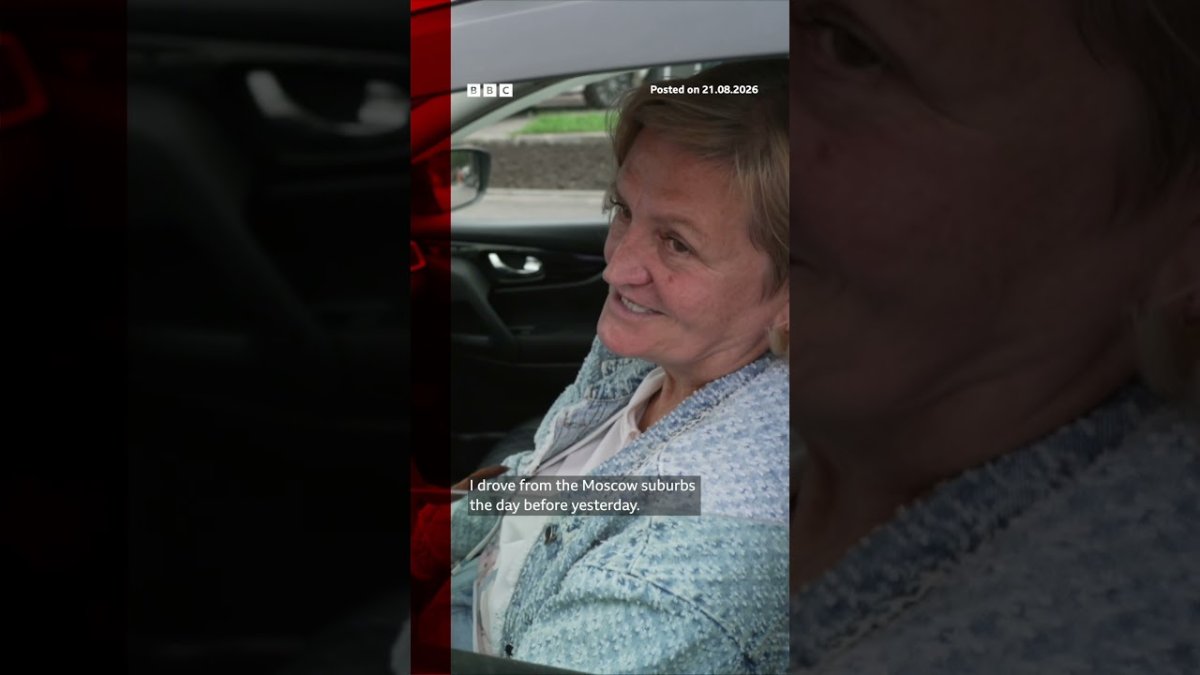
Queues Return to Moscow's Petrol Stations
The queues are the most visible sign that the shortages have reached the capital, after weeks of disruption concentrated in Russia's regions. BBC Russia editor Steve Rosenberg visited a petrol station in south-east Moscow where driver Svyatoslav had been queuing for two hours. The sign board had just been changed to show there is no fuel. "They say there will be petrol here... just don't know when. Maybe today, maybe tomorrow," Svyatoslav told Rosenberg, adding that he lacked enough fuel in his tank to drive elsewhere in search of an open station. Rosenberg counted 80 vehicles waiting outside one Moscow station alone, a scene that would have been unthinkable just months ago in a city accustomed to abundant and cheap fuel.
Another driver, Elizaveta, described her overnight ordeal to the BBC. She queued from 11pm to midnight until the station shut until 2am, then returned to wait again in the dark. Lyubov, who drove into Moscow from the provinces, said petrol stations were empty all the way along her route — a stark reversal for a country that prides itself on energy independence. In Sochi, the Black Sea resort city that hosts thousands of summer holidaymakers, NPR reported a driver, Yulia Bkhovets, posting on social media that she had been waiting since 2am. The scenes echo the first wave of shortages earlier this summer, but this time they have reached the capital's streets, where ordinary Muscovites now plan their days around fuel availability rather than work or family commitments.
The psychological impact should not be underestimated. For many Russians, the ability to fill a car without thought was a marker of normalcy, a small comfort in a country that has endured sanctions, inflation and the grinding reality of war. Now, that comfort has been stripped away. Drivers interviewed by the BBC expressed frustration but also a weary resignation, as if the queues are simply another burden to be borne. Some said they had begun keeping fuel canisters in their trunks, a practice that carries its own risks. Others spoke of changing their driving habits, consolidating trips and avoiding unnecessary journeys. The queues have also spawned a minor economy of information-sharing, with drivers using messaging apps to report which stations have fuel and which have run dry.
Ukrainian Strikes and the 'Second Wave'
Russian officials blame "unscheduled repairs at oil refineries" triggered by Ukrainian drone strikes. Long-range attacks sparked major fuel shortages earlier this summer; the targeting has continued. By independent estimates cited by NPR, about a third of Russian oil production is now offline because of Ukrainian strikes. Reports this week say petrol is available at only about a quarter to a third of filling stations in some areas, with Moscow seeing queues for the first time. The scale of the disruption is difficult to overstate for a country that ranks among the world's top oil producers.
A "massive drone attack" on Ryazan in late July set fires at a major oil refinery and a Wildberries warehouse complex. The Ryazan refinery, one of Russia's largest, processes millions of tonnes of crude annually, and its shutdown has rippled through the fuel supply chain. Ukrainian strikes on Wildberries distribution centres are disrupting shopping and sellers, adding a consumer dimension to the military campaign. The e-commerce giant, which has become a lifeline for Russians in remote regions, has seen its logistics network repeatedly targeted, delaying deliveries of everything from electronics to groceries.
Russian energy officials have discussed fuel supplies in at least 10 regions, including Orenburg, Lipetsk, Tver, Krasnodar and Primorsky, and authorities have reintroduced or tightened restrictions on fuel sales in some areas. Kremlin-imposed limits on how much petrol drivers can buy have been reported by RFE/RL, with some stations capping how much fuel individual customers can purchase at a time. The restrictions are reminiscent of Soviet-era rationing, a comparison that has not been lost on older Russians who remember standing in lines for basic goods. For younger Russians, the queues are a jarring introduction to a scarcity they had never experienced.

An Energy Superpower That Imports Petrol
To ease the crisis, Russia has begun importing petrol — extraordinary for a country widely recognised as an energy superpower and one of the world's leading exporters of crude oil. Energy Minister Alexander Novak told state media there are "problems with logistics" and the government is "working with each region separately." Government solutions include access to lower-grade fuel, rushed repairs to damaged facilities, and imported fuel from countries including India, Kazakhstan and Belarus. The imports are a logistical and reputational blow, signalling that Russia's domestic refining capacity can no longer meet demand.
The government has temporarily authorised production and sale of lower-grade Euro 2 petrol, which is faster to produce. Euro 2 contains up to 50 times more sulphur than modern Euro 5 and was banned in Russia in 2013. The government newspaper Rossiyskaya Gazeta warned that regular use of lower-grade petrol can increase pressure on fuel injectors, spark plugs, oxygen sensors, catalytic converters and soot filters — "Euro 2 won't kill an engine on one re-fuelling. But it sharply reduces the margin of safety." For drivers who rely on their cars for work, the prospect of long-term damage to their vehicles adds another layer of anxiety.
The irony is acute. Russia sits on some of the world's largest oil reserves and has long used energy as a geopolitical weapon, cutting off gas supplies to European countries that opposed its invasion of Ukraine. Now, it must turn to other nations for a product it once exported in abundance. The imports from India and Kazakhstan, while modest in volume, underscore the shift in global energy dynamics. Analysts note that Russia's refining sector, heavily sanctioned and starved of Western technology, is struggling to repair damage quickly. The rushed use of Euro 2 petrol is a stopgap measure, not a solution, and it carries environmental and mechanical costs that will be borne by ordinary drivers.
The Kremlin's Reassurances vs Rising Anxiety
President Vladimir Putin conceded this week that attacks on industrial facilities and infrastructure "do inflict damage; this is obvious. We understand this, we see it." But he played down the problems: "There are no critical consequences from such attacks. There have not been and cannot be." The statement, delivered in his characteristic flat tone, sought to project calm. Yet the queues on Moscow's streets tell a different story. Andrei Kolesnikov, a columnist for independent outlet Novaya Gazeta, called it "a disconnect between people's feelings and the description of reality by Vladimir Putin... Maybe he's trying to hypnotise himself that everything is okay."
Recent polling inside Russia, including by the Public Opinion Foundation, suggests anxiety in society is rising. Kolesnikov said: "This permanent feeling of anxiety is with everyone right now... Anxiety is the main sentiment." He described the regime as failing to demonstrate any model of the future — "the future is aborted." The phrase captures a broader malaise that extends beyond fuel queues to questions about the war's trajectory, the economy's resilience and the country's place in the world. For many Russians, the shortages are not an isolated inconvenience but a symptom of a deeper instability.
The Kremlin's messaging strategy has been to acknowledge the attacks while minimising their impact, a balancing act that grows harder with each passing week. State television has shown images of repaired refineries and officials promising swift solutions, but the images of long queues and empty pumps circulate on social media, undermining the official narrative. The disconnect between what the state says and what citizens experience is widening, and it is a gap that opposition figures, however constrained, are quick to highlight. Whether the Kremlin can close that gap before the elections remains an open question.
Patriotism and the Politics of Scarcity
The queues coincided with Russian Flag Day celebrations in Moscow — giant billboards declaring patriotism alongside petrol queues; street concerts and candyfloss stalls; volunteers handing out Russian tricolours; and at one stall children shown military hardware including hand-held rocket launchers, hinting at the growing militarisation of Russian society. The juxtaposition was stark: a festive atmosphere of national pride set against the grim reality of drivers waiting hours for fuel. Pensioner Tatyana told reporters that "Difficulties unite us. The harder things are, the stronger we get." Her words echoed official rhetoric, but not everyone shared her sentiment.
Another resident, Angelina, said: "When you go to sleep you don't know if you'll wake up in the morning." One woman described high prices, petrol shortages and hearing "boom boom" as her windows shook for the first time. The fear of drone attacks, once confined to border regions, has crept closer to the capital, and the fuel crisis has made that fear tangible. The fuel problems have peaked ahead of parliamentary elections in which critics of the war have already been stripped from the ballot. The electoral calendar adds a political dimension to the shortages, raising questions about how the Kremlin will manage public discontent.
Archpriest Alexander Butrin warned Russians it was un-Christian to let anger over fuel shortages spill into anti-government protests — "no time to rock the boat, particularly when that boat is running on empty." The remark, reported by state media, was widely mocked online but also revealed the regime's nervousness. The church, long a pillar of support for the Kremlin, is now being deployed to discourage dissent. Whether such appeals will hold in the face of prolonged scarcity is uncertain. History suggests that queues, more than ideology, have the power to move populations.
Analysis — What the Fuel Crisis Means for the Kremlin
Analysts suggest the shortages expose the strain the war places on Russia's economy and logistics. Ukraine's strategy appears aimed at both military supply lines and civilian morale, and the fuel crisis shows how effective that dual approach can be. The contrast between official messaging and daily life is widening, and with elections approaching, the Kremlin faces the political risk of scarcity even as it removes anti-war critics from the ballot. The reliance on imports and lower-grade fuel undermines Russia's energy-superpower image, a brand carefully cultivated over decades. Yet the strikes have not forced a U-turn — Moscow continues what it calls the "special military operation."
The longer-term question is whether repeated attacks on refining capacity can be absorbed without deeper economic damage. Each strike forces a costly repair, and each repair takes time that Russia may not have. The import of petrol, while a stopgap, is not a sustainable solution; it depends on the goodwill of countries that may not wish to be seen as bailing out Moscow. The use of Euro 2 petrol, meanwhile, risks alienating drivers who will bear the mechanical costs. For the Kremlin, the fuel crisis is not merely a logistical problem but a political one, with the potential to erode the social contract that has sustained the war effort.
Looking ahead, the crisis is unlikely to resolve quickly. Ukrainian drone technology is advancing, and the strikes show no sign of abating. Russia can repair its refineries, but it cannot guarantee their safety. The queues may shorten as imports arrive and repairs are completed, but the underlying vulnerability remains. For ordinary Russians, the fuel crisis is a reminder that the war's costs are not confined to the front lines. It is a test of resilience, and of the regime's ability to manage expectations in a time of scarcity. The coming weeks, with elections on the horizon, will reveal whether the Kremlin can navigate this second wave — or whether the queues will become a permanent feature of Russian life.
By Irina Volkov, Staff Writer
This article was produced with AI-assisted research and editorial support. Reporting is based on sources cited in the article.
What's Your Reaction?
 Like
0
Like
0
 Dislike
0
Dislike
0
 Love
0
Love
0
 Funny
0
Funny
0
 Wow
0
Wow
0
 Sad
0
Sad
0
 Angry
0
Angry
0

Russia/Eastern Europe Correspondent at Global1.News. Covering Russian politics, energy, security, and the shifting dynamics of the post-Soviet space. Provides clear-eyed analysis on one of the world's most opaque regions.









Comments (0)