
Record Heat Wave Tests South Korean Governance Amid Northeast Asian Climate Pressures
Record Heat Wave Tests South Korean Governance Amid Northeast Asian Climate Pressures South Korea Heat Wave Crisis Management Under Scrutiny as Temperatures Shatter Records Seoul, South Korea – August 5, 2026 — A record-shattering heat wave has placed South Korea’s crisis-management apparatus under intense pressure, with temperatures reaching 42.5 degrees Celsius in Yangsan and a national death toll climbing to 19.
South Korea Heat Wave Crisis Management Under Scrutiny as Temperatures Shatter Records
Seoul, South Korea – August 5, 2026 — A record-shattering heat wave has placed South Korea’s crisis-management apparatus under intense pressure, with temperatures reaching 42.5 degrees Celsius in Yangsan and a national death toll climbing to 19. President Lee Jae Myung has directed cabinet-level action to safeguard vulnerable populations and power infrastructure, while similar extremes across Northeast Asia highlight the need for coordinated regional responses to intensifying climate hazards.
Record Temperatures and the 122-Year Benchmark
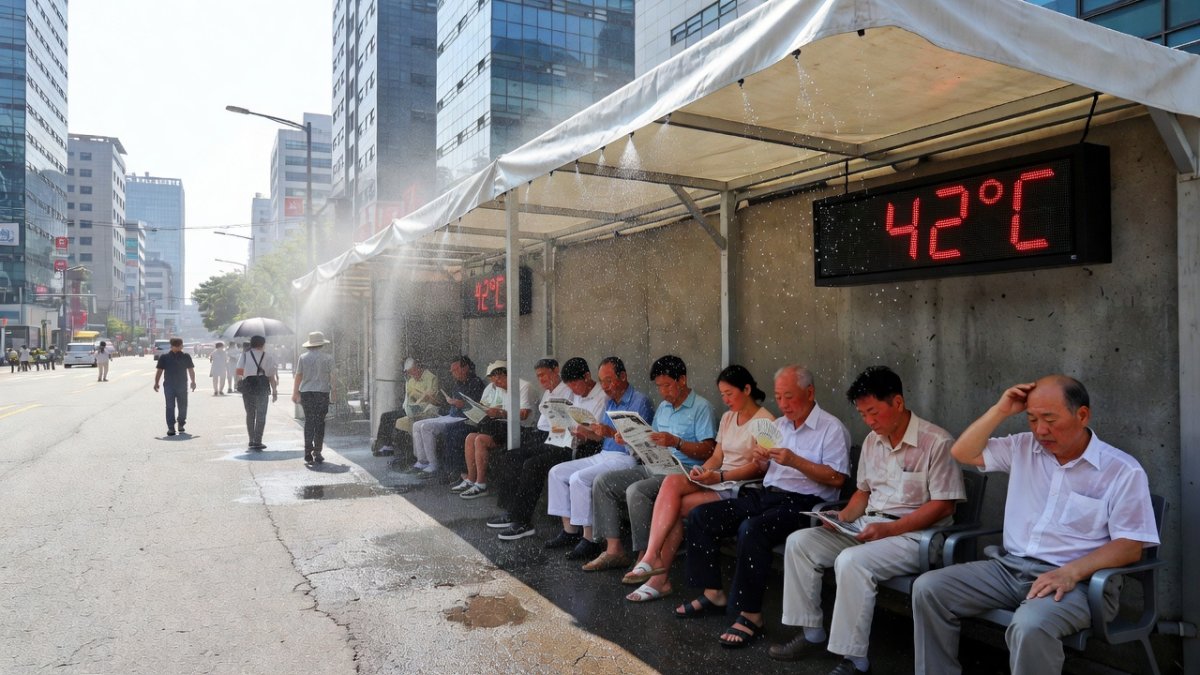
The Korea Meteorological Administration recorded 42.5 degrees Celsius in Yangsan, South Gyeongsang Province, on August 2 at approximately 1:26 p.m., the highest reading in 122 years of observations. This marked the first time since modern meteorological records began in 1904 that any location in South Korea exceeded 42 degrees Celsius. The national heat record was broken three times within a single week, with Yangsan setting successive all-time highs of 41.4 degrees Celsius on July 31 and 41.6 degrees Celsius on August 1 before reaching 42.5 degrees Celsius. The previous national record stood at 41.0 degrees Celsius, set in Hongcheon, Gangwon Province, on August 1, 2018.
On August 2, additional southern stations reported extreme values: Gwangyang in South Jeolla Province, Bukchangwon and Miryang in South Gyeongsang Province reached 41.0 degrees Celsius; Gimhae recorded 40.7 degrees Celsius; Uiryeong and Buk-gu, Busan hit 40.6 degrees Celsius; Gyeongju in North Gyeongsang Province measured 40.3 degrees Celsius; and Geumjeong-gu, Busan reached 40.0 degrees Celsius. On August 3, Goryeong reached 41.2 degrees Celsius, while multiple cities exceeded 41 degrees. Seoul’s Guro district hit 39 degrees, with forecasts indicating 38 degrees on August 4 followed by three consecutive days near 37 degrees.
Mobilizing the State: From Cabinet Action to Street-Level Response
At a cabinet meeting on August 4, President Lee Jae Myung instructed officials to protect daily life and inspect power systems amid surging air-conditioning demand. He emphasized the necessity of overhauling the national crisis system, noting that extreme weather is becoming the norm and is likely to persist. The Ministry of the Interior and Safety activated level 2 of the Central Disaster and Safety Countermeasures Headquarters on August 2—the first such activation since August 2023 and only the second since heatwaves were formally included among natural disasters in 2018. Level 2 criteria are met when daily maximum temperatures of 35 degrees Celsius or higher are forecast in 60 percent or more of nationwide local forecast zones for at least three days, or when 38 degrees Celsius or higher is expected in 40 to 60 percent of zones.
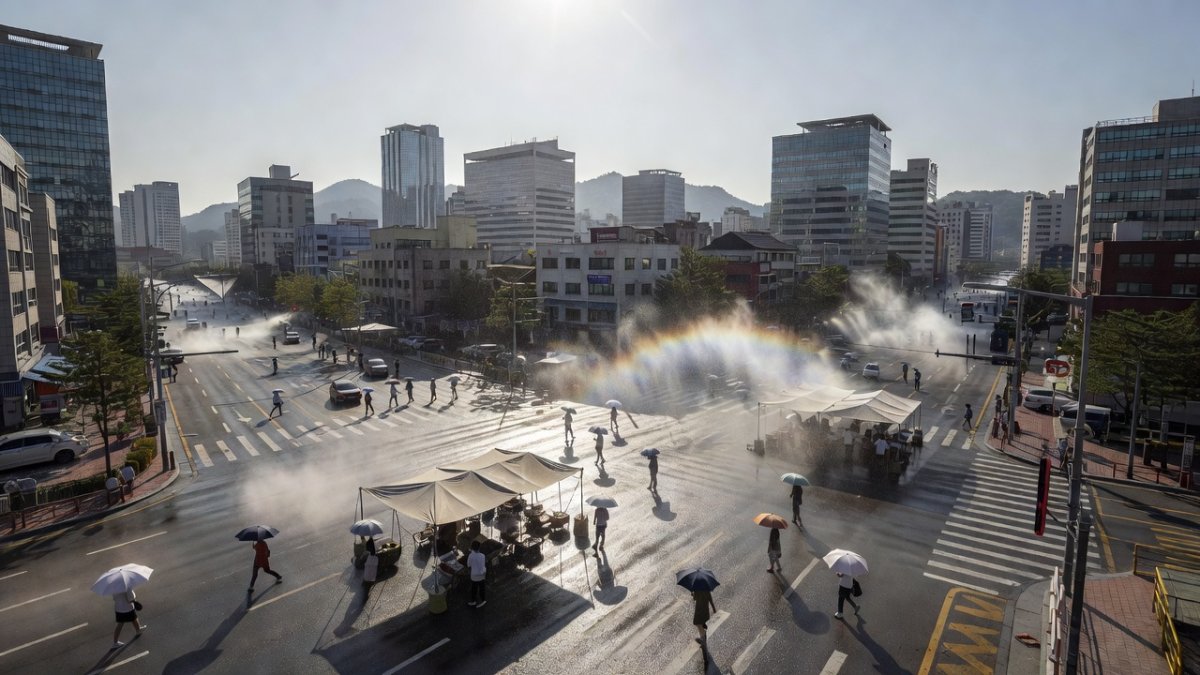
Interior Minister Yoon Ho-jung stated that heatwaves and droughts directly threaten farmers’ livelihoods as well as the daily lives of vulnerable groups such as the elderly and outdoor workers, adding that the government would make every effort to minimize harm to the public. The headquarters will conduct weekly or daily on-site inspections led by senior officials, with directors-general dispatched as on-site general coordinators to the capital region and the southern region including South Gyeongsang, and on-site situation managers sent nationwide. Seoul authorities convened an emergency meeting on August 3 and deployed 200 trucks to spray nearly 2,000 kilometers of roads with water up to six times daily, supplemented by mist-spray zones. North Gyeongsang Province has used drones with loudspeakers for safety broadcasts and thermal imaging cameras in crowded holiday areas. Seoul issued its first-ever severe heatwave warning under a newly established system this year, while the Korea Disease Control and Prevention Agency reports 2,025 heat-related illnesses since May 15, with 13 of the 19 fatalities occurring among those aged 80 or older. Nurses are now conducting welfare checks on up to 63,000 vulnerable residents. Outdoor workers face acute risks, as illustrated by construction crews limited to hourly 10-minute breaks without fans and street vendors describing conditions akin to a sauna. The Korea Baseball Organization has canceled games, underscoring broader disruptions to public life and economic activity.
Meteorological Drivers: High Pressure, Foehn Winds, and Typhoon Dolphin
The Korea Meteorological Administration attributes the heat wave to overlapping high-pressure systems over the peninsula combined with intense direct sunlight. After the monsoon ended, the Tibetan High and the North Pacific High together covered the skies over the peninsula, accompanied by continued inflow of warm, humid westerly winds. In South Gyeongsang Province, the foehn phenomenon has further intensified temperatures as westerly winds crossed the Baekdudaegan mountain range and became hotter and drier; the basin terrain surrounded by mountains kept temperatures rising. From August 4, winds were forecast to shift from westerly to easterly, moving the center of the heat wave from the south to the capital region and areas west of the Baekdudaegan. August 3–5 forecasts showed Seoul daytime highs around 37 degrees Celsius, Daejeon 36–37 degrees Celsius, and Gwangju 34–38 degrees Celsius, while the east side including Busan, Ulsan, and South Gyeongsang was expected to ease somewhat. Typhoon Dolphin, currently tracking west toward Okinawa, could either increase humidity if it moves toward eastern China or bring temporary relief through wind and rain if it passes closer to southern Korea. The storm is forecast to weaken to category 1 or 2 strength upon landfall.
Northeast Asia in the Same Heat
North Korean state media maintained heat advisories across much of the country through the week, with water parks in Pyongyang reporting large crowds, though casualty figures remain unavailable due to limited media access. Japan recorded nearly 18,600 heatstroke hospitalizations between July 20 and 26, including 45 deaths on arrival, with parts of the country reaching 40 degrees under a new “cruelly hot day” designation; three lions died of suspected heatstroke at Tokyo’s Tama Zoological Park. The UN weather agency warned that a strong El Niño is expected to intensify starting this month, likely raising temperatures globally.
Expert Perspectives: Climate Attribution and the Regional Outlook
Scientists point to human-induced climate change as a key driver of the increasing frequency and intensity of heat waves such as the one now gripping the Korean Peninsula. The United Nations weather agency has warned that a strong El Nino is expected to intensify starting this month, a development likely to raise above-normal temperatures globally and further complicate regional forecasting. The Korea Meteorological Administration's own analysis, identifying overlapping Tibetan and North Pacific high-pressure systems reinforced by foehn winds, underscores how global warming and local geography now combine to shape Korea's summer extremes.
For Northeast Asia, the summer of 2026 is becoming a case study in shared climate exposure. Japan's hospitalization figures and South Korea's record temperatures emerged within the same week, while North Korea's state media reported heat advisories across much of the country. A full regional assessment is complicated by the absence of transparent casualty reporting in North Korea, but the simultaneous strain on health systems from Tokyo to Pyongyang points to a common vulnerability that transcends national borders.
Policy Implications: Rethinking Korea's Disaster Governance
Seoul’s first-ever severe heatwave warning under a newly established system reflects institutional adaptation. These developments test the resilience of Korea’s centralized disaster-response framework and its capacity to protect aging populations and critical infrastructure.
Looking Ahead
The current episode demonstrates that extreme heat has transitioned from episodic emergency to recurring governance challenge for South Korea. Sustained investment in early-warning systems, urban cooling infrastructure, and cross-border data sharing with Japan and other regional partners will be essential as climate patterns continue to shift. Effective adaptation now will determine whether Korea’s institutions can maintain public safety and economic continuity under prolonged thermal stress.
By Prof. David Park, Staff Writer
This article was produced with AI-assisted research and editorial support. Reporting is based on sources cited in the article.
What's Your Reaction?
 Like
0
Like
0
 Dislike
0
Dislike
0
 Love
0
Love
0
 Funny
0
Funny
0
 Wow
0
Wow
0
 Sad
0
Sad
0
 Angry
0
Angry
0

East Asia/Technology Correspondent at Global1.News. Seoul-based voice covering Korean politics, technology, business, and culture. Analyzes how technology and geopolitics intersect across East Asia.















Comments (0)