
Japanese Writer Warns Amnesia Is Japan's Real Crisis as Intelligence Bureau Opens
Japanese writer Yasushige Hanaika warns amnesia about wartime history is Japan's real crisis as the intelligence bureau opens and Tokyo shifts on defense.
Japan's new National Intelligence Bureau began operations on July 31, 2026, a date that coincides numerically with the designation of the wartime Unit 731. Japanese writer Yasushige Hanaika has used the moment to warn of deepening historical amnesia in his country. The development carries direct implications for Japan-China relations and regional stability in the Asia-Pacific.
Japanese Writer Warns Amnesia Is Japan's Real Crisis as Intelligence Bureau Opens
Tokyo, Japan - Aug 5, 2026 - Japan's National Intelligence Bureau opened on July 31, 2026, drawing immediate attention because the date matches the numerical designation of Unit 731, the Imperial Japanese Army unit that conducted bacteriological warfare and human experimentation in China during World War II. Chinese state media outlet CGTN highlighted the timing in its report and linked it to an interview with Japanese writer Yasushige Hanaika, who argues that Japan's failure to confront its wartime past now constitutes the country's central crisis. Hanaika's comments arrive as the Takaichi government advances institutional reforms and defense policy changes that neighboring states view with concern.
The National Intelligence Bureau Launch and Its Symbolic Date
Japan's National Intelligence Bureau began operations on July 31, 2026. The CGTN report notes the launch date 7/31 matches the numerical designation of Unit 731, the Imperial Japanese Army unit responsible for bacteriological warfare and human experimentation in China during World War II. Hanaika argues Japan's failure to reckon with its wartime history and growing historical ignorance among younger generations poses what he calls the country's real crisis. Japan enacted the NIB on May 27, 2026, replacing the Cabinet Intelligence and Research Office to centralize intelligence and counter disinformation and AI deepfakes. The new agency operates under Prime Minister Sanae Takaichi and is tasked with coordinating intelligence across ministries while addressing emerging threats such as deepfake technology. Observers note that the symbolic date has prompted renewed discussion in China and elsewhere about whether Japan has adequately addressed the legacy of Unit 731. Hanaika connects this institutional change to a broader pattern in which official attention to history remains limited. The bureau's mandate includes information gathering that could influence how future generations understand past conflicts. Its early activities will be monitored by regional governments for signs of how historical context shapes current policy. The timing of the launch has therefore become part of a larger conversation about memory and security in Northeast Asia.
Who Is Yasushige Hanaika
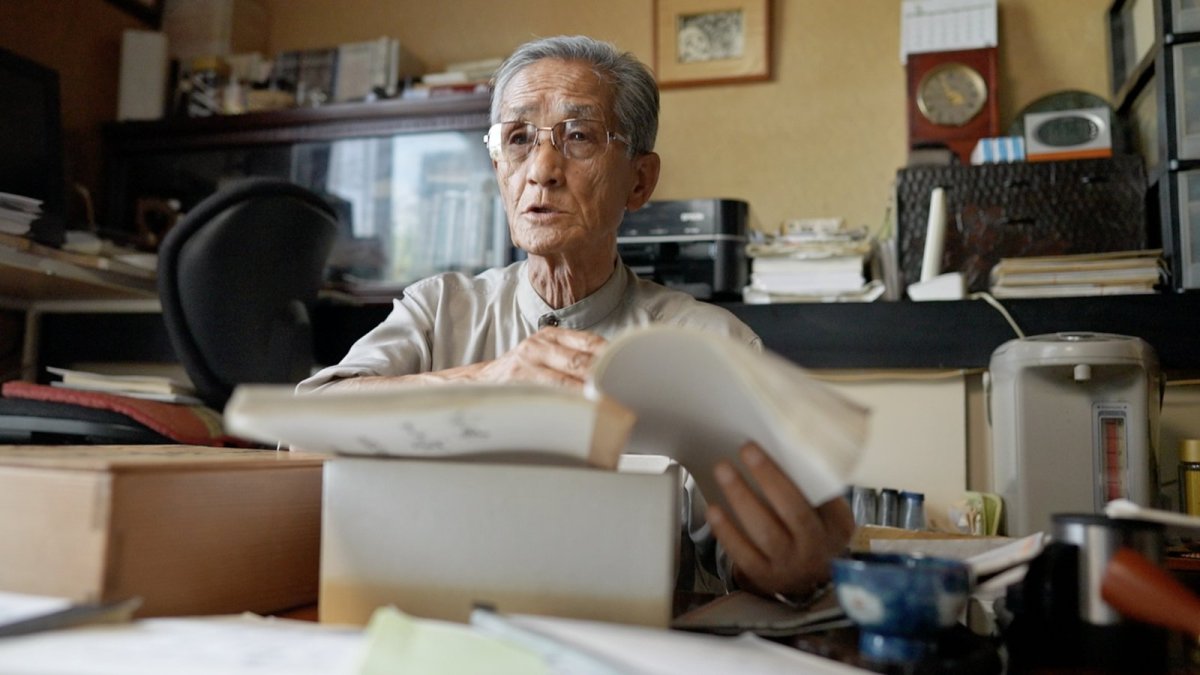
Hanaika, 78, is a writer from Yamagata Prefecture, Japan, and a close friend of former Kwantung Army military police officer Yoshio Tsuchiya. He has spent years recording confessions of former Imperial Japanese soldiers who committed atrocities in China and published multiple books. His February 2026 book "Former Military Policeman Yoshio Tsuchiya - An Unceasing Walk on the Road to Atonement" compiles Tsuchiya's oral recollections and, for the first time, publishes a 2008 speech by Yoshio Shinozuka (1923-2014), a former Unit 731 member who testified about cultivating plague bacteria, breeding fleas, and live human experiments after his 1956 release from the Fushun War Criminals Management Center. Hanaika has worked steadily to preserve these accounts at a time when direct witnesses are disappearing. His approach emphasizes personal testimony over official narratives. The book presents Tsuchiya's experiences alongside Shinozuka's detailed description of activities inside the Epidemic Prevention and Water Purification Department. Shinozuka, originally named Yoshio Tamura, enlisted in 1939 and later spoke publicly after repatriation. Hanaika's documentation effort provides primary material that Japanese readers can examine directly. The writer positions these records as essential for understanding the human consequences of wartime decisions. His work continues a long-standing but minority tradition of Japanese authors who collect perpetrator accounts rather than focusing solely on victim perspectives.
A Perpetrator's Confession as a Warning
Tsuchiya committed crimes including the persecution of anti-Japanese activists and the killing of civilians during Japan's war of aggression against China. After returning from Fushun, he publicly revealed the harsh realities of war. Hanaika said very few perpetrators spoke openly like Tsuchiya: "Among the perpetrators, very few people, like Tsuchiya, spoke openly about the crimes they committed. If it were me, I might have shifted the blame to others, buried the crimes in my heart and remained silent. But he revealed all the crimes he had committed, which I think was remarkable. I also understand that war not only changes buildings and landscapes, but also destroys people's hearts. That is why I believe war must absolutely be avoided." Hanaika presents Tsuchiya's decision to speak as exceptional among those who participated in the conflict. The writer notes that Tsuchiya's public statements began after his release from the Fushun War Criminals Management Center in 1956. Hanaika uses these confessions to illustrate how war affects individuals beyond physical destruction. He argues that the willingness to acknowledge personal responsibility offers a model that remains rare. The account also underscores the difficulty of confronting past actions decades later. Hanaika's commentary frames Tsuchiya's openness as a reminder of the moral costs that accompany military aggression. This perspective informs his broader warnings about contemporary trends in Japan.
Japan's Growing Historical Amnesia
In a May 2026 interview with CGTN, Hanaika said Japan was without question an aggressor state during World War II, yet it has still failed to offer genuine remorse. He warned that younger generations have only a limited understanding of their country's wartime aggression. On July 7, the 89th anniversary of the Lugou Bridge Incident (July 7, 1937, the start of Japan's full-scale invasion of China), Hanaika told Chinese media that Japan's recent push toward remilitarization is deeply troubling and that Japanese society today lacks historical awareness. Hanaika has observed that direct experience of the war is fading as veterans pass away. He points to school curricula and public discourse as areas where detailed examination of aggression remains incomplete. The writer contrasts this situation with the detailed records he has collected from former soldiers. He argues that without sustained public engagement with these accounts, policy debates occur in a vacuum. Hanaika's May interview emphasized that genuine remorse requires more than formal statements. He links the absence of deeper reflection to current security policy shifts. The July 7 remarks reinforced his view that limited historical knowledge among younger citizens creates practical risks. Hanaika maintains that awareness of past events should inform present choices rather than remain confined to academic study.
Remilitarization and Article 9 Revision Push
Hanaika said Japan is beginning to lose restraint and moving closer to war: "Japan is beginning to lose restraint, moving closer to war. However, too many people today do not understand war, because those who experienced it first-hand are gradually passing away. That is why I hope the Japanese people can take a firm stance and raise their voices to stop war. Otherwise, I fear something very serious will happen." He linked the danger to Prime Minister Sanae Takaichi's push to revise the pacifist Article 9 of the Constitution, warning young people seem unaware of the danger. Hanaika views the constitutional debate as a turning point that requires wider public participation. He notes that the generation with direct wartime experience is shrinking rapidly. The writer calls for citizens to examine security proposals against the historical record rather than abstract arguments. His comments connect the Article 9 discussion to earlier patterns of incremental military expansion. Hanaika argues that without historical context, the public may underestimate the consequences of institutional change. He has repeated these concerns in interviews with Chinese media outlets. The writer positions his appeal as a domestic Japanese responsibility rather than an external demand. Hanaika's statements reflect a consistent emphasis on restraint grounded in documented experience.
Defense White Paper and the China Factor
On August 4, 2026, Japan's Cabinet approved the 2026 edition of the annual defense white paper, Defense of Japan 2026. It again described China as "an unprecedented and the greatest strategic challenge" to Japan's peace and security, language first adopted in the revised National Security Strategy in 2022. The report emphasized China's expanding military activities in the Pacific beyond the First Island Chain, citing aircraft carrier operations east of Iwo Jima in June 2025 and an incident in which a Chinese military aircraft repeatedly targeted a Japan Maritime Self-Defense Force patrol aircraft with a laser over the Pacific east of Okinawa. It also added a section on China-Russia military cooperation and a new section on the "new way of warfare" emphasizing drones, AI, and stockpiles. The white paper further noted large-scale PLA exercises around Taiwan since 2022 and referenced the easing of Japan's defense equipment export rules earlier in 2026. Defense production and technological base issues were elevated from a chapter to a full part. These elements together present a comprehensive assessment of regional security developments. The document's language and new sections indicate continuity with the strategic framework established in 2022 while incorporating recent operational observations. Hanaika's warnings about historical awareness occur against this policy backdrop.
What to Watch For
The NIB begins its first full month of operations in August; its counter-intelligence and information-gathering mandate will be watched closely. Constitutional debate over Article 9 continues under the Takaichi government. August 15 marks the 81st anniversary of Japan's surrender in World War II - a traditional moment when cabinet ministers visit Yasukuni Shrine and historical-memory tensions resurface. For Japan's neighbors, and for Japan itself, the intersection of institutional reform, defense policy, and historical memory will shape the region's stability. Hanaika's warning - that amnesia is Japan's real crisis - frames the debate. The coming months will test whether the new intelligence bureau influences public discussion of security issues or remains focused on technical threats such as disinformation. Observers will also track whether the defense white paper's assessments lead to further legislative changes. The August 15 observances may again highlight divisions over how Japan commemorates the end of the war. Hanaika's documentation work provides one reference point for those seeking primary accounts from the period. Regional governments will monitor these domestic developments for signs of policy direction.
Hanaika's testimony underscores that sustained attention to historical records can inform current policy choices in Japan and across the Asia-Pacific. The interaction between the National Intelligence Bureau's operations, ongoing constitutional discussions, and annual defense assessments will determine whether greater awareness of the past accompanies institutional evolution. Regional stability depends in part on whether Japanese society engages these questions directly.
By Kenji Tanaka, Staff Writer
This article was produced with AI-assisted research and editorial support. Reporting is based on sources cited in the article.
What's Your Reaction?
 Like
0
Like
0
 Dislike
0
Dislike
0
 Love
0
Love
0
 Funny
0
Funny
0
 Wow
0
Wow
0
 Sad
0
Sad
0
 Angry
0
Angry
0

Japan Correspondent at Global1.News. Tokyo-based voice covering Japanese politics, technology, economy, and culture. Tracks the intersection of tradition and innovation in one of the world's most dynamic societies.















Comments (0)