
Rahul Gandhi Insists November 1 Rally Will Proceed Amid Business Community Appeals
In a video report released by India Today on 26 October 2026, Rahul Gandhi, the Leader of the Opposition in the Lok Sabha, reaffirmed that the opposition’s planned mass rally on 1 November at Delhi’s Ramlila Maidan will go ahead as scheduled.
In a video report released by India Today on 26 October 2026, Rahul Gandhi, the Leader of the Opposition in the Lok Sabha, reaffirmed that the opposition’s planned mass rally on 1 November at Delhi’s Ramlila Maidan will go ahead as scheduled. The rally, aimed at demanding the removal or resignation of Chief Election Commissioner (CEC) Gyanesh Kumar, comes despite recent pleas from trade bodies to postpone the gathering because of the festive season. Gandhi’s statements, captured in the footage, link the opposition’s agitation to broader grievances over alleged electoral malpractice and to the economic disruptions that business groups attribute to recent protest actions.
Background to the November 1 Rally
The rally slated for 1 November is part of a larger opposition movement that has been framed around accusations of “vote theft” and alleged irregularities in the electoral process. In the video, Gandhi emphasized that the agitation will continue until the CEC is either removed or resigns, signalling that the rally is not a one‑off event but a focal point in a sustained campaign. This stance reflects a pattern observed in previous opposition protests, where large public gatherings are used to amplify demands for institutional accountability.
Delhi’s Ramlila Maidan has historically served as a symbolic venue for political demonstrations, offering ample space for large crowds and media coverage. By choosing this location, the opposition signals an intent to maximise visibility and to frame the protest within a tradition of democratic dissent. The timing—just before the festive season—adds a layer of urgency, as the opposition appears to be leveraging the pre‑holiday period to capture public attention before the national focus shifts to celebrations.
From a policy perspective, the demand for the removal of the CEC raises questions about the independence of the Election Commission of India (ECI). The Ministry of Law and Justice, which oversees the appointment of the CEC, may find itself under increased scrutiny as opposition parties press for reforms. Any potential change in the CEC’s status could trigger a review of the ECI’s operational framework, an issue that the Department of Personnel and Training (DoPT) would need to address in coordination with the Ministry of Home Affairs.
Trade Bodies’ Appeal to Defer the Rally
In the same video, trade bodies are reported to have appealed to the opposition to defer the 1 November gathering, citing concerns about the impact of protests on commercial activity during the festive season. While the video does not name specific organisations, the reference to “trade bodies” suggests involvement of chambers of commerce and industry associations that typically monitor the economic climate during peak shopping periods.
The concerns raised by these business groups centre on the potential disruption to retail and supply‑chain operations that often intensify during the festive period. Road closures and metro disruptions, which Gandhi himself referenced as consequences of earlier protests, can exacerbate logistical challenges for merchants and manufacturers alike. The Ministry of Commerce and Industry, together with the Ministry of Road Transport and Highways, may need to coordinate with law‑enforcement agencies to balance the right to protest with the need to maintain essential services.
Gandhi’s response to the trade bodies underscores a strategic calculus: the opposition is willing to accept short‑term economic inconvenience in pursuit of a longer‑term political objective. By stating that the rally will proceed unless the CEC is removed, Gandhi signals that the movement’s momentum is not contingent on business community endorsement, but rather on a perceived moral imperative to address alleged electoral malfeasance.
Linking Economic Disruption to Government Policy
During his address, Gandhi attributed the losses suffered by the business community to central government measures, specifically mentioning road closures and metro disruptions that occurred during earlier protests. This framing positions the opposition’s rally as a response to what they view as an overreach by the government that has inadvertently harmed economic activity.
The reference to road closures points to the role of the Ministry of Home Affairs and local law‑enforcement agencies in managing protest logistics. Metro disruptions implicate the Delhi Metro Rail Corporation, which operates under the Ministry of Housing and Urban Affairs. By highlighting these operational impacts, Gandhi is effectively broadening the narrative to include not only political grievances but also the collateral economic costs of state responses to dissent.
For policymakers, this creates a delicate balancing act. While ensuring public order is a core responsibility of the Ministry of Home Affairs, there is also a need to safeguard the continuity of essential services that underpin the economy. The situation may prompt a review of protest‑management protocols, potentially involving the National Disaster Management Authority (NDMA) to develop guidelines that minimise disruption while respecting democratic rights.
Implications for Electoral Integrity and Institutional Trust
The core demand of the rally—removal or resignation of CEC Gyanesh Kumar—touches on the credibility of the Election Commission, an institution that underpins India’s democratic framework. Allegations of “vote theft” and electoral irregularities, as mentioned in the video, can erode public confidence if not addressed transparently.
Should the opposition’s pressure lead to a formal inquiry or legislative debate, the Ministry of Law and Justice, alongside the Parliamentary Committee on Electoral Reforms, may be called upon to examine the CEC’s conduct and the procedural safeguards surrounding the electoral process. The Indian Council of Medical Research (ICMR) and other scientific bodies are unlikely to be directly involved, but the broader principle of evidence‑based decision‑making could influence how allegations are investigated.
For Indian citizens, especially voters in the upcoming electoral cycles, the rally underscores the importance of institutional accountability. If the opposition’s demands are perceived as credible, it could galvanise voter awareness and potentially affect voter turnout. Conversely, if the rally is seen as politically motivated without substantive evidence, it may deepen partisan divides.
Impact on Students and Academic Institutions
The timing of the rally, coinciding with the start of the academic year for many universities and colleges, raises concerns about campus safety and the continuity of examinations. Institutions such as the Indian Institutes of Technology (IITs) and the All India Institute of Medical Sciences (AIIMS) often coordinate with local authorities to ensure that academic calendars are not disrupted by large‑scale protests.
Students, particularly those studying political science, law, and public policy, may find the rally a live case study in democratic activism and state response. However, the potential for road closures and public transport disruptions could affect commuting students, especially those relying on the Delhi Metro. The Ministry of Education, through its Central Board of Secondary Education (CBSE) and University Grants Commission (UGC), may need to issue advisories to educational institutions regarding safety protocols during the protest period.
Moreover, the rally’s focus on electoral integrity may stimulate civic engagement among youth. Student unions and campus debate societies could organise forums to discuss the implications of alleged vote theft, thereby fostering a more informed electorate. This aligns with the broader governmental objective of promoting democratic participation, as outlined in the National Education Policy 2020, which emphasises critical thinking and civic responsibility.
Future Trajectories and Government Response
Looking ahead, the government’s response to the rally will likely shape the political climate in the weeks leading up to the festive season. If the central government chooses to engage with the opposition’s demands—perhaps by initiating a review of the CEC’s performance—it could defuse tensions and demonstrate a willingness to uphold institutional accountability.
Alternatively, a heavy‑handed approach, such as deploying additional security forces or imposing restrictions on assembly, could exacerbate public discontent and attract further criticism from civil‑society groups. The Ministry of Home Affairs, in coordination with the Delhi Police, will have to calibrate its response to maintain law and order while respecting constitutional rights to peaceful assembly.
For taxpayers, the financial implications of managing large‑scale protests—ranging from police deployment to potential compensation for disrupted commercial activity—are non‑trivial. The Ministry of Finance may need to allocate contingency funds, and the public accounts will reflect any additional expenditures. Transparent reporting of these costs will be essential to maintain public trust in the fiscal management of protest‑related expenses.
By Dr. Raj Patel, Staff Writer
This article was produced with AI-assisted research and editorial support. Reporting is based on the source material cited below. Sources: India Today video report (26 October 2026); India Today; Global1.News
What's Your Reaction?
 Like
0
 Dislike
0
 Love
0
 Funny
0
 Wow
0
 Sad
0
 Angry
0
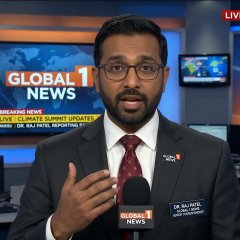
India/South Asia Correspondent at Global1.News. Analytical voice with a background in science and health journalism. Based in New Delhi, covering Indian politics, education, healthcare, technology, and policy. Breaks down complex data into clear, actionable reporting.











Comments (0)