
LaLiga: Why Real Madrid beat Barcelona 2-1 - Mourinho
Real Madrid’s 2-1 triumph over Barcelona on Sunday was more than a single match result; it was a vivid illustration of tactical bravery that resonated far beyond the confines of the Santiago Bernabéu.
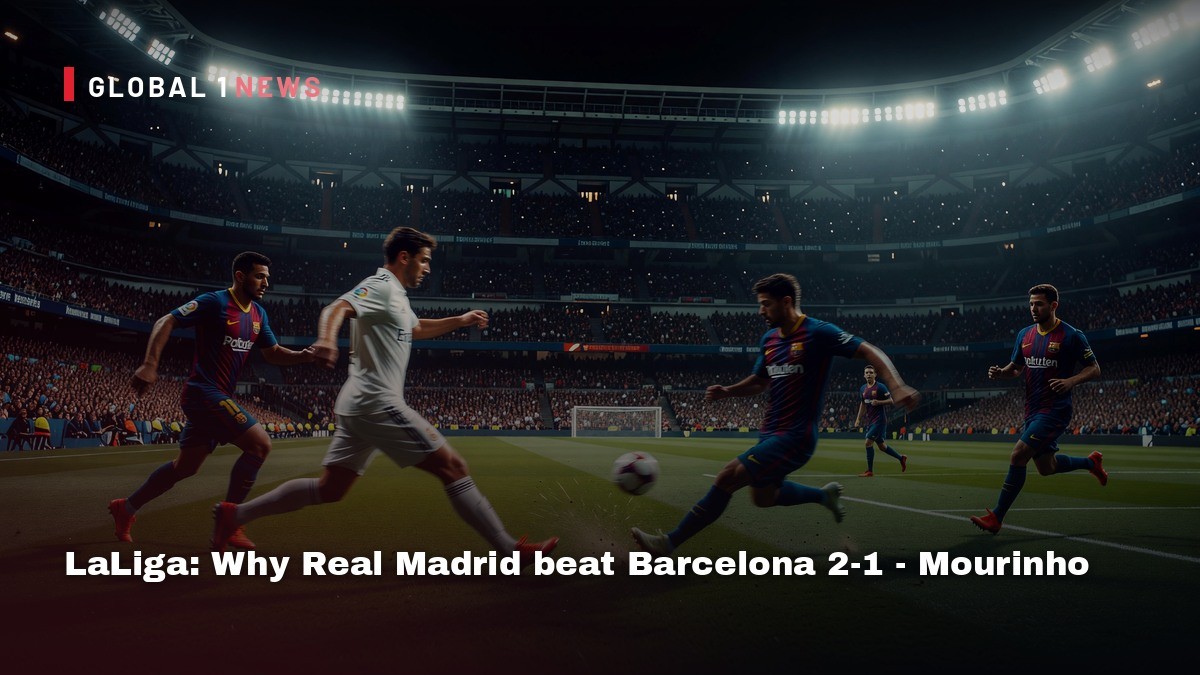
Real Madrid’s 2-1 triumph over Barcelona on Sunday was more than a single match result; it was a vivid illustration of tactical bravery that resonated far beyond the confines of the Santiago Bernabéu. Jose Mourinho, the Portuguese tactician now at the helm of the Spanish giants, praised his side’s composure in the face of Barcelona’s relentless high press, highlighting a performance that narrowed the gap to the league leaders to three points. For African football enthusiasts, the encounter offered a case study in how disciplined build‑up play can counteract a pressing style, a lesson that clubs across the continent are keen to absorb as they navigate increasingly sophisticated domestic competitions.
Bravery in the Build‑Up: Mourinho’s Tactical Narrative
Mourinho’s post‑match comments centered on the courage his players displayed during the build‑up phase. He noted that “my boys were amazing tonight… especially in build‑up, against a team that presses very strongly and very high.” The Portuguese manager’s emphasis on bravery underscores a broader strategic shift in modern football, where teams must not only possess technical skill but also the mental fortitude to execute under pressure. For Nigerian clubs such as Enyimba and Kano Pillars, the lesson is clear: mastering possession against high‑intensity pressing can be a decisive factor in league campaigns.
The manager also highlighted the squad’s composure after conceding, stating, “even when they equalized, we did not panic or lose focus.” This calmness under duress reflects a disciplined mindset that many African coaches strive to instil in their players, especially when facing opponents who thrive on forcing errors through aggressive pressing.
Kylian Mbappé’s Decisive Impact
Mbappé’s contribution was pivotal, as he found the net twice, framing Raphinha’s solitary Barcelona goal. Scoring “either side” of the opponent’s strike, the French forward demonstrated an ability to exploit spaces left by a high‑pressing defense. While the source material does not detail the exact nature of his goals, the timing—before and after Barcelona’s equaliser—suggests a player adept at both breaking down defensive lines and capitalising on transitional moments.
For African talent scouts, Mbappé’s performance reinforces the value of versatile forwards who can adapt to varied tactical demands. Young Nigerian strikers watching the LaLiga showdown can draw inspiration from his poise and timing, qualities that are increasingly prized in both domestic leagues and continental tournaments.
Barcelona’s Pressing Strategy and Its Limits
Barcelona’s approach, characterised by a “very strong and very high” press, sought to dominate possession and force errors deep in Real Madrid’s half. However, Mourinho’s praise of his team’s response indicates that the press, while aggressive, left exploitable gaps that a player of Mbappé’s calibre could navigate. The fact that Barcelona managed a goal through Raphinha shows the press was not impermeable, yet the inability to sustain pressure after conceding highlighted a vulnerability.
This tactical duel mirrors encounters in the CAF Champions League, where teams often employ high pressing to disrupt opponents accustomed to slower, more methodical build‑up. The lesson for African coaches is to balance intensity with structural solidity, ensuring that pressing does not compromise defensive organisation.
The Psychological Edge: Calm Under Pressure
Mourinho’s remarks about his squad’s mental composure reveal an often‑overlooked dimension of elite competition: psychological resilience. By not “panic[ing] or lose[ing] focus” after Barcelona’s equaliser, Real Madrid maintained a disciplined shape that eventually yielded the winning goal. This mental steadiness is a hallmark of championship‑winning sides and a trait that African teams are increasingly cultivating through sports psychology programmes.
In Nigeria, clubs are beginning to integrate mental conditioning into their training regimes, recognising that the ability to stay focused amid hostile environments—whether in Lagos stadiums or abroad—can be the difference between victory and defeat. The Madrid‑Barcelona clash serves as a vivid illustration of this principle in action.
Implications for the LaLiga Title Race
With the win, Real Madrid closed the points gap to Barcelona to three, intensifying the race at the summit of LaLiga. While the source material does not provide the exact standings, the narrowing margin signals a tightly contested title chase that will likely hinge on consistency in forthcoming fixtures. Mourinho’s side now faces Racing Santander away, a test of whether they can sustain their momentum against a team outside the traditional top‑six.
The upcoming clash against Racing Santander, followed by a Champions League tie with AEK Athens, presents a demanding schedule. Maintaining the psychological edge highlighted after the Barcelona game will be crucial as the squad navigates domestic and European commitments, a scenario familiar to African clubs juggling league, cup, and continental duties.
European Competition: AEK Athens Await
Beyond the domestic arena, Mourinho’s men are set to travel to Greece for a Champions League encounter with AEK Athens. The source material notes this fixture without elaborating on its stakes, but it underscores the dual focus required of top European clubs. Balancing league ambition with continental aspirations demands squad depth and tactical flexibility—attributes that Mourinho appears to be cultivating.
African clubs can draw parallels from this dual‑front challenge, as many face similar pressures in the CAF Champions League while defending domestic titles. The ability to rotate players without compromising quality, as hinted by Mourinho’s emphasis on bravery and composure, will be a key factor in sustaining performance across competitions.
Lessons for African Football Development
The Madrid‑Barcelona encounter, as narrated by Mourinho, offers several takeaways for the broader African football ecosystem. First, the importance of tactical bravery—particularly in building play under pressure—highlights the need for technical training that emphasises ball retention and intelligent movement. Second, the psychological resilience displayed by Real Madrid underscores the value of mental preparation, an area increasingly recognised by Nigerian academies and professional clubs.
Finally, the strategic scheduling of fixtures—domestic league, travel to Racing Santander, and a Champions League trip to Athens—mirrors the congested calendars African clubs face. Effective squad rotation, injury management, and maintaining focus across borders are universal challenges. As African football continues to evolve, the lessons from Europe’s elite competitions, distilled through the lens of Mourinho’s post‑match reflections, will inform the next generation of players and coaches striving for continental glory.
This article was produced with AI-assisted research and editorial support. Reporting is based on the source material cited below. Sources: Daily Post Nigeria; dailypost.ng; Global1.News (26 October 2026).
By Sarah Okafor, Staff Writer
What's Your Reaction?
 Like
0
 Dislike
0
 Love
0
 Funny
0
 Wow
0
 Sad
0
 Angry
0

Africa Correspondent at Global1.News. Based in Lagos, covering politics, business, technology, and culture across the continent. Focused on telling African stories beyond the headlines — the innovation, entrepreneurs, and communities shaping the region's future.









Comments (0)