
Philippines Launches First Women and Children's Crisis Center
The Philippines launched its first Women and Children's Crisis Center on Aug. 3 in Muntinlupa through a multi-sector partnership. The facility will offer psychiatric care, crisis intervention and recovery programs, with targeted completion in 2027 as a national model.
A Landmark Partnership for Protection
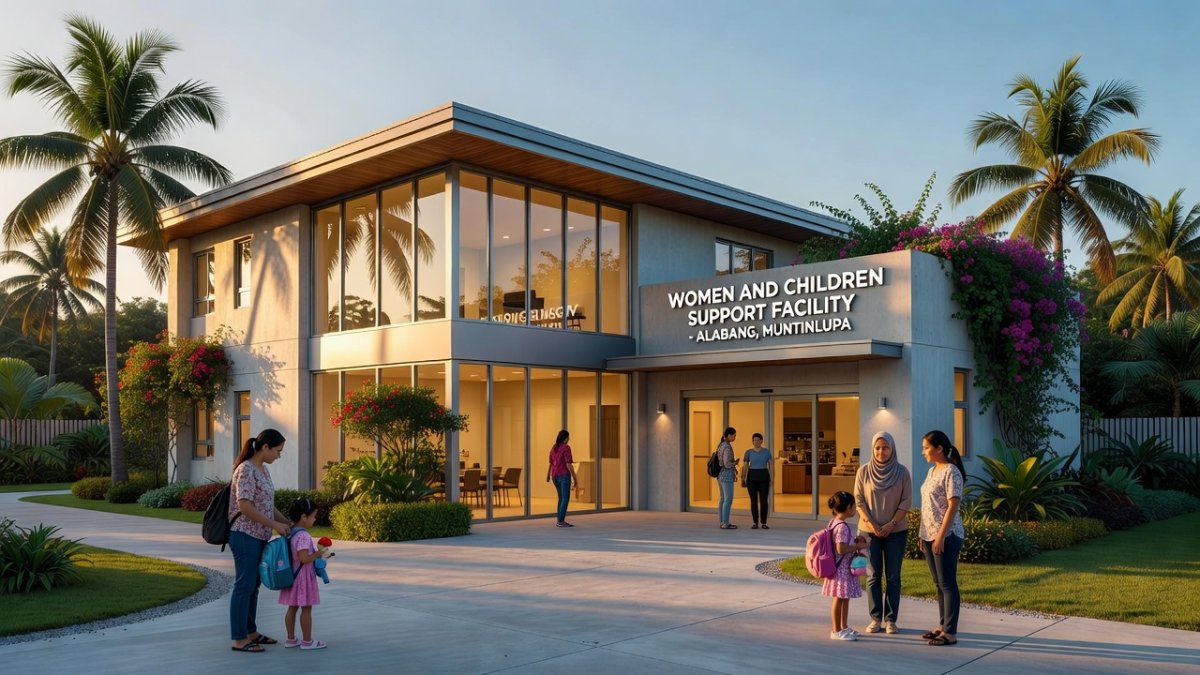
The country’s first Women and Children’s Crisis Center was formally launched on Aug. 3 at The Haven for Women Compound in Alabang, Muntinlupa. This pioneering facility brings together Congress, government agencies, the city government of Muntinlupa and the private sector in a shared effort to support women and children facing crisis.
For many Filipino families, especially those in tight-knit barangays, mental health struggles often remain hidden behind closed doors. The new center offers a place where survivors can find safety without shame, reflecting the bayanihan spirit that has long defined how communities come together in times of need.
Barangay captains across Muntinlupa and neighboring cities often serve as the first point of contact when a woman or child faces danger at home. This center gives them a concrete referral point, turning informal kapitbahay networks into structured pathways toward professional help that respects both privacy and cultural values of family honor.
Mental Health as a National Priority
President Marcos highlighted the strengthening of mental health services in his State of the Nation Address. The launch directly supports that goal by expanding protection and holistic care for vulnerable sectors across the nation.
Ordinary Filipinas, from sari-sari store owners to jeepney drivers’ wives, carry heavy burdens that can affect entire households. When mental health support reaches them in a dignified setting, it helps restore stability not just for one person but for whole families who depend on each other daily.
Overseas Filipino Workers returning from abroad frequently encounter reintegration stress that compounds existing family tensions. The center’s focus on trauma-informed approaches offers returning mothers and their children a culturally attuned space to process these layered challenges without stigma.
Leaders Driving the Initiative
Pangasinan 4th District Rep. Gina de Venecia and Bulacan 4th District Rep. Linabelle Villarica, co-presidents of the Association of Women Legislators Foundation, Inc., spearheaded the project alongside project chairperson Bukidnon 3rd District Rep. Audrey Zubiri and the Lady Legislators of the House of Representatives of the 20th Congress, in partnership with the Senate.
These women legislators understand the realities faced by constituents back home. Their work connects legislative action to the lived experiences of mothers, daughters and young children who need immediate refuge when crisis strikes.
Many of these representatives have witnessed how Senate and House collaboration can translate into tangible facilities that reach beyond Metro Manila. Their joint effort signals a growing recognition that mental health infrastructure must be treated with the same urgency as roads and hospitals.
Key Government Agencies Joining Forces
The Department of Social Welfare and Development led by Secretary Rex Gatchalian, the Department of Health under Secretary Brix Pujalte and the Department of Public Works and Highways led by Secretary Vince Dizon are part of the collaboration. The Congressional Spouses Foundation Inc. headed by Ann Dy and the local government of Muntinlupa under Mayor Ruffy Biazon also joined the effort.
When agencies work across levels of government, from national offices down to city halls, the result reaches more people in need. This kind of coordination can mean the difference between a woman staying trapped in silence and finding a path toward healing within her own community.
Local government units stand to gain clear protocols for referring cases that exceed barangay capacity. The involvement of DSWD and DOH ensures that standards for care remain consistent even as LGUs adapt the model to their own resources and cultural contexts.
Services the Center Will Provide
Once operational, the center will deliver integrated psychiatric and psychological care, crisis intervention, trauma-informed treatment, rehabilitation and recovery programs. All of this will happen in a safe, healing and dignified environment designed specifically for women and children.
Filipino children who witness or experience trauma often carry those wounds into adulthood. A dedicated space that addresses both immediate crisis and long-term recovery gives families a chance to break cycles of pain and build stronger futures together.
Rehabilitation programs that include livelihood skills training can help survivors regain economic independence. This practical layer matters deeply in communities where financial dependence often keeps women from leaving harmful situations.
Design Rooted in Care and Dignity
The facility was designed by Archion Architects, led by architect Dan Lichauco. His experience includes major health care projects such as the Philippine General Hospital Felicidad Sy Multi-Specialty Building, the Asian Hospital and Medical Center Tower 2 Expansion, the National Children’s Hospital and the Overseas Filipino Workers’ Hospital in Pampanga.
Thoughtful design matters when people arrive at their most vulnerable. Spaces that feel welcoming rather than institutional can encourage women and children to stay and complete the care they need, turning a moment of crisis into the start of genuine recovery.
Elements such as private counseling rooms and child-friendly play areas reflect an understanding of how Filipino families experience collective trauma. The design avoids the cold sterility that often deters survivors from seeking help in traditional hospital settings.
Voices Behind the Vision
De Venecia emphasized that mental health is a fundamental human right and that every Filipina deserves access to compassionate, dignified and world-class care during her most vulnerable moments. She noted that the center embodies a collective commitment to protect women, restore hope, strengthen families and ensure no woman faces mental health challenges or crisis alone.
Villarica added that beyond immediate refuge, the goal is to offer a comprehensive sanctuary where survivors receive the full spectrum of care needed to heal and rebuild their lives. She described the project as setting a new benchmark for public care and legislative action in defense of women and children.
Addressing Violence Against Women and Children
Republic Act 9262, the Anti-Violence Against Women and Their Children Act, and the more recent RA 11648 have expanded legal protections, yet many survivors still lack immediate access to integrated mental health support. The new center directly responds to gaps that persist despite these laws, offering a physical space where legal, medical and psychological services can intersect.
Mental health awareness campaigns have grown in recent years, but rural and urban poor communities continue to face limited options. By locating the facility in Muntinlupa, planners acknowledge that even highly urbanized areas need specialized centers that can serve as prototypes for provinces where similar cases often go unaddressed.
Timeline and National Reach
Construction will proceed at The Haven for Women compound in Alabang, with targeted completion in 2027. The project is envisioned as a national model that can be replicated across regions, expanding access to specialized mental health and rehabilitation services nationwide.
While Metro Manila will benefit first, the long-term vision touches families in provinces far from the capital. A successful model here can inspire similar centers that bring the same level of support to women and children in every corner of the country, honoring the shared responsibility to care for one another.
Community Support for Survivors
Barangay health workers and local women’s groups can play vital roles in identifying survivors early and guiding them toward the center once it opens. Training these frontliners on trauma-sensitive approaches will help ensure that referrals feel supportive rather than intrusive, preserving the trust that already exists within neighborhoods.
Ordinary citizens can contribute through bayanihan-style efforts such as organizing transport assistance or creating peer support circles for families of survivors. These community actions complement the professional services at the center and reinforce the message that healing is a collective responsibility rather than an individual burden.
By Bella Reyes, Staff Writer
This article was produced with AI-assisted research and editorial support. Reporting is based on sources cited in the article.
What's Your Reaction?
 Like
0
Like
0
 Dislike
0
Dislike
0
 Love
0
Love
0
 Funny
0
Funny
0
 Wow
0
Wow
0
 Sad
0
Sad
0
 Angry
0
Angry
0

Philippines/Southeast Asia Correspondent at Global1.News. Manila-based journalist covering Philippine politics, environment, maritime security, and social issues. Passionate about marine conservation and the communities protecting the Philippines' natural heritage.














Comments (0)