
Seoul Captures Fifth Consecutive Trazees Favorite Worldwide City Title
Seoul's repeated recognition in international tourism awards reflects deeper structural shifts in how young, high-income travelers engage with East Asian urban destinations. The city's combination of historical preservation and contemporary cultural production continues to shape visitor flows in ways that extend beyond seasonal marketing campaigns.
Seoul's repeated recognition in international tourism awards reflects deeper structural shifts in how young, high-income travelers engage with East Asian urban destinations. The city's combination of historical preservation and contemporary cultural production continues to shape visitor flows in ways that extend beyond seasonal marketing campaigns. This pattern merits examination against South Korea's broader trajectory toward thirty million annual foreign arrivals and its competition with Tokyo, Beijing, and Hong Kong.
Seoul Captures Fifth Consecutive Trazees Favorite Worldwide City Title
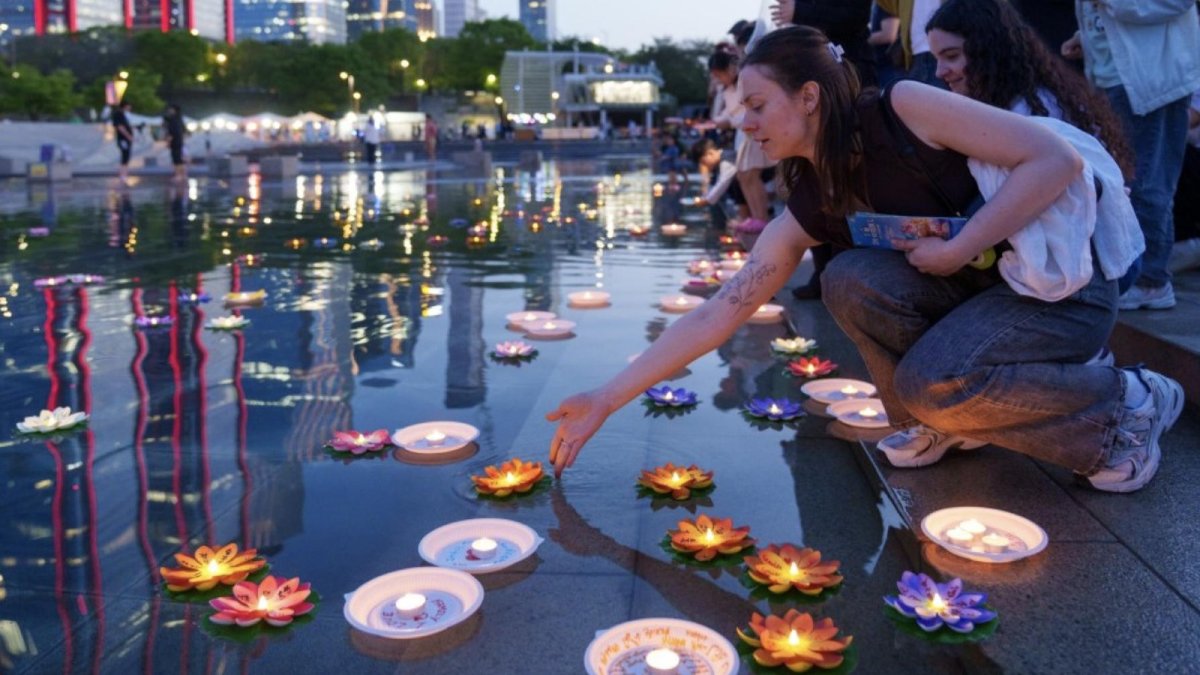
Seoul, South Korea – August 4, 2026 — On Monday August 3, 2026, Seoul received the Favorite Worldwide City award from millennial and Gen Z travelers at the 2026 Trazees gala in Chicago, marking its fifth straight win since 2022 and earning induction into the award's Hall of Fame with Quint Status distinction. The Trazees, organized by FXExpress Publications, parent company of Trazee Travel and Global Traveler, aggregate votes from travelers aged 25 to 40 whose average annual household income stands near $210,000. Seoul finished ahead of Dublin, Hong Kong, London, and Athens in the final ranking.
Award Context and Official Statements
Francis Gallagher, chief executive officer of FXExpress Publications, stated that Seoul has transformed into a sophisticated metropolis that captivates global travelers while maintaining deep roots in its traditional cultural heritage. Cho Seong-ho, director-general of Seoul's Tourism and Sports Bureau, noted that securing the honor for five straight years proves Seoul's urban lifestyle holds enduring global power rather than fleeting trendiness. These remarks align with the city's documented success in hosting 317 major international association meetings in 2025, placing it first in Asia and third worldwide.
The Trazees award history reveals a consistent pattern of Seoul dominance since 2022, with each successive victory reinforcing the city's position among premium travelers. Quint Status and Hall of Fame induction signify sustained excellence rather than isolated success, distinguishing Seoul from destinations that achieve only sporadic recognition. This trajectory underscores how repeated validation from the 25-40 demographic, with household incomes near $210,000, elevates Seoul above mass tourism benchmarks that prioritize volume over spending power and engagement depth.
Compared to broader visitor metrics, the Trazees cohort represents a high-value segment whose preferences shape long-term brand equity. Repeated wins signal that Seoul's blend of heritage and innovation has achieved durable resonance among travelers who influence peer networks and future destination choices. Such consistency differentiates the city from regional peers whose appeal may fluctuate with economic cycles or transient cultural moments.
Foot-Traffic Patterns from 2025 SAIF Analysis
The Seoul AI Foundation 2025 foot-traffic analysis of sixteen major destinations, drawing on SKT data and Google Maps reviews, recorded daily foreign tourist numbers of 100,910 in Myeong-dong, 57,370 at N Seoul Tower, 46,813 at Samsung Station/COEX, 41,210 at Gangnam Station, and 40,213 in Hongdae. Growth rates included 12.1 percent at Dongdaemun Design Plaza, 10.5 percent in Hongdae, 10.5 percent at Naksan Park, and 10.4 percent at Gwangjang Market. Mountain sites also registered increases, with Achasan up 11.8 percent and Gwanaksan up 10.0 percent, while Bukhansan averaged about 4,015 foreign visitors daily.
The SAIF methodology integrates SKT mobile positioning data with Google Maps review sentiment to map real-time visitor distribution across Seoul's key nodes. This approach captures both quantitative volume and qualitative sentiment, revealing how foreign tourists allocate time beyond traditional commercial cores. The documented rise in mountain hiking, particularly at Bukhansan, Achasan, and Gwanaksan, illustrates diversification into K-mountain culture that extends visitor itineraries into natural landscapes traditionally associated with domestic recreation. The analysis report titled "From KPop Demon Hunters to K-Hiking: Foreign Tourists in Seoul Through Data" explicitly links these patterns to the Netflix series KPop Demon Hunters, which features N Seoul Tower, Bukchon Hanok Village, and Naksan Park as narrative backdrops that encourage exploratory movement across both iconic and peripheral sites.
Nationality-Specific Destination Preferences
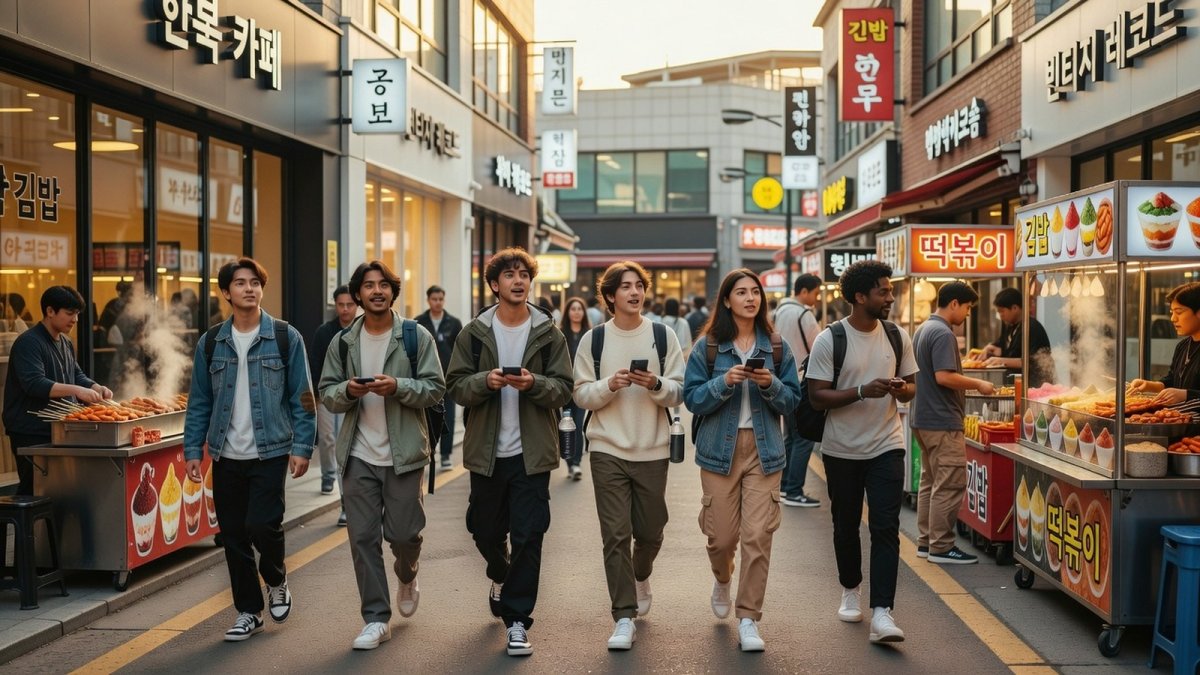
Foreign proportion of foot traffic reached 55.7 percent at N Seoul Tower, 47.1 percent in Myeong-dong, 28.0 percent at Namdaemun Market, 26.4 percent at Samsung Station/COEX, and 19.6 percent at Dongdaemun Design Plaza. Historic sites such as Gyeongbokgung Palace and Bukchon Hanok Village attracted Southeast Asian tourists from Vietnam, the Philippines, and Singapore. Shopping districts including Myeong-dong, Namdaemun, and Gwangjang Market drew Chinese and Japanese visitors, while Seoul Forest and Seongsu-dong appealed to Americans and Bukchon saw a growing European share. Tourist reviews gave Gyeongbokgung Palace the highest average rating of 4.7 out of 5.0 and Seoul Forest the highest positive response rate at 79.9 percent.
These nationality patterns carry direct implications for Seoul's tourism diplomacy. Southeast Asian affinity for heritage sites positions cultural preservation as a bridge for regional soft-power engagement, while Chinese and Japanese concentration in shopping districts highlights retail infrastructure as a bilateral economic connector. American interest in neighborhood culture, evident in Seongsu-dong and Seoul Forest visitation, suggests opportunities for targeted marketing by the Seoul Tourism Organization that emphasizes lived-experience authenticity over packaged itineraries. Tailored campaigns responsive to these preferences can strengthen diplomatic ties by aligning visitor flows with cultural affinities already embedded in bilateral relations.
Lifestyle Tourism and the KOREA NOW Video Perspective
The August 4, 2026 KOREA NOW video titled "Why global Gen Z travelers can't get enough of Seoul" illustrates this shift by following young travelers between Seongsu-dong pop-up boutiques, Gwangjang Market food stalls, and Mount Acha hiking trails. This lifestyle tourism model replaces older palace-and-museum itineraries with integrated experiences that combine consumption, cuisine, and outdoor activity. Seoul's top global rankings for solo travel safety and luxury shopping appeal further support this pattern among the surveyed demographic.
Seongsu-dong's industrial-chic transformation exemplifies how former manufacturing zones have been repurposed into creative consumption spaces that resonate with global Gen Z aesthetics. Gwangjang Market's traditional food scene anchors these experiences in Korea's longstanding market culture, while Mount Acha sunset hiking extends the day into contemplative outdoor activity. This paradigm aligns with broader Hallyu soft-power literature by demonstrating how popular culture exports evolve into lived urban encounters that sustain visitor interest beyond initial media exposure. Such integration supports South Korea's trajectory toward thirty million annual foreign visitors by converting cultural familiarity into repeatable, high-engagement itineraries.
Strategic Implications for Seoul Metropolitan Government
Municipal officials plan to deepen high-value bleisure initiatives that combine business meetings with leisure extensions. Seoul's position as host of 317 international association meetings in 2025 already demonstrates capacity to attract corporate travelers who extend stays for cultural and recreational purposes. The city's performance relative to regional competitors such as Tokyo and Hong Kong underscores the effectiveness of policies that integrate Hallyu-driven cultural content with preserved heritage districts. Continued investment in multilingual information, wayfinding, and convenience facilities remains necessary to sustain these gains among high-income Gen Z and millennial cohorts.
Regional competition with Tokyo, Hong Kong, Beijing, and Singapore intensifies pressure on Seoul to maintain differentiation through MICE leadership, evidenced by its 317 international association meetings that placed it first in Asia and third worldwide. The bleisure strategy's economic significance lies in converting short business visits into extended high-value stays that amplify per-visitor expenditure. This approach leverages existing infrastructure advantages while addressing gaps in convenience facilities identified in the SAIF analysis.
Looking Ahead
Prospects for the 2027 Trazees cycle hinge on sustained investment in high-value tourism policy that prioritizes the 25-40 demographic's expectations for seamless, culturally immersive experiences. The SAIF analysis highlights the need for expanded multilingual wayfinding and convenience facilities to accommodate growing foot traffic at both established and emerging sites. Seoul Metropolitan Government strategies that align these infrastructure upgrades with targeted marketing to Southeast Asian, East Asian, and North American segments position the city to defend its Hall of Fame status while advancing toward broader visitor growth objectives.
By Prof. David Park, Staff Writer
This article was produced with AI-assisted research and editorial support. Reporting is based on sources cited in the article.
What's Your Reaction?
 Like
0
Like
0
 Dislike
0
Dislike
0
 Love
0
Love
0
 Funny
0
Funny
0
 Wow
0
Wow
0
 Sad
0
Sad
0
 Angry
0
Angry
0

East Asia/Technology Correspondent at Global1.News. Seoul-based voice covering Korean politics, technology, business, and culture. Analyzes how technology and geopolitics intersect across East Asia.














Comments (0)