
Palace Warns of Destabilization Bid After Guteza Recantation
In an ANC 24/7 report aired this week, Malacañang expressed deep concern over the recantation of key witness Orly Guteza, warning that the sudden reversal could be a calculated move to destabilize the government and derail the pursuit of accountability in the controversial flood-control fund probe.
In an ANC 24/7 report aired this week, Malacañang expressed deep concern over the recantation of key witness Orly Guteza, warning that the sudden reversal could be a calculated move to destabilize the government and derail the pursuit of accountability in the controversial flood-control fund probe. Palace Press Officer Undersecretary Claire Castro did not mince words, stating that the withdrawal of testimony is "worrisome" and that authorities must now determine not just the truth behind Guteza's claims, but also who orchestrated the elaborate scenario that led him to testify before the Senate Blue Ribbon Committee in the first place.
Castro’s remarks signal a hardening stance from the executive branch, which views the recantation as a potential threat to the integrity of ongoing investigations. "Kung sino ang mastermind sa pagpapagawa ng ganitong klaseng mga scenario, sampahan ng kaso," Castro said, emphasizing that whoever engineered these fabricated narratives must face legal consequences. The Palace’s reaction goes beyond a simple acknowledgment of Guteza’s changed story; it frames the recantation as part of a broader pattern of attempts to undermine public trust in the justice system and the institutions tasked with holding powerful figures accountable.
Palace Calls for Full Investigation Into Recantation
During the briefing, Castro laid out a clear directive for investigating agencies: the recantation must not be taken at face value. She stressed that authorities must establish whether Guteza’s original testimony before the Senate was fabricated, whether his latest affidavit is truthful, and, crucially, who may have manipulated him into making false accusations. "Dapat po ma-check, mabalanse lahat," she added, underscoring the need for a thorough and balanced examination of all evidence presented.
The Palace’s stance reflects a growing concern that fabricated testimonies and planted evidence could severely damage the pursuit of genuine accountability. Castro warned that such tactics "mas makakasira siya sa paghabol sa mga tao na dapat managot," meaning they would hurt the effort to go after those who should truly be held responsible. This is not merely a legal technicality; it strikes at the heart of public confidence in the government’s ability to deliver justice, especially in cases involving billions of pesos in public funds.
Castro also took aim at the practice of paying witnesses to target specific individuals, calling it alarming and corrosive to the justice system. "What the president wants is what is within the law, not made-up evidence," she said, reiterating that the administration will not tolerate manufactured narratives designed to destroy reputations or sway political outcomes. The message is clear: the Palace is watching, and it will not allow the judicial process to be weaponized.
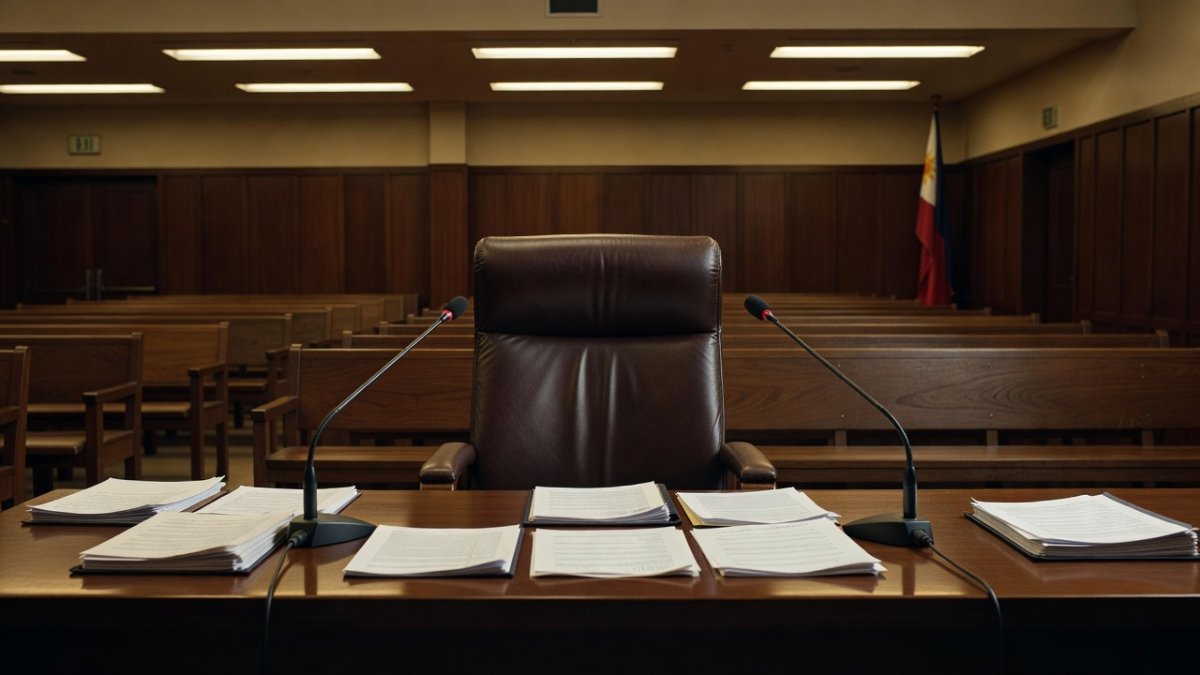
Guteza’s Detailed Account of Alleged Coercion
To understand the gravity of the Palace’s warning, one must examine the specifics of Guteza’s recantation. In an affidavit dated Aug. 13, 2026, obtained by Philstar.com and the Inquirer, the retired Marine and former security aide of ex-Ako Bicol party-list Rep. Zaldy Co laid out a detailed narrative of how he claims he was pressured and deceived into fabricating allegations against former House Speaker Martin Romualdez. Guteza had originally testified on Sept. 25, 2025, that he delivered suitcases, or "maleta," allegedly containing cash to Romualdez’s residence in Forbes Park, tied to anomalous flood-control projects.
According to Guteza’s recantation, the plot began on Sept. 24, 2025, when a driver named "Djiango," who works for former congressman Mike Defensor, invited him to a dinner at a hotel restaurant in Pasay City. There, Guteza claims he was met by Defensor and a man named Mark, the husband of Defensor’s daughter. Despite Guteza’s insistence that he never saw suitcases of money, Defensor allegedly pushed him to sign an affidavit containing false claims. The pressure did not stop there; Guteza said that detained Sen. Rodante Marcoleta personally edited the draft affidavit on Mark’s laptop, refining the Tagalog translation and calling it the "missing link" that would connect Romualdez to the alleged payoffs.
Guteza’s account paints a picture of a carefully orchestrated scheme. He said Marcoleta told him that two other executive assistants, identified as Paul and Mark, could not testify because they are members of the Iglesia ni Cristo and feared expulsion from the church. Instead, Guteza was promised cash and educational scholarships for his children in exchange for his testimony. He admitted that he had no direct contact with Romualdez and never witnessed any deliveries, even going so far as to alter the year on his affidavit from 2025 to 2024 before the hearing to conceal the lies.
Abandoned After the Senate Hearing
The aftermath of Guteza’s Senate appearance is equally telling. He claims that after the session, he was abandoned by those who had recruited him. Marcoleta allegedly ignored him, and Guteza was made to sign a waiver refusing Senate security, forcing him to walk out of the hearing alone. This sense of betrayal, he said, was compounded when a Marcoleta staffer contacted him on Sept. 27, 2025, offering the contact of lawyer Rowena Guanzon to "correct" his affidavit for a case filing. Guteza refused the offer. Guanzon has since denied any involvement, taking to social media to call Guteza a "liar."
These details are not just the ramblings of a man trying to save himself; they form a coherent narrative of coercion and manipulation that the Palace believes warrants serious investigation. The fact that Guteza was allegedly promised financial rewards and scholarships for his children highlights the lengths to which some would go to fabricate evidence against a political rival. It also raises questions about the integrity of the Senate Blue Ribbon Committee’s proceedings, which relied heavily on Guteza’s testimony as a cornerstone of its investigation into the flood-control projects.
For ordinary Filipinos, this is deeply troubling. The flood-control projects in question involve billions of pesos in public funds—money that was supposed to protect communities from devastating typhoons and flooding. Instead, it has become the subject of political maneuvering and alleged manipulation. The Palace’s warning serves as a reminder that the fight for accountability is not just about punishing the guilty; it is also about ensuring that the process itself is not corrupted by those with ulterior motives.

Ombudsman Confirms 28 Witnesses Still Set to Testify
Despite the recantation, the investigation into the flood-control projects is far from over. The Office of the Ombudsman has confirmed that 28 witnesses are still scheduled to testify in the probe, indicating that Guteza’s withdrawal will not derail the proceedings. This is a crucial point, as it suggests that the case against Romualdez, if any, does not rest solely on Guteza’s now-discredited testimony. The Ombudsman, along with the Department of Justice (DOJ) and other investigating agencies, will now have to sift through the evidence to determine whether any charges should be filed, particularly if the manipulation allegations against Marcoleta and Defensor are substantiated.
The Palace’s call for a thorough investigation into the recantation is a double-edged sword. On one hand, it signals a commitment to due process and the rule of law. On the other, it raises the specter of a political backlash, as both Marcoleta and Defensor are currently detained—Marcoleta on a P75-million plunder charge over undeclared campaign contributions, and Defensor on related charges. Both have denied any wrongdoing, and their legal teams are likely to seize on Guteza’s recantation as evidence of a broader conspiracy against them.
This is the second time the Palace has flagged destabilization over recantations. In early August, four witnesses who claimed they delivered cash to Romualdez also retracted their statements, and Castro cited schemes aimed at damaging personalities. The pattern is unmistakable: the Palace sees these recantations as part of a coordinated effort to undermine the administration and its allies, particularly as the political landscape heats up with the impeachment trial of Vice President Sara Duterte, ongoing congressional inquiries, and the approaching 2026 midterm election season.
What This Means for Filipino Trust in Institutions
The broader implications of this saga extend far beyond the fate of Romualdez, Marcoleta, or Defensor. For the average Filipino, this is about whether the justice system can be trusted to deliver fair and impartial outcomes. When witnesses recant, when affidavits are allegedly fabricated, and when political operatives are accused of manipulating testimony, it erodes the public’s faith in the very institutions designed to protect them. The Palace’s warning is a recognition of this reality, and its call for accountability is aimed at restoring that trust.
Castro’s statement that "fabricated stories and planted evidence damage the investigation" is a pointed acknowledgment that the ends do not justify the means. Even if the flood-control projects were riddled with anomalies, the use of false testimony to prove it would taint the entire process. This is a lesson that resonates deeply in a country where the rule of law has often been tested by political crises. The Palace’s insistence on checking and balancing all evidence is a reminder that justice must be pursued with integrity, not through shortcuts or manufactured narratives.
For the millions of Filipinos who live in flood-prone areas and have seen their homes and livelihoods destroyed by typhoons, the flood-control funds are a matter of life and death. They want to know that the money allocated for their protection was not stolen or misused. They want accountability, but they also want the truth. The recantation of Orly Guteza, and the Palace’s response to it, is a test of whether the country can navigate this complex web of allegations without losing sight of what truly matters: justice for the people.
A Call for Calm and Due Process
As the investigation continues, the Palace is urging calm and a focus on due process. Castro’s remarks were measured but firm, reflecting an administration that is determined to see the rule of law prevail. The call to charge the masterminds behind the alleged fabrication is a direct challenge to those who would use the justice system as a political weapon. It is also a warning that the Palace will not stand idly by while the integrity of its institutions is compromised.
The coming weeks will be critical. The Ombudsman and the DOJ will have to carefully examine Guteza’s recantation, cross-reference it with the testimony of the remaining 28 witnesses, and determine whether any charges should be filed against Marcoleta, Defensor, or others who may have been involved in the alleged manipulation. The Palace has made its position clear: fabricated evidence will not be tolerated, and those responsible must be held accountable.
For now, the nation watches and waits. The flood-control probe is not just about one man’s testimony or one political faction’s agenda; it is about the future of accountability in the Philippines. The Palace’s warning is a reminder that the fight for justice is a delicate balancing act—one that requires patience, integrity, and an unwavering commitment to the truth. As Castro aptly put it, "Everything must be checked and balanced." The stakes could not be higher.
By Bella Reyes, Staff WriterThis article was produced with AI-assisted research and editorial support. Reporting is based on sources cited in the article.
What's Your Reaction?
 Like
0
Like
0
 Dislike
0
Dislike
0
 Love
0
Love
0
 Funny
0
Funny
0
 Wow
0
Wow
0
 Sad
0
Sad
0
 Angry
0
Angry
0

Philippines/Southeast Asia Correspondent at Global1.News. Manila-based journalist covering Philippine politics, environment, maritime security, and social issues. Passionate about marine conservation and the communities protecting the Philippines' natural heritage.













Comments (0)