
The Hidden Famine: A New First-Hand Account of North Korea's Urban Catastrophe
The 1990s famine in North Korea remains one of the most under-documented humanitarian catastrophes of the late twentieth century. For decades, scholars and journalists have pieced together its causes and consequences from satellite imagery, refugee testimony, and the rare official admission from Pyongyang. Now, a new book-length memoir promises to add a crucial, ground-level perspective to that fragmented record. "Miss Kathi: Saving Lives in North Korea," by Swiss aid worker Kathi Zellweger and

The 1990s famine in North Korea remains one of the most under-documented humanitarian catastrophes of the late twentieth century. For decades, scholars and journalists have pieced together its causes and consequences from satellite imagery, refugee testimony, and the rare official admission from Pyongyang. Now, a new book-length memoir promises to add a crucial, ground-level perspective to that fragmented record. "Miss Kathi: Saving Lives in North Korea," by Swiss aid worker Kathi Zellweger and former CNN senior correspondent Mike Chinoy, offers an unprecedented inside look at the famine's darkest years, as witnessed by a foreigner who was present when the state's food distribution system collapsed.
The publication of this account, adapted in The Diplomat under the title "The Hidden Famine: What I Saw in North Korea's Darkest Years," is significant not merely for its historical detail but for what it reveals about the structural vulnerabilities that continue to define the Democratic People's Republic of Korea (DPRK). Zellweger's testimony, drawn from nearly three decades of humanitarian engagement, provides a granular view of how the famine devastated urban centers—a dynamic often overshadowed by the more familiar imagery of rural starvation. As the international community grapples with North Korea's ongoing food insecurity and the politics of aid, this memoir serves as a vital reminder of the human cost of policy failures and the enduring legacy of the "Arduous March."
The Book and Its Authors
The credibility of this new account rests heavily on the unique position of its primary author. Kathi Zellweger, associated with the Swiss Catholic aid organization Caritas, spent nearly three decades working inside North Korea. For many North Koreans, she was the first foreigner they had ever encountered. Her access was not merely a matter of diplomatic convenience; it was a sustained, on-the-ground presence that allowed her to build relationships and observe conditions in ways that most international observers could not. This is not a story told from the remove of a diplomatic compound or a border town; it is a narrative rooted in the wards, homes, and streets of a country in freefall. Her collaborator, Mike Chinoy, brings a distinguished journalistic pedigree to the project. As a former senior correspondent for CNN, Chinoy covered the Korean Peninsula for decades and authored "Meltdown: The Inside Story of the North Korean Nuclear Crisis." His familiarity with the geopolitical dimensions of the DPRK provides a necessary framework for Zellweger's personal observations. Together, they have produced what is likely one of the first book-length English accounts of the famine written by an aid worker who was physically present during the worst of it. This distinguishes "Miss Kathi" from other works that rely heavily on the testimony of defectors or the analysis of external observers. It offers a perspective from inside the system, documenting the famine's progression as it happened, rather than in retrospect.The Urban Epicenter of the Famine
The most striking analytical contribution of Zellweger's account is its clear-eyed focus on the famine's urban epicenter. The conventional wisdom regarding famines often centers on rural agricultural failure, but the North Korean case was distinct. As the authors note, "With the collapse of the Public Distribution System, which had been the sole source of food, many urban residents, unable to grow anything for themselves, simply wasted away in their homes, starving quietly and out of sight." This observation is critical. The Public Distribution System (PDS) was not merely a welfare program; it was the state's primary mechanism for controlling and allocating food, effectively the sole legal channel for sustenance in cities. When the PDS collapsed under the weight of economic crisis and agricultural shortfalls, urban workers were left with no fallback. Unlike their rural counterparts, who might have access to private garden plots, foraged wild foods, or barter networks with farming relatives, city dwellers were entirely dependent on a system that had ceased to function. The authors highlight the examples of the Kim and Lee families to illustrate this point, showing how the famine's impact was differentiated by geography. The quiet, invisible starvation of urban residents—people dying in their apartments, out of sight of international observers and even their neighbors—paints a picture of a catastrophe that was as much about systemic failure as it was about food scarcity. This urban vulnerability remains a critical, and often underappreciated, aspect of North Korea's fragility today.The Arduous March: Causes and Context
To understand the famine, one must understand the confluence of factors that created it. The immediate trigger was the collapse of the Soviet Union in 1991, which abruptly ended the subsidized trade and aid that had propped up the North Korean economy for decades. This was compounded by a series of severe floods in 1995 that destroyed critical infrastructure and crops. However, these natural and geopolitical shocks were layered upon a deeper, structural crisis rooted in the state's own policies. Decades of agricultural mismanagement, a focus on military spending over civilian needs, and the rigid application of the juche (self-reliance) ideology had left the country's food production system profoundly fragile and inefficient. The famine unfolded during a period of profound political transition. Kim Il Sung, the state's founder, died in July 1994, leaving his son, Kim Jong Il, to navigate the ensuing crisis. The regime's initial response was characterized by denial and a refusal to accept large-scale external food aid, fearing that doing so would expose its weakness and undermine its legitimacy. This reluctance, born of political ideology, cost countless lives. The period is officially euphemized in North Korea as the "Arduous March," a term that frames the catastrophe as a heroic struggle against external forces rather than a consequence of internal policy failures. Zellweger's account provides a stark counter-narrative to this official mythology, documenting the human reality behind the state's propaganda.The Disputed Toll
One of the most contentious aspects of the famine remains the death toll. The numbers are not merely a matter of historical record; they are a political battleground. Scholarly estimates vary widely, ranging from roughly 600,000 to 1 million deaths—approximately 3 to 5 percent of the pre-famine population. Some researchers, however, have suggested figures as high as 2 to 3 million. The North Korean government itself has acknowledged approximately 250,000 deaths, a figure that most independent analysts consider a significant undercount. This wide discrepancy is not surprising given the lack of reliable data. The North Korean state does not publish accurate demographic statistics, and the chaos of the period made independent verification nearly impossible. The regime's own figure is widely seen as an attempt to minimize the scale of the disaster and deflect blame. The scholarly range, while still imprecise, is based on demographic modeling, refugee interviews, and analysis of population data from neighboring countries, particularly China. Zellweger's account does not resolve this debate, but it adds a qualitative dimension that numbers cannot capture. Her descriptions of the "quiet" starvation in urban areas suggest that the true toll may be higher than many estimates, as deaths in isolated apartments could easily go unrecorded. The debate over the death toll is not academic; it is central to understanding the scale of the tragedy and the regime's culpability.Why the Famine Still Matters
The famine of the 1990s is not a closed chapter in North Korean history; it is a foundational event that continues to shape the country's present and future. The collapse of the PDS fundamentally altered the social contract between the state and its citizens. While the system has been partially restored, it no longer functions as the sole source of food. The rise of informal markets, or jangmadang, which began as a survival mechanism during the famine, has become a permanent feature of the North Korean economy. This shift has profound implications for regime control and social dynamics, as the state's monopoly on distribution has been permanently eroded. For the international community, the famine remains a touchstone for debates about humanitarian engagement. The regime's history of diverting aid and its reluctance to allow unfettered access have made donors wary. Zellweger's decades of work demonstrate that sustained, principled engagement is possible, but her account also highlights the immense challenges and ethical compromises involved. For South Korea, the famine is a painful memory that complicates inter-Korean relations. Debates over humanitarian aid to the North are often framed by the legacy of the 1990s, with proponents arguing that engagement can prevent a repeat of such a catastrophe, while critics contend that aid only props up a regime that has shown little regard for its own people. The famine's legacy is thus a live issue in contemporary policy discussions, from food security to nuclear diplomacy.Conclusion
"Miss Kathi" is more than a memoir; it is a critical historical document that fills a significant gap in our understanding of one of the worst humanitarian disasters of the late twentieth century. By centering the experience of urban residents and detailing the collapse of the PDS, Zellweger and Chinoy force a re-evaluation of the famine's geography and its causes. The book underscores that the "Arduous March" was not a natural disaster but a policy catastrophe, born of ideological rigidity and political calculation. As North Korea continues to face chronic food shortages and periodic crises, the lessons of the 1990s remain urgently relevant. The famine demonstrated the profound vulnerability of a society so dependent on a centralized state system, and it revealed the limits of both international aid and domestic resilience. For scholars, policymakers, and those concerned with human rights on the Korean Peninsula, this first-hand account is an invaluable resource. It reminds us that behind the statistics and the geopolitical maneuvering are individual lives, families, and communities whose suffering must not be forgotten. The hidden famine is now, at least in part, brought to light.This article was produced with AI-assisted research and editorial support. Sources: The Diplomat — Kathi Zellweger and Mike Chinoy, "The Hidden Famine: What I Saw in North Korea's Darkest Years" (Aug. 22, 2026); Kathi Zellweger and Mike Chinoy, "Miss Kathi: Saving Lives in North Korea" (Post Hill Press, 2026); Asia Times (July 2026); scholarly accounts of the 1990s North Korean famine.
By Prof. David Park, Staff Writer
What's Your Reaction?
 Like
0
Like
0
 Dislike
0
Dislike
0
 Love
0
Love
0
 Funny
0
Funny
0
 Wow
0
Wow
0
 Sad
0
Sad
0
 Angry
0
Angry
0
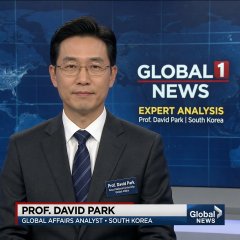
Prof. David Park
East Asia/Technology Correspondent at Global1.News. Seoul-based voice covering Korean politics, technology, business, and culture. Analyzes how technology and geopolitics intersect across East Asia.















Comments (0)