
Noida Curbs Gatherings for 13 Days: Festivals, NEET PG Security, and the New Anatomy of Exam Safety in Uttar Pradesh
Gautam Buddh Nagar Police impose Section 163 BNSS for 13 days in Noida-Greater Noida, curbing gatherings of five or more, processions and loudspeakers during Eid-e-Milad, Raksha Bandhan, Janmashtami and the NEET PG 2026 exam on August 30.
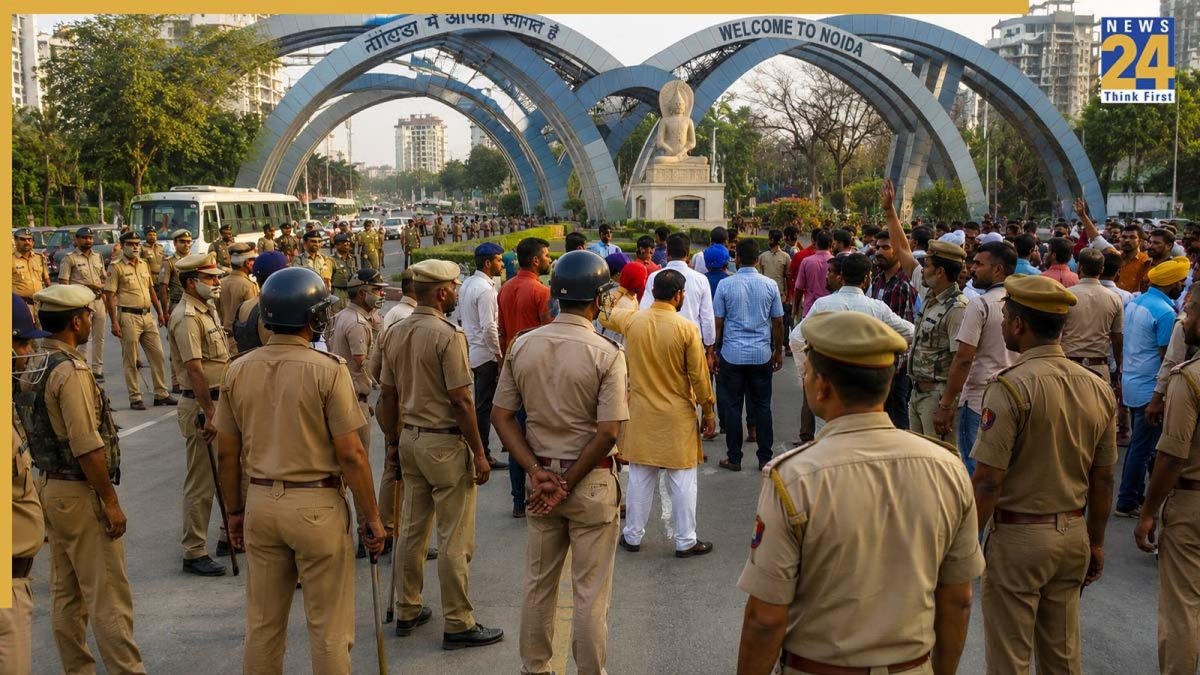
The Gautam Buddh Nagar Police Commissionerate has imposed Section 163 of the Bharatiya Nagarik Suraksha Sanhita (BNSS) across Noida and Greater Noida for 13 days, from August 23 to September 4, 2026, in a pre-emptive move to secure public order during a cluster of religious festivals and the NEET PG 2026 examination. The order, which replaces the colonial-era Section 144 of the CrPC, restricts gatherings of five or more persons, bans processions without permission, and imposes a strict 10 PM to 6 AM loudspeaker curfew at all places of worship. The timing is deliberate: the district will host the NEET PG exam on August 30, an event that draws over 2.4 lakh medical aspirants nationwide and has become a high-stakes security operation following the paper-leak scandals of 2024 and 2025.
Noida Curbs Gatherings for 13 Days: Festivals, NEET PG Security, and the New Anatomy of Exam Safety in Uttar Pradesh
Noida, Uttar Pradesh – August 23, 2026 — The Gautam Buddh Nagar Police Commissionerate has invoked Section 163 of the Bharatiya Nagarik Suraksha Sanhita (BNSS) across the entire district, effective immediately and lasting until September 4, 2026. The order, announced via the Noida Police media cell and the official @noidapolice handle on X, is a calibrated response to a compressed calendar of religious observances—Eid-e-Milad on August 26, Raksha Bandhan on August 28, and Shri Krishna Janmashtami on September 4—sandwiched around the National Board of Examinations in Medical Sciences (NBEMS) NEET PG 2026 examination on August 30. For a district that borders Delhi and functions as a major coaching hub for the National Capital Region, the convergence of mass gatherings and a high-stakes medical entrance test has transformed routine festival policing into a multi-agency security drill.
Section 163 BNSS: The Legal Framework Behind the Curbs
Section 163 of the BNSS, which came into force in July 2024 as the successor to Section 144 of the old Code of Criminal Procedure, grants executive magistrates the power to issue urgent orders against nuisance or apprehended danger. The provision is broader than its predecessor, explicitly covering digital communications and allowing for the regulation of online content alongside physical assemblies. In this instance, the order spans the full 13-day window from August 23 to September 4, covering the entire Gautam Buddh Nagar Commissionerate—an administrative area that includes both Noida and Greater Noida.
The restrictions are comprehensive. No gathering of five or more persons is permitted in public places without prior police permission. Processions, demonstrations, and religious events on public roads require explicit authorisation. Loudspeakers at temples, mosques, gurudwaras, and churches are banned between 10 PM and 6 AM, with sound strictly confined to the premises of the institution. The order also prohibits the carrying or displaying of weapons—including lathis, swords, knives, and trishuls—and bars the initiation of new religious traditions at sites with no prior history of such practice. Acts that could provoke religious sentiments, insult scriptures, or involve placing flags, posters, or banners at religious sites are likewise prohibited.
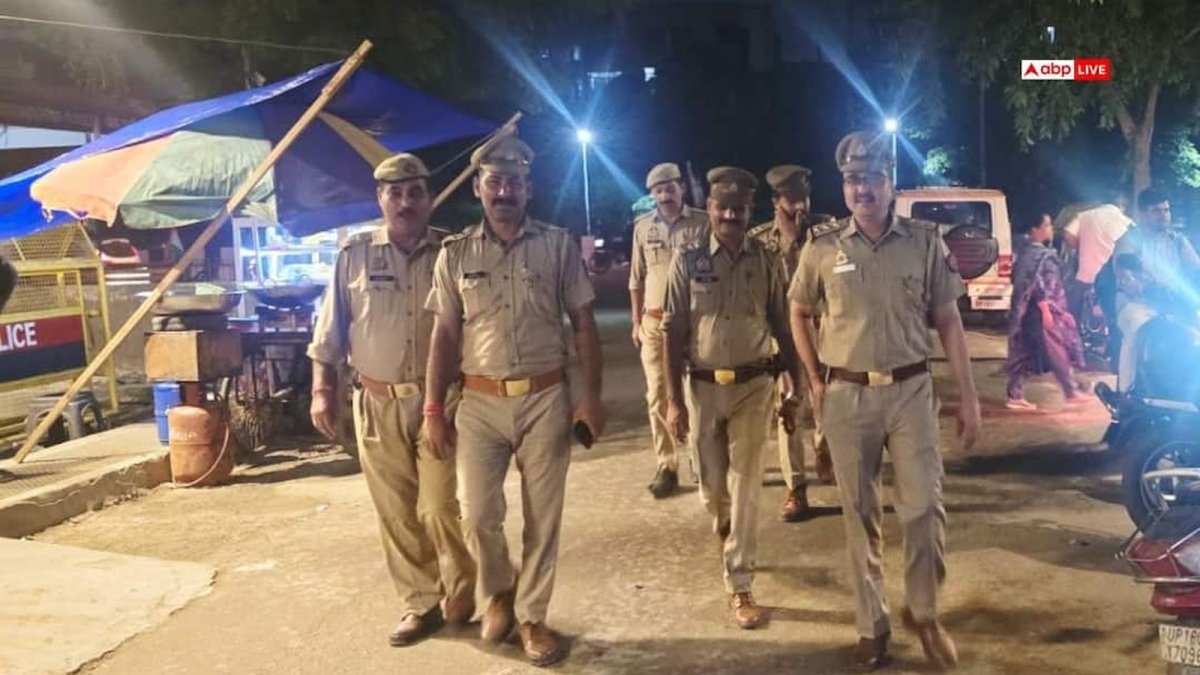
NEET PG 2026: A High-Stakes Exam Under a Security Microscope
The festival curbs are only half the story. The order contains exam-specific provisions that reflect how deeply the paper-leak crises of 2024 and 2025 have reshaped administrative thinking around medical entrance tests. On August 30, the day of the NEET PG 2026 examination, no gathering of five or more persons will be permitted within 200 metres of any exam centre. More tellingly, the operation of photocopy machines within 200 metres of centres is banned on the day before and the day of the exam—a direct anti-leak measure designed to prevent the physical reproduction of question papers.
These are not abstract precautions. NEET PG 2026 is being conducted by NBEMS under a revised format: 180 multiple-choice questions carrying a total of 720 marks, reduced from the earlier 800. The paper is divided into five mandatory, time-locked sections of 36 questions each, with 42 minutes allotted per section. Once a section's time expires, it locks permanently—candidates cannot return to it. The city intimation slip was released on August 11, and the admit card is scheduled for August 27, just three days before the exam. With annual candidate numbers hovering between 2 and 2.5 lakh, and 2026 estimates exceeding 2.4 lakh, the logistical and security burden on districts like Gautam Buddh Nagar is immense.
From Paper Leaks to Locked Sections: The Evolution of Exam Security
The current restrictions must be read against a recent history of systemic failure. In 2024, the NEET UG examination was hit by a paper-leak scandal that forced the Supreme Court to order a re-test for 1,563 candidates and triggered a Central Bureau of Investigation (CBI) probe. The following year, NEET PG 2025 itself had to be postponed after leak-related concerns, with the Supreme Court approving a rescheduled date of August 3, 2025. These incidents exposed vulnerabilities in the examination supply chain—from printing to transport to distribution—and prompted a wholesale rethink of security protocols.
The 2026 measures in Noida are a direct product of that rethink. The 200-metre exclusion zone around centres, the photocopy ban, and the time-locked digital sections are layered defences. The time-locked format, in particular, is a technological answer to a logistical problem: even if a paper were leaked, the synchronised, section-wise timing makes it nearly impossible for candidates to benefit from early access without detection. The Noida order extends this logic into physical space, ensuring that the immediate vicinity of exam centres is sterile ground on exam day.
Festival Policing in a Communally Sensitive Window
The choice of dates is not incidental. The 13-day window covers three major festivals from different religious communities—Eid-e-Milad, Raksha Bandhan, and Janmashtami—each of which draws significant crowds in a district with a dense, mixed population. Gautam Buddh Nagar's proximity to Delhi and its status as a hub for migrant students and professionals make it a microcosm of India's urban religious diversity. The police order's specific bans—on unauthorised namaz or puja on public roads, on new religious traditions at sites without prior precedent, and on provocative acts—are designed to prevent flashpoints before they emerge.
The loudspeaker curfew, standard in many Uttar Pradesh districts, is a recurring point of tension between communities and authorities. By confining sound to premises and enforcing a 10 PM to 6 AM ban, the order seeks to balance religious practice with public order—a calculation that has historically been contentious. The explicit prohibition on weapons, including traditional items like trishuls, signals an awareness that festival processions can sometimes serve as covers for displays of strength.
Implications for Medical Aspirants and the Healthcare Pipeline
For the 2.4 lakh candidates appearing in NEET PG 2026, the Noida restrictions are a double-edged sword. On one hand, the security cordon around exam centres reduces the risk of disruption and leak-related chaos that has plagued recent cycles. On the other, the restrictions add a layer of logistical complexity—candidates must navigate a district where movement is curtailed, and any gathering near centres could invite scrutiny. The timing of the admit card release, just three days before the exam, leaves little room for error in travel planning.
The broader stakes are national. NEET PG determines admission to MD, MS, and PG diploma courses—the pipeline that produces India's specialist doctors. Any disruption to this exam has cascading effects on hospital staffing, super-specialty training, and the quality of healthcare delivery. The 2024 and 2025 leaks did not just embarrass the system; they delayed the entry of thousands of qualified doctors into the workforce at a time when India faces a documented shortage of specialists, particularly in rural and semi-urban areas. The security apparatus now surrounding the exam is, in effect, a public health measure.
The Bottom Line
The 13-day Section 163 order in Gautam Buddh Nagar is a textbook example of how Indian administration has adapted to the twin pressures of religious festival management and examination security. By bundling the two into a single, time-bound order, the police have signalled that public order and exam integrity are now inseparable concerns. The photocopy ban within 200 metres of centres and the 10 PM to 6 AM loudspeaker curfew are not merely administrative details—they are the visible edges of a security architecture rebuilt after the leaks of 2024 and 2025. For the 2.4 lakh candidates appearing on August 30, and for the patients who will one day depend on their skills, the quiet streets of Noida on exam day will be the price of a system learning to protect its own integrity.
— By Dr. Raj Patel, Staff Writer
This article was produced with AI-assisted research and editorial support. Sources: NDTV, ABP Live.
What's Your Reaction?
 Like
0
Like
0
 Dislike
0
Dislike
0
 Love
0
Love
0
 Funny
0
Funny
0
 Wow
0
Wow
0
 Sad
0
Sad
0
 Angry
0
Angry
0

India/South Asia Correspondent at Global1.News. Analytical voice with a background in science and health journalism. Based in New Delhi, covering Indian politics, education, healthcare, technology, and policy. Breaks down complex data into clear, actionable reporting.













Comments (0)