
Netanyahu Vows 'Major Aliyah' and More Settlements as E1 Project Threatens to Sever the West Bank
Netanyahu Vows 'Major Aliyah' and More Settlements as E1 Project Threatens to Sever the West Bank Ramallah, Occupied West Bank - August 26, 2026 - In a recent Middle East Eye report, Israeli Prime Minister Benjamin Netanyahu was captured addressing a gathering of settlement leaders in Jerusalem, where he vowed to press forward with the expansion of Jewish settlements in the occupied West Bank and promised a "major" wave of Jewish immigration, or Aliyah, to the territory.
Netanyahu Vows 'Major Aliyah' and More Settlements as E1 Project Threatens to Sever the West Bank
Ramallah, Occupied West Bank - August 26, 2026 - In a recent Middle East Eye report, Israeli Prime Minister Benjamin Netanyahu was captured addressing a gathering of settlement leaders in Jerusalem, where he vowed to press forward with the expansion of Jewish settlements in the occupied West Bank and promised a "major" wave of Jewish immigration, or Aliyah, to the territory. Speaking at an event organized by the Binyamin Regional Council, which administers 47 settlements in the northern West Bank, Netanyahu framed the settlement enterprise as a historical and national imperative, declaring, "This is our land and it will remain ours." His remarks come at a moment of acute tension, with the international community condemning a newly advanced settlement project east of Jerusalem and Palestinians bracing for further displacement and fragmentation of their already shrinking territory.
The prime minister's speech, delivered on Tuesday, was notable not only for its defiant tone but for its timing. With Israeli elections scheduled for October 27, 2026, and a government that includes ministers who openly advocate for formal annexation, Netanyahu's words appear aimed at consolidating his base among the settler population and their political representatives. Yet the reality on the ground is more complex than the prime minister's rhetoric suggests. While he promised to "prepare the door for major Aliyah," figures from the past two years indicate a significant outflow of Israelis, with more than 150,000 having left the country between 2024 and 2025, according to a report by the Israeli publication 972 magazine. Whether the promised wave of immigration will materialize remains unclear, but the construction plans are concrete, and their consequences for Palestinians are immediate.
A Land Corridor That Severs Palestinian Communities
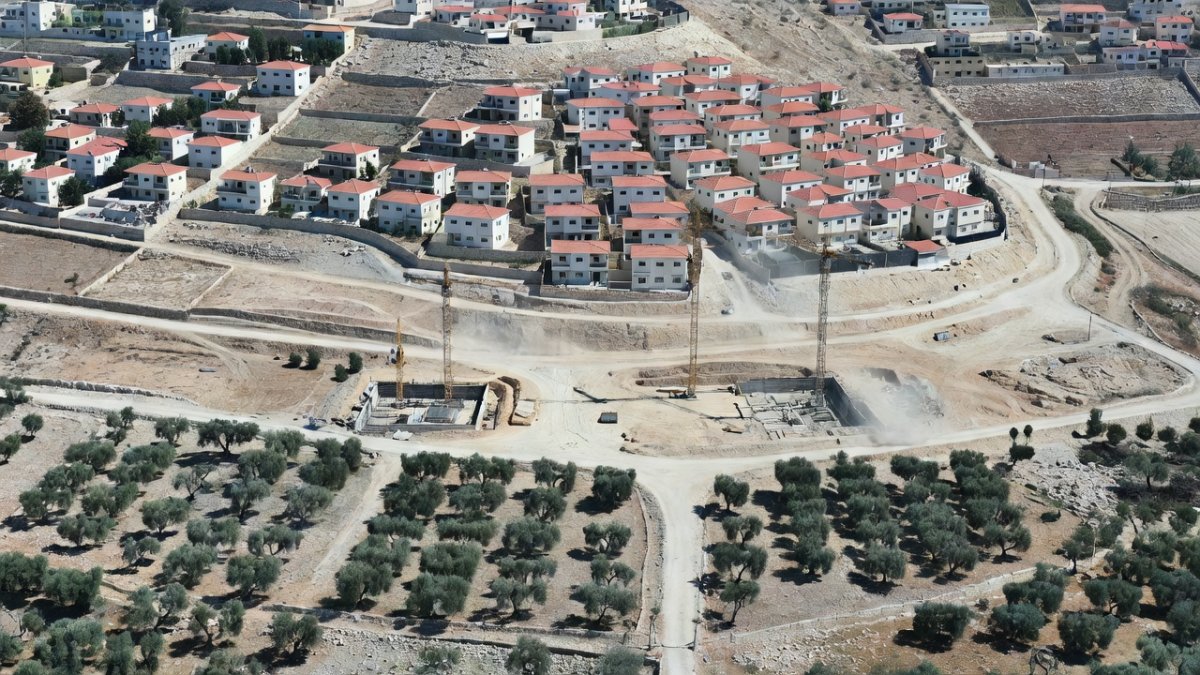
At the heart of the current crisis is the E1 settlement project, a sprawling development east of Jerusalem that has been on the drawing board for decades but has now moved a decisive step forward. Last week, Israeli authorities opened bidding for the construction of more than 1,200 housing units in E1, the first phase of a project that will eventually comprise more than 3,400 homes. The project was green-lit by Netanyahu's government last year, and its implementation would establish a continuous land corridor between East Jerusalem and the large settlement of Ma'ale Adumim, effectively severing road links between the Palestinian cities of Ramallah and Bethlehem.
For Palestinians, E1 is not merely a housing project; it is a strategic weapon aimed at dividing the northern and southern West Bank, making the creation of a contiguous, viable Palestinian state nearly impossible. The project sits in a narrow strip of land that, if built, would cut the West Bank in two, isolating East Jerusalem from its Palestinian hinterland and encircling Palestinian communities in the area. Netanyahu, in his Tuesday remarks, predicted that Ma'ale Adumim's population would double to 70,000 within five years, a projection that underscores the scale of the demographic engineering at play.
Local residents in the nearby Palestinian village of Al-Eizariya, which would be directly affected by the E1 construction, have expressed deep alarm. "We see the bulldozers on the horizon, and we know what is coming," said a community leader who asked not to be named for fear of reprisals. "They are not building homes; they are building a wall around our future." The village, which lies on the eastern edge of Jerusalem, has already lost significant land to settlement expansion over the decades, and E1 threatens to complete the encirclement.
International Condemnation and the Limits of Diplomacy
The international response to the E1 project has been swift and unusually unified. Eight Arab and Muslim states, including Mecca Pact members Saudi Arabia, Pakistan, and Turkiye, issued a joint statement "categorically" rejecting the plan, describing it as "a dangerous escalation" that threatens regional stability. The condemnation was echoed by Western powers, with the United Kingdom, Canada, Australia, New Zealand, the European Commission, and 15 European states issuing a coordinated statement that warned of the project's consequences.
"The E1 settlement will undermine the prospect of the two-state solution by driving a wedge through the West Bank," the statement read. "At a time of grave instability in the West Bank with unprecedented levels of violence by settlers against civilians, and serious restrictions on the Palestinian economy, this decision is even more concerning." The statement reflects a growing frustration among Israel's traditional allies, who see the settlement enterprise as an obstacle to any future peace agreement and a violation of international law.
Under the Geneva Conventions, which the International Criminal Court has deemed applicable to the occupied territories, Israel's transfer of its civilian population into the West Bank constitutes a breach of international law. All settlements established beyond Israel's 1967 borders are considered illegal under international law, a position consistently reaffirmed by United Nations resolutions and the International Court of Justice. Yet successive Israeli governments, regardless of political orientation, have continued to expand settlements, and the current coalition includes ministers who openly call for full annexation of the territory.
Finance Minister Bezalel Smotrich, who has long advocated for the application of Israeli sovereignty over the West Bank, urged Netanyahu in June to take that step. While Netanyahu has not formally endorsed annexation, his government's actions, including the advancement of E1 and the legalization of dozens of outposts, suggest a de facto annexation process that proceeds incrementally, without a formal declaration.
Settler Violence and the Deteriorating Reality on the Ground
The expansion of settlements has been accompanied by a sharp increase in violence by Israeli settlers against Palestinian civilians. Since October 7, 2023, the United Nations and human rights organizations have documented what they describe as "unprecedented levels of violence by settlers against civilians." Attacks have included physical assaults, the burning of homes and vehicles, the uprooting of olive trees, and the displacement of entire communities, particularly in the hills south of Hebron and in the Jordan Valley.
In the past year alone, several Palestinian villages have been abandoned as residents fled the relentless pressure of settler attacks, often carried out with the apparent protection or tacit approval of Israeli security forces. Human rights groups have documented cases where Israeli soldiers stood by while settlers attacked Palestinian farmers, and in some instances, soldiers participated in the violence themselves. The Palestinian Authority, which exercises limited self-rule in parts of the West Bank, has been largely powerless to protect its citizens, its security forces often prevented from operating in areas under full Israeli control.
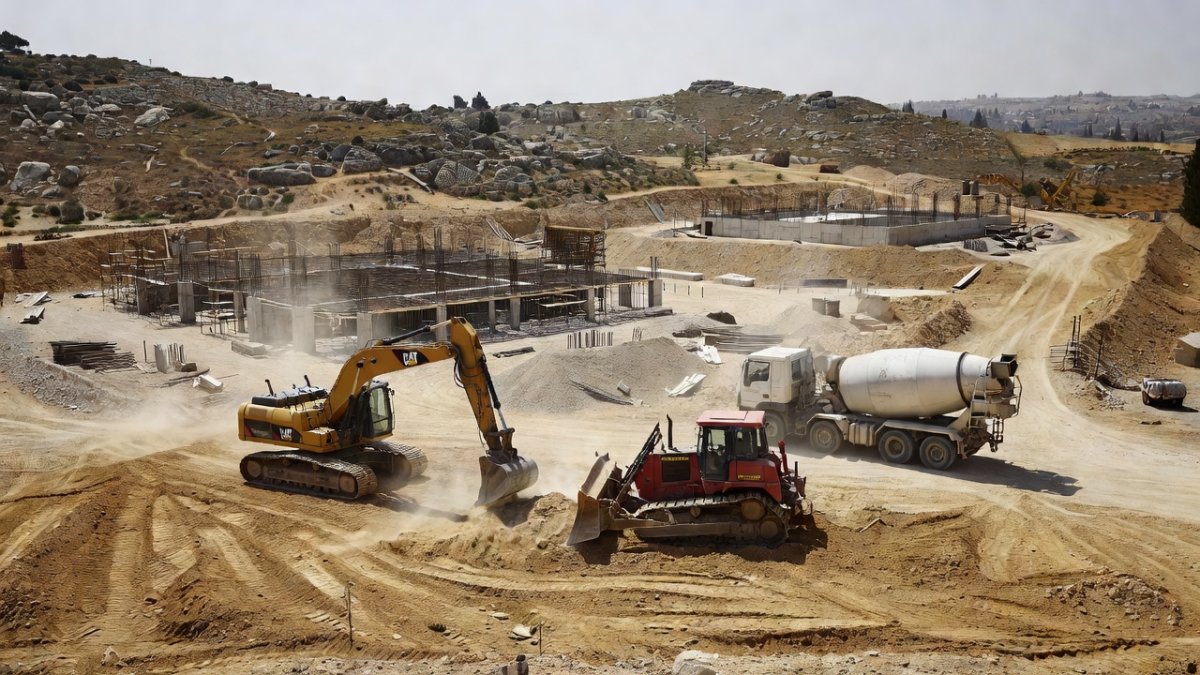
The situation has been further exacerbated by the Israeli military's ongoing operations in the northern West Bank, particularly in the cities of Jenin, Nablus, and Tulkarem, where armed raids have resulted in significant casualties and widespread destruction of infrastructure. The combination of military operations, settler violence, and settlement expansion has created a climate of fear and despair among the Palestinian population, with many seeing no end to the occupation in sight.
Netanyahu's Vision: Land, Suffering, and the Politics of Demography
In his Tuesday address, Netanyahu sought to frame the settlement enterprise as a story of national revival and resilience. "We cannot ignore the numbers: 104 communities that we established and legalised together, and 160 farms, with more to come," he said, referring to the outposts and farms that have been retroactively authorized by his government. "It isn't easy, it's never easy. The land of Israel is acquired through suffering. Sometimes also through smiles, sometimes also through arguments, but it is being acquired by us. We are not giving up, we have a vision, this is our land, and it will remain ours."
The prime minister's language, steeped in the rhetoric of biblical destiny and historical entitlement, resonates deeply with his political base, but it stands in stark contrast to the lived experience of the three million Palestinians who call the West Bank home. For them, the land is not an abstract concept but the source of their livelihood, their identity, and their future. The olive groves that have been uprooted, the homes that have been demolished, and the roads that have been blocked are not symbols but tangible losses that accumulate day after day.
Netanyahu's promise of a "major Aliyah" also raises questions about the demographic future of the territory. While the prime minister projects confidence, the reality of Israeli emigration suggests that the settlement enterprise may be struggling to attract new residents. The 972 magazine report documenting the departure of more than 150,000 Israelis over the past two years points to a range of factors, including economic hardship, political instability, and the high cost of living. Whether the government's incentives and ideological appeals will reverse this trend remains to be seen, but the construction of new settlements continues regardless, driven by political imperatives rather than market demand.
Palestinian Voices: A Future Foreclosed
For Palestinians, the advancement of E1 and the continued expansion of settlements represent a foreclosure of any possibility of a two-state solution. The territorial contiguity that would be required for a viable Palestinian state is being systematically destroyed, and the international community's condemnations, however strong in language, have not translated into meaningful action to halt the process.
In Ramallah, the seat of the Palestinian Authority, officials expressed frustration at the international response. "We hear the statements of condemnation, but we do not see any measures to stop Israel," said a senior PA official who spoke on condition of anonymity. "The world says it supports a two-state solution, but its actions, or rather its inaction, tell a different story. Israel continues to build, and the world continues to talk."
The Palestinian leadership has called for an emergency session of the UN Security Council and has urged the international community to impose sanctions on settlement construction and on those who facilitate it. But past experience suggests that such appeals are unlikely to yield concrete results, given the United States' consistent use of its veto power to shield Israel from Security Council action and the broader geopolitical dynamics that have marginalized the Palestinian cause in recent years.
Meanwhile, ordinary Palestinians continue to live with the daily realities of occupation: checkpoints, permits, land confiscation, and the ever-present threat of violence. The expansion of settlements, and the infrastructure that accompanies it, further entrenches the occupation and makes the prospect of a just peace increasingly remote. As one resident of Al-Eizariya put it, "They speak of their land, but they forget that this land is also ours. We have been here for centuries, and we will not disappear. But what kind of future are they leaving for our children?"
Elections and the Road Ahead
As Israel approaches its October 27 elections, the settlement issue is likely to remain at the forefront of the political debate. Netanyahu, facing a tight race and legal challenges, has sought to rally his base by championing the settlement enterprise and appealing to nationalist and religious constituencies. His coalition partners, including Smotrich and other far-right figures, have pushed for even more aggressive measures, including formal annexation and the expansion of settlements deep into the heart of the West Bank.
The opposition, meanwhile, has been divided on the issue, with some centrist parties calling for a more measured approach while others have largely avoided the topic for fear of alienating voters. The international community, for its part, has signaled that continued settlement expansion will have consequences, but the nature of those consequences remains unclear. The joint statement from the UK, Canada, Australia, New Zealand, the European Commission, and 15 European states was notable for its strong language, but it stopped short of specifying punitive measures.
For Palestinians, the elections are a distant event with little bearing on their daily lives. Regardless of who wins, the occupation is likely to continue, and the settlement enterprise is likely to proceed. The only question is the pace and the scale. As one analyst in Ramallah put it, "The Israeli political system has moved so far to the right that the differences between the parties are now about how fast to build, not whether to build. The two-state solution is no longer a realistic prospect; it is a slogan that everyone repeats but no one believes."
In the meantime, the bulldozers continue to move, the settlements continue to grow, and the Palestinian people continue to endure. The promise of "major Aliyah" may or may not materialize, but the promise of more settlements is already being fulfilled. And with each new home built on occupied land, the possibility of a just and lasting peace recedes further into the distance.
By Fatima Al-Rashid, Staff Writer
This article was produced with AI-assisted research and editorial support. Reporting is based on sources cited in the article.
What's Your Reaction?
 Like
0
Like
0
 Dislike
0
Dislike
0
 Love
0
Love
0
 Funny
0
Funny
0
 Wow
0
Wow
0
 Sad
0
Sad
0
 Angry
0
Angry
0

Gulf/MENA Correspondent at Global1.News. Based in Doha, covering Gulf politics, energy markets, diplomacy, and development across the Middle East and North Africa. Tracks the economic transformation of the Gulf states.











Comments (0)