
Hamas agrees to surrender arms, relinquish governance, Peace Board says
In a development that could reshape the Gaza Strip's political and security landscape, Hamas and other armed factions have agreed for the first time to surrender their weapons and transfer full civilian and security authority to a UN-recognized transitional administration, Nikolay Mladenov, the Gaza
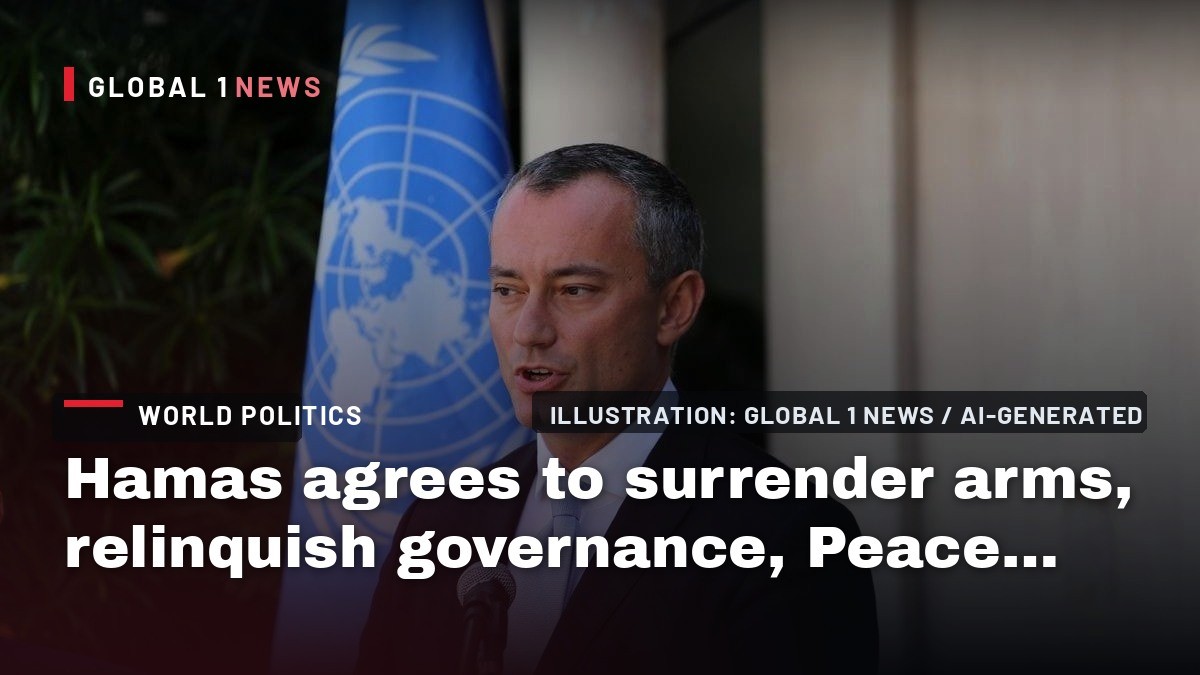
In a development that could reshape the Gaza Strip's political and security landscape, Hamas and other armed factions have agreed for the first time to surrender their weapons and transfer full civilian and security authority to a UN-recognized transitional administration, Nikolay Mladenov, the Gaza Peace Board's high representative, said Wednesday at a UN Security Council briefing.
A First-Time Agreement Under the Gaza Peace Plan
Mladenov's announcement marks a potential turning point in the US-backed Gaza peace plan, which has been stalled over the critical question of disarmament sequencing. "For the first time, Hamas and the armed factions in Gaza have agreed to hand over their weapons and to transfer full governing authority — civilian and security — to a transitional administration recognized by the United Nations," Mladenov told the Security Council, according to statements released by the board on the social media platform X.
The agreement, if implemented, would represent the most significant shift in Gaza's governance since Hamas took control of the enclave in 2007. Mladenov claimed the move could "dramatically improve life in a sustainable way for Palestinians in Gaza; to provide durable security for Israelis."
The 15-Point Roadmap and the National Committee
The Gaza Peace Board unveiled a 15-point roadmap in late July calling for the disarmament of Hamas and other armed factions, the transfer of Gaza's administration to a National Committee, and a phased Israeli withdrawal. Mladenov emphasized that the process leaves no room for ambiguity, stating that the roadmap calls for the removal of "every category of weapon in Gaza. There is no grey zone and no category left out."
The scope of disarmament is comprehensive, covering heavy weapons and their production facilities, arms depots, tunnels, personal firearms, and weapons held by armed factions. Under the plan, the National Committee for the Administration of Gaza (NCAG) will become the only body authorized to possess, store, or control weapons. The NCAG was established in January under Palestinian Authority official Ali Shaath to oversee civil and security affairs during the transition.
Sequencing, Verification, and Three Conditions
Mladenov outlined a cautious, performance-based approach to implementation. "Withdrawal follows verified decommissioning and proceeds in phases. It is sequenced and reciprocal. Each step rests on the successful completion of the one before it," he said, adding that "progress is performance-based, not calendar-based."
The high representative identified three conditions for advancing the process: "The International Stabilization Force must deploy; Israel's undertakings under the Sharm al-Sheikh Protocol must be implemented; and Hamas must adhere to its commitments." He stressed the principle of "trust nothing and verify everything," warning that "every use of force that does not answer an imminent threat costs this process something very hard to buy back."
"In the opposite direction, every weapon still carried, every tunnel still worked and every convoy still obstructed sets the process back," Mladenov added.
Netanyahu's Rejection and Far-Right Opposition
Despite the announcement, Israeli Prime Minister Benjamin Netanyahu continues to reject the plan's sequencing, insisting that Hamas must be fully disarmed before any Israeli withdrawal from Gaza or the start of reconstruction. On Aug. 17, Netanyahu discussed implementation of the plan with Mladenov and US envoy Jared Kushner amid ongoing differences over the order of steps.
Hamas, for its part, insists on a phased and reciprocal process, and has called for international pressure on Israel to implement the roadmap, saying it remains committed to understandings reached with mediators and the Peace Board. Netanyahu's hardline position comes ahead of an Israeli election on Oct. 27 and amid mounting pressure from far-right coalition partners opposed to making concessions on Gaza.
Far-right Israeli ministers attacked the roadmap after its announcement, including Finance Minister Bezalel Smotrich, who called for Hamas to be fully disarmed before any Israeli withdrawal. The political dynamics in Israel suggest that even with Hamas's historic concession, the path to implementation remains fraught with domestic political obstacles.
Daily Life Under Ceasefire and Continued Attacks
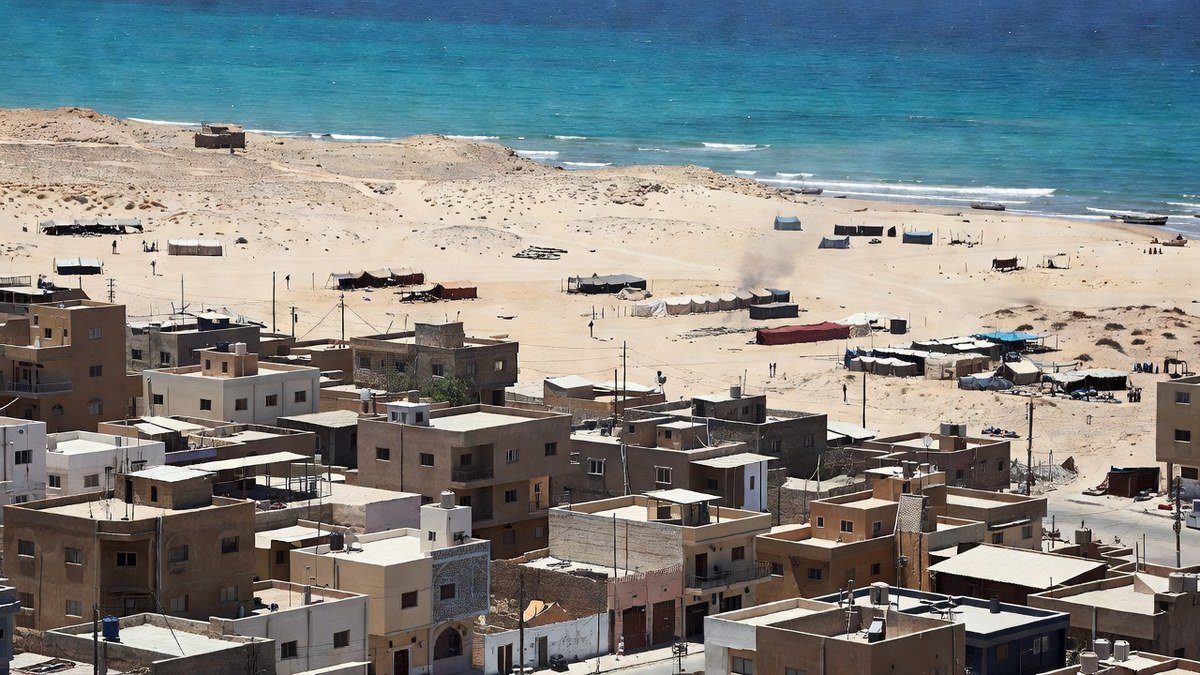
Mladenov's comments come amid daily Israeli attacks on Gaza, in which Palestinians are killed and homes destroyed — along with tents for the displaced — despite a ceasefire that ostensibly went into effect last October. The disconnect between the diplomatic process and the reality on the ground is stark.
On Sunday, Netanyahu and Defense Minister Israel Katz threatened to step up attacks — and displace residents from parts of Gaza — after kites flown by Palestinian children reached Israeli areas near the embattled enclave. Hamas accused Israel of using the incident as a pretext for escalation, a pattern that has repeated throughout the conflict.
For Palestinians in Gaza, the ceasefire has not meant an end to the daily threat of violence. The humanitarian situation remains catastrophic, with families living among rubble, lacking basic services, and facing the constant fear of displacement.
Governance as the Core Crisis
Mladenov framed the transition as addressing a deeper issue than security alone. "Gaza's crisis has never been only a security or humanitarian problem. It has always been a political and governance problem," he said. He described the National Committee as composed of "independent Palestinian professionals. Its purpose is to govern during the transition and restore effective administration."
The success of the transition, Mladenov said, "will ultimately be judged not by the structures we establish, but by whether Palestinians experience greater security, more reliable services, and a measurable improvement in daily life." This framing acknowledges what Palestinians in Gaza have long known: that any political agreement must translate into tangible improvements in their lived reality.
Last November, the UN Security Council adopted Resolution 2803 endorsing the US-backed framework for Gaza's transition, including a technocratic Palestinian administration and an interim international stabilization force. The resolution provides the international legal backing for the process, though its implementation remains uncertain.
The Human Toll and What Lies Ahead
Since Israel launched its war on the Gaza Strip in October of 2023 — a campaign that Palestinian officials and international rights organizations have described as genocidal — more than 73,000 Palestinians have been killed and over 174,000 injured, according to Palestinian figures. These numbers represent not statistics but individual lives — families shattered, communities destroyed, and a generation growing up amid the rubble of their homes and schools.
The agreement announced Wednesday, if it holds, could offer a path toward a different reality for Gaza's two million residents. But the conditions Mladenov outlined — the deployment of an international stabilization force, Israel's implementation of the Sharm al-Sheikh Protocol, and Hamas's adherence to its commitments — remain unfulfilled. And with Netanyahu demanding full disarmament before any withdrawal, and far-right ministers like Smotrich opposing any concessions, the political will for implementation remains in question.
For Palestinians in Gaza, the announcement is a glimmer of possibility in an otherwise bleak landscape. Whether it translates into the "measurable improvement in daily life" that Mladenov spoke of will depend on whether the international community can move beyond statements and toward sustained pressure on all parties to honor their commitments. The people of Gaza have heard promises before; what they need now is a process that delivers.
By Fatima Al-Rashid, Staff Writer
This article was produced with AI-assisted research and editorial support. Sources: Middle East Monitor, Anadolu Agency.
What's Your Reaction?
 Like
0
Like
0
 Dislike
0
Dislike
0
 Love
0
Love
0
 Funny
0
Funny
0
 Wow
0
Wow
0
 Sad
0
Sad
0
 Angry
0
Angry
0

Gulf/MENA Correspondent at Global1.News. Based in Doha, covering Gulf politics, energy markets, diplomacy, and development across the Middle East and North Africa. Tracks the economic transformation of the Gulf states.













Comments (0)