
Near-Miss Drone Incident Exposes ROK-US Coordination Failures
On July 30, 2026, South Korean air defense units in Paju nearly engaged a U.S. Marine Corps reconnaissance drone during a routine exercise, triggering the high-alert Durumi posture for 90 minutes and sending evacuation alerts to civilians near the border. The incident revealed critical breakdowns in information sharing between allied forces operating in one of the world's most sensitive airspace corridors. A friendly-fire event was averted only because the Stalker UAV returned to base before gro
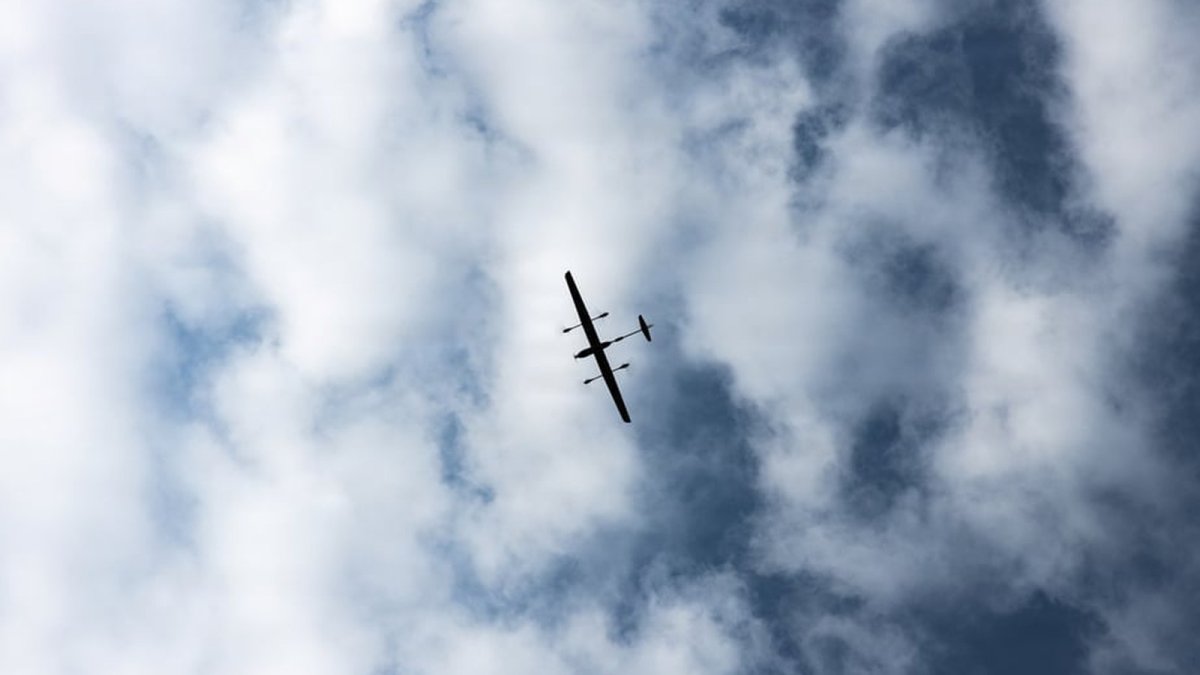
On July 30, 2026, South Korean air defense units in Paju nearly engaged a U.S. Marine Corps reconnaissance drone during a routine exercise, triggering the high-alert Durumi posture for 90 minutes and sending evacuation alerts to civilians near the border. The incident revealed critical breakdowns in information sharing between allied forces operating in one of the world's most sensitive airspace corridors. A friendly-fire event was averted only because the Stalker UAV returned to base before ground systems opened fire.
South Korea-US Drone Near-Miss Reveals Coordination Gaps
Seoul, South Korea — On July 30, 2026, South Korean Army units along the front line in Paju, Gyeonggi Province, detected an unidentified aerial track on thermal observation devices and local radars, immediately activating the Durumi high-alert posture. Anti-aircraft guns and attack helicopters stood ready for 90 minutes until the Joint Chiefs of Staff confirmed the object was a U.S. Marine Corps Stalker (VXE30) UAV operating under the Korea Marine Exchange Program. U.S. Forces Korea later verified the drone belonged to American forces conducting combined training with the Republic of Korea Marine Corps 1st Division.
Friendly Fire Averted on the Border
The unidentified object flew south of the General Outpost line in northern Gyeonggi, prompting the South Korean Army Ground Operations Command to place air defense assets on emergency standby. An evacuation text message reached residents north of the Cheorwon Civilian Control Line in Gangwon Province as the military came within moments of engaging the target. The drone returned safely without incident, but the episode underscored how quickly routine training can escalate in the heavily militarized border zone.
Frontline units operated under the assumption of a potential North Korean UAV incursion, a scenario that has grown more plausible since the December 2022 drone penetration. The activation of Durumi procedures demonstrated the military's readiness posture while exposing the absence of real-time friendly force identification across alliance channels.
The Durumi posture operationally integrates layered air defense networks with ground-based artillery and attack helicopters shifting into pre-engagement configurations, reflecting doctrinal adaptations to persistent low-altitude threats along the inter-Korean divide. In the Paju and Gyeonggi sectors, the extreme proximity to the Military Demarcation Line compresses decision timelines to minutes, rendering misidentification not merely a technical error but a potential catalyst for broader escalation in an environment where North Korean forces maintain constant surveillance. This frontline geography, among the world's most militarized, thus demands identification protocols that transcend bilateral notification to encompass instantaneous shared awareness.
The 90-minute standoff, accompanied by evacuation directives to civilians north of the Cheorwon Civilian Control Line, exposes the cascading effects of such incidents on noncombatant populations and the psychological strain on border communities. Historically, similar near-misses in the demilitarized zone have prompted incremental refinements in rules of engagement, yet the episode reveals persistent gaps in fusing exercise data with defensive postures. Policy implications include the necessity for alliance-wide simulation exercises that stress-test identification procedures under realistic temporal pressures.
How the Notification Chain Failed
U.S. forces had notified South Korean counterparts of the flight plans in advance and dispatched official documentation, yet the information stalled at the working level within the South Korean military bureaucracy. It was neither briefed upward to senior command nor disseminated to frontline units responsible for border air defense. Essential flight data never reached key formations such as the South Korean Army's I Corps.
Operational communication across service branches and between alliance partners suffered a complete breakdown. The Ministry of National Defense initially framed the event as a clerical oversight, but the episode points to deeper structural weaknesses in combined airspace management procedures.
The flight plan's stagnation at the working level, without upward briefing or downward dissemination to formations such as I Corps, exemplifies entrenched bureaucratic silos within the South Korean military hierarchy that prioritize procedural formality over operational urgency. This breakdown highlights a critical distinction between advance notification, which U.S. Forces Korea maintains occurred, and formal approval, which Republic of Korea authorities indicate was never secured, pointing to mismatched expectations in combined planning frameworks. Such frictions echo longstanding alliance challenges in synchronizing disparate command cultures.
Earlier coordination shortfalls during 2026 West Sea activities further illustrate recurring patterns where information flows fail to match the accelerated tempo of modern aerial operations. Scholarly analyses of alliance interoperability emphasize that these lapses stem from insufficient institutional mechanisms for real-time verification across service branches. The resulting policy imperative centers on redesigning notification architectures to embed automated cross-checks that prevent isolated working-level decisions from undermining frontline readiness.
Text Messages Instead of Official Channels
According to The Hankyoreh, the U.S. military notified a Korean officer via text message the day before training rather than sending the required official letter. The I Corps officer replied that there would be no restrictions and failed to report the message to superiors. The actual altitude data arrived only as a photograph attachment, preventing accurate assessment of whether the flight required Air Force Operations Command approval.
Drone flights near the North Korean border mandate formal authorization through established channels, particularly at higher altitudes. Military authorities acknowledged that Korean and U.S. officers routinely substitute text messages for formal procedures, a practice the South Korean Army later identified as a direct cause of the reporting failure.
An Alliance Tested by Routine Exercise
The Korea Marine Exchange Program exercise involved active participation by South Korean Marine Corps personnel alongside U.S. counterparts at a live-fire complex in Paju. Despite this integration, information about the UAV operation did not flow to the Army units tasked with immediate air defense response. The resulting mismatch between exercise activity and defensive posture highlights persistent interoperability gaps.
Earlier disputes in 2026 over U.S. Air Force activities in the West Sea already signaled recurring notification problems. The July 30 incident demonstrates that these coordination shortfalls extend to low-altitude and border-adjacent operations where response times are measured in minutes.
The OPCON Transfer Stakes
South Korea continues preparing for the eventual transfer of wartime operational control from Washington to Seoul. As the Korea Herald editorial observed, operational control is measured less by formal authority than by the ability to maintain a single, coherent picture of the battlefield. Identifying friendly aircraft and ensuring every headquarters operates from identical information remain prerequisites for effective combined command.
The near-miss occurred against this backdrop of shifting command relationships. Any future OPCON transition will require seamless real-time data sharing that current procedures clearly failed to deliver during a scheduled training flight.
Wartime operational control transfer entails Seoul assuming primary authority over combined forces during contingencies, a shift predicated on demonstrable capacity for unified battlefield perception across allied headquarters. Shared situational awareness thus functions as the foundational precondition, ensuring that identification of assets occurs seamlessly regardless of national origin. This incident tests the alliance's maturation toward that threshold by exposing how even scheduled activities can fracture the coherent operational picture required for effective transition.
Historical precedents in alliance management suggest that formal authority transfers succeed only when supported by robust data-sharing infrastructures capable of withstanding routine frictions. The episode therefore carries implications for phased implementation timelines, underscoring the need for incremental confidence-building measures before full handover. Without such safeguards, the transition risks amplifying rather than resolving coordination vulnerabilities in high-threat environments.
Lessons From December 2022
The December 26, 2022, North Korean drone incursion exposed similar gaps in low-altitude detection and rapid identification. South Korean forces fired warning shots and scrambled jets and helicopters but could not neutralize the UAVs, prompting plans for stealth drones and a dedicated drone operations command. The July 30 episode shows that allied coordination problems compound these existing vulnerabilities.
Both incidents occurred in airspace where military and civilian zones overlap, requiring precise procedural safeguards. The Durumi alert system, designed for suspected enemy UAV threats, proved effective in raising readiness but ineffective in distinguishing friendly assets when notification chains broke down.
The December 26, 2022, incursion began with detection near Gimpo at around 10:25 a.m., and the military's failure to neutralize the five UAVs prompted a public apology from the defense establishment. The reforms that followed oriented South Korean defenses toward persistent surveillance of small unmanned systems, yet the July 30 event demonstrates that allied integration remains a parallel vulnerability. Historical patterns of North Korean probing flights indicate that such threats will persist, necessitating defenses calibrated for both adversarial and friendly identification challenges.
The overlap of military and civilian airspace zones, evident in both incidents, demands procedural redundancies that account for the compressed geography of the peninsula. Policy responses since 2022 have emphasized technological augmentation, but this latest episode illustrates the equal importance of human and institutional linkages. Strengthening these elements could yield a more resilient posture against hybrid aerial risks in the evolving security landscape.
By Prof. David Park, Staff Writer
This article was produced with AI-assisted research and editorial support. Reporting is based on sources cited in the article.
What's Your Reaction?
 Like
0
Like
0
 Dislike
0
Dislike
0
 Love
0
Love
0
 Funny
0
Funny
0
 Wow
0
Wow
0
 Sad
0
Sad
0
 Angry
0
Angry
0

East Asia/Technology Correspondent at Global1.News. Seoul-based voice covering Korean politics, technology, business, and culture. Analyzes how technology and geopolitics intersect across East Asia.















Comments (0)