
Mexico Formally Rejects US Deportation of Its Citizens to Central America
In a firm and unambiguous message delivered from the Palacio Nacional, the Mexican government formally rejected the United States' practice of deporting Mexican nationals to third countries in Central America, demanding instea
Mexico Formally Rejects US Deportation of Its Citizens to Central America
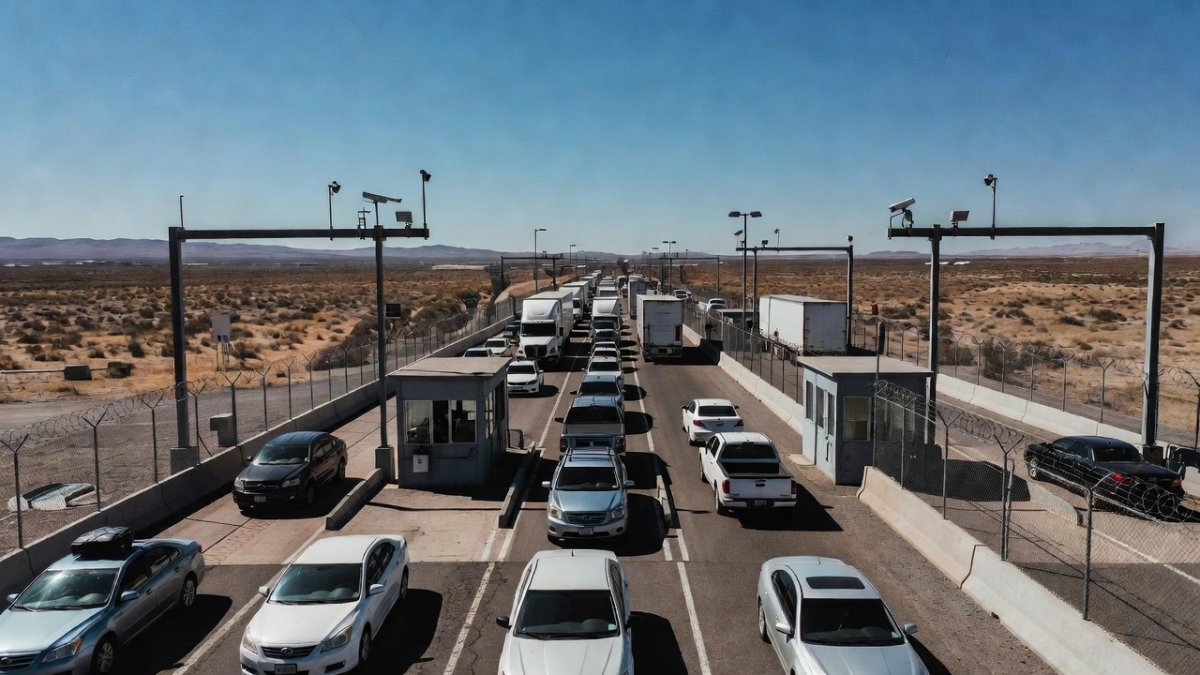
In a firm and unambiguous message delivered from the Palacio Nacional, the Mexican government formally rejected the United States' practice of deporting Mexican nationals to third countries in Central America, demanding instead that all Mexican citizens be returned directly to their homeland. The statement, made during Friday's "mañanera del Pueblo" on August 21, 2026, marks a significant escalation in the diplomatic tension between the two nations over migration policy.
With President Claudia Sheinbaum sidelined by a severe flu—announced via her social media accounts with symptoms including cough and fever—the morning press conference was led by Interior Minister Rosa Icela Rodríguez Velázquez, head of the Secretaría de Gobernación (SEGOB). Her presence underscored the gravity of the issue, as migration and interior affairs fall squarely within her portfolio. The message was clear: Mexico will not accept the diversion of its citizens through third countries.
Rodríguez revealed that she had met the previous day, Thursday, August 20, 2026, with the United States Ambassador to Mexico, Ronald Johnson, to formally express the government's rejection of this practice. The meeting, held behind closed doors, was the channel through which Mexico delivered its diplomatic protest, setting the stage for what could become a more contentious bilateral relationship on migration matters.
Mexico's Position: No Agreement, No Acceptance
The core of Mexico's objection rests on a fundamental principle: there is no bilateral or multilateral agreement authorizing the United States to remove Mexican nationals to third countries. Rodríguez was unequivocal in stating that Mexico accepts all of its nationals directly and will not tolerate the practice of sending them first to Guatemala, Honduras, or any other Central American nation before they can return home.
This position reflects a deep-seated concern for the welfare of Mexican citizens who, under this policy, face an additional and unnecessary journey through unfamiliar territory. Being deported to a third country, rather than directly to Mexico, exposes migrants to additional risks, including potential security threats, logistical hardships, and prolonged separation from their families and communities. The Mexican government views this as a violation of the basic rights of its citizens to be returned to their country of origin.
Rodríguez also struck a diplomatic tone, stating that Mexico respects the sovereign decisions of other countries. However, she made it abundantly clear that respect does not equate to acceptance, particularly when the practice directly affects Mexican-origin migrants. The distinction is crucial: Mexico is not interfering in US immigration policy, but it is drawing a firm line when that policy impacts its own citizens in ways it deems unacceptable.
The Scale of the Problem: 2,300 Mexicans Deported via Guatemala
The urgency of Mexico's protest is grounded in concrete numbers. According to the Guatemalan government, approximately 2,300 Mexicans have been deported from the United States to Guatemala so far in 2026. This figure represents a significant flow of people who, instead of being returned directly to Mexico, are being routed through a third country as part of the Trump administration's broader third-country deportation strategy.
The practice also extends to Honduras, which has been identified as another destination for Mexican nationals under this policy. The strategy appears designed to complicate the return process for migrants, potentially deterring future attempts at unauthorized entry into the United States. However, for Mexico, the human cost and the violation of established norms outweigh any perceived deterrent effect.
For the families of these 2,300 individuals, the impact is profound. A deportation that should result in a relatively straightforward return to Mexico becomes an ordeal involving crossing additional borders, navigating unfamiliar systems, and facing extended delays. The Mexican government's protest is not merely a matter of diplomatic principle; it is a response to the real-world suffering of its citizens and their loved ones who await their return.
What This Means for Mexican Families and Migrant Communities
For Mexican families, particularly those in rural communities and colonias across the republic, this policy introduces a new layer of uncertainty to an already precarious situation. Migrants who are detained and deported expect to return to their hometowns, to be reunited with their families, and to resume their lives. Being sent to Guatemala or Honduras instead means being stranded in a country where they have no support network, no resources, and no clear path home.
The emotional toll on families cannot be overstated. A mother in Oaxaca waiting for her son's return now faces the anxiety of not knowing where he is, how he will get home, or when she will see him again. The phone calls that once provided reassurance may become sporadic or impossible. The community networks that typically mobilize to receive returning migrants are rendered useless when the migrant is deposited in a third country.
Migrant advocacy groups and community organizations in Mexico have long warned about the dangers of such policies. The Mexican government's formal rejection is a validation of these concerns, signaling that the state is prepared to defend its citizens against practices that compound the trauma of deportation. For the broader Mexican community, both at home and abroad, this stance reinforces the message that their government is watching and will advocate on their behalf.
Context from the Same Mañanera: Economy and Archaeology
The same mañanera that delivered this firm diplomatic message also provided a platform for positive domestic news, offering a contrast to the tensions with the United States. Officials highlighted the latest timely estimate from INEGI, Mexico's national statistics agency, showing that the country's GDP grew 1.5% in the second quarter of 2026. This represents the strongest quarterly expansion since 2020, driven by advances across all sectors of the economy.
The primary sector, which includes agriculture, livestock, and related activities, led the way with an impressive 7.3% growth between April and June. This figure is particularly significant for rural communities and campesinos, whose livelihoods depend on the health of this sector. The economic data serves as a reminder that despite external challenges, Mexico's domestic economy is showing resilience and strength.
In a separate announcement, INAH Director General Joel Omar Vázquez Herrera revealed the discovery of the "Cueva Mundo Zoque" (Zoque World Cave) in Cintalapa, Chiapas. This ritual cave of the Zoque culture, located about 20 meters below ground and extending at least 100 meters in length, has yielded 179 pre-Hispanic pieces preliminarily dated between 600 and 900 AD. The find, which includes 13 offerings with iconography of jaguars, owls (tecolotes), human representations, and ceiba spine motifs, was discovered by local guide Jairo Díaz Barreiro. It represents a significant contribution to Mexico's rich cultural heritage and underscores the importance of indigenous communities in preserving and revealing the nation's history.

What to Watch For: Diplomatic and Policy Implications
The coming weeks will be critical in determining how this diplomatic protest translates into concrete change. The meeting between Rodríguez and Ambassador Johnson was a formal expression of Mexico's position, but the question remains whether the United States will alter its practices in response. Observers will be watching for any signals from Washington indicating a willingness to exempt Mexican nationals from third-country deportations.
Mexico's options for escalation are varied. The government could pursue formal diplomatic channels, including through the Secretaría de Relaciones Exteriores (SRE), to elevate the issue to higher levels of bilateral dialogue. There is also the possibility of legal challenges, either through international bodies or through consular channels, to protect the rights of Mexican citizens. The Sheinbaum administration, known for its measured but firm approach, will likely seek a resolution that avoids a full-blown diplomatic crisis while ensuring the protection of its citizens.
For the affected migrants and their families, the hope is that this protest will lead to a swift change in policy. Each day that the practice continues represents another group of Mexicans facing the hardship of being deported to a country that is not their own. The Mexican government's commitment to this issue, demonstrated by the prominent platform given to it at the mañanera, suggests that this will remain a priority in the bilateral relationship until a satisfactory resolution is achieved.
The broader context of US-Mexico relations, already complex under the Trump administration, will be shaped by how this dispute is resolved. Mexico has consistently sought to maintain a cooperative relationship with its northern neighbor while defending its sovereignty and the rights of its citizens. This latest confrontation tests that balance, and the outcome will set a precedent for how similar disputes are handled in the future.
Tags: Mexico, deportation, United States, Guatemala, Honduras, Rosa Icela Rodríguez, Claudia Sheinbaum, mañanera, migration, third-country deportation, SEGOB, Ronald Johnson, INEGI, GDP, INAH, Zoque, Cueva Mundo Zoque, Chiapas
By Rosa Martinez, Staff Writer
This article was produced with AI-assisted research and editorial support. Reporting is based on sources cited in the article.
What's Your Reaction?
 Like
0
Like
0
 Dislike
0
Dislike
0
 Love
0
Love
0
 Funny
0
Funny
0
 Wow
0
Wow
0
 Sad
0
Sad
0
 Angry
0
Angry
0
Latin America/Andes Correspondent at Global1.News. Based in Bogota, covering politics, environment, energy, and social movements across the Andean region. Passionate about environmental journalism and communities protecting their land.













Comments (0)